
 Worksheets
World Geography Final Exam Review honors
Total questions: 99
Worksheet time: 50mins
Where is the Ganges River located?
India and Bangladesh
China and Nepal
Brazil and Argentina
Egypt and Sudan
Where is the Amazon located?
South America
Africa
Asia
Europe
Where is the Yellow River located?
China
India
Egypt
Brazil
Where are the Appalachian Mountains located?
Eastern United States
Western United States
Central Canada
Southern Mexico
Where are the Himalayas located?
Asia (Nepal, India, China, Bhutan, Pakistan)
South America (Brazil, Argentina, Chile)
Africa (Kenya, Tanzania, Uganda)
Europe (France, Switzerland, Italy)
Where is the Sahara Desert located?
Northern Africa
South America
Eastern Europe
Southern Asia
Where is Mt. Everest located?
Nepal/China border (Himalayas)
India/Pakistan border (Karakoram)
Tibet/Bhutan border (Himalayas)
Nepal/India border (Himalayas)
Be able to locate the following Physical Features: Where is the Mississippi River located?
United States
Canada
Mexico
Brazil
Be able to locate the following Physical Features: Where are the Andes located?
South America
Africa
Asia
Europe
Be able to locate the following Physical Features: Where is the Nile River located?
Egypt and Sudan (Northeast Africa)
India and Bangladesh (South Asia)
Brazil and Argentina (South America)
China and Mongolia (East Asia)
Where is the Gobi Desert located?
China and Mongolia
Egypt and Sudan
Australia and New Zealand
United States and Canada
Be able to locate the following Physical Features: Where is Lake Victoria located?
Africa (bordering Uganda, Kenya, and Tanzania)
South America (bordering Brazil, Argentina, and Paraguay)
Asia (bordering China, India, and Nepal)
Europe (bordering France, Germany, and Switzerland)
Where is North America located?
Northern and Western Hemisphere
Southern and Eastern Hemisphere
Eastern and Northern Hemisphere
Western and Southern Hemisphere
Where is South America located?
Southern and Western Hemisphere
Northern and Eastern Hemisphere
Eastern and Southern Hemisphere
Northern and Western Hemisphere
Where is Europe located?
Northern Hemisphere, west of Asia
Southern Hemisphere, east of Africa
Western Hemisphere, south of Australia
Eastern Hemisphere, north of Antarctica
Where is Africa located?
Northern and Southern Hemisphere, south of Europe
Eastern and Western Hemisphere, north of Asia
Southern Hemisphere, east of Australia
Northern Hemisphere, west of North America
Where is Asia located?
Eastern Hemisphere, east of Europe
Western Hemisphere, west of Africa
Southern Hemisphere, south of Australia
Northern Hemisphere, north of North America
Where is Australia located?
Southern Hemisphere, southeast of Asia
Northern Hemisphere, west of Europe
Eastern Hemisphere, north of Africa
Western Hemisphere, south of North America
Where is Antarctica located?
Southernmost continent
Northernmost continent
Easternmost continent
Westernmost continent
Where is the Atlantic Ocean located?
Between the Americas and Europe/Africa
Between Asia and Australia
Between Africa and Australia
Between North America and Asia
Where is the Pacific Ocean located?
Between Asia/Australia and the Americas
Between Europe and Africa
Between North America and Europe
Between Africa and South America
Where is the Indian Ocean located?
Between Africa, Asia, Australia
Between North America and South America
Between Europe and Antarctica
Between Australia and South America
Where is the Arctic Ocean located?
Northernmost ocean, around the North Pole
Southernmost ocean, around the South Pole
Easternmost ocean, near Asia
Westernmost ocean, near the Americas
Where is the Southern Ocean located?
Surrounds Antarctica
Surrounds Africa
Surrounds Australia
Surrounds North America
What is the definition of Climate?
The long-term pattern of weather in a particular area.
A sudden change in temperature over a day.
The amount of rainfall in a single month.
The direction of wind on a particular day.
What is the definition of Norms?
Standards or rules of behavior in a society.
A type of economic system.
A form of government.
A scientific theory.
What is the definition of GDP?
Gross Domestic Product; the total value of goods and services produced in a country.
General Domestic Policy; the rules governing a country's economy.
Gross Domestic Price; the average price of goods in a country.
Global Development Program; an international aid initiative.
What is the definition of Traditions?
Customs or beliefs passed down from generation to generation.
A type of government system.
A scientific theory about evolution.
A modern technology used in communication.
What is the definition of Remittance?
Money sent by migrants to their home country.
A type of government tax.
A loan given by banks to businesses.
A form of international trade agreement.
What is the definition of Taboo?
A social or cultural prohibition or restriction.
A traditional festival celebrated annually.
A type of ancient musical instrument.
A popular form of dance in many cultures.
What is the definition of Natural Resource?
Materials or substances found in nature that are used by humans.
Man-made objects used for construction.
Technological devices created for communication.
Artificial chemicals used in laboratories.
What is the definition of Urban Sprawl?
The uncontrolled expansion of urban areas.
The preservation of rural landscapes.
The reduction of city populations.
The development of public parks.
What is the definition of Immigrate?
To move into a new country to live permanently.
To leave a country to live elsewhere.
To travel for vacation.
To visit a country for business.
What is the definition of GMO?
Genetically Modified Organism.
General Microbial Operation.
Global Medical Outreach.
Greenhouse Management Objective.
What is the definition of Emigrate?
To leave one's own country to live in another.
To move within the same country.
To visit another country for a short time.
To return to one's home country.
What is the definition of Quota?
A fixed share or limit of something.
A type of currency used in trade.
A method of measuring temperature.
A legal document for property ownership.
What is the definition of Ethnic group?
A group of people who share a common culture, ancestry, or language.
A group of people who live in the same city.
A group of people who have the same profession.
A group of people who share the same hobbies.
What is the definition of Urbanization?
The process of making an area more urban.
The process of increasing agricultural land.
The process of rural depopulation only.
The process of industrial decline.
What is the definition of Culture?
The beliefs, customs, arts, etc. of a particular society or group.
A scientific theory explaining natural phenomena.
A mathematical formula used in calculations.
A physical location where events are held.
What is the definition of Multinational corporation?
A company that operates in multiple countries.
A company that only sells products online.
A company that operates only in its home country.
A company that does not engage in international trade.
What is the definition of Crop rotation?
The practice of growing different crops in succession on the same land.
The process of irrigating crops using drip methods.
The technique of planting only one type of crop every year.
The method of harvesting crops before they mature.
What is the definition of Gentrification?
The process of renovating and improving a house or district so that it conforms to middle-class taste.
The movement of people from rural to urban areas.
The decline of urban neighborhoods due to lack of investment.
The process of government taking private land for public use.
What is Water Stress?
Water stress is when the demand for water exceeds the available amount. Example: California during drought.
Water stress is when water is always available in abundance. Example: Amazon rainforest.
Water stress is when water is only used for industrial purposes. Example: Factories in urban areas.
Water stress is when water is never used for agriculture. Example: Desert regions.
What is Non-Renewable Resource?
A resource that cannot be replaced quickly. Example: Coal.
A resource that can be replaced quickly. Example: Solar energy.
A resource that is always available. Example: Air.
A resource that is produced by living organisms. Example: Wood.
What is Monsoon?
A seasonal wind bringing heavy rains. Example: Indian monsoon.
A type of desert wind.
A mountain formation process.
A type of ocean current.
What is Cultural landscape?
A landscape shaped by human activity. Example: Rice terraces in the Philippines.
A natural landscape untouched by humans.
A type of weather pattern found in tropical regions.
A geological formation created by volcanic activity.
What is Push Factor?
A reason that drives people away from a place. Example: War.
A reason that attracts people to a place. Example: Job opportunities.
A type of physical force used in sports.
A government policy to increase population.
What is Forced Migration?
When people are made to move against their will. Example: Refugees fleeing conflict.
When people move voluntarily for better job opportunities.
When people migrate for educational purposes.
When people travel for tourism.
What is Pull Factor?
A reason that attracts people to a place. Example: Job opportunities.
A reason that forces people to leave a place. Example: Natural disasters.
A type of government policy.
A method of transportation.
What is Renewable Resource?
A resource that can be replaced naturally. Example: Solar energy.
A resource that cannot be replaced once used. Example: Coal.
A resource that is always man-made. Example: Plastic.
A resource that is only found in oceans. Example: Salt water.
What is Natural Disaster?
A natural event causing damage. Example: Earthquake.
A man-made event causing pollution. Example: chernobyl
A type of festival celebrated annually. Example: festivus
A medical condition caused by bacteria.
Example: staph
What is Cultural Diffusion?
The spread of cultural beliefs and social activities. Example: Sushi in the United States.
The process of physical weathering of rocks.
The invention of new technology within a single culture.
The isolation of cultures from one another.
What is State?
An organized political community under one government. Example: France.
A group of people sharing the same culture but not necessarily living in the same territory. Example: the irish people
A geographical area with no permanent population. Example: antartica
A type of government where power is held by a single individual. Example: north Korea
What is Stateless Nation?
A group without its own state. Example: Kurds.
A nation with multiple states. Example: USA.
A state with no population. Example: Antarctica.
A group with its own state. Example: Japan.
People tend to live near which physical feature?
Mountains
Deserts
Rivers
Glaciers
People generally prefer to live in which type of climate, and why?
Mild climates because they are comfortable and less extreme.
Desert climates because they are very hot.
Polar climates because they are very cold.
Rainforest climates because they are very humid.
People generally do not want to live in which types of climates, and why?
Extreme hot or cold climates because they are uncomfortable and challenging for survival.
Mild climates because they are too boring.
Rainy climates because they are always dangerous.
Temperate climates because they lack excitement.
Some of the effects of European colonization in Africa included:
Improved local governance and complete independence for African nations
borders drawn with little care for the ethnic groups with in them
Rapid industrialization led by African leaders
Total eradication of traditional African societies
A lack of natural resources could impact a country by:
limiting economic growth and development
increasing its population rapidly
making it a major exporter of goods
ensuring political stability
Culture can bring people together or separate a group of people by:
creating shared values and traditions
eliminating all differences
removing the need for communication
ensuring everyone has the same beliefs
Site and situation can impact a country’s ability to operate economically by:
Determining access to resources, trade routes, and markets
Guaranteeing political stability
Ensuring a large population
Providing unlimited natural resources
In modern times, what has helped culture to spread rapidly?
The internet
Horse-drawn carriages
Handwritten letters
Smoke signals
What contributes to modern borders?
Geographical features and treaties
Seasonal changes
Language evolution
Technological advancements
Governments respond to natural disasters by:
providing aid and coordinating emergency services
ignoring the situation
causing the disaster
focusing only on economic growth
Complete the Chart Below:
State: Turkey
Shape/Size/Relative Location: __________
Impact: __________
Shape/Size/Relative Location: Turkey is a transcontinental country, mainly in Asia with a small part in Europe, bridging the two continents. Impact: Strategic location for trade and politics, cultural crossroads.
Shape/Size/Relative Location: Turkey is a small island in the Pacific Ocean. Impact: Limited influence on global trade and politics.
Shape/Size/Relative Location: Turkey is entirely located in South America. Impact: Major agricultural exporter.
Shape/Size/Relative Location: Turkey is a landlocked country in Central Africa. Impact: Restricted access to international markets.
Complete the Chart Below: State: Chile Shape/Size/Relative Location: __________ Impact: __________
Shape/Size/Relative Location: Chile is a long, narrow country stretching along South America's western edge. Impact: Difficult internal communication, lots of sea ports
Shape/Size/Relative Location: Chile is a landlocked country in central South America. Impact: Easy access to neighboring countries.
Shape/Size/Relative Location: Chile is a small island nation in the Pacific Ocean. Impact: Limited land resources, maritime economy.
Shape/Size/Relative Location: Chile is a large, circular country in northern South America. Impact: Uniform climate, easy transportation.
Complete the Chart Below: State: Indonesia Shape/Size/Relative Location: __________ Impact: __________
Shape/Size/Relative Location: Indonesia is an archipelago of thousands of islands in Southeast Asia. Impact: Challenges in unity and transportation, rich biodiversity.
Shape/Size/Relative Location: Indonesia is a landlocked country in Central Asia. Impact: Limited access to trade routes.
Shape/Size/Relative Location: Indonesia is a single large island in the Pacific Ocean. Impact: Easy transportation and uniform culture.
Shape/Size/Relative Location: Indonesia is a desert region in North Africa. Impact: Scarcity of water and limited agriculture.
Complete the Chart Below: State: Russia Shape/Size/Relative Location: __________ Impact: __________
Shape/Size/Relative Location: Russia is the largest country in the world, spanning Eastern Europe and northern Asia. Impact: Resource abundance, difficult to govern, diverse climates.
Shape/Size/Relative Location: Russia is a small island nation in the Pacific Ocean. Impact: Limited resources, easy to govern, uniform climate.
Shape/Size/Relative Location: Russia is a landlocked country in central Africa. Impact: Scarcity of water, limited trade, tropical climate.
Shape/Size/Relative Location: Russia is a peninsula in southern Europe. Impact: Mild climate, maritime trade, small population.
Complete the Chart Below: State: Lesotho Shape/Size/Relative Location: __________ Impact: __________
Shape/Size/Relative Location: Lesotho is a landlocked country entirely surrounded by South Africa. Impact: Economic dependence on South Africa, limited access to resources.
Shape/Size/Relative Location: Lesotho is a coastal country with many ports. Impact: Strong maritime trade and independence.
Shape/Size/Relative Location: Lesotho is located in West Africa and shares borders with multiple countries. Impact: Diverse trade opportunities and regional influence.
Shape/Size/Relative Location: Lesotho is an island nation in the Indian Ocean. Impact: Reliance on fishing and tourism.
Give three examples of the following: Primary Activity
1. Farming 2. Fishing 3. Mining
1. Banking 2. Teaching 3. Software Development
1. Construction 2. Manufacturing 3. Textile Production
1. Retailing 2. Advertising 3. Transportation
Give three examples of the following: Secondary Activity
1. Manufacturing 2. Construction 3. Food processing
1. Agriculture 2. Mining 3. Fishing
1. Banking 2. Insurance 3. Tourism
1. Forestry 2. Animal husbandry 3. Dairy farming
Give three examples of the following: Tertiary Activity
1. Teaching 2. Banking 3. Transportation services
1. Farming 2. Mining 3. Fishing
1. Iron smelting 2. Shipbuilding 3. Textile manufacturing
1. Forestry 2. Animal husbandry 3. Dairy farming
Describe the importance and/or impact of the following Governmental Organization: United Nations.
It promotes international cooperation and peacekeeping among nations.
It manages global stock markets and financial institutions.
It controls the education systems of member countries.
It enforces national laws within individual countries.
Describe the importance and/or impact of the following Governmental Organization: OPEC.
OPEC influences global oil prices and coordinates petroleum policies among member countries.
OPEC is responsible for regulating international banking standards.
OPEC manages global food supply chains and agricultural exports.
OPEC oversees international air travel and aviation safety.
Describe the importance and/or impact of the following Governmental Organization: USMCA.
It promotes trade and economic cooperation between the United States, Mexico, and Canada.
It regulates international air travel between North America and Europe.
It manages the military alliances in North America.
It oversees environmental protection laws in South America.
The importance and/or impact of the following Governmental Organization: Antarctica Treaty is:
It preserves Antarctica for peaceful and scientific use, banning military activity and resource exploitation.
It establishes Antarctica as a military base for international cooperation.
It allows for commercial mining and resource extraction in Antarctica.
It promotes tourism and private ownership of Antarctic land.
The importance and/or impact of the following Governmental Organization: EU is mainly related to:
Promoting economic and political integration among European countries
Managing global oil production
Overseeing international space missions
Regulating the internet worldwide
Urbanization leads to which of the following effects?
Increased rural population
Improved agricultural productivity
Growth of cities and infrastructure
Decrease in industrialization
The effects of European Colonization include:
Spread of diseases, exploitation of resources, and cultural changes
Complete preservation of indigenous cultures
No impact on local economies
Total isolation from global trade
The effects of Resettlement Programs include:
Displacement of communities and changes in social structure
Increase in wildlife population
Reduction in urbanization
Decrease in agricultural productivity
The effects of desertification include:
Loss of fertile land
Increase in forest cover
Improvement in water resources
Expansion of agricultural activities
The effects of Industrialization include:
Increased urbanization and economic growth
Decline in technological advancement
Reduction in population density
Decrease in production efficiency
Overfishing leads to which of the following effects?
Depletion of fish populations
Increase in fish biodiversity
Improvement of marine habitats
Expansion of fish breeding grounds
The effects of Assimilation include:
Loss of cultural identity
Increase in biodiversity
Rise in technological innovation
Decrease in population
The effects of deforestation include:
Loss of biodiversity
Increase in forest cover
Improvement in air quality
Expansion of wildlife habitats
Urban sprawl leads to which of the following effects?
Increased traffic congestion and loss of natural habitats
Reduction in pollution and preservation of green spaces
Decrease in population density and improved public transport
Enhanced community cohesion and reduced infrastructure costs
The effects of the One Child Policy include:
Aging population and gender imbalance
Rapid population growth
Increase in birth rate
Improved gender equality
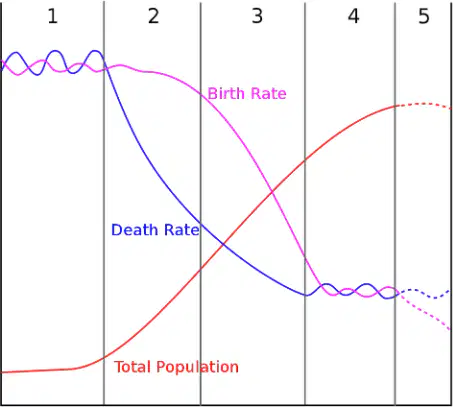
Explain what stage the following would correlate to in the DTM below. Falling birth rate, death rate falling slowly. Refer to the DTM graph for stages 1-5.
Stage 3
Stage 1
Stage 2
Stage 4
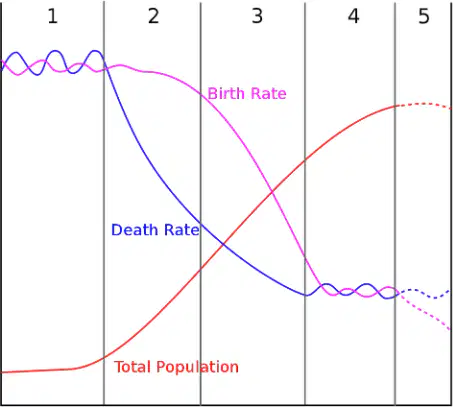
Explain what stage the following would correlate to in the DTM below. High birth rate, high death rate. Refer to the DTM graph for stages 1-5.
Stage 1
Stage 2
Stage 3
Stage 4
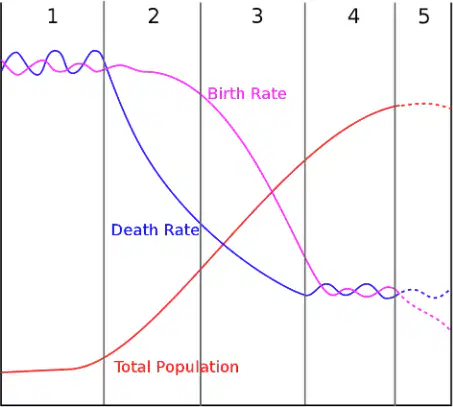
Explain what stage the following would correlate to in the DTM below. Falling birth rate, stable death rate. Refer to the DTM graph for stages 1-5.
Stage 4
Stage 2
Stage 1
Stage 5
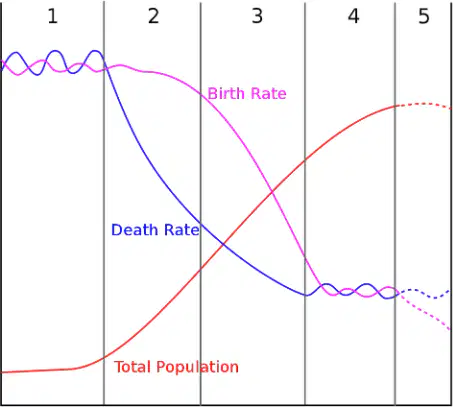
Explain what stage the following would correlate to in the DTM below. High birth rate, death rate falling rapidly. Refer to the DTM graph for stages 1-5.
Stage 2
Stage 1
Stage 3
Stage 4
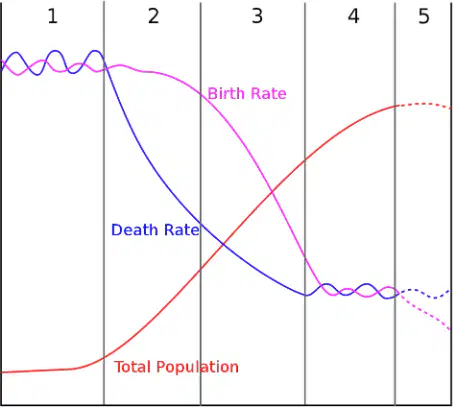
Explain what stage the following would correlate to in the DTM below. Low birth rate, low death rate. Refer to the DTM graph for stages 1-5.
Stage 4 or Stage 5
Stage 1
Stage 2
Stage 3
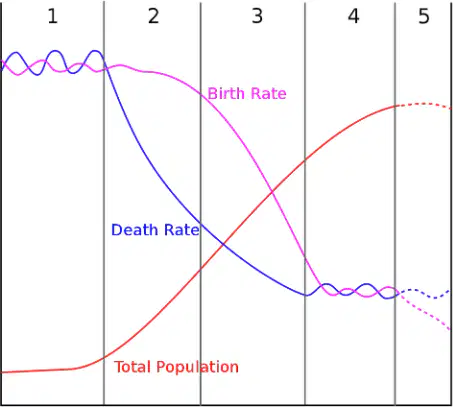
Explain what stage the following would correlate to in the DTM below. Population increasing rapidly (choose 2). Refer to the DTM graph for stages 1-5.
Stage 2 and Stage 3
Stage 1 and Stage 2
Stage 3 and Stage 4
Stage 4 and Stage 5
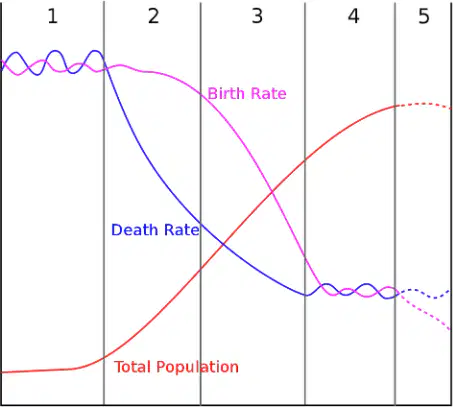
Explain what stage the following would correlate to in the DTM below. Population Stable (choose 2). Refer to the DTM graph for stages 1-5.
Stage 1 and Stage 4
Stage 2 and Stage 3
Stage 3 and Stage 5
Stage 2 and Stage 5
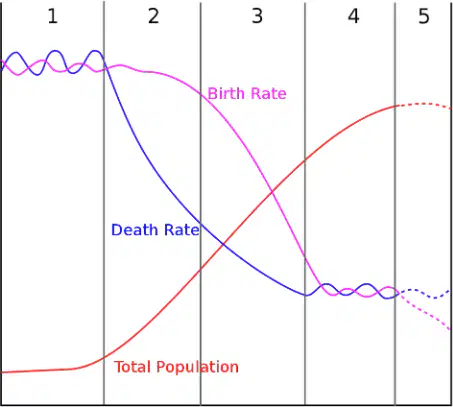
Explain what stage the following would correlate to in the DTM below. Population declining. Refer to the DTM graph for stages 1-5.
Stage 5
Stage 1
Stage 2
Stage 3
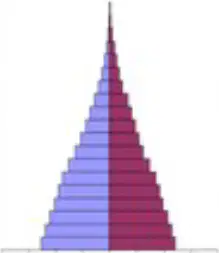
Fill in the blanks using the clues below for Angola: _____ birth rate _____ death rate _____ population growth Typical of _____ countries
high birth rate, high death rate, rapid population growth, typical of developing countries
low birth rate, low death rate, slow population growth, typical of developed countries
high birth rate, low death rate, slow population growth, typical of developed countries
low birth rate, high death rate, rapid population growth, typical of developing countries
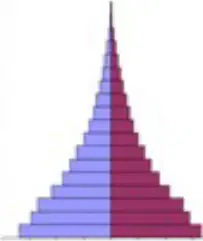
Fill in the blanks using the clues below for Philippines: _____ birth rate _____ death rate _____ population growth Typical of _____ countries
high birth rate, high death rate, rapid population growth, typical of developing countries
low birth rate, low death rate, slow population growth, typical of developed countries
high birth rate, low death rate, slow population growth, typical of developed countries
low birth rate, high death rate, rapid population growth, typical of developing countries
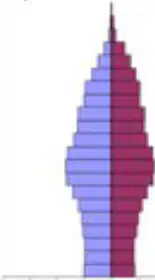
Fill in the blanks using the clues below for USA: _____ birth rate _____ death rate _____ population growth or _____ population Typical of _____ countries
low birth rate, reduced death rate, stable population growth or ageing population, typical of developed countries
high birth rate, high death rate, rapid population growth or youthful population, typical of developing countries
moderate birth rate, fluctuating death rate, declining population growth or shrinking population, typical of underdeveloped countries
very high birth rate, very low death rate, explosive population growth or booming population, typical of least developed countries
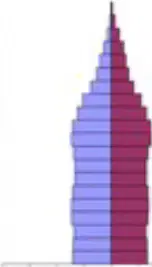
Fill in the blanks using the clues below for Italy: _____ birth rate _____ death rate _____ and _____ population Typical of _____ countries
low birth rate, reduced death rate, declining and ageing population, typical of developed countries
high birth rate, high death rate, growing and young population, typical of developing countries
moderate birth rate, increasing death rate, stable and balanced population, typical of transitional countries
low birth rate, high death rate, increasing and youthful population, typical of underdeveloped countries

