
 Worksheets
Unit 6 Review
Total questions: 31
Worksheet time: 31mins
What is primarily responsible for our weather
What temperatures do people of coastal regions experience
Mild
Hot
Cold
Extremes Variation: Hot days & Cold Nights
What temperatures do people of tropical regions experience
Mild
Hot
Cold
Extremes Variation: Hot days & Cold Nights
What temperatures do people of Desert regions experience
Mild
Hot
Cold
Extremes Variation: Hot days & Cold Nights
What temperatures do people of Arctic regions experience
Mild
Hot
Cold
Extremes Variation: Hot days & Cold Nights
What precipitations levels do people of Arctic regions experience
Low
High
Moderate
What precipitations levels do people of Tropical regions experience
Low
High
Moderate
What precipitations levels do people of Costal regions experience
Low
High
Moderate
What precipitations levels do people of desert regions experience
Low
High
Moderate
Which statement best describes the role of oceans in Earth’s climate system?
Oceans create heat through wave motion
Oceans reflect solar energy away from Earth
Oceans store energy from the Sun and release it over time
Oceans only affect climate during storms
During the day, land heats up faster than nearby ocean water. What happens at night?
Ocean water cools faster than land
The ocean releases stored heat, keeping nearby air warmer
Ocean currents stop moving
The Sun’s energy is reflected by the ocean
Which evidence best supports the idea that oceans influence climate?
Deserts are located far from oceans
Ocean waves create frictional heat
Coastal regions have smaller temperature changes than inland regions
Winds are strongest over the open ocean
What condition is required for a tropical cyclone to form?
Cold ocean water and strong surface winds
Warm ocean water and warm air
High elevations and dry air
Cool temperatures and clear skies
Tropical cyclones form when cool air rises over warm ocean water, causing rotating air currents as high- and low-pressure areas interact.
True
False
Warm air masses bring what kind of weather
Cold Air masses bring what kind of weather?
Which statement correctly explains the difference between hurricane, typhoon, & cyclone
The difference lies in their geographical naming
_______ pressure systems are characterized by clear skies and fair weather.
High
Low
_______ pressure systems are characterized by cloudy, rainy weather.
High
Low

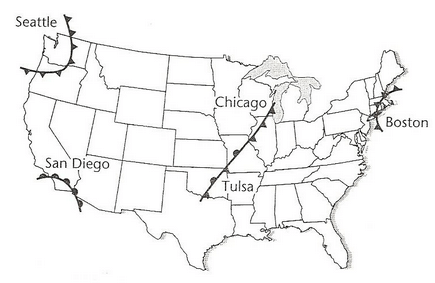
What type of front does this symbol represent?
warm front
cold front
stationary front
occluded front

What kind of weather is New York City most probably having?
Hot and humid
Clear, sunny skies with light wind
Rainy and possible storms

Which cities are probably experiencing stormy or rainy weather?
Los Angeles and Charleston
Seattle and Chicago
Chicago and Little Rock

Which city was probably much warmer YESTERDAY than it is today?
Little Rock
Seattle
New Orleans
New York City

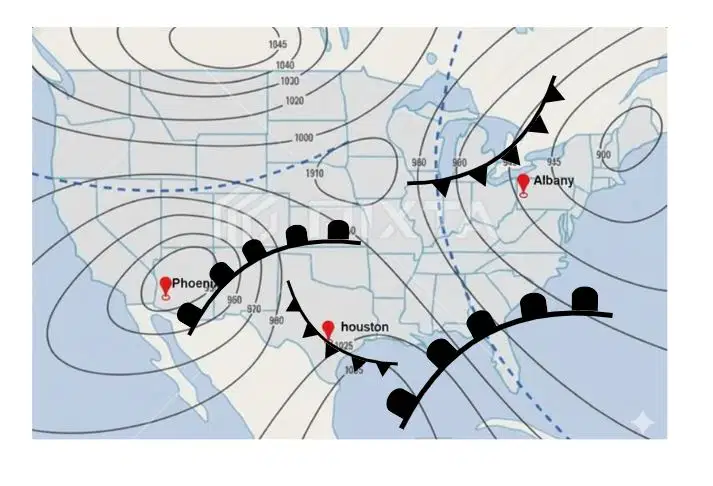
What type of weather should Albany expect in the next 24 hrs
Cold
Warm
Rainy
Sunny
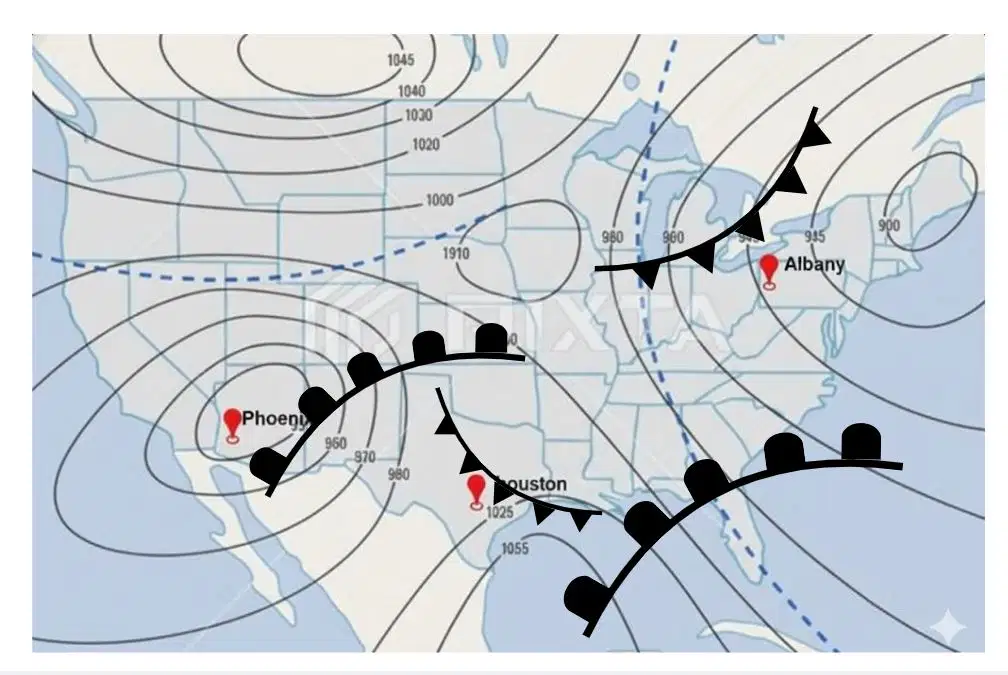
What type of weather is Houston currently experiencing
Cold
Warm
Rainy
Sunny
What type of weather should Phoenix expect in the next few days
Cold
Warm
Rainy
Sunny
Is Western Canada Getting a High or low pressure system
Hight
Low

A strong low-pressure weather system forms off the coast and moves toward a land area. Which weather conditions will likely result from the low-pressure system?
clear, sunny skies and calm winds
mostly sunny skies with little to no precipitation
partly cloudy skies with little precipitation and light winds
mostly cloudy skies with moderate to heavy precipitation and strong winds

The Jet Stream is a global pattern of atmospheric movement that influences patterns in local weather. Based on the information provided in the weather map, which city shown will most likely experience a drop in pressure over the next few days?
Baltimore
Jacksonville
Portland
Rapid City

