
Font size
 Worksheets
U.S. Fall Final Exam
Total questions: 100
Worksheet time: 50mins
The United States acquired Alaska from _____ for $7.2 million.
Which policy gave US the ability to "police" the Western Hemisphere.
Roosevelt Corollary
Good Neighbor Policy
Open Door Policy
Marshall Plan
Choose all territories gained by US as a result of the Spanish American War...
Puerto Rico
Guam
Philippines
Hawaii
Why is the Spanish American War of 1898 often considered a major turning point in US history?
It revealed the US as an imperial power in the world.
It marked the first American victory over a European country.
It demonstrated the need for better communications in wartime.
It showed American support for European economic interests in East Asia.
What was the purpose of the Open Door Policy in China?
End the Boxer Rebellion
Ensure equal trading rights with China
Win leaseholds in China
Establish a sphere of influence in China
President Taft's foreign policy focusing on America's financial power in relations with other countries.
Dollar Diplomacy
Moral Diplomacy
Big Stick Diplomacy
Great White Fleet
Filipino Revolutionary who aided US soldiers against Spain but then revolted against American control.
Jose Marti
Cesar Chavez
Emilio Aguinaldo
Woodrow Wilson
President Wilson's foreign policy that utilized the American military to support nations that need aid (food, medical, etc.)
Dollar Diplomacy
Moral Diplomacy
Big Stick Diplomacy
Panama Canal

________________was a widely held belief in the 19th century United States that its settlers were destined to expand across North America.
Imperialism
Annexation
Monroe Doctrine
Manifest Destiny
The practice of stronger nations extending their control over weaker countries and territories is
Militarism
Alliances
Imperialism
Nationalism
One cause of U.S. imperialism was
Militarism
Alliances
Spanish Treachery
Desire to gain more land and natural resources
Why did the United States acquire Hawaii?
The US wanted volcanoes
To use the islands as a naval base, and for its sugar
to create a naval base during World War II
to assist Queen Liliuokalani take control of the islands
President Teddy Roosevelt's foreign policy for relations with other countries.
Moral Diplomacy
Dollar Diplomacy
Big Stick Diplomacy
Panama Canal
All the following were reasons for US imperialism except:
to develop closer relations with European nations
need for more natural resources
need for new markets to sell goods
fear of running out of land to settle
Which president built on the Monroe Doctrine's limitations on colonization in the Western Hemisphere?
T. Roosevelt
Taft
Wilson
Clinton
How did the US gain the rights to build the Panama Canal?
the US helped Panama achieve independence from Colombia
a treaty with Colombia whom controlled Panama
the US purchased the land from Panama for 7.2 million dollars
the US helped Colombia put down a rebellion in Panama

What did Roosevelt believe the U.S. should use to protect its economic and strategic interests in Latin America?
Diplomatic negotiations
Economic sanctions
"Big stick" meaning military force
Cultural influence
The Roosevelt Corollary was President Theodore Roosevelt’s expansion of the Monroe Doctrine that declared the United States would stop _______ governments from chronic wrongdoing.
Latin American
European
Asian
South American
Many Americans believed that US expansion was part of a divine plan to—
spread Christian ideals
spread democracy
bring economic properity
all answer choices are correct
Anti-imperialists claimed that seizing foreign lands was unjust and it weakened democracy.
true
false
In the Caribbean, President Roosevelt forced ________ to repay its debts.
Panama
Cuba
the Dominican Republic
the Bahamas
Roosevelt signed the Gentlemen’s Agreement with _____ in an effort to end a dispute over that country's immigration.
Cuba
Japan
China
France
The United States needed ________ permission to build the Panama Canal.
Colombia's
Peru's
Cuba's
Argentina's
One of the benefits of the transcontinental railroad was that -
farmers were able to sell their goods to distant markets
the business relationship between Mexico and America improved
the cost of traveling across the country increased by fifty percent
businessmen were able to ship goods across the Atlantic Ocean to Europe for cheaper prices
Government Bonds
Big Business
Private Investment
The Central Pacific and the Union Pacific companies hired workers from _________ and _________ to build their railroads.
Japan and Germany
China and Ireland
China and Germany
Ireland and Japan
What was the most difficult challenge for the Central Pacific workers while building the Transcontinental Railroad?
going through rivers
going through mountains
going through forests
bandits
A less expensive and easier way to make steel. It increased production and lowered the price of steel in the US dramatically.
Industrial Revolution
Bessemer Process
JP Morgan
Hull House
Who was the oil tycoon who created the Standard Oil Company
Carnegie
Morgan
Rockefeller
Vanderbilt
Company who Owns every step of production
Horizontal Integration
Vertical Integration
Lassiez faire
Corporation
Financier who made his money in the Banking industry
Rockefeller
Morgan
Carnegie
Vanderbilt

Mark Twain coined this phrase to describe industrial America and the corruption in political America
Progressive Era
Imperial America
Era of Good Feelings
Gilded Age
How was wealth divided with the workers?
wealth was not shared with the workers
workers were placed on a dental plan
workers often robbed the owners
there was no money made from business
A trust is
a bond between friends
when you bury money under your home
marking money with a signature to keep track
arrangements between companies that allowed powerful individuals to control entire industries

John D. Rockefeller controlled what industry?
oil
railroad
steel
water

Andrew Carnegie controlled what industry?
water
railroad
oil
steel

Cornelius Vanderbilt controlled what industry?
steel
railroad
water
oil
What is a monopoly and how did the robber barons use it to their advantage?
Robber barons used monopolies to promote fair competition and lower prices
Robber barons used monopolies to eliminate competition, control prices, and maximize their profits.
Monopolies were used by robber barons to benefit the consumers and the economy
Robber barons used monopolies to encourage innovation and diversity in the market
Jim Crow laws
Segregated blacks and whites
Killed minorities
Resulted in slavery
Were ended after the Civil War
This was the Supreme Court case that legalized segregation in America
Dred Scott v. Sanford
Marbury v. Madison
Plessy v. Ferguson
Garrett v. NFL
Forcing a person to pay a fee to vote is called a
Poll tax
Lynching
Literacy Test
Grandfather clause
What did Brown v The Board of Education rule?
Separate but equal only allowed to be based in education
Separate but equal was unconstitutional & not allowed especially with education
All marriages between white person & person of color was outlawed
The teaching of evolution is outlawed in the state of Tennessee
The title given to people like Carnegie who invested their money to start businesses, such as his steel monopoly.
Entrepreneurs
Nativists
Philanthropists
Populists
Americans who grew angry and resentful at the increased Immigrant migration into the country, especially those from Southern and Eastern Europe
Nativists
Populists
Philanthropists
Social Workers
Declining wages and a rise unemployment on the west coast led to what piece of legislation?
Chinese Exclusion Act
Dawes Act
Homestead Act
Pendleton Act of 1883

the process by which a company gains the ability to raise prices or exclude competitors
monopolies
reforms
supply and demand
free market
During the Gilded Age, immigrants often lived in parts of cities that were:
crowded, run down, and filthy
beautiful and new
spacious
the most expensive
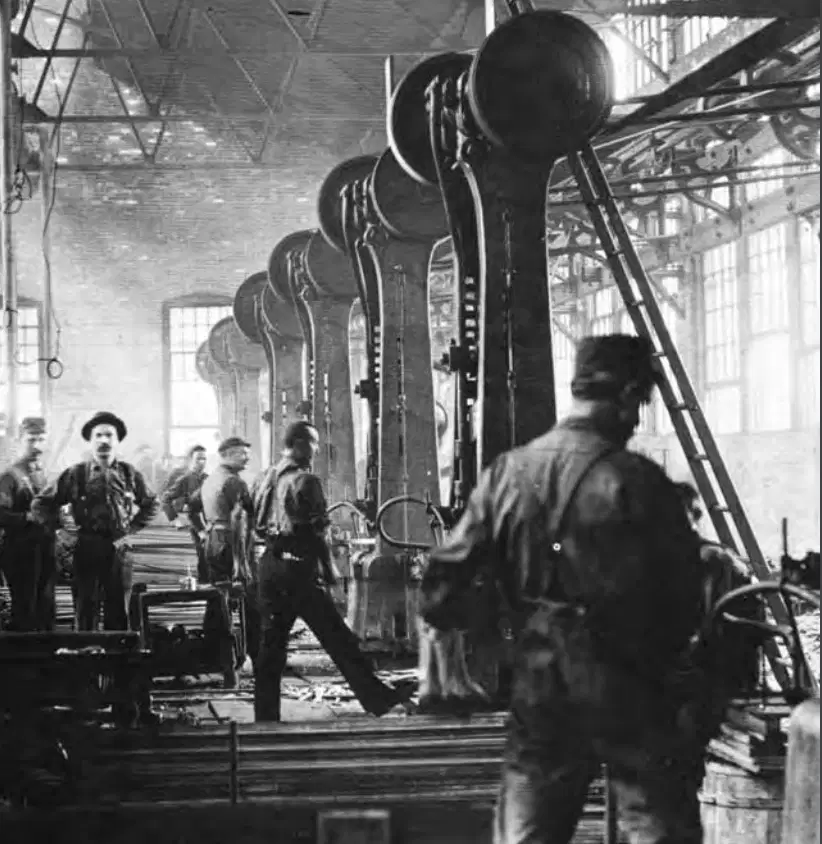
Based on this photograph and your content knowledge, which conclusion can be made about the lives of these industrial workers?
Their work was fun and exciting.
Their work was dangerous and harmed their physical health.
Their work was difficult, but at least they got weekends and holidays off.
They became rich enough to buy a mansion and yacht.
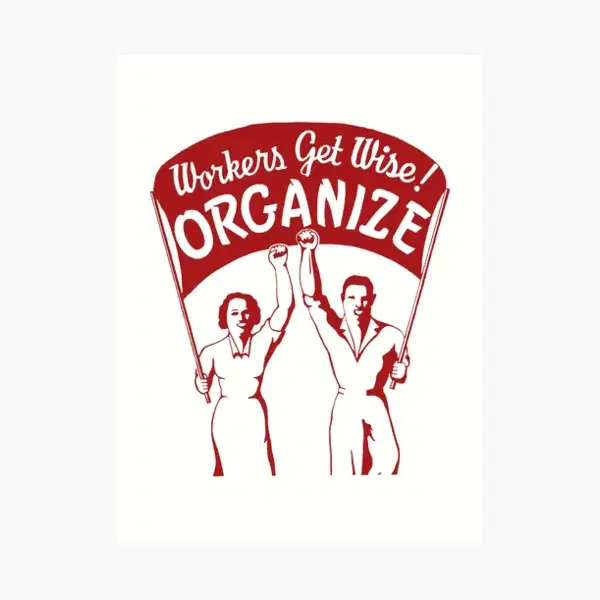
What is it called when an organized group of workers comes together to protect and advance its members' interests.
Philanthropy
Labor Unions
Political Bosses
Credit Unions
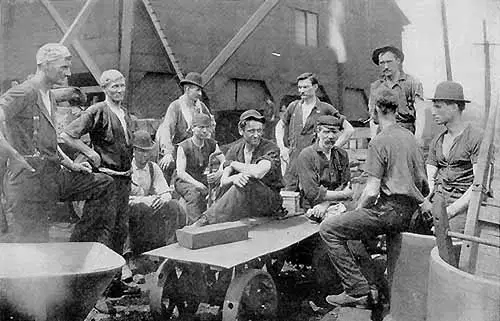
What did union workers do when negotiations with business owners failed?
They set factories on fire.
They went on strike.
They used collective bargaining.
They gave up and found another job.
Gross National Product
the total value of all the factories in a given city or state.
The process of buying all of your competitors so you become a monopoly.
the total value of goods produced and services provided by a country during one year,

What was Ellis Island?
An amusement park
A vacation spot
An immigration center in New York
The first capital of the United States
What was the primary purpose of Angel Island?
To process and examine immigrants
To enforce immigration laws
To restrict Chinese immigration
To target Chinese laborers
Which immigration station primarily processed European immigrants?
Angel Island
Ellis Island
Both Angel Island and Ellis Island
None of the above
Why did immigrants at Angel Island face extensive interrogations and stringent procedures?
Due to the discriminatory policies of the Chinese Exclusion Act
To ensure faster processing of individuals
To welcome immigrants from Asia
To find discrepancies in their responses
Why were the procedures at Ellis Island less rigorous compared to Angel Island?
Due to the largely welcoming attitude towards European immigrants
To ensure faster processing of individuals
To target European laborers
To find discrepancies in their responses
What did a Chinese immigrant worry about during the interrogation at Angel Island?
Being rejected
Being accepted
Being detained
Being questioned
Who wrote The Jungle?
Upton Sinclair
John Adams
Nathaniel Hawthorne
Steven Spielberg
What would happen if someone fell in the vats?
They would lose an arm
They would be injured
They would die and end up as lard
They would leave the slaughterhouse
Why was the time men were able to work in chilling rooms limited to five years?
They would lose their limbs
They would lose a finger
They would develop rheumatism
They would catch a cold
Which extremist organization was known for harassing and using violence against black people during Reconstruction?
The White Resistance
The Ku Klux Klan
The Knights of the White Dragon
The White Brotherhood
How did African Americans respond to the attacks on their rights during Reconstruction?
All of the above.
They protested openly and boldly.
They focused on their families, churches, and communities.
They moved to the North to escape segregation.
What was the main occupation of the majority of African Americans in the South after Reconstruction?
Sharecroppers
Tenant farmers
Business owners
Teachers
What was the impact of African American-owned businesses in the South after Reconstruction?
The majority of African Americans became business owners.
There was a significant increase in the number of black-owned businesses.
Business ownership remained the same as before Reconstruction.
There was a decline in the number of Black-owned businesses.
What was the long-term impact of segregation in the South?
It improved educational opportunities for African Americans.
It led to a new struggle for racial equality.
It resulted in the repeal of the Fourteenth and Fifteenth amendments.
It ended racial discrimination and inequality.
Which of the following best defines the term Reconstruction?
The amendment that outlawed slavery
The time period (1865-1877) when former confederate states were reintegrated into the country.
The amendment that guaranteed citizenship to newly freed enslaved people and gave them equal protection.
Strict states laws passed after the Civil War.
This former clergyman became the first black senator in the history of the United States.
Andrew Johnson
Abraham Lincoln
Hiram Revels
Sharecropping
These strict state laws were passed after the Civil War, restricting black people's right to own property, conduct business, buy and lease land, and move freely through public spaces.
Compromise of 1877
Black Codes
15th Amendment
Reconstruction Acts.
These Northerners saw the reconstruction South as a chance to get rich quickly by seizing political office now barred from the old order.
Carpetbaggers
Scalawags
Confederates
Colfax Massacre
These southern whites allied themselves with the northerners, and took advantage of the political openings to get rich quick.
Carpetbaggers
Scalawags
Confederates
Colfax Massare
Johnson's Reconstruction plan centered around which of the following
Pardoning former Confederates
Harsh punishment for all members of ex-Confederate leadership
Providing rights to freed slaves
Rebuilding the Southern economy through manufacturing
The 15th Amendment reaffirmed and clarified which of the following rights?
Free Speech
Suffrage (Voting Rights)
Citizenship
None of the above


The purpose of the Freedmen's Bureau was to
provide 40 acres and a mule for each slave.
gain the vote for millions of former slaves.
provide work, education, and relief for former slaves.
get radical Republicans in positions of power in the South.

Which of the following is true about sharecropping
Sharecropping favored the freeedmen.
Many freedmen were able to buy new homes through sharecropping
Most sharecroppers remained in debt or in a cycle of poverty
Many state governments offered loan for sharecropping farmers.

Which statement describes the attitude of the "Radical Republicans" following the Civil War?
"Southern states should pass the 'Black Codes.' "
"The Southern states have been conquered and should be punished for their actions."
"Former Confederate leaders should be forgiven for their actions during the Civil War."
"The country should follow President Lincoln's plans to reunite the country as quickly as possible."

Which is the BEST description of the southern economy during Reconstruction?
The southern economy was stabilized because of trade relationships with Great Britain and France.
The southern economy was still based on agriculture and cotton, but now depended on sharecropping rather than slave labor
The southern economy was transformed from being based on agriculture to being completely dependent on industry and manufacturing.
The southern economy was completely restored by 1866 and was actually more productive and profitable than the pre- Civil War economy.
Who became president after Abraham Lincoln died?
Andrew Johnson
Frederick Douglass
Lyndon Johnson
Charles Sumner
Why did Congress want to impeach Andrew Johnson?
He didn’t want to give rights to African Americans
He disagreed with the 10% plan
He vetoed the Wade-Davis Bill
He wouldn’t cooperate with Radical Republicans
What was the outcome of the impeachment proceedings against President Johnson?
Secretary of War Edwin Stanton was fired.
The House voted not to impeach the president.
The House impeached the president, but the Senate failed to remove him.
Johnson was removed from office, and Ulysses S. Grant became president.

What was issued by President Lincoln stating on January 1, 1863, all slaves in the rebelling states would be free?
Emancipation Proclamation
13th Amendment
14th Amendment
15th Amenment
Andrew Johnson became president after
Grant lost the battle at Gettysburg
Lincoln's assassination
Robert E Lee captured Richmond, VA
the South seceded
What group of people ran Congress during Reconstruction and did all they could to punish the South and help the newly freed slaves?
Democratic Republicans
Radical Republicans
Copper Heads
Confederates

Poll taxes and Literacy Tests were used throughout the south in order to keep African Americans
from making a lot of money
from voting
from getting proper health care
from owning property

