
Font size
 Worksheets
Component 1 - Learning Aim C
Total questions: 100
Worksheet time: 50mins
Which warm-up best prepares football players and reduces injury risk?
Skip warm-up and hydrate later
Start with static long-held stretches
Begin with gradual dynamic movements
Jump straight into full-speed sprints
Which planning step shows a coach understands how the body responds during exercise?
Using the same pace throughout
Ending abruptly without a cool-down
Progressing intensity through phases
Randomly picking drills each day

You have 10 minutes and cones set up as shown. Which warm-up sequence is best?
Maximum effort sprints, then stop
Light jog, mobility, sport-specific
Static holds only, no movement
Ball work first, no raise in pulse
What is a pulse raiser in a warm-up?
A breathing drill to improve lung capacity
A cooling strategy to lower body temperature
A gradual elevation of heart rate before activity
A brief static stretch routine for flexibility
What is the main purpose of a pulse raiser before exercise?
To reduce sweating during exercise
To target specific muscles
To save energy for the workout
To prepare heart rate for exercise
What is the ideal duration for a pulse raiser in a warm-up?
At least three to five minutes
More than twenty minutes
Thirty seconds to one minute
Ten to fifteen minutes
Which sequence shows intensity increasing in a warm-up?
Gentle jogging, running, sprinting
Running, sprinting, gentle jogging
Sprinting, running, gentle jogging
Walking, static stretching, sprinting
What happens to muscle temperature and readiness during a pulse raiser?
Temperature stays the same, readiness unchanged
Temperature decreases, performance worsens
Temperature increases, performers become ready
Temperature changes randomly, readiness varies
Which of these are common pulse raiser activities?
Jogging on the spot, high knees, jumping jacks
Deadlifts, bench press, heavy squats
Static hamstring hold, quad stretch, calf stretch
Yoga poses, deep breathing, Pilates
A coach observes players starting with jogging, then running, then sprints. Which training component does this represent?
Speed endurance development phase
Cool-down recovery protocol
Main body strength conditioning
Pulse raiser within the warm-up
Which is the best five-minute basketball warm-up to gradually raise heart rate?
Static stretches for five minutes
Balance drills without intensity
Jogging, high knees, then sprint drills
Immediate full sprint tests
Which of these is NOT usually a pulse raiser?
Jumping jacks
Walking lunges
Heavy one-rep max back squats (using over 10kg)
High knees
Why should you do a pulse raiser before the main session?
It prevents dehydration
It increases calorie burn
It prepares the body and reduces injury risk
It replaces the need for cool-down
Which change during a pulse raiser helps meet higher oxygen demand at muscles?
Stable heart rate
Increased heart rate
Decreased heart rate
Irregular heart rate
Which response increases blood flow to where it is most needed during a warm-up?
Decreased blood flow to cardiac muscle
Increased blood flow to skeletal muscles
Unchanged blood flow across all tissues
Reduced blood flow to digestive organs
A student feels short of breath after a pulse raiser. Which physiological change explains this?
Increased breathing rate to address oxygen shortage
Decreased breathing rate conserving respiratory effort
Irregular breathing rate limiting airflow
Unchanged breathing rate between breaths
Which adjustment helps remove respiratory waste faster during a warm‑up?
Rapid, shallow panting
Shallow breaths with lower tidal volume
Holding breath to stabilise carbon dioxide
Deeper breaths with higher tidal volume
Which response during a pulse raiser helps remove carbon dioxide?
Delayed removal of carbon dioxide
Unchanged carbon dioxide levels
Decreased removal of carbon dioxide
Increased removal of carbon dioxide
Muscle contractions during a pulse raiser produce heat. What is the effect on muscles?
Increased muscle temperature aiding performance
Decreased muscle temperature limiting movement
Unchanged muscle temperature at rest levels
External temperature only affecting muscles
What is the term for muscles and tissues stretching further when warm?
Pliability of muscles improving flexibility
Fragility of muscles increasing injury risk
Density of muscles preventing elongation
Rigidity of muscles resisting extension
Why does a pulse raiser before activity lower injury risk?
It warms muscles and reduces strain risk
It increases strain risk by causing fatigue
It does not affect muscle strain risk
It hides muscle strain without preventing it
Which sequence best shows how the cardio‑respiratory system responds during a warm‑up run?
Irregular breathing rate then unstable oxygen supply
Constant breathing rate then equal oxygen needs
Higher breathing rate then greater oxygen uptake
Lower breathing rate then less oxygen delivery
Which changes best prepare muscles to generate force safely after a warm-up?
Higher muscle temperature and greater pliability
Lower muscle temperature and reduced pliability
Stable muscle temperature and unchanged pliability
Higher muscle temperature and increased rigidity
During a pulse raiser, blood is redirected to working muscles. Which planning decision uses this to improve performance?
Avoid movement to keep blood in core organs
Hold breath to concentrate blood in lungs
Include gradual intensity to increase muscle perfusion
Start intense activity immediately without warm-up
Which pair of changes best increases oxygen delivery to tissues at the start of exercise?
Decreased heart rate and decreased breathing rate
Increased heart rate and increased breathing rate
Unchanged heart rate and unchanged breathing rate
Increased heart rate and decreased breathing rate
You feel light-headed during exercise. Which action helps your body recover?
Slow and deepen breathing to improve gas exchange
Hold your breath to raise carbon dioxide quickly
Stop moving to cool muscles abruptly
Sprint harder to force heart rate higher
What is the main result of deeper breathing during a warm-up?
Faster removal of waste gases from the body
More carbon dioxide in the blood
No change in gas movement
Less oxygen exchange at the alveoli
A coach says warm-ups only raise heart rate and don't affect injury risk. Which option disagrees?
More strain risk from higher pulse
No change in strain risk with higher heart rate
Heart rate rise not linked to flexibility
Less muscle strain risk after warming up
Why should you mobilise joints before exercise?
To instantly strengthen muscles
To burn calories quickly
To lower heart rate
To safely increase range of motion

A warm-up should start with small movements and progress to larger ones. Which plan is best for the shoulder?
Start with gentle arm circles, then wider rotations
Start with fast arm swings, then stop completely
Begin with static holds, then no movement
Begin with heavy weights, then slower circles
Which exercise directly mobilises the wrists?
Wrist circles in both directions
Deep squats
Hip open-and-close the gate
Calf raises
Which exercise best prepares the hips for multidirectional movement?
Elbow flexion and extension
Static knee extensions
Rapid calf raises
Open and close the gate drills
A student does squats and leg extensions. Which joint area is targeted?
Wrists during circles
Shoulders during rotations
Hips during dynamic work
Knees during mobiliser work
Which option is a misconception about ankle mobilisation?
Circles help prepare the joint
Only static holds are needed
Gentle range increases are useful
Calf raises develop ankle control

You have two minutes before a match. Which mini-routine best warms up your main joints?
Press-ups, sit-ups, sprints, lunges, burpees
Heavy barbell lifts, then static holds
Arm rotations, wrist circles, hip gate, squats, ankle circles
Arm stretches only, then rest quietly
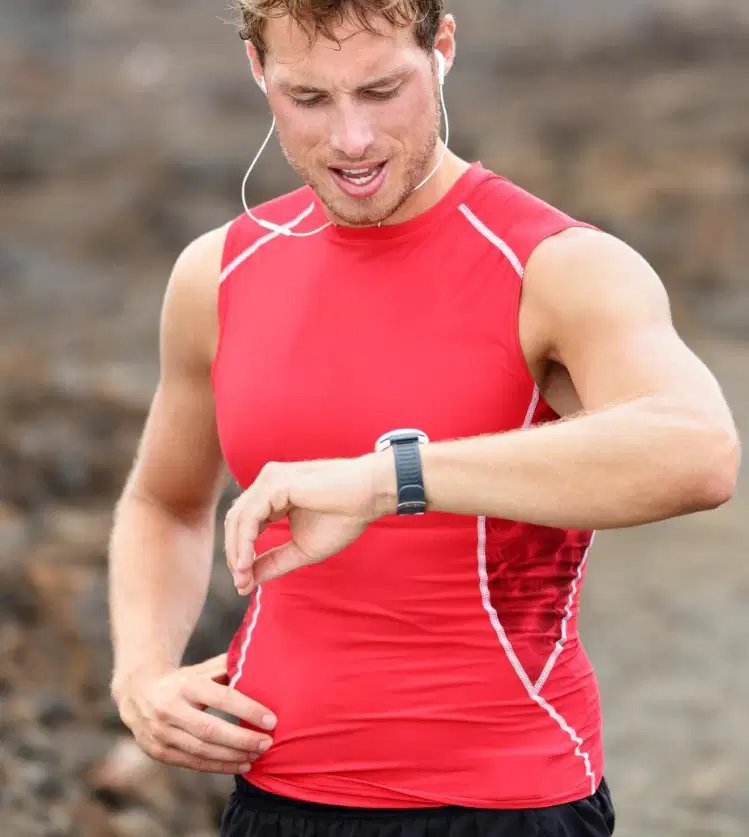
What cardio-respiratory change occurs when exercise intensity is reduced?
Stable heart rate and unchanged breaths
Slight drop in heart rate and breathing
Irregular heartbeats with rapid breathing
Rise in heart rate and faster breaths

Why do joints move more easily after gentle mobilisation drills?
Muscle fatigue loosens joint capsules
Decreased synovial fluid thickens joints
Increased synovial fluid boosts lubrication
Reduced lubrication limits joint motion
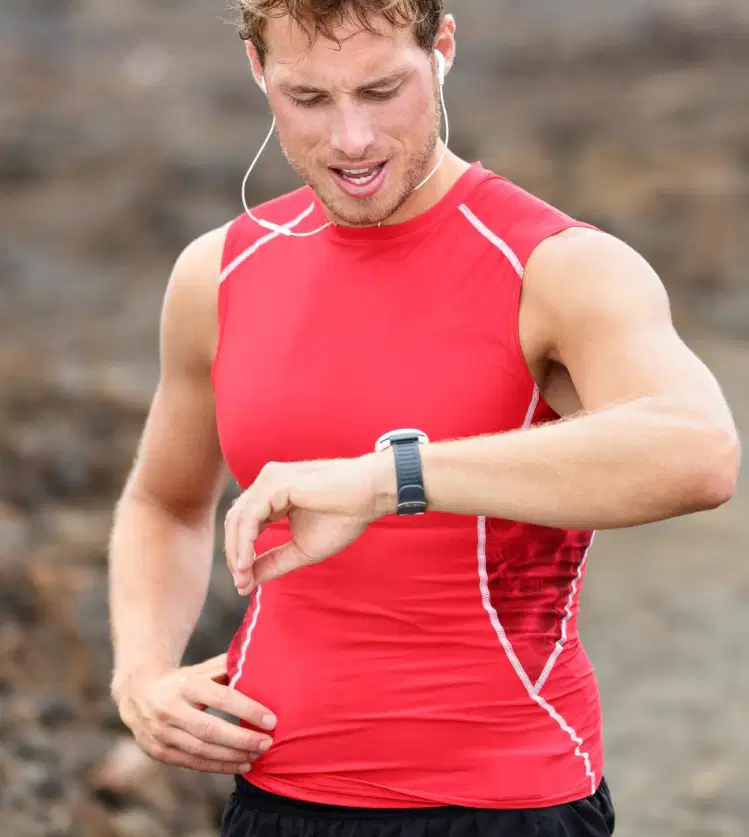
During a cooldown with mobilisers, what happens to breathing rate?
Becomes irregular
Stays constant
Rises significantly
Drops by about half
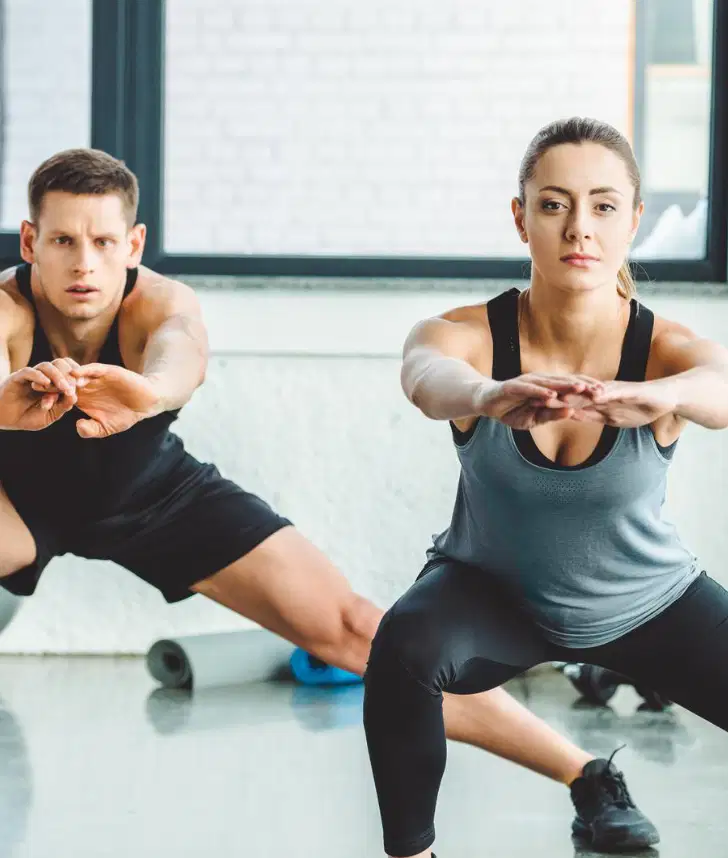
Which sequence links a mobiliser action to its musculoskeletal effects?
Mobiliser → more synovial fluid → more lubrication
Mobiliser → less synovial fluid → less lubrication
Mobiliser → unchanged fluid → same lubrication
Mobiliser → fluid loss → wider movement
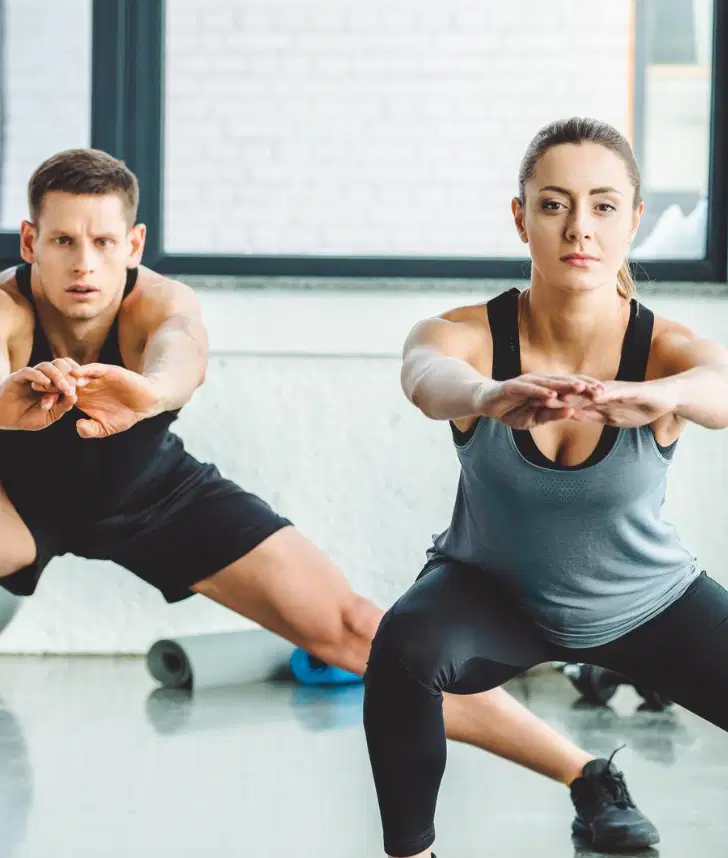
Which option best helps increase range of movement before a flexibility test?
Do intense sprints
Skip warm-up
Use controlled joint mobilisation exercises
Hold long static stretches
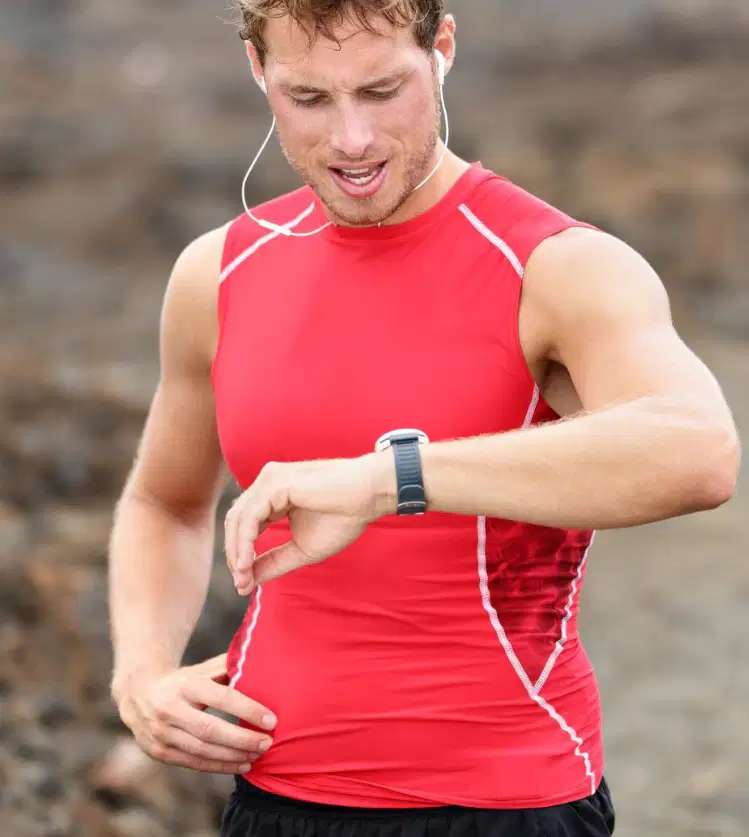
A coach notices a runner’s heart rate drop during technique drills. What is the most likely reason?
Drills restrict blood flow
Drills reduce exercise intensity
Drills raise metabolic demand
Drills cause dehydration

Which change best shows effective cooldown with a mobiliser?
Higher heart rate and deeper breaths
Lower heart rate and slower breaths
Unchanged heart rate and faster breaths
Lower heart rate and faster breaths
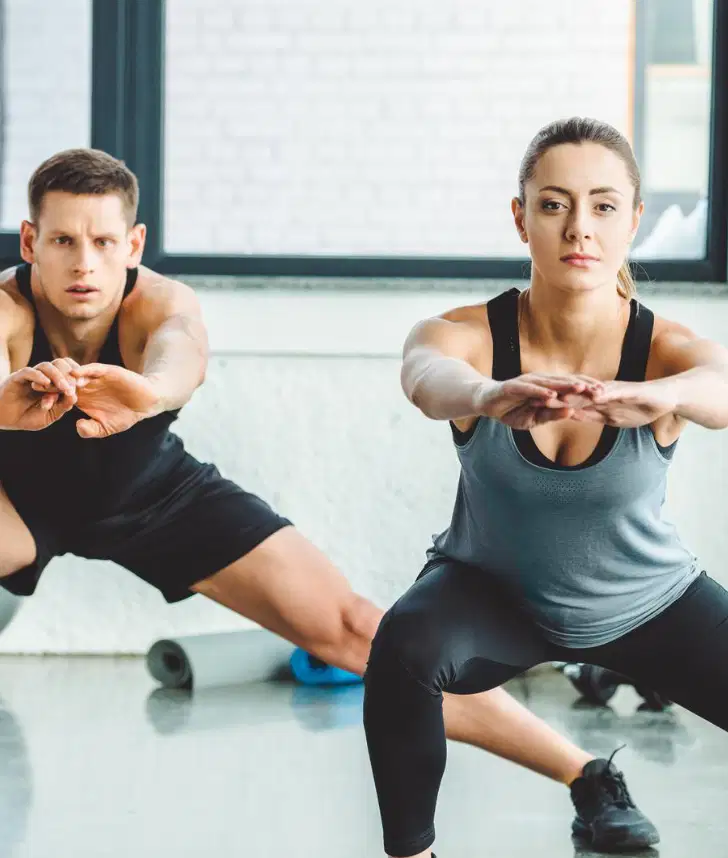
Why do mobilisers help prevent joint stiffness after activity?
They cool the cartilage quickly
They increase joint lubrication
They reduce blood to muscles
They dry the joint surfaces
What is the main purpose of stretching before exercise?
Build muscle size
Boost heart rate
Prepare muscles and reduce injury risk
Increase joint stress
What is it called when you hold a stretch in one position without moving?
Static stretch method
Ballistic stretch technique
Compound stretch routine
Dynamic stretch pattern
What is a dynamic stretch?
Holding a position briefly
Moving whilst stretching
Resting between sets
Contracting the muscle without moving
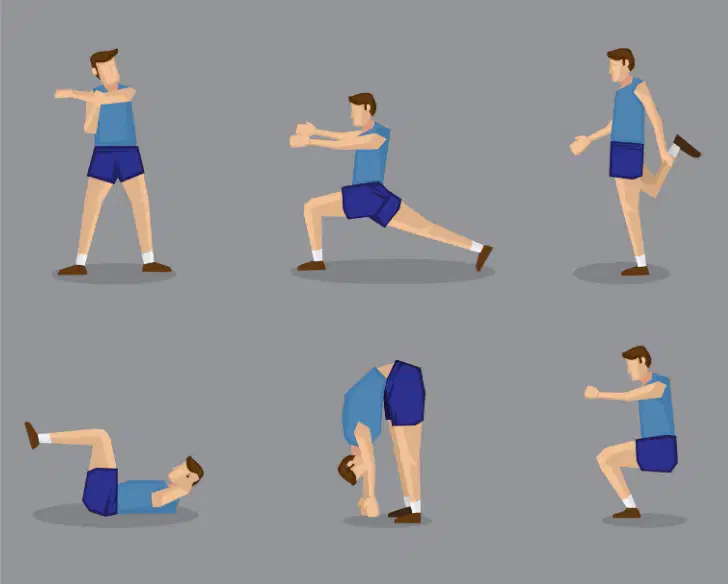
Which combination shows good dynamic stretches for a sprinting warm-up?
Isometric plank and wall sit
Quad hold and triceps hold
Arm circles and trunk twists
Hamstring hold and calf hold
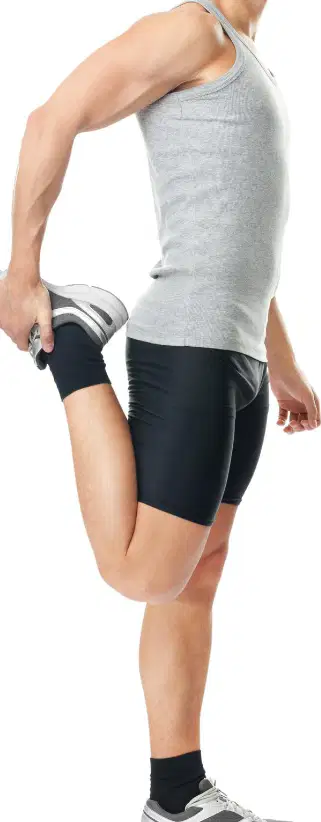
During a standing quad stretch, which muscle group is mainly targeted?
Quadriceps at the front thigh
Hamstrings at the back thigh
Gastrocnemius in the calf
Gluteus maximus in the hip
Which muscle is at the front of the upper arm and bends the elbow?
Erector spinae
Deltoid
Biceps
Triceps
Which muscle covers the shoulder and lifts the arm to the side?
Quadriceps
Gluteus maximus
Deltoid
Obliques
Which muscle group runs along the spine and extends the back?
Abdominals across the belly
Erector spinae along the spine
Hip flexors at the front hip
Triceps on the upper arm
You feel tightness at the side of your abdomen when twisting. Which muscle is being stretched most?
Gastrocnemius in the lower calf
Hamstrings on the back thigh
External obliques on the trunk sides
Quadriceps on the front thigh
Which pair correctly matches function and location?
Gastrocnemius—hip rotation in upper leg
Hamstrings—knee extension on back thigh
Hip flexors—bending hip at front pelvis
Triceps—elbow flexion on upper arm back
Design a simple stretch for the hamstrings. Which choice fits the definition of simple?
Forward fold holding one position
Step-back lunge to knee drive
Walking lunges with arm reach
Squat with trunk rotation
Which example best illustrates a compound stretch?
Wall triceps hold
Seated hamstring hold
Arm swing while stepping forward
Static calf hold only
For athletes with tight hip flexors, which stretch would be most directly targeted?
Kneeling lunge with hip push
Standing calf raise hold
Seated forward hamstring hold
Cross-body triceps arm hold
You are programming a warm-up for jumping activities. Which muscles should be prioritized for stretching to help knee drive and landing control?
Deltoid and obliques
Quadriceps and gastrocnemius
Erector spinae and abdominals
Biceps and triceps
Which stretch choice best prevents lower back strain during lifting practice?
Dynamic trunk rotations for obliques
Static back extension for erector spinae
Cat-camel mobility for spine control
Seated biceps curl isometric hold
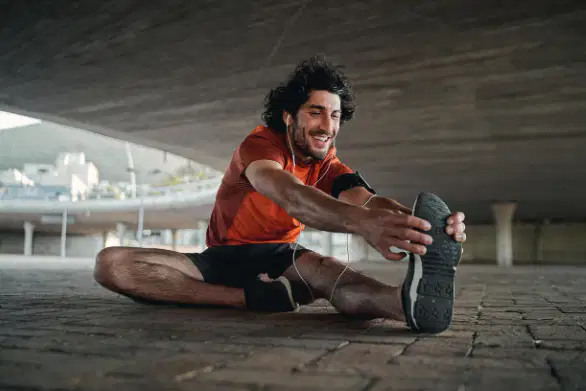
Which scenario best explains why static stretching may lower heart rate and breathing rate during a warm-up?
Holding a stretch quietly for thirty seconds
Jogging while swinging arms and legs
Performing quick lunges in short bursts
Skipping drills with increasing tempo
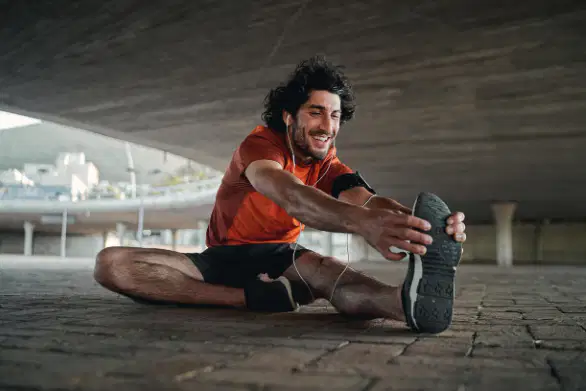
During dynamic stretching, what is the typical cardio-respiratory response compared to static stretching?
No change in heart or breathing rates
Significant drop in heart and breathing rates
Maintained elevated heart and breathing rates
Irregular heart and breathing rates
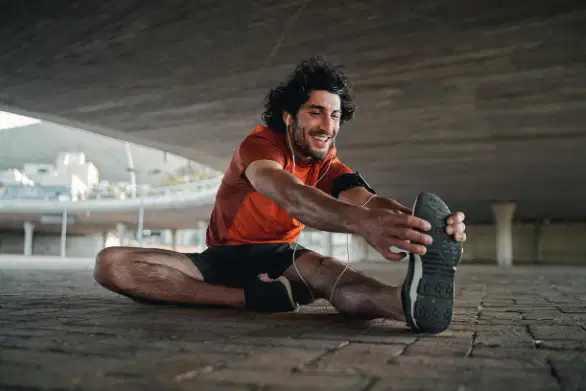
A coach wants to reduce muscle tear risk before a match. Which stretching outcome supports this goal?
Extends the muscle beyond normal state
Shortens the muscle to resting length
Prevents any muscle activation at all
Keeps muscle tension completely absent
You have five minutes for warm-up. Plan the order to optimize cardio-respiratory readiness and injury prevention.
Dynamic stretches then static then sprinting
Static only then immediately high-intensity work
Light activity then dynamic stretches then static
Static stretches then dynamic stretches then rest
Which explanation best justifies choosing dynamic stretches over static right before a fast-paced drill?
They keep heart and breathing rates elevated
They eliminate all risk of muscle tears
They perfectly match resting physiological state
They reduce movement by promoting stillness
Which factor should primarily govern how hard a warm-up is performed?
Weather conditions on the day
Coach’s personal training style
The sport’s rulebook wording
Athlete’s fitness and age/ability
A group of younger students begins class. What is the best way to set warm-up intensity for them?
Skip warm-up to save time
Avoid any cardio movements
Force a fixed high intensity
Let students self-regulate intensity
Older participants are joining a recreational session. Which intensity choice is most appropriate?
Sustain low intensity throughout
No warm-up needed
Alternate extreme sprints
Immediate maximum effort
An elite sprinter is preparing to train. Which warm-up approach best supports performance?
Focus only on static stretching time
Avoid dynamic movements entirely
Use very low intensity to conserve energy
Use higher intensity to activate muscles
Which pair correctly matches impact level to example movement for inclusivity?
High impact—slow walking
Low impact—jump squats
High impact—gentle arm circles
Low impact—marching in place
A mixed-ability class includes a student with a lower limb disability. Which adaptation best balances inclusion and safety?
Mandatory jogging laps for all
No warm-up for that student
High-impact bounding drills
Seated dynamic upper-body warm-up
Which statement best explains why warm-up intensity should be individualized?
Intensity should always be maximal
Identical intensity maximizes fairness
Different fitness levels require different demands
Warm-ups replace skill practice entirely
When planning a warm-up for beginners, which sequencing shows sound reasoning?
Start maximal, then abruptly stop
Start low intensity, build gradually
Begin static holds, avoid movement
Skip mobility, add only sprints
Which outcome is linked to a well-designed high-intensity warm-up for advanced performers?
Slower reaction times
Greater risk only without benefits
Improved speed activation
Reduced muscle activation
You must adapt warm-up impact for a hardwood gym with joint-sensitive participants. What is the best choice?
Run continuous stairs for time
Add repeated jump tests
Perform maximal plyometric sets
Choose low-impact, controlled drills
A 15-minute warm-up is planned for a mixed-age class. Which adjustment best matches the principle that timing depends on age and ability?
Keep the same time for everyone
Reduce time for elite performers
Shorten time for younger children
Extend time for elite performers
Which statement best explains why low impact movements are recommended for older participants?
They avoid excessive jumping and bounding
They focus only on upper-body strength
They require maximum anaerobic effort
They increase joint stress significantly
An athlete without joint injuries is preparing for a sprint session. Which warm-up activity aligns with high impact guidance?
Walking lunges for five minutes
Squat jumps in short intervals
Gentle arm circles and breathing
Static calf stretches only
You are designing a warm-up for a wheelchair basketball session. Which option shows activity-specific movements?
Standing balance exercises
General jogging in place
Static hamstring holds
Propulsion drills and turns
A school PE group includes older adults visiting. What change best demonstrates adapting warm-up timings?
Replace dynamic stretches with static
Remove the mobility phase entirely
Shorten overall duration slightly
Add longer high-intensity intervals
Which choice correctly distinguishes simple from compound stretches?
Simple target one muscle group
Simple use fast bouncing motions
Compound avoid using joints entirely
Compound target only the calves
A netball team wants a sport-specific warm-up. Which sequence best shows specificity?
Jogging, random stretches, meditation
Dynamic ankle taps, chest passes, pivots
Burpees, sit-ups, heavy resistance sets
Static quad holds, toe touches, wall sits
Which adjustment is most appropriate for a participant with a physical disability affecting lower limbs?
Include bounding drills to build power
Increase squat jump volume substantially
Remove the warm-up entirely
Shift to upper-body dynamic mobility
When planning warm-up length for elite athletes, what is the best approach?
Skip and start the main set
Shorten to save energy
Keep very brief and minimal
Extend to prepare thoroughly
Which option best matches relevant muscles for a soccer-specific warm-up?
Work solely the abdominal obliques
Emphasize trapezius exclusively
Target calves, hamstrings, hip flexors
Focus wrists and forearms only
Which activity is most effective for increasing heart rate at the start of a warm-up?
Holding a plank position
Standing still
Gentle stretching
Jogging on the spot
What is the primary benefit of performing joint mobilisation exercises before intense physical activity?
Improved joint lubrication and movement
Reduced oxygen supply
Lowered body temperature
Immediate muscle growth
During a cool-down, which physiological change is expected?
Sudden muscle contraction
Rapid rise in breathing rate
Decrease in heart rate
Increase in muscle temperature
Which activity is most effective for increasing joint lubrication before exercise?
Sitting quietly and relaxing
Performing heavy weightlifting sets
Holding static stretches for several minutes
Gentle joint mobilisation movements
What is the primary benefit of performing dynamic stretches in a warm-up routine?
Improved muscle flexibility and increased blood flow
Reduced heart rate and slower breathing
Decreased joint lubrication
Lower muscle temperature
During a cool-down, which physiological response is expected?
Muscle temperature rises sharply
Joint stiffness increases immediately
Heart rate spikes and breathing becomes rapid
Heart rate and breathing rate gradually decrease
Which benefit is most associated with performing dynamic mobilisation exercises before activity?
Improved joint lubrication and movement range
Reduced muscle temperature and stiffness
Decreased blood flow to working muscles
Increased risk of injury
What is the primary effect of a gradual warm-up on the cardiovascular system?
Sudden drop in heart rate
Immediate muscle fatigue
Steady increase in heart rate and blood flow
No change in breathing rate
Which exercise is best for mobilising the shoulder joint before upper body training?
Gentle arm circles
Static calf stretch
Deep squats
Wrist flexion holds
Which benefit is most associated with performing a proper cool-down after exercise?
Immediate boost in energy levels
Rapid dehydration of muscles
Gradual reduction in heart rate and muscle soreness
Sudden increase in muscle tension
What is the primary reason for including joint mobilisation in a warm-up routine?
To decrease blood flow to muscles
To limit movement and prevent stretching
To reduce oxygen supply to tissues
To increase joint lubrication and flexibility
Which type of stretch is best performed at the end of a workout to aid recovery?
Static stretching
Isometric stretching
Ballistic stretching
Dynamic stretching
Which activity is most effective for increasing blood flow before a workout?
Light jogging followed by dynamic movements
Sitting quietly for five minutes
Standing still and stretching arms
Holding deep static stretches only
What is a key benefit of including joint mobilisation in a warm-up routine?
Decreases blood flow to muscles
Limits oxygen delivery to tissues
Increases range of movement and flexibility
Reduces joint lubrication
Which statement best describes the effect of a proper cool-down after exercise?
Heart rate and breathing rate gradually decrease
Muscle temperature rises sharply
Blood pools in the lower body suddenly
Flexibility is reduced immediately
Which warm-up activity is most effective for increasing joint lubrication?
Doing maximum effort sprints immediately
Holding static stretches for several minutes
Performing gentle dynamic movements like lunges
Sitting quietly before exercise
What is the main benefit of including mobility drills in a warm-up routine?
They improve joint range of motion
They reduce muscle temperature
They limit blood flow to muscles
They increase muscle fatigue

