
 Worksheets
Final Exam Fall 2025
Total questions: 100
Worksheet time: 3hrs 46mins
Title used by Egyptian rulers
pharaoh
Ka
dynasty
obelisk
Object inscribed with hieroglyphics that allowed historians to understand Egyptian writing
papyrus
obelisk
Rosetta Stone
delta
Which direction does the longest river in the World(the Nile) flow?
South
West
East
North
Egypt is surrounded by desert, what is a benefit of this?
Too Hot
The sand was soft
Gave Natural Protection
Winds provided diseases
What invention did Egyptians create using papyrus
fireworks
wheel
paper
silk
What were the 2 major regions of ancient Egypt?
Northern & Southern
Upper & Lower
Memphis & Cairo
Upper & Southern
1. How does the geography affect the cultures of Greece?
Makes them easier to trade with each other
Makes them more connected
Independent and separated
Separate but united under same Ruler
Which city-state do the following apply to: they had fierce warriors, a strong army, women were physically trained and could own property, their government was an oligarchy, and the boys went into the military at the age of 7.
Sparta
Mycennae
Athens
Ancient Greece
What age did Spartan boys begin military training?
7
10
12
15
The most famous of the Ancient Babylonian kings was
Sargon the Great
Cyrus the Great
Alexander the Great
King Hammurabi

What did Hammurabi use to unify the Babylonian empire and preserve order?
A. his strong military
B. his system of walls
C. his code of laws
D. his network of spies

What ancient civilization is depicted on this map?
Indus River/Harappa
Yellow River Valley
Mesopotamia/Sumer
Egypt

Which ancient writing system is illustrated in this picture?
Chinese characters
Phoenician Alphabet
Sumerian Cuneiform
Egyptian hieroglyphics
Mesopotamia means land between two rivers. What were the two rivers?
The Nile and the Amazon
The Snake and the Colorado
The Tigris and the Euphrates
The Pol and the Yangtze

Why were Pharaoh's mummified?
to preserve them for the afterlife
to save them for us to see today
to terrify enemies
to satisfy the gods
What geographic feature contributed to the success of the first civilizations
Mountains
Rivers
Plains
Deserts
The southern part of ancient Egypt.
Upper Egypt
Lower Egypt
The period in Egyptian history from about 3000 BC to 2180 BC. The pyramids were built in this era.
Predynastic Period
Old Kingdom
Middle Knigdom
New Kingdom
Intermediate Periods
Which Pharaoh unified Egypt’s Upper and Lower kingdoms?
Mentos
Menes
Menchaca
Melchizidek
What was the name of the town buried in a volcanic eruption?
Pompeii
Rome
Naples
Florence
Where was Rome located?
Italy
Egypt
France
Spain
Julius Caesar adopted a son named Octavian. What did Octavian change his name to?
Lepidus
Augustus
Cleopatra
Julius
Poor Romans were called what?
Patricians
Plebeians
In 27 B.C., who became the first Roman Emperor?
Julius Caesar
Octavian
Romulus Augustus
Mark Antony

A form of government in which citizens choose their leaders by voting
Commuist
Monarchy
Republic
Dictatorship

Rome was built along the ______________ river.
Thames
Tigris
Nile
Tiber
What was the purpose of the Roman Colosseum?
Royal residence
Gladiator combats and public spectacles
Library
Parliament building
What is a ziggurat?
A type of ancient weapon
A massive, stepped temple built for religious purposes
A form of ancient currency
A type of agricultural tool
What does the name Mesopotamia mean in Greek?
Land of the fertile soil
Between rivers
Land of the ancient kings
Place of the sun
Who were the initial rulers of Sumerian city-states?
Kings
Priests
Warriors
Merchants
What was the main purpose of the Code of Hammurabi?
To expand territory
To protect people's rights
To increase trade
To build monuments
In what ways did the Code of Hammurabi bring "greater stability and justice"?
By increasing military power
By replacing individual vengeance with a publicized system
By expanding trade routes
By building new cities
What was the primary writing system developed by the Sumerians in ancient Mesopotamia?
Hieroglyphics
Latin Script
Cuneiform Writing
Phoenician Alphabet
Hammurabi was..
a famous king in Mesopotamia who made sure that the laws were written down
a famous city in Mesopotamia
a famous queen in Mesopotamia

True or False: The compound/composite bow was the deadly weapon of choice for Persian invaders.
True
False
Which crop, native to the Americas, is credited with fueling the population boom in Europe and is often cited as a key factor in the Industrial Revolution?
Sugar Cane
Wheat
Coffee
Potatoes (or Maize/Corn)
Which of the following was a key raw material that flowed from the Americas to Europe as part of the Triangular Trade system?
Manufactured goods
Enslaved people
Sugar, Tobacco, and Cotton
Smallpox
Which economic system emphasized accumulating gold and silver as a measure of national wealth?
Capitalism
Mercantilism
Socialism
Feudalism
How did the introduction of horses impact the Plains Indians?
It improved their mobility and hunting abilities
It led to the extinction of buffalo
It caused widespread disease
It reduced their ability to trade
Why were Native Americans particularly affected by "Virgin Soil Epidemics"?
They had no previous exposure or immunity to Old World diseases
They lived in large cities
They had advanced medical knowledge
They were immune to most diseases
How did the Columbian Exchange affect the indigenous peoples of the Americas?
It introduced new diseases that caused population decline
It led to the development of advanced technology
It increased their immunity to all diseases
It made them wealthy through trade
What was a "worse" outcome of the Columbian Exchange?
Collapse of indigenous populations and ecological damage
Introduction of new crops
Growth of international trade
Development of new technologies
The need for forced labor to cultivate sugar cane (a labor-intensive cash crop) in the Caribbean and Brazil led directly to:
The invention of the cotton gin
The rise of mercantilism
The African Slave Trade
The establishment of the Silk Road
Which of the following items did NOT travel from the Old World to the New World?
Horses
Cattle
Maize (corn)
Sugarcane
Bullionism is most closely associated with which economic theory?
Capitalism
Socialism
Mercantilism
Communism
Which three factors are described as forming a destructive cycle of exploitation in the New World according to the notes?
Cultivation of sugar, collapse of indigenous population, rise of the African Slave Trade
Industrialization, urbanization, technological advancement
Expansion of democracy, rise of capitalism, spread of education
Growth of cities, decline of agriculture, increase in trade
What does the collapse of the indigenous population in the New World primarily refer to?
A significant decline in the native population due to disease, warfare, and exploitation
The rise of new cities
The increase in agricultural production
The spread of European languages
How did the Triangular Trade contribute to the rise of the African Slave Trade?
The demand for labor in the Americas led to the forced transportation of Africans
It promoted voluntary migration
It reduced the need for labor
It ended slavery
What is the main topic described in the title of the document?
The Industrial Revolution
The Atlantic Slave Trade
The American Civil War
The Age of Exploration
What was a major consequence of poor sanitation aboard slave ships?
Disease spread rapidly due to heat, seasickness, and lack of toilets.
Captives received regular medical care.
The ship was kept clean and disease-free.
Crew members provided fresh food and water daily.
Why was mortality extremely high during the seasoning period for new arrivals?
Adjustment to new diseases and harsh work
Lack of food and water
Poor navigation skills
Extreme weather conditions
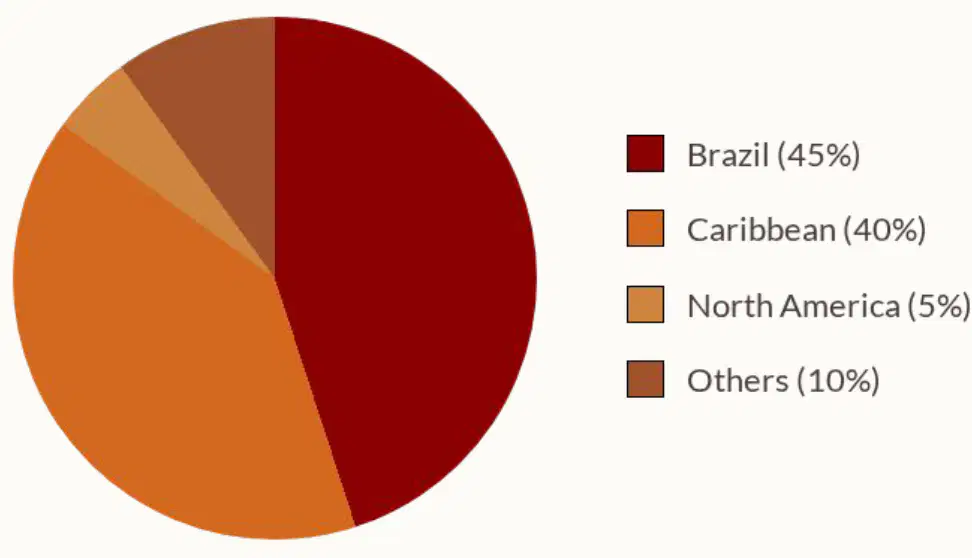
What percentage of people were taken to North America according to the chart?
5%
10%
40%
45%
Which economic system was financed by profits from trade, leading to the building of banks, insurance companies, and factories in Europe?
Socialism
Feudalism
Capitalism
Mercantilism
Which of the following best describes the demographic crisis in Africa as mentioned in the material?
Millions of young, able-bodied men and women were removed, causing stagnation in agricultural and economic development.
Africa experienced rapid population growth due to increased birth rates.
The continent saw a rise in urbanization and industrialization.
There was a significant increase in the elderly population.
What significant action did the United States take in 1808 regarding slavery?
Abolished slavery
Banned the importation of slaves
Banned the Transatlantic Slave Trade
Passed the 13th Amendment
What is a dynasty?
A form of writing
A series of rulers from the same family
A religious temple
A type of irrigation system
What does cultural diffusion mean?
The spread of ideas and customs from one culture to another
The building of large temples
The invention of the wheel
The rise of dynasties
What is a pastoral nomad?
A person who lives in cities
A person who moves with their herds in search of pasture
A person who builds irrigation systems
A person who writes in cuneiform
What is irrigation?
The process of writing laws
The process of supplying water to crops
The process of building temples
The process of trading goods
Which two rivers are located in Mesopotamia?
Nile and Amazon
Tigris and Euphrates
Ganges and Yangtze
Danube and Rhine
How did cuneiform contribute to civilization?
It allowed for the recording of laws and trade
It was used for building temples
It was a type of irrigation
It was a religious ceremony
How does cultural diffusion affect civilizations?
It isolates cultures from each other
It leads to the exchange of ideas and technologies
It stops the development of new ideas
It causes wars between cities
Which of the following is an example of cultural diffusion?
Building a ziggurat
Adopting new farming techniques from neighboring cultures
Writing in cuneiform
Practicing polytheism
Which statement best describes a dynasty?
A group of farmers
A family of rulers
A type of writing
A religious ceremony
What is one way the geography of Mesopotamia benefited agriculture?
Frequent flooding deposited rich soil
High mountains protected crops
Large forests provided wood
Deserts kept pests away
What was the largest city in Sumer?
Uruk
Babylon
Nineveh
Memphis
What other contributions did the Sumerians make?
The wheel, plow, and irrigation systems
The printing press
The steam engine
The compass
What new weapon helped the Persian invaders take control of Mesopotamia?
Spears of Iron
Compound Bows and arrows/Horses
Iron swords
Catapults
What were King Hammurabi's "Big 3 Achievements"?
Building pyramids, inventing writing, conquering Egypt
Creating a code of laws, uniting Mesopotamia, improving irrigation
Discovering America, inventing the wheel, building roads
Writing poetry, building ships, inventing money
In what ways did the Code of Hammurabi bring "greater stability and justice"?
By making laws clear and punishments consistent
By building more cities
By increasing trade
By inventing new weapons
Who was the first emperor of the Tang Dynasty?
Li Yuan
Qin Shi Huang
Wu Zetian
Kublai Khan
The Tang Dynasty established __________ states, which were independent states that acknowledged Chinese supremacy and sent tribute.
tributary
colonial
federal
vassal
What exam did Empress Wu expand during her rule?
Imperial Exam
Civil Service Exam
Military Exam
Trade Exam
What is porcelain? Porcelain is a thin, beautiful type of _______.
pottery
metal
glass
plastic
What was the capital city of the Tang dynasty?
Beijing
Chang'an
Xi'an
Nanjing
Chang'an was a center for which of the following?
Trade only
Religious & philosophical activities
Military operations
Agriculture
List two causes of the decline mentioned in the information provided.
Overuse of resources and pollution
Increase in population and technological advancement
Improved healthcare and education
Expansion of trade and commerce
The Song Dynasty began after China was split into different kingdoms.
True
False
During the Song Dynasty, Southern China became the ________ center.
economic
political
religious
military
One of the inventions shown in the image is ________ money.
paper
plastic
metal
wood
The Song dynasty supported Confucianism.
True
False
Footbinding reinforced which philosophy about women?
Confucian philosophy that women should remain in the home
Daoist philosophy that women should be spiritual leaders
Legalist philosophy that women should govern society
Buddhist philosophy that women should seek enlightenment

The Hippodrome was facility for?
Chariot races
Religious services
The Olympic Games
None of the above
In 1054, a schism, or complete break, separated
the Eastern and Western Churches
The South Slaves
Greeks and Byzantines
Browns with Cleveland

The ----------- ----------- Church continued to dominate Western Europe until the Reformation in the sixteenth century.
Eastern Orthodox Church
Roman Catholic Church
Both
The Pope

Which large structure, rebuilt by Justinian, is an example of Byzantine architecture and is known for its use of a dome, arches, and pillars?
Hagia Sophia
Colosseum
Pantheon
St. Peter's Basilica
Empress Theodora affected the social status of women in the Byzantine Empire by:
granting women more rights and protections.
reducing women's legal rights.
banning women from public life.
increasing taxes on women.
The permanent split of the Christian Church that occurred in 1054 CE is known as:
The Great Schism
The Protestant Reformation
The Council of Trent
The Edict of Milan
The comprehensive law code created under Emperor Justinian was known as:
Code of Hammurabi
Justinian Code
Napoleonic Code
Magna Carta

