
 Worksheets
Savings Vocab REVIEW
Total questions: 22
Worksheet time: 11mins

What does the term "retire" mean?
To stop working when you are older and live on the money you have saved
To start working at a new job
To invest money in stocks
To borrow money from a bank
What is a "recession" in economic terms?
Economy is growing rapidly
Economy is shrinking, economic downturn
Economy is stable and unchanging
Economy is experiencing inflation
What is the primary function of a "bank"?
A place to borrow money for free
A business that will hold and keep your money safe
A store where you can buy financial products
A company that only invests in stocks
What is a "savings account" used for?
A bank account where you can save money with low interest
A bank account for borrowing money
A bank account for investing in stocks
A bank account for paying bills
What is a checking account?
A bank account where you can save money and get money out with checks
Money put into a bank account
Money taken out of a bank account
Moving money in and out of a bank account
What does the term "deposit" mean in banking?
Money taken out of a bank account
Money put into a bank account
A bank account where you can save money
Moving money in and out of a bank account

What is the definition of "withdrawal" in banking?
Money put into a bank account
A bank account where you can save money
Money taken out of a bank account
Moving money in and out of a bank account
What does the term "transaction" refer to in banking?
Money put into a bank account
Money taken out of a bank account
Moving money in and out of a bank account
A bank account where you can save money
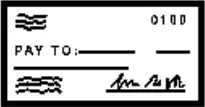
What is a "check"?
A plastic card used to withdraw money from your account immediately.
A special paper you fill out that promises you will pay a person a certain amount.
A bank machine where you can get cash from your account.
An expense the bank may charge for certain accounts and services.
What is the purpose of an ATM machine?
To charge fees for certain accounts and services.
To provide a plastic card for cashless transactions.
To allow you to get cash from your account.
To fill out a promise to pay a certain amount.

What does the term "fees" refer to in banking?
A machine used to withdraw cash from your account.
An expense the bank may charge for certain accounts and services.
A special paper promising payment to a person.
A plastic card used for cashless transactions.
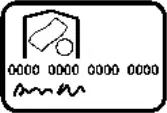
What is a "debit card"?
A machine used to withdraw cash from your account.
A plastic card you can use in place of cash that takes money out of your bank account immediately.
A special paper promising payment to a person.
An expense the bank may charge for certain accounts and services.

What is the term for money moved into your account through a series of computer programs?
Penalty
Electronic transfer
Money market account
CD
Which type of savings account has high interest but cannot be taken out for a period of time?
Money market account
Penalty
CD
Electronic transfer
What is the fee charged if money is taken out of an account before the pre-determined time?
CD
Money market account
Penalty
Electronic transfer
Which type of savings account has variable interest and can be taken out at any time?
CD
Money market account
Penalty
Electronic transfer
What does the term "liquidity" refer to in financial terms?
Money in an account that can be accessed any time without penalty
A way to save money where you are paid interest until the bond matures
A small part of a company you can buy whose value changes as the value of the company changes
When a bond reaches its full term and the initial investment is paid back
What happens when a bond "matures"?
The bond is sold to another investor
The bond reaches its full term and the initial investment is paid back
The bond's value decreases over time
The bond is converted into stock

What is a "bond" in financial terms?
A small part of a company you can buy whose value changes as the value of the company changes
A way to save money where you are paid interest until the bond matures
Money in an account that can be accessed any time without penalty
A loan given to a company without interest
What is a "stock" in financial terms?
A way to save money where you are paid interest until the bond matures
A small part of a company you can buy whose value changes as the value of the company changes
Money in an account that can be accessed any time without penalty
A bond that has reached its full term
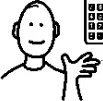
What is the role of a financial advisor?
A person who helps you determine the best way to save depending on your future goals.
A person who manages your bank account directly.
A person who provides loans to individuals.
A person who collects taxes for the government.
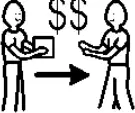
What does "interest" refer to in financial terms?
Money you earn for keeping your money in a bank account.
Money you pay for borrowing from a bank.
A fee charged for opening a bank account.
A penalty for withdrawing money early.

