
Font size
S
M
L
XL
 Worksheets
Fall Semester Final US History
Total questions: 100
Worksheet time: 50mins
Name
Class
Date
1.
The belief or desire of a government or people that a country should maintain a strong military:
a)
Militarism
b)
Imperialism
c)
Nationalism
d)
Communism
2.
What is it called when a country increases their power and wealth?
a)
Militarism
b)
Imperialism
c)
Nationalism
d)
Communism
3.
What does acronym M.A.I.N. represent?
a)
reasons for the start of WW1
b)
reasons the U.S. became involved in WWI
c)
reasons for the start of WW2
d)
reasons Germany should take the blame for WWI
4.
What does the M in MAIN stand for?
a)
meteorite
b)
Militarism
c)
meliorism
d)
Massive military
5.
What does the N stand for in MAIN?
a)
Natalist
b)
new world order
c)
Nationalism
d)
neutrality
6.
What does the I stand for in MAIN?
a)
Imperialism
b)
informant
c)
ideology
d)
information
7.
What does the A in MAIN stand for?
a)
Aircrafts
b)
Adolf Hitler
c)
Allies
d)
Alliances
8.
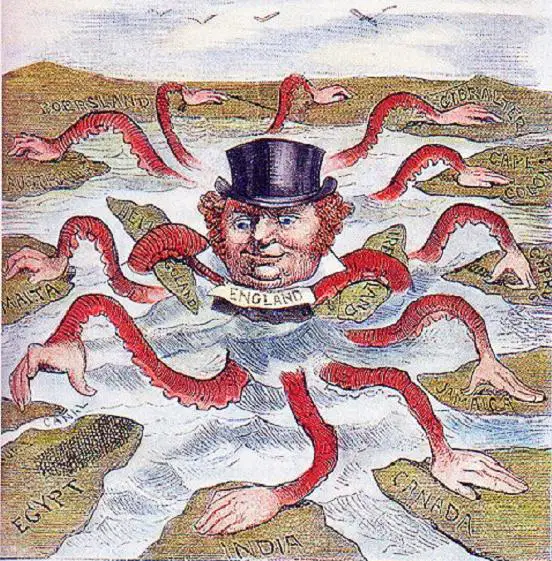
In the above cartoon, England has its “hands” on India, Canada, Jamaica, and other overseas territories. The cartoon is showing England’s ________
a)
Nationalism
b)
Isolationism
c)
Nativism
d)
Imperialism
9.
The events that were the IMMEDIATE spark that is a cause of WWI were ____
a)
Archduke Franz Ferdinand is assassinated
b)
Woodrow Wilson is assassinated
c)
Czar Nicholas is assassinated
d)
None of the above
10.

This poster is an example of __________
a)
Advertising
b)
Propaganda
c)
Neutrality
d)
Nativism
11.
What was the law that required men between 18-30 to sign up and be eligible for the draft?
a)
Selective Service Act
b)
Selective Soldier Act
c)
Secret Service Act
d)
Secret Soldier Act
12.
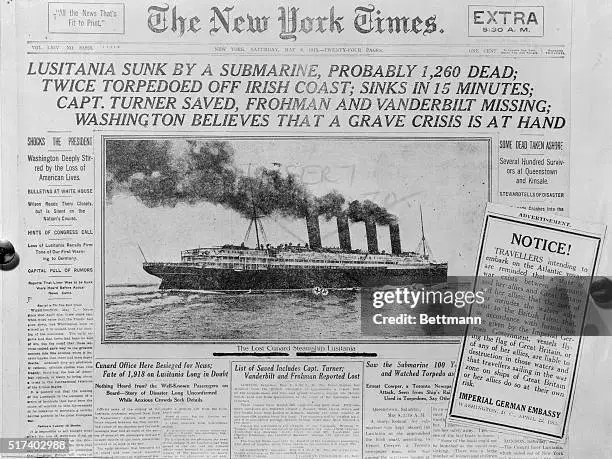
The event reported on the above front page of the Washington Post from May 1915 led to —---
a)
The end of WWI
b)
Calls for America to join the war
c)
The beginning of American Isolationism
d)
Archduke Franz Ferdinand's assassination
13.
Which of the following is true of jobs on the American home front during World War I?
a)
Thousands of Black Americans moved from Jim Crow South to northern cities to work in factories.
b)
Women and Black men were given jobs they had never been permitted to have previously.
c)
The National War Labor Board was created to prevent disputes between factory owners and workers to eliminate labor strikes.
d)
All of the above statements are true
14.
What was part of a nationwide campaign to support the war effort by saving food, going without certain food items, and growing fruits and vegetables at home.
a)
Meatless Monday & Wheatless Wednesday
b)
Taco Tuesday & French Fry Friday
c)
Meatball Monday & Whey Wednesday
d)
Souper Sunday & Meatless Monday
15.
Which of the following would get a person jailed under the Sedition Act?
a)
A woman telling her sister that she was proud of her husband fighting in France, but that she worried about him.
b)
A college professor presenting a map of the Austro-Hungarian Empire to his students for analysis.
c)
A worker at a machine gun factory making a speech to his fellow workers asking them to work harder and longer despite their fatigue.
d)
A waitress telling a customer that she thought American involvement in the war was a mistake.
16.

The above excerpt is from what?
a)
German naval orders during the Battle of the Marne
b)
President Woodrow Wilson's plan for American neutrality.
c)
The Zimmerman Telegram.
d)
The last communication from the U-boat that sank the Lusitania.
17.
The United States joined the League of Nations
a)
True
b)
False
18.
Germany was blamed for the war
a)
True
b)
False
19.
Which of the following best describes the purpose of propaganda posters during World War I?
a)
To discourage military enlistment
b)
To promote support for the war effort
c)
To advertise new consumer products
d)
To encourage citizens to travel abroad
20.
What was the main goal of the Zimmerman Telegram?
a)
To propose an alliance between Germany and Mexico
b)
To declare war on France
c)
To announce the end of submarine warfare
d)
To request peace negotiations with Britain
21.
Which of the following was NOT a cause of World War I as represented by the acronym MAIN?
a)
Militarism
b)
Nationalism
c)
Imperialism
d)
Isolationism
22.
Which event directly led the United States to declare war on Germany in World War I?
a)
The signing of the Treaty of Versailles
b)
The sinking of the Lusitania
c)
The assassination of Archduke Franz Ferdinand
d)
The bombing of Pearl Harbor
23.
Which of the following best describes the concept of alliances as a cause of World War I?
a)
Nations competing for colonies and resources
b)
Countries forming agreements to support each other in case of conflict
c)
Governments increasing their military spending
d)
Citizens expressing pride in their nation
24.
What was the primary purpose of the Selective Service Act during World War I?
a)
To provide financial aid to war veterans
b)
To require men to register for military service
c)
To limit immigration from enemy countries
d)
To encourage women to join the workforce
25.
This forced Germany to accept full blame for WWI.
a)
Fourteen Points
b)
Armistice
c)
Treaty of Versailles
d)
Red Scare
26.
Where was the Treaty of Versailles signed
a)
Germany
b)
France
c)
Russia
d)
America
27.
What treaty ended WW1?
a)
Treaty of Ghent
b)
Treaty of Versailles
c)
Treaty of Berlin
d)
Great Treaty of 1919
28.
When a nation reduces its armed forces and are not allowed to acquire weapons
a)
reparations
b)
self-determination
c)
demilitarization
d)
militarization
29.
Which of the following was a direct result of the Treaty of Versailles?
a)
Germany was required to pay reparations
b)
The United States joined the League of Nations
c)
Russia gained new territories
d)
Austria-Hungary expanded its empire
30.
Which event is considered a long-term cause of World War I?
a)
The assassination of Archduke Franz Ferdinand
b)
The signing of the Treaty of Versailles
c)
The rise of militarism in Europe
d)
The sinking of the Lusitania
31.
After WWI, what did a “return to normalcy" mean?
a)
An end to isolationism
b)
A return to life as it had been before WWI
32.
Presidents Harding and Coolidge believed that the prosperity of all Americans depended upon:
a)
the success of American businesses
b)
importing goods from foreign countries
c)
the passage of the 18th amendment
d)
an end to immigration restrictions
33.
An increase in the number of gas stations, tourist cabins and restaurants was a result of:
a)
the Harlem Renaissance
b)
the 19th amendment
c)
the growing auto industry
d)
The Red Scare
34.
The Quota System was established to:
a)
Prevent anyone from leaving the United States
b)
Increase immigration from Mexico
c)
Set limits on immigration
d)
Help foreigners assimilate more easily
35.
“Attorney General Palmer asserted that there were 60,000 Communists at large – enough, if unchecked, to bring the republic down." This quote expresses the fear which led to:
a)
the alliance system
b)
nativism
c)
the return of the Ku Klux Klan
d)
the Red Scare
36.
The Sacco and Vanzetti Trial and the actions of the KKK demonstrated that:
a)
Americans still blamed the Germans for WWI
b)
A strong fear of immigrants existed in America
c)
Less discrimination against African Americans existed in the North
d)
City people were more agreeable to change than farmers
37.
The Charleston, jazz music, flappers, and flagpole sitting were all:
a)
Outlawed during the 1920s
b)
Causes of the Great Depression
c)
Brought to America by soldiers returning from WWI
d)
Popular fads during the 1920s
38.
A major factor helping to provide greater consumer goods to Americans in the 1920s was:
a)
the institution of the assembly line
b)
the development of the internet
c)
an increase in cars imported from Germany
d)
computers to speed up production
39.
What did installment buying allow consumers to do?
a)
Buy goods at discount prices
b)
Buy foreign made goods without a tariff
c)
buy goods and pay over time
d)
trade in old goods for new ones
40.
**The Harlem Renaissance of the 1920’s could be described as:
a)
a period when African Americans gained political leadership
b)
a major urban renewal project providing new houses for African Americans
c)
a time of increased recognition of African American athletes
d)
a rebirth of African American culture as seen through the experiences of musicians and writers
41.
After WWI, what was the United States' foreign policy?
a)
Isolationism
b)
Communism
c)
Anarchy
d)
imperialism
42.
The Roaring 1920s were characterized by:
a)
Hard times for businesses
b)
The growth of consumer spending
c)
improved government services
d)
unchecked immigration into the US
43.
In addition to African Americans, who else were targeted by the KKK?
a)
White, native-born women
b)
Protestant city dwellers
c)
immigrants, Jews and Catholics
d)
bootleggers
44.
Prohibition resulted in:
a)
widespread poverty
b)
the rise of organized crime
c)
more stable marriages
d)
disappearance of racial prejudice
45.
John Scopes was convicted for teaching about:
a)
Communism
b)
Immigration
c)
Anarchy
d)
Evolution
46.
Automobiles were considered luxury items owned by few until:
a)
the stock market crashed
b)
President Harding broke up labor unions
c)
Henry Ford invented the assembly line
d)
Gold was discovered in California
47.
**What was the "Red Scare"?
a)
Fear of evolution
b)
Fear of the KKK
c)
Fear of bootlegging
d)
Fear of communism
48.
The “boom” years of the 1920s are characterized by:
a)
widespread consumer spending and increased buying of new goods
b)
increased dependency on an agricultural way of life
c)
regulation of businesses by government
d)
limited money to invest and a decrease in factory workers
49.
Charles Lindbergh was famous as a:
a)
Politician
b)
Composer
c)
Inventor
d)
Pilot
50.
The "Great Migration" of 1910-1920 refers to the movement of:
a)
Immigrants from Europe to America
b)
People from rural areas and towns to large cities
c)
African Americans from the United States to Africa
d)
African Americans from the South to northern cities
51.
Jazz music was born in New Orleans and was spread to the North by musicians such as:
a)
Louis Armstrong
b)
Zora Neale Hurston
c)
Paul Robeson
d)
Langston Hughes
52.
What was the nickname for the more outgoing girls of the 1920s?
a)
Flowerchild
b)
Flapper
c)
Sheik
d)
Footloose
53.
F. Scott Fitzgerald described the 1920s as the -
a)
Harlem Renaissance
b)
Jazz Age
c)
Prohibition Age
d)
Roaring Twenties
54.
After Russia fell to Communism during WWI_________swept across America.
a)
Dust Bowl
b)
Support of communism
c)
Poverty
d)
Red Scare
55.
What led to mass consumerism in the 1920s?
a)
Credit
b)
Debit
c)
Interest rates
d)
Stocks
56.
Which inventor led to an increase in travel through the assembly line?
a)
Rudolph Diesel
b)
Henry Ford
c)
Karl Benz
d)
Al Capone
57.
What were the major causes of the economic prosperity in the 1920s?
a)
Government intervention, decreased industrial production, and the decline of consumerism.
b)
Political instability, decreased technological advancements, and the decline of consumerism.
c)
Increased industrial production, decreased technological advancements, and the decline of consumerism.
d)
Technological advancements, increased industrial production, and the growth of consumerism.
58.
*The Indian Citizenship Act of 1924 granted Native Americans:
a)
The right to vote
b)
Full U.S. citizenship
c)
Protection under the 18th Amendment
d)
Access to government-run schools
59.
Labor unrest during the 1920s and 1930s often included:
a)
Support for isolationism
b)
Sit-down strikes and union activism
c)
Peaceful protests with no government intervention
d)
Military intervention against labor groups
60.
The appeal of socialism and communism to labor groups was primarily due to:
a)
Support for racial equality
b)
Promises of workers' rights and better wages
c)
Religious freedom
d)
International trade agreements
61.
The New Deal set up a federal agency to produce electricity in the
a)
Virginia Mountains
b)
California Desert
c)
Atlantic Ocean
d)
Tennessee Valley
62.
The Farm Board tried to persuade farmers to:
a)
Grow more crops to increase surplus
b)
Find industrial jobs
c)
Grow less to reduce surplus
d)
Hold prices down
63.
As a result of the increase in homelessness during the Great Depression, many families lived in makeshift shacks in “villages” which were called
a)
Soup kitchens
b)
Tenement housing
c)
Hoovervilles
d)
Hull Houses
64.
1929 collapse of the stock market occurred on what has been called
a)
Black Monday
b)
Black Tuesday
c)
Black Wednesday
d)
Black Friday
65.
Which of the following was NOT a cause of the Great Depression?
a)
Overproduction
b)
Prolonged slump in agriculture
c)
Under consumption
d)
A rise in farm prices
66.
Which of the following was a reason Hoover opposed direct federal relief for the unemployed?
a)
Loss of self-respect for recipients
b)
Local governments should be responsible for relief, not the federal government
c)
Believed helping the poor was the responsibility of private organizations
d)
All of the Above
67.
The Social Security Act of 1935 was designed to help
a)
Migrant Workers
b)
The victims of the Dust Bowl
c)
Those unable to work (e.g. elderly)
d)
Gain greater profits for industries
68.
Many people urged President Hoover to veto the Hawley-Smoot bill partly because it would
a)
Reduce foreign markets
b)
Lower the tariff
c)
Lower consumer prices
d)
Lessen the President’s popularity
69.
Legislation of the first New Deal primarily focused on:
a)
The farmer
b)
Foreign Trade
c)
Tariffs
d)
Relief and recovery
70.
The Civilian Conservation Corps helped
a)
Minority groups
b)
Businesses
c)
Unemployed artists
d)
Construction workers
71.
The National Labor Relations Board could:
a)
Hold secret elections to find out whether workers wanted to unionize
b)
Allow constructive bargaining
c)
Reinstate workers fired for supporting unions
d)
All of the above
72.
Which of the following was NOT a result of the Dust Bowl?
a)
Okies streamed into California in search of jobs
b)
Farms were destroyed, sending 350,000 farm families out of the Dust Bowl Regions
c)
The Department of Agriculture helped farmers plant millions of trees to cut wind speeds and remain moisture
d)
The Bonus Army marched on Washington demanding early bonus payments
73.
This New Deal program offered the unemployed jobs instead of handouts
a)
Public Works Administration (PWA)
b)
Federal Deposit Insurance Corporation (FDIC)
c)
Civilian Conservation Corps (CCC)
d)
Both PWA and CCC
74.
As a result of the ________, many people from Oklahoma and Texas moved to California in search of jobs.
a)
Bonus Army
b)
Dust Bowl
c)
Government
d)
Stock Market Crash
75.
This program was designed to provide financial aid for education
a)
Public Works Administration (PWA)
b)
Tennessee Valley Action (TVA)
c)
National Youth Administration (NYA)
d)
Works Progress Administration (WPA)
76.
When the Great Depression first began, President Hoover and Congress
a)
Offered tax relief to businesses to hire back workers who had lost their jobs
b)
Increased the supply of money by cutting taxes and increasing spending
c)
Refused to take action because they believed the economy would fix itself
d)
Increased support for workers who had lost their jobs
77.
Why did the Bonus Army march on Washington?
a)
They were hungry
b)
They were homeless
c)
They wanted early payments on their bonuses
d)
They had nothing else to do
78.
The primary reason farmers received low prices for their crops was
a)
Poor farming methods
b)
Overproduction
c)
Government Corruption
d)
Drought
79.
Banks were especially hard hit by the stock market crash because
a)
The government stopped printing currency
b)
They had loaned money to the brokerage houses
c)
They had spent too much on expansion
d)
They had too much gold and silver
80.
A slowdown or refusal to buy goods is
a)
Under-consumption
b)
Inversion
c)
Underpinning
d)
Instinction
81.
One of the great ironies of the Depression was that
a)
There were plenty of jobs to go around
b)
Charities were forced to help the poor
c)
Hunger existed in the midst of plenty
d)
The banks were basically stable
82.
Some programs started during the New Deal are still functioning today, including
a)
Those that focus on relief, recovery, and reform
b)
Bank holidays when the economy seems to be declining
c)
Regulating the stock market and insuring people’s savings
d)
Federal employment of workers in large public works programs
83.
Which was NOT a cause of the Great Depression?
a)
Tariffs on foreign goods
b)
The availability of easy credit
c)
A growing number of homeless people
d)
A crisis in the farm sector
84.
Which candidates ran for president in 1932?
a)
Calvin Coolidge and Herbert Hoover
b)
Calvin Coolidge and Franklin D. Roosevelt
c)
Herbert Hoover and Alfred E. Smith
d)
Herbert Hoover and Franklin D. Roosevelt
85.
Which of the following describes a government system for giving payments or food to the poor?
a)
Rugged Individualism
b)
Direct Relief
c)
Bonus Army
d)
Price Support
86.
President Hoover believed that the way out of the Great Depression was through:
a)
Granting government money to fund public projects
b)
Passing out government relief, such as unemployment
c)
Temporarily shutting trade on the stock market
d)
Volunteer efforts by charities and organizations
87.
During the Dust Bowl the illness that swept across the country was called?:
a)
Dust Coccidiosis
b)
Dust Pneumonia
c)
Dust Fever
d)
Dust Cough
88.
Which of the following from Franklin D. Roosevelt’s New Deal for relief, recovery, and reform was considered a “reform” program?
a)
Security and Exchange Commission
b)
Civilian Conservation Corps
c)
Agricultural Adjustment Act
d)
Works Progress Administration
89.
A risky business venture involving buying or selling in the hope of making a large, quick profit is known as?
a)
Installment buying
b)
Speculation
c)
Buying on margin
d)
Extremism
90.
Buying stock by making a small cash down payment and borrowing the rest from a stockholder is known as?
a)
Installment buying
b)
Speculation
c)
Buying on margin
d)
Extremism
91.
What caused the stock market to crash?
a)
Inflated Stock prices
b)
People buying stock on margin
c)
Overproduction of goods
d)
All of the above
92.
During the 1920s, the U.S. government followed a laissez-faire approach to the economy. What does this mean?
a)
Government had strict regulations on businesses
b)
Government took an active role in controlling wages
c)
Government took a hands-off approach and did not interfere with businesses
d)
Government limited international trade to protect U.S. businesses
93.
Which of the following economic policies contributed to an unstable economy in the 1920s?
a)
High taxes on the wealthy
b)
Government deregulation of banks and businesses
c)
Strict limits on stock market trading
d)
Government bailouts for failing companies
94.
Women faced challenges during the Great Depression because:
a)
They were expected to give up jobs for unemployed men
b)
They gained equal pay through the New Deal
c)
The government passed laws encouraging women to join the workforce
d)
Most were hired for leadership positions in government programs
95.
Why did some conservatives oppose FDR’s New Deal?
a)
They believed it expanded government too much and limited personal freedom
b)
They felt it did not do enough to help the poor
c)
They thought it favored big business over workers
d)
They believed it was unconstitutional for the government to create jobs
96.
Why did some liberals criticize the New Deal?
a)
They wanted the government to take more control of the economy
b)
They believed FDR gave too much power to business owners
c)
They wanted fewer social programs
d)
They opposed Social Security
97.
What was the purpose of FDR’s "court-packing" plan?
a)
To reduce the power of the executive branch.
b)
To increase the number of federal judges in lower courts.
c)
To eliminate the Supreme Court entirely.
d)
To ensure support for New Deal legislation by increasing the number of justices.
98.
Why did many Americans oppose FDR’s attempt to add more justices to the Supreme Court?
a)
They believed it would reduce the power of the President.
b)
They thought it would increase the number of cases heard.
c)
They believed it threatened judicial independence and the system of checks and balances.
d)
They felt it would lead to more political influence in the court.
99.
What method did Father Coughlin use to criticize FDR and the New Deal?
a)
Newspaper articles
b)
Radio broadcasts
c)
Political cartoons
d)
Public speeches
100.
What was Huey Long’s “Share Our Wealth” program?
a)
A program to eliminate all forms of taxation.
b)
A strategy to promote corporate monopolies.
c)
A plan to increase taxes on the wealthy.
d)
A plan to redistribute wealth by taxing the rich and giving money to the poor
Reset

