
 Worksheets
Recognition and Management of Injuries to the Elbow
Total questions: 68
Worksheet time: 34mins
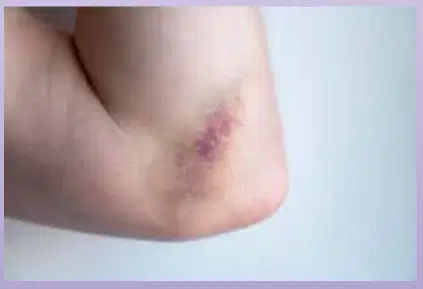
What is a common reason the elbow region is vulnerable to contusions?
Excessive padding
Lack of padding
Strong muscles
Frequent movement
Elbow contusions are often the result of _________
direct blow or repetitive blows
overuse of the wrist
lack of calcium
poor circulation
What is the recommended immediate management for elbow contusions?
Apply heat
Treat with RICE for at least 24 hours
Massage the area
Ignore the injury
If an elbow contusion is severe, what should be done to determine the presence of a fracture?
Refer for X-ray
Apply ice
Take painkillers
Rest for a week
What is a key reason the olecranon is susceptible to injury?
Deep location
Superficial location
Lack of blood supply
High mobility
Fill in the blank: Swelling in olecranon bursitis will appear almost spontaneously and without usual ______ and heat.
pain
redness
itching
numbness
In acute conditions of olecranon bursitis, compression for at least 1 hour is recommended.
True
False
Which management step may be necessary if swelling fails to resolve in olecranon bursitis?
Surgery
Aspiration
Ice application
Rest
What is the most common muscle rupture of the upper extremity?
Rupture of distal biceps
Rupture of triceps
Rupture of deltoid
Rupture of pectoralis major
Active or resistive motion produces pain and point tenderness in muscle, tendon, or lower part of muscle belly are signs and symptoms of strains.
True
False
What is the recommended management for severe cases of muscle strain?
Surgery
RICE and sling
Physical therapy only
Ignore and continue activity
If severe loss of function is encountered in a muscle strain, what should be done according to the management guidelines?
Refer for X-ray
Apply heat
Massage the area
Take painkillers only
What is a common cause of Ulnar Collateral Ligament Injuries?
Injured as the result of a valgus force from repetitive trauma.
Direct blow to the lateral side of the elbow.
Overuse of the wrist flexor muscles.
Fracture of the humerus.
Which of the following can result from Ulnar Collateral Ligament Injuries?
Ulnar nerve inflammation
Wrist flexor tendinitis
Overuse flexor/pronator strain
All of the above
Which symptom is associated with Ulnar Collateral Ligament Injuries?
Pain along medial aspect of elbow
Tenderness over MCL
Associated paresthesia, positive Tinel’s sign
All of the above
Fill in the blank: Tenderness over ______ is a sign of Ulnar Collateral Ligament Injuries.
MCL
LCL
ACL
PCL
Fill in the blank: Associated paresthesia and positive ______ sign may be present in Ulnar Collateral Ligament Injuries.
Tinel’s
Phalen’s
Babinski
Hoffman’s
What is the initial conservative treatment for Ulnar Collateral Ligament (UCL) injuries?
Surgery
RICE and NSAID's
Physical therapy only
Immobilization
After resolution of UCL injury, what should be performed according to the management steps?
Surgery
Strengthening and analysis of throwing motion
Immobilization
Rest only
Surgical intervention for UCL injuries is called the Tommy John procedure.
True
False
Fill in the blank: A throwing athlete can return to activity ______ weeks post Tommy John surgery.
22-26
10-12
30-34
16-18
Which ligament is reconstructed during Tommy John surgery?
Radial collateral ligament
Ulnar collateral ligament
Patellar ligament
Achilles tendon
What is the etiology of Lateral Epicondylitis (Tennis Elbow)?
Repetitive microtrauma to insertion of extensor muscles of lateral epicondyle
Sudden trauma to the elbow
Infection of the elbow joint
Overuse of flexor muscles
Which of the following is a sign or symptom of Lateral Epicondylitis (Tennis Elbow)?
A) Aching pain in region of lateral epicondyle after activity
B) Swelling of the fingers
C) Numbness in the shoulder
D) Redness of the wrist
Pain worsens and weakness in wrist and hand develop over time is a sign of Lateral Epicondylitis (Tennis Elbow).
True
False
Fill in the blank: Elbow has decreased _____; pain with resistive wrist extension is a symptom of Lateral Epicondylitis (Tennis Elbow).
ROM (Range of Motion)
strength
flexibility
temperature
Which of the following is NOT a recommended management strategy for Lateral Epicondylitis (Tennis Elbow)?
RICE, NSAID’s and analgesics
Avoidance of pronation motions
Stretching in pain free ranges
Vigorous exercise of the elbow
Use of neoprene sleeve is recommended in the management of Lateral Epicondylitis (Tennis Elbow).
True
False
Fill in the blank: Management of Lateral Epicondylitis (Tennis Elbow) includes avoidance of _____ motions.
pronation
supination
flexion
extension
What is the etiology of Medial Epicondylitis (Golfer’s or Little League Elbow)?
Repeated forceful flexion of wrist and extreme valgus torque of elbow
Repeated extension of the knee
Sudden twisting of the ankle
Overuse of shoulder muscles
Which of the following is a sign or symptom of Medial Epicondylitis (Golfer’s or Little League Elbow)?
A) Pain produced with forceful flexion or extension
B) Numbness in the fingers
C) Swelling of the ankle
D) Difficulty breathing
Which of the following is NOT a sign or symptom of Medial Epicondylitis (Golfer’s or Little League Elbow)?
Point tenderness and mild swelling
Passive movement of wrist seldom elicits pain, but active movement does
Severe headache
Pain produced with forceful flexion or extension
Analgesic and NSAID's are used in the management of Medial Epicondylitis (Golfer’s or Little League Elbow).
True
False
Severe cases of Medial Epicondylitis (Golfer’s or Little League Elbow) may require splinting and complete rest for how many days?
7-10 days
1-2 days
14-21 days
30-40 days
What is the primary cause of Medial Epicondylitis (Golfer’s or Little League Elbow)?
Repetitive microtraumas from throwing
Type of pitch thrown
Lack of exercise
Poor nutrition
Which of the following is a sign or symptom of Medial Epicondylitis?
Rapid onset
Slow onset with slight flexion contracture
Increased ROM
Strong triceps
Medial Epicondylitis is associated with decreased ROM including forearm _______ and supination.
pronation
extension
abduction
flexion
Which of the following is NOT a recommended management strategy for Medial Epicondylitis?
RICE, NSAID’s and analgesics
Throwing stops until pain resolved and full ROM is regained
Ignoring the pain and continuing to throw
Gentle stretching and triceps strengthening
Throwing should stop until pain is resolved and full ROM is regained in the management of Medial Epicondylitis.
True
False
Throwing under supervision with good technique is recommended to prevent _______ of Medial Epicondylitis.
recurrence
swelling
fracture
infection
Which type of force acts on the lateral side of the elbow during a baseball throw?
Compressive forces
Tensile forces
Shear forces
Rotational forces
Which of the following is a common cause of elbow dislocation?
Fall on outstretched hand with elbow extended
Hyperextension
Hyperflexion
None of the above
Bones in an elbow dislocation can be displaced in which directions?
Backward
Forward
Laterally
All of the above
Elbow dislocation is distinguishable from fracture because lateral and medial epicondyles are normally aligned with the shaft of humerus.
True
False
Fill in the blank: Swelling, severe pain, and _______ are signs and symptoms of elbow dislocation.
disability
itching
rash
numbness
Which nerves and blood vessels can have complications in elbow dislocation?
Median and radial nerves and blood vessels
Ulnar and femoral nerves and blood vessels
Sciatic and popliteal nerves and blood vessels
Axillary and carotid nerves and blood vessels
Often a ________ fracture is involved in elbow dislocation.
radial head
olecranon
capitellum
coronoid process
Gross deformity and loss of function are signs and symptoms of elbow dislocation.
True
False
Which of the following should be done immediately in the management of elbow dislocation?
Application of splint and sling
Ice and compression
Immobilization for 3 weeks
Refer for reduction
Neurological and vascular function must be assessed prior to and following reduction in elbow dislocation management.
True
False
Immobilization, following reduction, in flexion for approximately ______ weeks is recommended in elbow dislocation management.
3
1
5
8
Elbow Fractures - Etiology: Which of the following can cause an elbow fracture?
A. Fall on flexed elbow
B. Direct blow
Both A and B
None of the above
Fracture can occur in which of the following bones?
Humerus
Radius
Ulna
Any one or more of the above
Elbow Fractures - Etiology: Fill in the blank: Fall on outstretched hand often fractures humerus ______ condyles or between condyles.
above
below
beside
behind
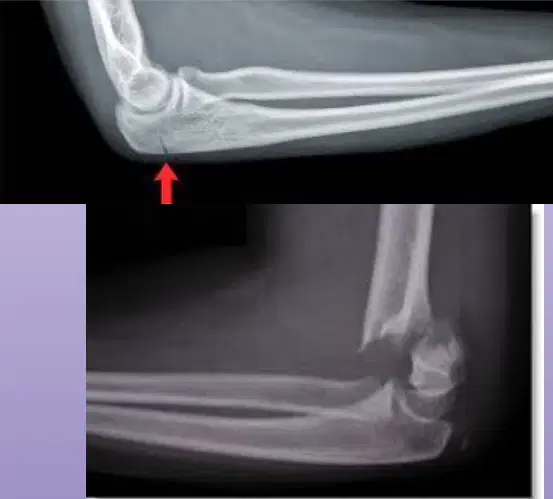
Which of the following is NOT a sign or symptom of elbow fractures?
May not result in visual deformity
Hemorrhaging, swelling, muscle spasm
Significant pain and dysfunction
Increased range of motion
Stable elbow fractures require surgery.
True
False
Fill in the blank: If the forearm is cold & clammy and the athlete reports numbness in the hand, the blood supply is ________ and requires immediate attention.
compromised
normal
increased
unaffected
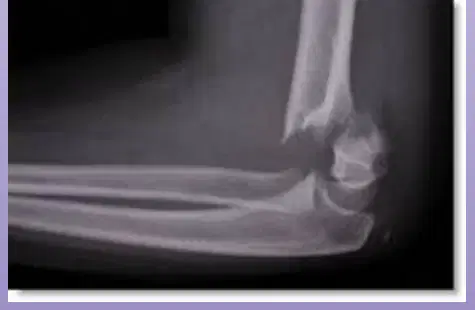
Which of the following should be monitored in the management of elbow fractures?
Decrease in ROM and neurovascular status
Increase in muscle strength
Visual deformity only
None of the above
What is Volkmann’s Contracture associated with?
Humeral fractures causing muscle spasm, swelling, or bone pressure on radial artery
Femoral fractures causing muscle spasm
Wrist sprain
Ankle dislocation
Volkmann’s Contracture can become permanent.
True
False
Fill in the blank: Significant pain and immediate _______ are signs and symptoms of Volkmann’s Contracture.
swelling
numbness
redness
itching
Pain in Volkmann’s Contracture is followed by cessation of _______ and _______ pulses, coldness, and numbness in forearm.
brachial; radial
ulnar; femoral
popliteal; tibial
axillary; carotid
Medical attention must be received immediately for Volkmann’s Contracture.
True
False
Valgus Stress Test: What does the Valgus Stress Test check for?
Sprains of the radial collateral ligament
Sprains of the ulnar (medial) collateral ligament
Fractures of the humerus
Dislocation of the wrist
Valgus Stress Test: The hand on the wrist attempts to move the forearm ________.
laterally
medially
anteriorly
posteriorly
Valgus Stress Test: A positive test is indicated by gapping in the ulnar collateral ligament or severe pain.
True
False
Valgus Stress Test: Severe pain over the medial aspect of the elbow that is relieved by flexing the elbow is also indicative of what pathology?
UCL pathology
Radial head fracture
Lateral epicondylitis
Olecranon bursitis
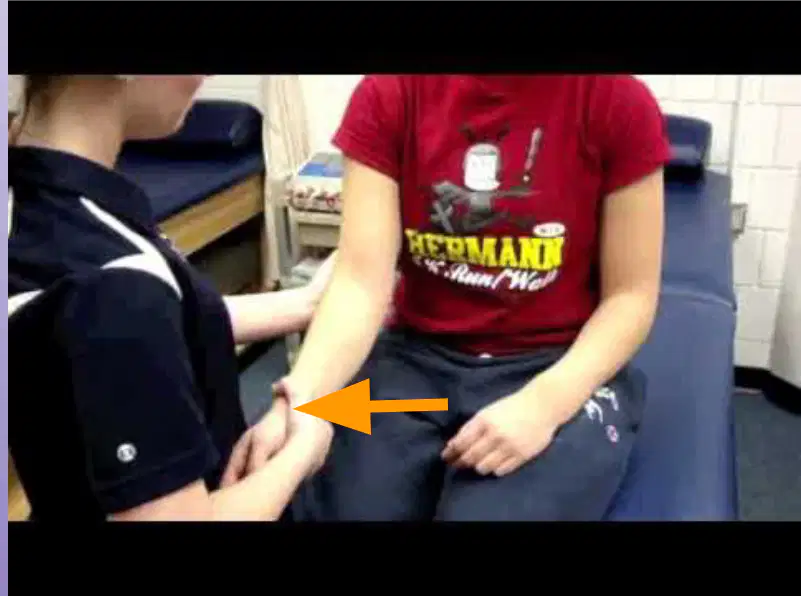
What is the name of the orthopedic test being demonstrated in the image?
Varus Stress Test
Valgus Stress Test
Lachman Test
McMurray Test

