
 Worksheets
Types of Parenthood
Total questions: 96
Worksheet time: 48mins
Types of Parenthood: Who are considered Biological Parents?
One or two people who conceive a child.
People who adopt a child.
Legal guardians appointed by the court.
Individuals who raise a child but are not related by blood.
Types of Parenthood: Who legally become parents of a child and raise the child as their own?
Adoptive Parents
Foster Parents
Step Parents
Biological Siblings
Types of Parenthood: Who marries someone who already has kids?
Step-Parents
Single Parents
Grandparents
Foster Parents
Types of Parenthood: Adoptive parents have the same responsibilities as biological parents.
True
False
What is a Step Family?
Both adults have children from a previous relationship, but they are combined to form a new family
One adult has children from a previous relationship
Doesn't fit into one of the other family types; polyamorous, LGBTQ+ families, unmarried couples, etc.
A Blended Family is when both adults have children from a previous relationship, but they are ______ to form a new family.
combined
separated
ignored
divided
What is the stage called that starts with a couple starting a family?
Beginning Stage
Expansion Stage
Retirement Stage
Maturity Stage
Which stage involves the family planning and/or having their first child?
Childbearing Stage
Launching Stage
Aging Stage
Parenting Stage
In which stage are new children added to the family and parents are involved in children’s activities?
Parenting Stage
Launching Stage
Retirement Stage
Empty Nest Stage
What is the stage called when children are young adults and start leaving home?
Launching Stage
Nurturing Stage
Retirement Stage
Expansion Stage
Which stage is characterized by children having left home and the couple reevaluating their interests and hobbies?
Middle Years Stage
Launching Stage
Parenting Stage
Beginning Stage
What is the stage called when people retire from their job and reflect on their life?
Retirement Stage
Adolescence Stage
Childhood Stage
Working Stage

What is one key feature of Authoritative/Democratic Parenting? ________ respect.
Mutual
Conditional
Minimal
Passive
Which parenting style does the statement 'Because I say so!' belong to?
Authoritarian
Authoritative
Which parenting style does the statement 'Let’s discuss it.' belong to?
Authoritarian
Authoritative
Which parenting style does the statement 'I’m leaving. I’ll come back when you are quiet.' belong to?
Authoritarian
Authoritative

A ________ is a traditional structure with two parents and children.
Nuclear family
Extended family
Single-parent family
Childless family
A ________ consists of one parent raising children.
Single Parent Family
Nuclear Family
Joint Family
Extended Family
An ________ consists of two or more adults who are related, either by blood or marriage, living in the same house (grandparents).
Extended Family
Nuclear Family
Single Parent Family
Childless Family
No matter how you are being raised, no matter what your life at home looks like, YOU get to decide how you will live your life.
True
False
What is a Foster Parent? A Foster Parent is a person who provides home to children in times of ________ (usually temporary).
emergency
celebration
vacation
prosperity
Legal guardianship is usually done when a child's parent dies or is seen as unfit to raise the child.
True
False
A child takes the last name of their legal guardian.
True
False

Permissive parenting is characterized by ________ without order.
freedom
discipline
strictness
control

Authoritarian Parenting is ______ controlled.
Parent
Child
Teacher
Peer

Authoritarian Parenting involves strict rules and ______ punishments.
harsh
lenient
random
delayed
What does 'Nature' refer to in the context of 'Nature vs Nurture'?
Nature refers to the genetic or hereditary influences on human behavior and traits.
Nature refers to the environmental factors that shape human behavior.
Nature refers to the cultural traditions passed down through generations.
Nature refers to the educational experiences a person receives.
What does 'Nurture' refer to in the context of 'Nature vs Nurture'?
Nurture refers to the environmental influences, such as upbringing and experiences, on human behavior and traits.
Nurture refers to genetic inheritance and biological factors only.
Nurture refers to the study of plants and their growth.
Nurture refers to the process of natural selection in evolution.
According to the definition of 'Nature' in psychology, psychological characteristics are influenced by environmental factors after birth.
True
False

What does 'NURTURE' refer to in psychology?
Genetic inheritance
Psychological characteristics and behavioral differences as results of learning
Physical appearance
Biological traits

Attachment is an __________ bond to another person.
emotional
economic
physical
temporary
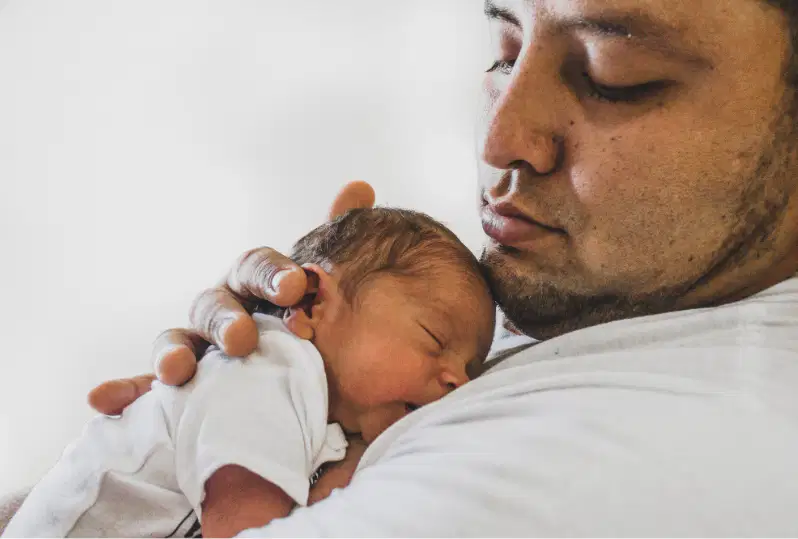
What is the definition of 'bonding'? Bonding is the process of forming _________.
attachment
separation
conflict
division
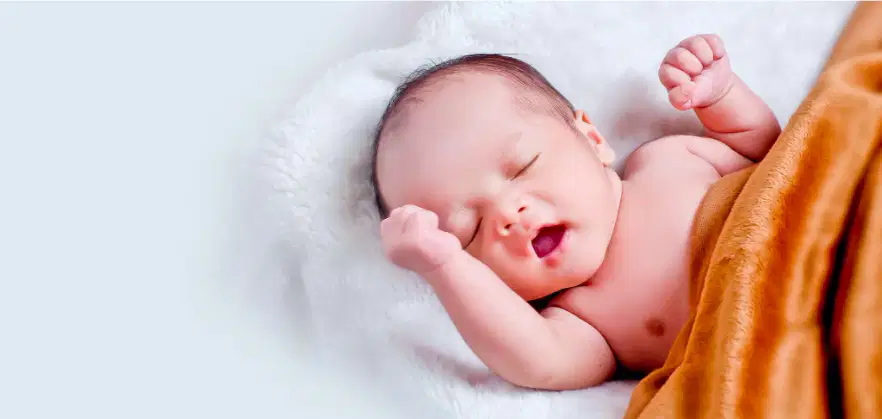
What is 'Failure to Thrive'?
A condition in which infants become malnourished & fail to grow or gain weight for no obvious medical reason
A condition in which infants grow rapidly
A condition in which infants have a fever
A condition in which infants sleep excessively
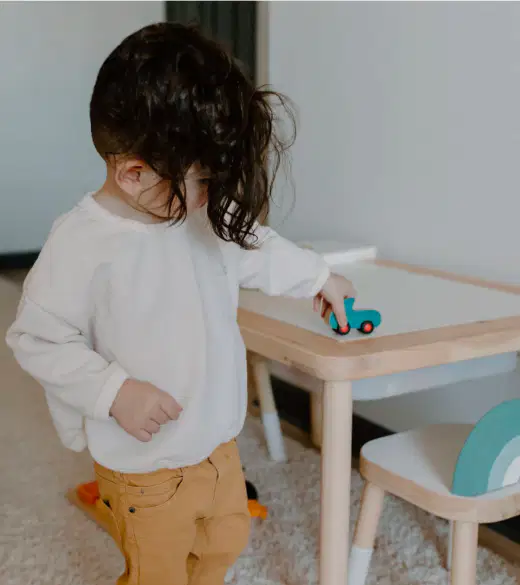
What is solitary play?
The child plays with others
The child plays ALONE
The child watches others play
The child leads a group activity
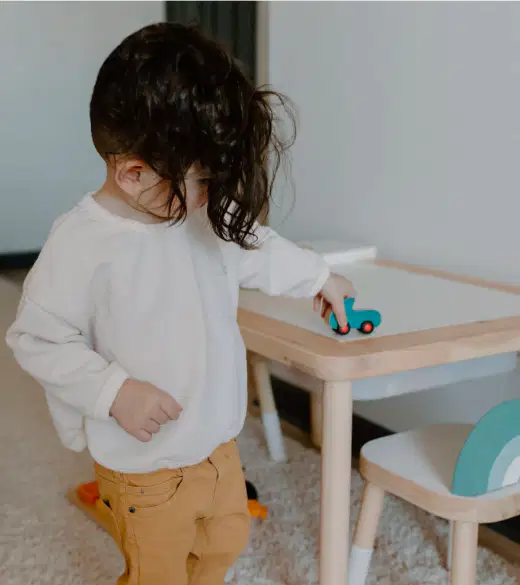
Which of the following is NOT a characteristic of solitary play?
The child plays alone
The child has no interest in what anyone else is doing
The child interacts with other children
The child is focused on their own activity
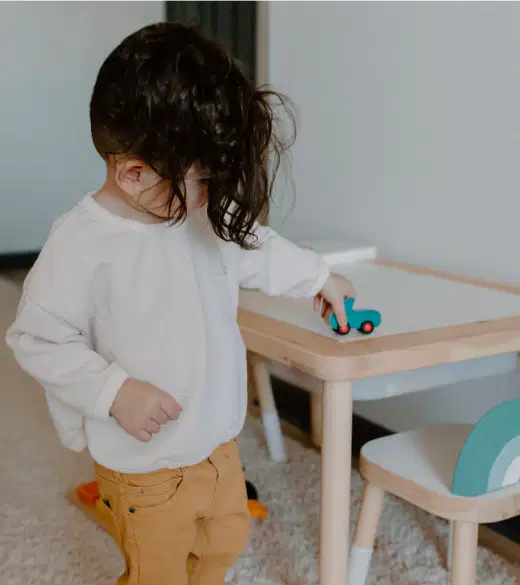
An example of solitary play is _________
reading
playing tag
building a group puzzle
singing in a choir
What does an 'onlooker' do during play?
Participates actively in the game
Watches others play
Organizes the game
Coaches the players
An onlooker may talk to those who are playing, but doesn’t get involved in the play.
True
False
Examples of onlooker behavior include board games, card games, and _________?
watching sports
playing chess
solving puzzles
reading books
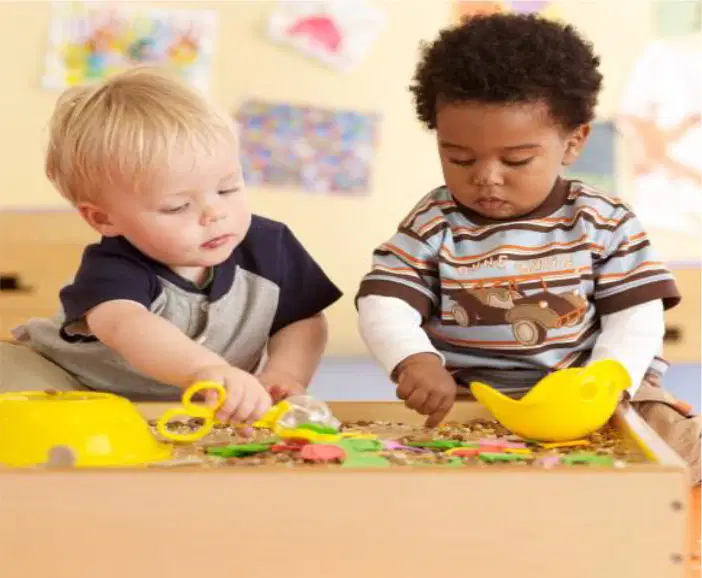
What is 'Parallel Play'?
Playing a similar thing next to another child without interacting
Playing alone
Playing in a group and interacting
Watching TV alone
Parallel play involves playing a similar thing _______ another child without interacting.
next to
under
above
behind
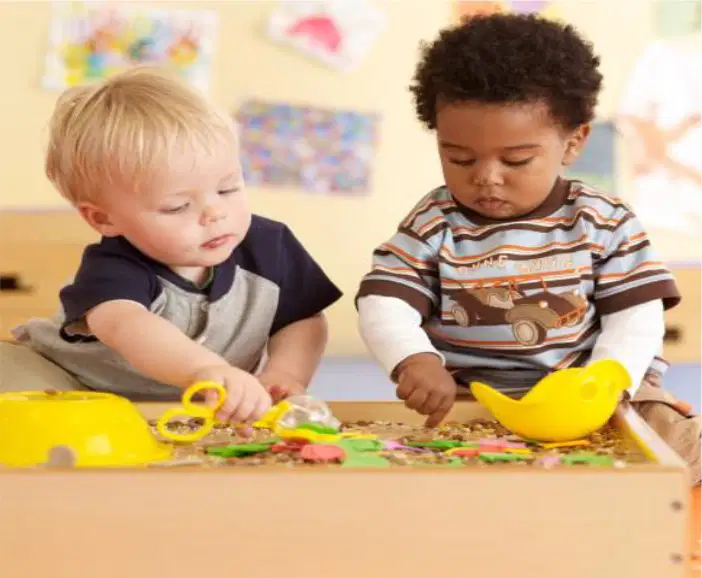
Which of the following is an example of parallel play?
Riding bikes next to each other without talking
Playing a board game together
Reading a book alone
Talking on the phone with a friend
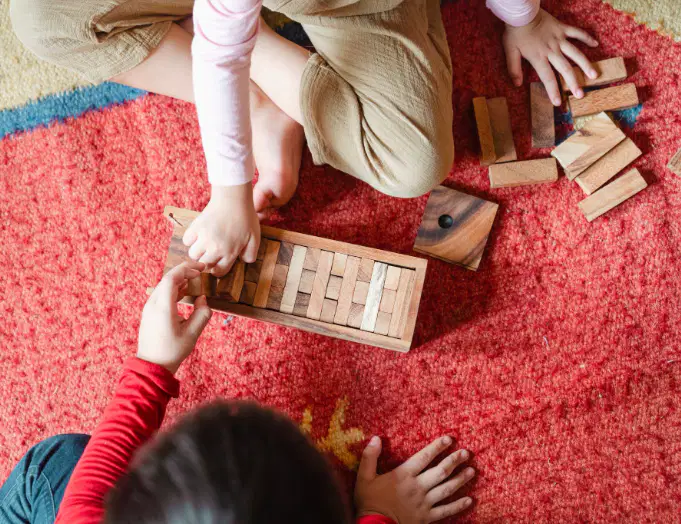
What does 'Cooperative Play' mean?
Playing alone
Play and interact TOGETHER
Watching others play
Ignoring others
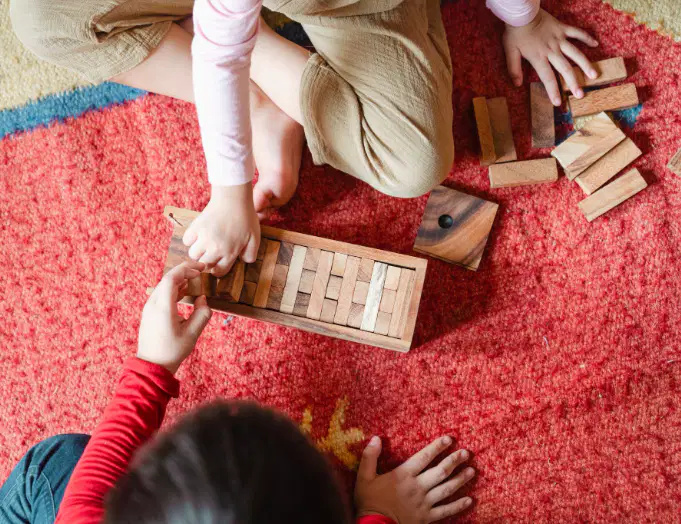
In 'Cooperative Play', the child is part of a group with a ______ purpose.
specific
random
unknown
general
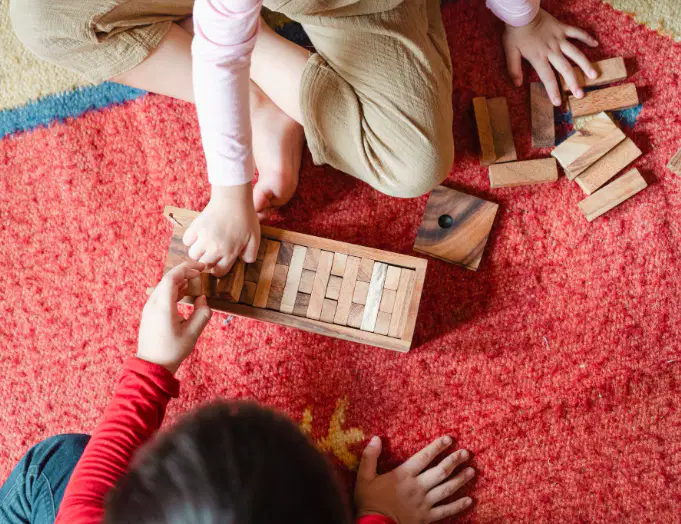
Which of the following is an example of cooperative play?
Building a sand castle together
Reading a book alone
Drawing by oneself
Playing video games alone
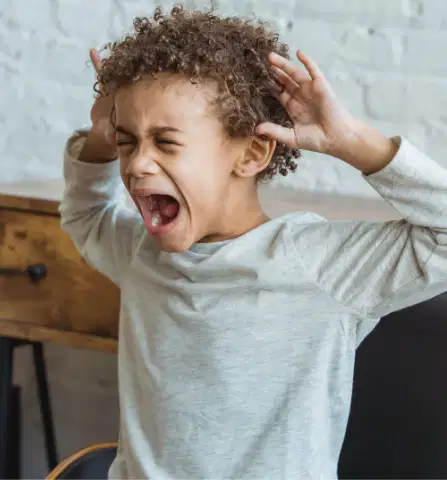
Caregivers should have ______ expectations for a child's behavior according to their age.
appropriate
unrealistic
strict
lenient
What is the child curious to know according to the concept of Natural Curiosity? The child is curious to know what the ______ or response for the actions would be.
result
color
shape
sound
According to the concept of Natural Curiosity, what should a caregiver do?
Ignore the child's curiosity
Provide opportunities to experiment and satisfy curiosity
Discourage questions
Limit the child's activities
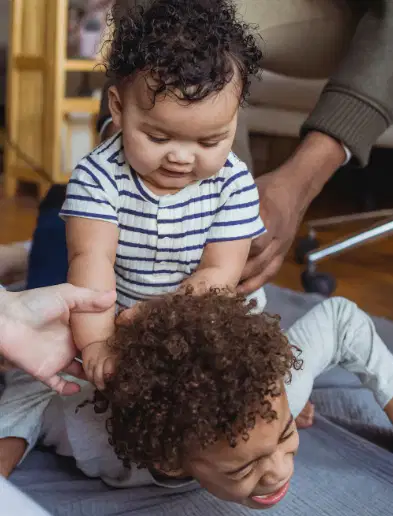
One reason a child may not know any better is because they have __________ instructions.
misunderstood
clear
detailed
written
Caregivers should make sure instructions are clearly __________ and __________.
said and understood
written and ignored
heard and forgotten
spoken and missed
Caregivers should provide encouragement for children's successes and attempts, and refrain from _______ in or fixing every task that they undertake.
jumping
listening
waiting
watching
What is the main reason children act 'For Revenge'?
To get attention
To get even for what they have been made to do or for how they feel
To make friends
To learn new things
What should a caregiver do when a child acts 'For Revenge'?
Ignore the child
Pay attention to good choices, teach alternatives, provide love
Punish the child harshly
Take away all privileges
A caregiver should do the following when a child tries to engage in a power struggle:
Avoid engaging in the power struggle and remain calm.
Raise their voice to assert authority.
Punish the child immediately.
Ignore the child's behavior completely.
What type of attention does the child prefer?
Negative attention
Positive attention
No attention
Both positive and negative attention

What should a caregiver do to encourage positive behaviors?
Give more attention to the behaviors you want repeated.
Ignore all behaviors, both positive and negative.
Punish the child for every mistake.
Give attention only when negative behaviors occur.
Which of the following best describes a logical consequence?
It is unrelated to the behavior and serves as a deterrent
It is directly related to the behavior and helps in learning from mistakes
It is a random punishment to instill fear
It is a reward for good behavior
Which of the following best illustrates the use of logical consequences in a classroom?
A student is given a time-out for not sharing
A student is required to apologize and make amends for hurting a classmate
A student is given extra recess time for good behavior
A student is ignored for misbehaving
Which of the following is an example of a logical consequence for a student who forgets their homework?
The student is given a detention
The student is required to complete the homework during activity time.
The student is praised for their honesty
The student is given extra credit work
Which of the following is an example of a logical consequence for a student who disrupts the class?
The student is given extra homework
The student is required to write an apology letter to the class
The student is praised for their honesty
The student is given a reward for good behavior
Which of the following scenarios best illustrates a natural consequence in a school setting?
A student is given a detention for not completing their homework
A student misses a fun activity because they did not finish their classwork
A student is praised for helping a classmate
A student is given extra credit for participating in class
What behavior should a teacher NOT ignore?
When a child is rude
When a child endangers him or herself
When a child hurts someone else
All of the above
Which type of behavior is ok to ignore?
When a child embarrasses someone
When a child damages property
When a child whines
When a child hurts someone
Younger children's behavior should be redirected by
Diverting and distracting
Making substitutions
Giving them what they want
None of the above
Discipline means
Teaching or learning
Putting a child in time out
Letting the child have their way
None of the above
Which is a direct result of behavior? (such as burn your hand after touching the stove)
Positive Reinforcement
Natural Consequence
Logical Consequence
Goals of Guidance
Rewards positive behaviors with verbal and non- verbal recognition.
Positive Reinforcement
Goals of Guidance
Prosocial Behaviors
Positive Guidance Statements
Which is an example of directions stated positively?
“Do you like bananas?”
“Stop throwing the blocks!”
“Let’s ride the tricycles on the side walk”
“No running in the classroom.”
What is the number one reason why children misbehave?
Bored
Attention
Too much sugar
They want to
Turning the children's attention in another direction:
Prompting
Praising
Guiding
Redirecting
What is an example of a positive statement ?
Don't Run
Let's Walk
Be Quiet
Stop Running
According to the Time Out guidelines, how should the time spent in time out be determined?
Based on the child's age, typically one minute per year of age.
By the severity of the child's behavior.
According to the parent's discretion.
By the time of day the misbehavior occurred.
What is an effective way to reinforce good behavior in children?
By setting unrealistic expectations.
By providing consistent praise and rewards.
By ignoring the behavior.
By punishing them for bad behavior.
What does "Physical" refer to in the context of this learning material?
Emotional and psychological well-being
Intellectual and cognitive development
Having to do with the body & motor skills
Social and interpersonal skills
What are large motor skills primarily associated with?
Development of small muscles like fingers and toes
Abilities that involve using large muscles for activities like running and jumping
Skills related to emotional expression
Cognitive abilities such as memory and problem-solving
What do small motor skills develop?
Hand/foot coordination
Hand/eye coordination
Eye/ear coordination
Ear/hand coordination
Which of the following is an example of a fine motor skill?
Running
Grasping small objects
Jumping
Throwing
What does physical development focus on in children?
Social skills and friendships
Height and weight
Reading and writing abilities
Mathematical skills
What does the intellectual area deal with?
Physical activities and sports
Mind & brain learning, problem solving, school concepts, creative thinking, language & literacy
Cooking and nutrition
Music and arts
What is another term for intellectual development?
Emotional development
Cognitive development
Physical development
Social development
What does social development in children involve learning about?
Learning to play alone
Learning how to get along with others and make friends
Memorizing social rules
Studying textbooks on social behavior
What does the "P" in P.I.E.S. stand for in the context of child development?
Psychological
Physical
Personal
Productive
According to the material, what kind of development does the "I" in P.I.E.S. refer to?
Interpersonal Development
Intuitive Development
Intellectual Development
Intrapersonal Development
Which aspect of P.I.E.S. includes internal working model and body language?
Physical
Intellectual
Emotional
Social
Learning skills using the small muscle of the body; fingers, hands, face, eyes...
Gross Motor
Fine Motor
Balance
Coordination
The type of development with the 'big idea" of BRAIN is _____
Physical
Intellectual
Emotional
Social

Related to memory, thinking skills and language development.
intellectual development
The type of development with the 'big idea" of FEELINGS is _____
Physical
Intellectual
Emotional
Social
The type of development also referred to as mental or cognitive is _______.
physical
intellectual
emotional
social
Fine motor skills use
small muscles like fingers
large muscles like legs
Gross motor skills use
large muscles like arms
small muscles like toes
Tying shoes is a
fine motor skill
gross motor skill
running is a
fine motor skill
gross motor skill
What is the age group of an infant?
1-3 years
3-5 years
0-12 months
5-12 years

