
 Worksheets
VUS SOL Review: A Little Bit of Everything
Total questions: 95
Worksheet time: 48mins
Who was the first female Supreme Court justice?
Ruth Bader Ginsberg
Sally Ride
Rosie the Riveter
Sandra Day O'Connor
In the later 20th and early 21st century, Membership of the US Supreme Court has become more _____________ overtime
Liberal
Unequal
Diverse
Large
What is working from home, making use of internet and telephone?
Outsourcing
Offshoring
Bilingual education
Telecommuting
What is obtaining goods or a services from an outside or foreign supplier, especially in place of an internal source?
Outsourcing
Offshoring
Marketing
Bargaining
What president launched the War on Terror (After 9/11), promoted policies on the economy, health care, education, and social security reform, signed into law broad tax cuts, the Patriot Act, and the No Child Left behind Act, and obtained congressional passage of economic programs intended to preserve American financial system?
George W Bush
Barack Hussein Obama
Ronald Reagan
Which political party did the Tea Party influence in the 1990s and 2000s?
Democrat
Republican
Which law passed during George W Bush's term has been criticized for infringing upon the rights of individuals?
No Child Left Behins
Affordable Care Act
The Patriot Act
Which court case requires states to provide counsel for needy defendants charged with serious offenses (lawyers for those that can’t afford them)?
Gideon v. Wainwright
Riley v. California
Loving v. Virginia
Roe v. Wade
Which court case upholds that protests of public concern are entitled to greater protection under the free speech clause of the First Amendment?
Arizona v. Inter Tribal Council of Arizona
Roe v. Wade
Loving v. Virginia
Snyder v. Phelps

What were the radio broadcast of speeches by the president known as?
Social Security
Fireside Chats
The New Deal
The Square Deal
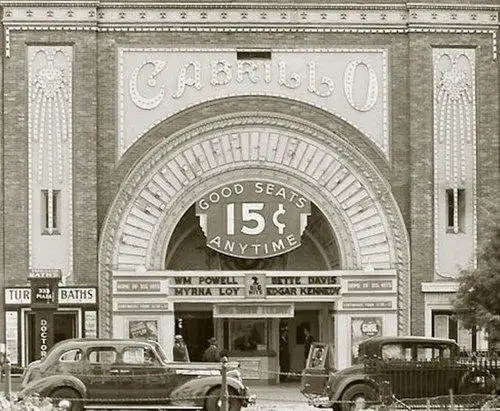
What form of media provided escape from Depression era realities?
Newspapers
Radio
Movies
Magazines

Who was the teacher in Tennessee that challenged religious norms by teaching evolution?
Darwin
Edwards
Harmon
Scopes

What was the term given to women of the time that challenged traditional female roles by becoming less conservative?
Damsels
Flappers
Maidens
Speakeasies
Suffragettes
The Open Door Policy gave all nations equal trading rights where?
Japan
China
India
United States
What war resulted in the USA annexing Puerto Rico and intervening in Cuban affairs?
Spanish American War
Mexican American War
Civil War
WWI
Who said America wanted to "make the world safe for democracy?"
Ronald Reagan
Woodrow Wilson
William Howard Taft
Theodore Roosevelt
Germany was divided into East and West Germany after WWII. Which side was democratic?
North
West
East
South
The Policy of _____________________ led to USA involvement in Vietnam and Korea
Containment
Deterrence
Detente
Massive Retaliation
Fidel Castro led a revolution and took over what country with communism?
Vietnam
Canada
Cuba
Korea
Why was Nixon forced to resign from President of the United States?
Teapot Dome Scandal
He murdered his wife
The Watergate Scandal
Having an affair with a White House intern
What is the term we use to describe making false accusations based on rumor or guilt by association?
McCarthyism
Nixonism
Kennedyism
Reaganism
What increased after the French and Indian War?
Taxes
Trade
Population
Technology
In what ways did the cultures of Europe, Africa, and the Americas in the 1500 and 1600s? What were the consequences of the interactions of European, African, and American societies?
Through trade, colonization, and slavery, leading to cultural exchanges and conflicts
Primarily through peaceful cultural exchanges and mutual respect
There was no significant interaction between these cultures
Only through conflicts and wars without any cultural exchanges
How did the economic activity and political institutions of the three colonial regions reflect the resources or the European origins of their settlers?
By adapting their economic policies to the available resources and replicating European governance structures
By ignoring the local resources and strictly following their European traditions
By focusing solely on economic growth without regard to political institutions
By establishing political institutions that were unrelated to economic activities or European origins
How did the institution of slavery influence European and African life in the colonies? Why was slavery introduced into the colonies?
To boost the economy through unpaid labor
To increase cultural exchanges between Europe and Africa
To address labor shortages in agriculture and mining
None of the above
What were the major arguments for and against the Constitution of 1787 in leading Federalist and Anti-Federalist writings and in the ratification debates?
Federalists argued for a strong central government, while Anti-Federalists wanted more power for the states.
Federalists supported the abolition of slavery, while Anti-Federalists opposed it.
Federalists were pro-British, while Anti-Federalists supported stronger ties with France.
Federalists favored free trade policies, while Anti-Federalists advocated for protectionist trade policies.
What issues divided America in the first half of the nineteenth century?
Economic policies and slavery
Technological advancements
Foreign policies and alliances
None of the above
Which of the following was a the turning point of the Civil War?
The Battle of Gettysburg
The signing of the Declaration of Independence
The invention of the cotton gin
The establishment of the United Nations
How did the ideas expressed in the Emancipation Proclamation change the nature of the Civil War?
It declared all slaves in Confederate-held territory to be forever free, shifting the war aims of the North.
It had no significant impact on the nature of the Civil War.
It led to immediate peace negotiations between the North and the South.
It changed the primary combat strategy used by the Northern armies.
How did the Civil War affect African Americans and the common soldier?
It led to significant social and economic changes for African Americans and varied impacts on soldiers.
It had no significant impact on either group.
It primarily affected the political landscape without changing social structures.
It resulted in technological advancements that benefited only the soldiers.
Why did the United States become involved in helping the Allies during World War I?
*US will eventually join in 1917
Due to economic interests and the sinking of American ships by German submarines
To support the spread of democracy in Europe
Because of a direct military threat to the United States
To fulfill treaty obligations with European allies
What were consequences of the stock market crash of 1929?
Initiated the Great Depression
Caused a boom in the economy
Had no significant impact
Led to technological advancements
The United States occupation of Japan following World War II ended when Japan
was invaded by China.
imposed a communist regime.
adopted a democratic form of government
was annexed by Korea.
Which country was divided into four zones following World War II?
France
Germany
Russia
China
In which East Asian country did the United States support anti-communist forces in a conflict during the 1950s aimed at preventing the spread of communism?
Japan
Korea
Philippines
Taiwan
The lack of United States military success in the conflict in Southeast Asia during the 1960s led to which president’s decision not to run for re-election?
Dwight Eisenhower
Lyndon Johnson
Richard Nixon
Jimmy Carter
The United States invasion of Cambodia in 1970 resulted in antiwar protests on some college campuses. National Guard troops shot and killed four students at which university when the guard was called in to restore order?
Stanford University
University of California
Kent State University
Brown University
During the Cold War, Virginia’s economy
declined as federal dollars were sent to other regions.
benefited as private companies were awarded large defense contracts
remained stable as the rest of the nation’s economy declined
improved as many corporations moved their headquarters to Virginia
Saratoga

What piece of land was gained by America from France in 1803?
Review: Marbury V. Madison gave the Supreme Court this power?
Judicial Review
Implied Power
Veto Powers
None of these
How did Andrew Jackson repay his supporters?
By appointing them to government positions, even if they were unqualified (Spoils System).
By sending them on an all-inclusive trip to a resort in Mexico.
By removing them from their families and having them live in home with 10 other strangers (Real World).
by sending them to exile outside of the United States

Which of the following is a synonym for the phrase on the image?
*the 19th Amendment finally passed in 1920
suffrage
abolition
temperance
utopia
a rebellion that destroyed the myth that slaves were happy with their lives or too docile to undertake a violent rebellion and led to new oppressive legislation prohibiting the education, movement, and assembly of slaves.
Bacon's Rebellion
Stono Rebellion
Nat Turner's Rebellion
Pueblo Revolt
The first women's rights convention in the United States held in July 1848
Kentucky Resolutions
Virginia Resolutions
Niagara Falls Convention
Seneca Falls Convention
The Kansas-Nebraska Act
Ended slavery in the South
Banned slavery in new territories
Created the Republican Party
Introduced popular sovereignty to unorganized territories
The Supreme Court ruled that slaves were not citizens and therefore could not sue in the court system
Plessy v. Ferguson
McCulloch v. Maryland
Gibbons v. Ogden
Dred Scott Decision
The Supreme Court overturned the ruling above, saying that segregated schools are unequal and must desegregate
Dred Scott Decision
Brown v. Board of Education
McCulloch v. Maryland
Plessy v. Ferguson
Which principle is shared by the Articles of Confederation and the Constitution of the United States?
Limited government
Judicial Review
Checks and balances
Separation of power
?
• British interference with American shipping
• British interference with America's westward expansion
Which event best completes the graphic?
Causes of the War of 1812
Causes of the creation of the Democratic-Republican Party
Causes of the Revolutionary War
Causes of the failures of the Articles of Confederation
Which region of colonies made money by trading, small scale farming of crops like wheat, and shipbuilding?
New England
Middle
Southern
Western
After 1871, where did most immigrants come from as they arrived in America?
Asia, Africa and South America
Southern Europe, Eastern Europe and Asia
Africa, Asia and Northern Europe
Western Europe, Eastern Europe and Asia
One outcome of the Scopes Monkey Trial was that...
It denied the teaching of the Theory of Evolution in public schools.
It required the teaching of the Creation story from the Bible.
Resulted in the passing of the 18th Amendment.
It challenged traditional religious beliefs.

What was the Allied strategy in the Pacific known as?
island-hopping
island-jumping
appeasement
rationing
The cold war involved the two superpowers of....?
USA and Italy
USA and USSR
USA and Russia
USSR and Germany

What law gave people up to 160 acres of land at a low cost if they agreed to live on it for 5 years?
The Free Land Act
The Home on the Range Act
The Homestead Act
The Government Land Act
Televised news -> ??? -> better informed rural population
Which innovation best completes this diagram?
radio
newspaper
satellite dish
compact disc
This president led the calls for the North American Free Trade Agreement (NAFTA)?
Reagan
Bush 41
Clinton
Obama
This man was declared to be the mastermind behind the 9/11 attacks?
Osama Bin Laden
Sadaam Hussein
Vladimir Putin
Adolf Hitler
The 9/11 attacks were four coordinated attacks on what two US sites?
Capitol Building and Pentagon
Pentagon and World Trade Center
World Trade Center and White House
Pentagon and USS Cole
What was Virginia's response to the Brown v. Board ruling which closed many schools instead of integrating
Acceptance
Massive Resistance
FEMA
Civil War

How did the Hawley-Smoot Tariff Act lead to the Great Depression?
it caused Americans to panic and withdraw their money from the bank
it led other countries to impose tariffs which slowed international trade
it caused a shortage of money
it led people to buy stocks on margin

The first permanent colony was called _______
Lost Colony of Roanoke
Church of England
Jamestown
Bluffton

The Declaration of Independence states that...
the king has the power to make all decisions
a council has the right to make all decisions
the people have ultimate power to make all decisions
the military has the power to overrule any decisions

Which of these was an example of settlers self-governing?
the Magna Carta
the Mayflower Compact
Two Treatises on Government
Common Sense
Lead NAACP attorney on a school integration case in VA in the 1950s
John Marshall
Thurgood Marshall
Oliver Hill
Believed that the road to equality was a long one and that African Americans should first achieve a good vocational education--why I founded Tuskegee Institute
W.E.B. DuBois
Booker T. Washington
Thurgood Marshall
Oliver Hill
"Father of the Constitution", wrote Bill of Rights, proposed VA Plan, president during War of 1812
George Washington
Thomas Jefferson
George Mason
James Madison
A major policy of President Ronald Reagan’s administration was to-
end desegregation of public facilities
reduce defense spending
lower federal income tax rates
promote regulation of small businesses
Which President said this announcement?: "President announces normalization of relations with Vietnam"
Gerald Ford
James Carter
Ronald Reagan
William "Bill" Clinton
The House of Burgesses is an example of a
town meeting
county seat
city hall
representative assembly

This minority group was given a special role during WWII to create an "unbreakable code" so that enemy forces would not know American strategies or plans.
Native American "Codetalkers"
Black American "Hellfighters"
Women "WASPS"
Japanese American "Nishi"
The initial French exploration of North America resulted in —
Economic Colonies in Florida
Competition with Spanish Settlers
Plantations using slave labor
cooperation with native groups
Which document directly influenced the first ten amendments to the Constitution of the United States?
Mayflower Compact
Virginia Declaration of Rights
Articles of Confederation
Emancipation Proclamation
Which issue led to the development of the first political parties in the United States?
Abolition of slavery
Women’s suffrage
Expansion of western territories
National government’s powers
Uprisings led by Nat Turner and Gabriel Prosser contributed to the Southern states’ decisions to —
pass harsh fugitive slave laws
accept the Missouri Compromise
enact Jim Crow legislation
support the passing of higher tariffs
Even though I wanted to establish a "Great Society", I am more known for escalating the war in Vietnam.
Richard Nixon
John Kennedy
Lyndon B. Johnson
Ronald Reagan
We were caught and convicted of selling atomic secrets to the Soviets. We increased the "Red Scare".
Mikhail Gorbachev
Joseph McCarthy
The Rosenbergs
Oliver Hill
I was the non-violent civil rights leader of the 50’s and 60’s, organizing boycotts and marches.
Oliver Hill
Martin Luther King
Clarence Thomas
Thurgood Marshall
I am the first American in space.
Neil Armstrong
Jonas Salk
Sally Ride
John Glenn
As a Progressive, I pressed for “New Freedom” programs which. Later, I was the President who wrote the 14 Points for a lasting peace after WW1. The U.S. never joined my League of Nations.
Samuel Gompers
Theodore Roosevelt
William H. Taft
Woodrow Wilson
Thomas Paine's publication of Common Sense influenced many American colonists to support the _________________________.
formation of loyalist groups
concept of capitalist economies
idea of separation from England
purchase of territory from France

What was a major consequence of the Soviet Union's launch of Sputnik in 1957?
The United States increased funding for science and education.
The Soviet Union withdrew from Eastern Europe.
A new trade agreement was signed between the US and the Soviet Union.
The United Nations was established.

Who settled New England seeking freedom from religious persecution in Europe and formed a “covenant community” based on the Mayflower Compact?
Puritans/Pilgrims
Quakers
Presbyterians
Hugenots

Enslaved Africans were forcibly brought to the Southern colonies by the
Virginia Company of London
Middle Passage
Transcontinental Railroad
French

Who negotiated a Treaty of Alliance with France during the American Revolution?
George Washington
Thomas Jefferson
King George III
Ben Franklin

Which presidential election was the first in which power was transferred peacefully from one political party to another?
Election of 1800
Election of 1796
Adams' Election
Monroe's Election

Which 1823 document stated that Europe should not interfere in the Western Hemisphere?
Roosevelt Corollary
Declaration of Independence
Adams-Onis Treaty
Monroe Doctrine

Name the Indian woman who served as a guide and translator on the Corps of Discover expedition.
Powhatan
Pocahontas
Sacajawea
Shawnee

The CIVIL RIGHTS ACT OF 1957 established a Civil Rights Division within the US Department of Justice. What was the main purpose of this division?
To enforce laws prohibiting discrimination.
To integrate public schools.
To enforce privacy protections.
To integrate the armed forces.

Civil Rights group founded in Oakland, CA that use armed resistance to protect and defend themselves, Huey Newton was leader
Brown Berets
Black Panthers
American Civil Liberties Union (ACLU)
Center for Constitutional Rights

