
 Worksheets
Psychology Fall Final
Total questions: 77
Worksheet time: 39mins
Name
Class
Date
1.
Psychology field that studies how people grow and change throughout life.
a)
egocentrism
b)
developmental psych
c)
reflex
d)
imprinting
e)
assimilation
2.
Involuntary reaction or response
a)
egocentrism
b)
developmental psych
c)
reflex
d)
imprinting
e)
assimilation
3.
Process of forming immediate attachments during a critical period
a)
egocentrism
b)
developmental psych
c)
reflex
d)
imprinting
e)
assimilation
4.
Change brought about because of new information
a)
egocentrism
b)
developmental psych
c)
reflex
d)
imprinting
e)
assimilation
5.
Inability to see another person’s point of view
a)
egocentrism
b)
developmental psych
c)
reflex
d)
imprinting
e)
assimilation
6.
Understand that an object exists even when it cannot be seen or touch
a)
object permanence
b)
contact comfort
c)
maturation
d)
rooting reflex
e)
critical period
7.
A basic instinctual need to touch and be touched by something soft
a)
object permanence
b)
critical period
c)
maturation
d)
rooting reflex
e)
contact comfort
8.
Internally programed growth of a child
a)
object permanence
b)
critical period
c)
maturation
d)
rooting reflex
e)
contact comfort
9.
An infant’s response to turn and suck when touched on face
a)
object permanence
b)
critical period
c)
maturation
d)
rooting reflex
e)
contact comfort
10.
a point in which a person is best suited for learning a particular skill, or behavior
a)
object permanence
b)
critical period
c)
maturation
d)
rooting reflex
e)
contact comfort
11.
The type of development that developmental psychologists focus on is
a)
a. physical
b)
b. social
c)
c. cognitive
d)
d. all of these
12.
Children of authoritative parents often grow up to be
a)
a. achievement-oriented
b)
b. dictatorial
c)
c. resistant to other people
d)
d. dependent on other people
13.
Based on children’s answers on intelligence tests, Jean Piaget theorized that
a)
a. boys are mentally superior to girls
b)
b. girls are mentally superior to boys
c)
c. children’s thinking develops in sequent stages
d)
d. children’s thinking develops continuously
14.
Research studies that use the visual cliff show that
a)
a. infants prefer moderately complex visual stimuli
b)
b. infants prefer looking at faces.
c)
c. depth perception is a result of heredity
d)
d. depth perception is a result of experience.
15.
According to Piaget, people reach cognitive maturity during the
a)
a. concrete-operational
b)
b. formal-operational stage
c)
c. sensorimotor stage
d)
d. preoperational stage
16.
Maturation results from which of the following
a)
a. genetic signals
b)
b. learned experience
c)
c. imitation of parents
d)
d. proper nutrition
17.
According to Kohlberg, on what do children at the preconventional level base their moral decisions?
a)
a. winning approval of others
b)
b. maintaining social order
c)
c. judging personal values
d)
d. avoiding punishment
18.
At birth, an infant has fully developed all of following senses except
a)
a. taste
b)
b. smell
c)
c. sight
d)
d. touch
19.
What makes a human baby 12 months old cling to her mother when he or she is frightened or hurt?
a)
a. separation anxiety
b)
b. stranger anxiety
c)
c. attachment
d)
d. imprinting
20.
What makes a duckling follow it’s mother?
a)
a. separation anxiety
b)
b. stranger anxiety
c)
c. attachment
d)
d. imprinting
21.
At what age do psychologists believe that depth perception is learned?
a)
a. 5 months
b)
b. 2 months
c)
c. 9 months
d)
d. 12 months
22.
Psychologist who experimented with imprinting with animals
a)
Konrad Lorenz
b)
Sigmund Freud
c)
Jean Piaget
d)
Lawrence Kohlberg
e)
Harry Harlow
23.
Psychologist who researched cognitive development
a)
Konrad Lorenz
b)
Sigmund Freud
c)
Jean Piaget
d)
Lawrence Kohlberg
e)
Harry Harlow
24.
Psychologist who researched moral development
a)
Konrad Lorenz
b)
Sigmund Freud
c)
Jean Piaget
d)
Lawrence Kohlberg
e)
Harry Harlow
25.
Psychologist who concluded contact comfort was even stronger than the need to eat
a)
Konrad Lorenz
b)
Sigmund Freud
c)
Jean Piaget
d)
Lawrence Kohlberg
e)
Harry Harlow
26.
Erik Erikson concluded that a key task of young adulthood is
a)
a. starting a career.
b)
b. becoming independent from parents.
c)
c. assuming responsibilities in one’s community.
d)
d. all of these.
27.
Which is the order of the stages of dying as defined by Kübler-Ross?
a)
a. anger, denial, bargaining, depression, acceptance
b)
b. bargaining, anger, denial, acceptance, depression
c)
c. denial, anger, bargaining, depression, acceptance
d)
d. denial, bargaining, anger, depression, acceptance
28.
Hostility and resentment characterizes what stage of dying?
a)
a. denial
b)
b. bargaining
c)
c. depression
d)
d. anger
29.
Erikson’s term for the desire to use one’s accumulated wisdom to guide future generations is called
a)
a. generativity
b)
b. ego integrity
c)
c. stagnation
d)
d. egocentrism
30.
end of menstruation
a)
menopause
b)
Age 30 transition
c)
ageism
d)
cancer
e)
hypertension
31.
belief that life is meaningful and worthwhile even when physical abilities are not what they used to be
a)
ego integrity
b)
Age 30 transition
c)
ageism
d)
cancer
e)
hypertension
32.
prejudice against the old is known as
a)
ageism
b)
Age 30 transition
c)
cancer
d)
hypertension
e)
Alzheimer's disease
33.
most common cause of death in later adulthood
a)
hypertension
b)
Age 30 transition
c)
ageism
d)
cancer
e)
Alzheimer's disease
34.
progressive brain disorder that causes loss of memory, and language
a)
Alzheimer's disease
b)
Age 30 transition
c)
ageism
d)
cancer
e)
hypertension
35.
characteristics that are directly involved in reproduction
a)
primary sex characteristics
b)
Age 30 transition
c)
ageism
d)
cancer
e)
hypertension
36.
culturally preferred timing of events - marriage, parenthood, and retirement
a)
social clock
b)
Age 30 transition
c)
ageism
d)
cancer
e)
hypertension
37.
developing human organism from 2 weeks through 2nd month
a)
zygote
b)
Age 30 transition
c)
ageism
d)
cancer
e)
hypertension
38.
characteristics that distinguish males from females, but not in reproduction
a)
secondary sex characteristics
b)
Age 30 transition
c)
ageism
d)
cancer
e)
hypertension
39.
Distinguishing between two shades of red is an example of
a)
a. absolute threshold
b)
b. difference threshold
c)
c. sensory adaptation
d)
d. afterimage
40.
Light enters the eye through which of the following?
a)
a. pupil
b)
b. lens
c)
c. cornea
d)
d. retina
41.
Even with eyes closed, a person knows about the position and motion of his or her body parts because of
a)
a. visual acuity.
b)
b. kinesthesis.
c)
c. monocular cues.
d)
d. binocular clues.
42.
Visual illusions are caused by which of the following?
a)
a. poor vision
b)
b. brightness constancy
c)
c. the brain’s use of perceptual constancy
d)
d. monocular cues for depth
43.
Many older people become farsighted as
a)
a. the lens in their eyes becomes more brittle.
b)
b. their pupils respond more slowly to light.
c)
c. they lose photoreceptors.
d)
d. all of the above occur.
44.
Rubbing a sore area may lessen the pain because
a)
a. this numbs the skin’s sensory neurons.
b)
b. it causes more prostaglandins to flood the brain.
c)
c. the nervous system can only handle a certain amount of information at one time.
d)
d. of all of the above.
45.
What sense dominates our ability to taste foods and liquids?
a)
a. olfactory
b)
b. auditory
c)
c. gustatory
d)
d. kinesthetic
46.
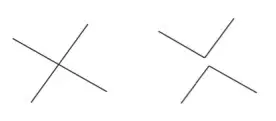
What laws of sensory perception does each illustration represent?
a)
Closure
b)
Gestalt Rule of Continuity
c)
Overlapping
47.
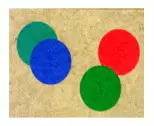
What laws of sensory perception does each illustration represent?
a)
Closure
b)
Gestalt Rule of Continuity
c)
Overlapping
48.

a)
Closure
b)
Gestalt Rule of Continutiy
c)
Overlapping
49.
The technique that uses magnetic fields and radio waves to produce computer images of structures within the brain is called
a)
a. the EEG.
b)
b. a lesion
c)
c. a PET scan
d)
d. MRI.
50.
The main function of the peripheral nervous system is to
a)
a. relay messages between the brain’s right and left hemispheres.
b)
b. transmit information from the central nervous system to other parts of the body.
c)
c. speed up respiration and heart rate to increase alertness.
d)
d. produce growth hormones.
51.
David experienced difficulty keeping his balance after receiving a blow to the back of her head. It is likely that he injured his
a)
a. medulla .
b)
b. thalamus.
c)
c. hypothalamus
d)
d. cerebellum.
52.
You are able to pull your hand quickly away from hot water before pain is felt because:
a)
a. movement of the hand is a reflex that involves intervention of the spinal cord only.
b)
b. movement of the hand does not require intervention by the central nervous system.
c)
c. the brain reacts quickly to prevent severe injury.
d)
d. the autonomic division of the peripheral nervous system intervenes to speed contraction of the muscles of the hand
53.
Multiple sclerosis is a disease in which the immune system mistakenly destroys some of the myelin wrapped around nerve cell fibers. Which nerve cell fibers are being attacked by this process?
a)
a. Synapses
b)
b. Axons
c)
c. Dendrites
d)
d. Mitochondria
54.
The two major divisions of the nervous system are the
a)
a. brain and spinal cord.
b)
b. central and somatic nervous systems.
c)
c. sympathetic and parasympathetic systems.
d)
d. peripheral and central nervous systems.
55.
Dr. Barillas is examining a cell from the nervous system of an animal. He notices that at one end of the cell body is a long, fibrous strand of tissue. He immediately recognizes this as an axon that is responsible for
a)
a. carrying signals away from the cell body.
b)
b. receiving signals from other cells and carrying them toward the cell body.
c)
c. determining the speed at which an action potential will travel.
d)
d. determining whether the cell inhibits or excites neighboring neurons.
56.
Chemical messengers produced by endocrine glands are called
a)
a. agonists
b)
b. neurotransmitters
c)
c. hormones
d)
d. enzymes
57.
Part of the nervous system that consists of the brain and spinal cord
a)
cell body
b)
axon
c)
central nervous system
d)
somatic nervous system
58.
the part of a neuron that produces the energy needed for the activity of the cell
a)
cell body
b)
axon
c)
central nervous system
d)
somatic nervous system
59.
How do scientists confirm the findings of a study?
a)
a. by replicating the study
b)
b. by changing the hypothesis of the original study
c)
c. by formulating new research questions
d)
d. all of the above.
60.
The relationship between smoking cigarettes and living a shorter life is an example of a(n)
a)
a. positive correlation.
b)
b. dependent variable.
c)
c. negative correlation.
d)
d. independent variable.
61.
The testing method of observation investigates human behavior through
a)
a. personality tests.
b)
b. aptitude tests.
c)
c. intelligence tests.
d)
d. all of the above.
62.
Scientists are cautious about making generalizations from case studies because
a)
a. such observations occur in a controlled laboratory setting.
b)
b. case studies cannot always be replicated.
c)
c. case studies do not include information from other sources.
d)
d. all of the above.
63.
The longitudinal method is concerned with observing
a)
a. the ways in which people change over time.
b)
b. how people behave under controlled conditions.
c)
c. people’s views on a particular subject.
d)
d. people’s character traits and temperament.
64.
The cross-sectional method charts changes over time by
a)
a. observing one group of participants over a certain period of time.
b)
b. surveying people who are the same age about their personal history
c)
c. manipulating the independent variable.
d)
d. comparing participants from different age groups.
65.
In an experiment, it is useful to have a control group to
a)
a. help minimize the effects of volunteer bias.
b)
b. ensure that the target population is represented.
c)
c. complete a stratified sample.
d)
d. show the effect of the treatment and no other factors
66.
A double-blind study is sometimes needed because researchers
a)
a. may have expectations that affect their observations.
b)
b. cannot control every variable outside a laboratory.
c)
c. may not have time for a longitudinal study
d)
d. are bound by a code of ethics
67.
A researcher had one group of children go trick-or-treating wearing masks and a second group of children go trick-or-treating without masks. The researcher found that the children who wore masks took more candy than the children who were not wearing masks. Which was the dependent variable in this study?
a)
a. Whether or not the children wore masks
b)
b. The amount of candy taken
c)
c. Trick-or-treating
d)
d. Whether or not the children wore masks and trick-or-treating
68.
In the previous scenario, what is the independent variable?
a)
a. Whether or not the children wore masks
b)
b. The amount of candy taken
c)
c. kids without masks
d)
d. Whether or not the children wore masks and trick-or-treating
69.
The practice of psychology is closely related to the natural sciences by
a)
a. its concern with the biological functions of the brain.
b)
b. the way it conducts experiments.
c)
c. the way it analyzes data and draws conclusions.
d)
d. all of the above.
70.
The majority of psychologists are
a)
a. clinical psychologists. .
b)
b. counseling psychologists.
c)
c. school psychologists
d)
d. developmental psychologists
71.
Social psychologists differ from personality psychologists in their focus on
a)
a. external rather than internal influences.
b)
b. behavior rather than cognitive activity.
c)
c. heredity rather than environmental causes for behavior
d)
d. all of the above
72.
Training your dog to shake using delicious dog biscuits is related to which psychologists?
a)
a. Sigmund Freud
b)
b. B.F. Skinner
c)
c. John B. Watson
d)
d. William James
73.
Course planning and instructional methods for school districts are usually
a)
a. school psychologists.
b)
b. developmental psychologists.
c)
c. personality psychologists.
d)
d. educational psychologists.
74.
Developmental psychologists are especially concerned with
a)
a. testifying at legal trials
b)
b. developing aptitude tests for students
c)
c. changes that occur throughout the life span
d)
d. all of the above
75.
action that can be observed or measured
a)
basic research
b)
behavior
c)
experimental research
d)
psychology
76.
the scientific study of behavior and mental processes
a)
basic research
b)
behavior
c)
experimental research
d)
psychology
77.
Every time a student asks their parent if they can use the car, their parents say no, therefor they stop asking. This is an example of
a)
a. structuralism .
b)
b. functionalism.
c)
c. introspection
d)
d. behaviorism.
100 %

