
 Worksheets
CE Unit 4 Review - Foundations of American Government
Total questions: 62
Worksheet time: 1hrs 2mins
Which Fundamental Principle has the following definition:
a political system that combines a central national government with state and local powers, dividing the powers between them
Federalism
Separation of Powers
Checks & Balances
Popular Sovereignty
Limited Government
Which Fundamental Principle has the following definition:
a system of government in which the people elect public office holders to make laws and conduct government on the people's behalf
Republicanism
Popular Sovereignty
Limited Government
Federalism
Separation of Powers
Which Fundamental Principle has the following definition:
government is not all-powerful and may do only those things the people have given it the power to do
Limited Government
Checks & Balances
Popular Sovereignty
Federalism
Separation of Powers
Which Fundamental Principle has the following definition:
a system that allows each branch of government to limit the power of the other branches
Checks & Balances
Separation of Powers
Limited Government
Federalism
Popular Sovereignty
Which Fundamental Principle has the following definition:
the division of government power between the three branches of government
Separation of Powers
Checks & Balances
Federalism
Republicanism
Limited Government
Which Fundamental Principle has the following definition:
based on the consent of the people, meaning that the people are the source of the government's power and participate in the decision making
Popular Sovereignty
Republicanism
Limited Government
Federalism
Checks & Balances
Which Fundamental Principle is demonstrated by the following scenario:
In this system, the federal government has the power to make treaties with foreign countries and collect federal taxes. The state governments have the power to control education, elections, and licensing.
Limited Government
Popular Sovereignty
Federalism
Separation of Powers
Republicanism
Carefully read the excerpt from the Declaration of Independence and then answer the question below: "Prudence, indeed, will dictate that Governments long established should not be changed for light and transient causes; and accordingly all experience hath shewn, that mankind are more disposed to suffer, while evils are sufferable, than to right themselves by abolishing the forms to which they are accustomed. But when a long train of abuses and usurpations, pursuing invariably the same Object evinces a design to reduce them under absolute Despotism, it is their right, it is their duty, to throw off such Government, and to provide new Guards for their future security." Which Fundamental Principle is best described by this quote?
Rule of Law
Representative Government
Limited Government
Popular Sovereignty
Which Fundamental Principle is demonstrated by the following:
The Legislative Branch makes the laws; The Executive Branch enforces the laws; The Judicial Branch interprets the laws
Limited Government
Federalism
Checks & Balances
Separation of Powers
Popular Sovereignty
Which Fundamental Principle is demonstrated by the following scenario:
Every 2–4 years, eligible U.S. citizens that register to vote and carry out their civic responsibility are able to choose their representative. In doing so, they are granting that representative the power to make laws and conduct government on their behalf.
Limited Government
Republicanism
Federalism
Checks & Balances
Popular Sovereignty
Which Fundamental Principle is shown in the example below:
"That the freedom of the press can never be (taken away) by government." – Virginia Declaration of Rights
Rule of Law
Democracy
Limited Government
Popular Sovereignty
Which Fundamental Principle is shown in the example below:
The US Congress has overturned President Donald Trump's veto of a defense spending bill, the first time this has happened in his presidency. The Republican-controlled Senate held a rare New Year's Day session to debate the move, which had already been voted for by the House of Representatives. The $740bn (£549bn) bill will fund defense policy for the year to come. Mr Trump, who leaves office in a few weeks, objected to certain provisions in the bill. The Senate voted 81-13 for the National Defense Authorization Act (NDAA) - a two-thirds majority is required to override a presidential veto in both chambers.
Limited Government
Republicanism
Federalism
Checks & Balances
"Our Debts being unfunded and unprovided for, the Interest cannot be paid . . . . The United States have call'd for eight Million of Dollars early in November last, of which the first quarterly Payment was to have been made on the first Day of April. But I cannot find a single State has laid the Taxes . . . . [L]et the several States be ever so negligent, the Confederation has given no Power to compel [force]. While it confers on Congress the Privilege of asking everything, it has secured to each State the Prerogative of granting nothing."
—Robert Morris, Secretary of the Treasury, to John Hanson, president of the Continental Congress, February 11, 1782
The author of this excerpt is expressing concern about what weakness in the Articles of Confederation?
The national government had no army
The national government had no power to tax
The national government had no system of courts
"No freeman is to be taken or imprisoned . . . or outlawed or exiled or in any way ruined . . . save by lawful judgment of his peers or by the law of the land."
—Magna Carta, 1215
Which statement about this excerpt is correct?
It protected serfs from the power of feudal lords
It gave English kings more control over the nobles
It established a person's right to have a trial by jury
It created an independent judicial branch of government
The Articles of Confederation were replaced with the ______.
U.S. Constitution
Bill of Rights
Magna Carta
Mayflower Compact
The ______ was used by James Madison as a model for the Bill of Rights.
Virginia Declaration of Rights
Virginia Statute for Religious Freedom
Declaration of Independence
Charters of the Virginia Company of London
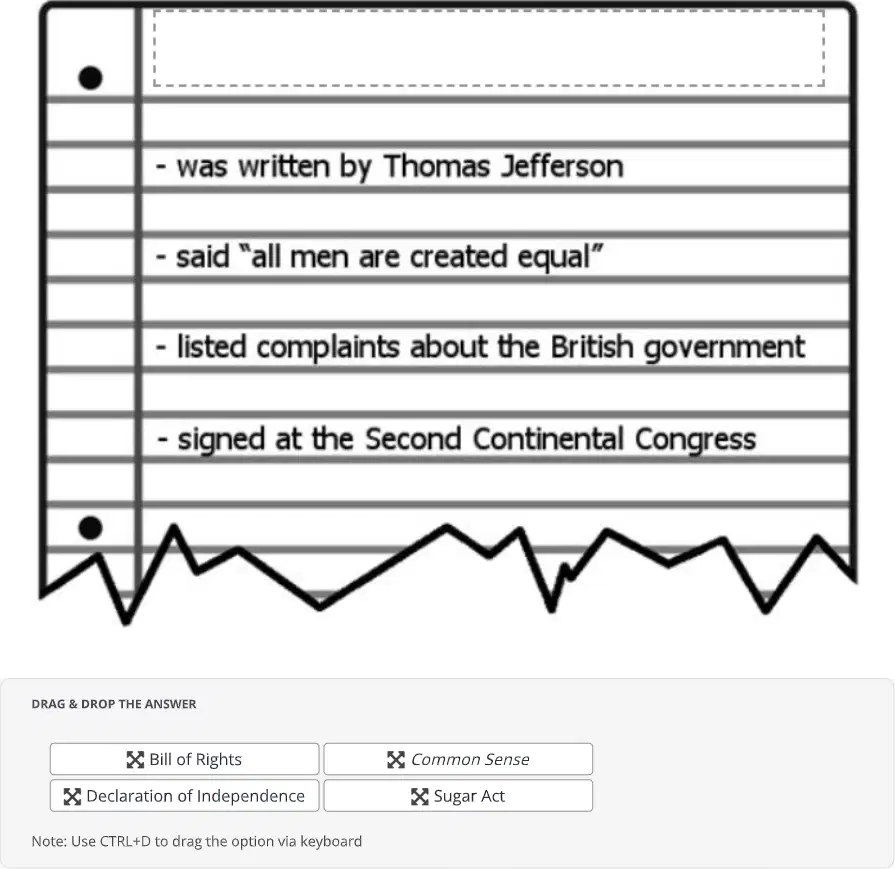
The image shows notes that were taken by a student in class. What is the best title for these notes?
Bill of Rights
Common Sense
Declaration of Independence
Sugar Act
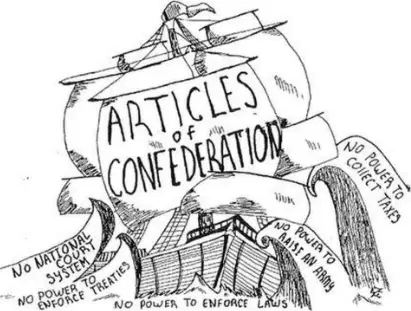
Which three of the following statements are true of the Articles of Confederation?
It established the first form of national government
George Washington served as the first President under the A.O.C.
The central government had no power to tax
The states had little power
The central government had no power to enforce laws
This document established the first form of national government for the independent states, maintained that major power resided with the individual states.
Articles of Confederation
U.S. Constitution
Declaration of Independence
Virginia Declaration of Rights
Magna Carta
This document served as a model for the Bill of Rights.
Virginia Declaration of Rights
Bill of Rights
Magna Carta
English Common Law
Declaration of Independence
The document declared the colonies' independence from Great Britain, affirmed certain unalienable rights.
Declaration of Independence
Articles of Confederation
U.S. Constitution
Charters of the Virginia Company
Bill of Rights
This document provided freedom of religious beliefs and opinions for Virginians.
Virginia Statute for Religious Freedom
Virginia Declaration of Rights
Magna Carta
Declaration of Independence
English Common Law
This document established that everyone, even the King was subject to the law.
Magna Carta
English Common Law
Bill of Rights
Articles of Confederation
U.S. Constitution
This document guaranteed the rights of Englishmen to the colonists arriving in Jamestown.
Charters of the Virginia Company
Magna Carta
Virginia Declaration of Rights
Articles of Confederation
U.S. Constitution
This document established "Judicial Precedent" and prioritized individual rights and due process.
English Common Law
Magna Carta
Bill of Rights
Virginia Declaration of Rights
U.S. Constitution
This document established the structure of the U.S. government that is still in use today; has elected representatives and three branches of government.
U.S. Constitution
Articles of Confederation
Bill of Rights
Virginia Declaration of Rights
Declaration of Independence
This document protected the fundamental individual freedoms of religion, speech, press, assembly, petition, and due process.
Bill of Rights
U.S. Constitution
Magna Carta
Virginia Statute for Religious Freedom
Declaration of Independence
Which document expressed ideas about the separation of church and state and allowed for freedom of religious beliefs and opinions?
Articles of Confederation
VA Statute of Religious Freedom
VA Declaration of Rights
Declaration of Independence
Charters for the Virginia Company of London
Directions: Read the quote and then answer the question. Original version: "Alsoe wee doe, for us, our heires and successors, declare by theise presentes that all and everie the parsons being our subjects which shall dwell and inhabit within everie or anie of the saide severall Colonies and plantations and everie of theire children which shall happen to be borne within the limits and precincts of the said severall Colonies and plantations shall have and enjoy all liberties, franchises and immunities within anie of our other dominions to all intents and purposes as if they had been abiding and borne within this our realme of Englande or anie other of our saide dominions." Summarized English version: "We and our heirs and successors declare that all people born within and inhabit the colonies and plantations shall enjoy all the liberties, franchises, and immunities within any of Britain's other dominions." Which founding document granted the rights, freedoms, and protections of an Englishman to the colonists in Jamestown?
Magna Carta
Declaration of Independence
Bill of Rights
Charter of the Virginia Company of London
Virginia Statutes for Religious Freedom
Directions: Read the information and then answer the question. 20. For a trivial [less serious] offence, a free man shall be fined only in proportion to the degree of his offence, and for a serious offence correspondingly, but not so heavily as to deprive him of his livelihood [means of supporting oneself]. 60. Moreover, all these . . . customs and liberties, the observances of which we have granted in our kingdom as far as pertains to us towards our men, shall be observed by all of our kingdom, as well clergy [religious leaders] as laymen, as far as pertains to them towards their men. —The Magna Carta, 1215 Which statements best explain two purposes of the Magna Carta?
The Magna Carta was the first document that stated that citizens had rights
King John of England agreed to it on June 15, 1215
The Magna Carta stated that the king must follow the law
The barons drew up the Magna Carta to increase King John's power
King John demanded too much money from his people
"We hold these truths to be self-evident, that all men are created equal, that they are endowed by their Creator with certain unalienable Rights, that among these are Life, Liberty and the pursuit of Happiness" These basic rights are affirmed in the —
Magna Carta
Declaration of Independence
Articles of Confederation
U.S. Constitution
Virginia Statutes for Religious Freedom
The New Jersey Plan and the Virginia Plan proposed at the Constitutional Convention in 1787 disagreed with each other about the basis of representation in the legislative branch. Which plan called for representation to be based on each state's total population?
Virginia Plan
New Jersey Plan
The New Jersey Plan and the Virginia Plan proposed at the Constitutional Convention in 1787 disagreed with each other about the basis of representation in the legislative branch. Which plan called for equal representation for each state?
Virginia Plan
New Jersey Plan
The New Jersey Plan and the Virginia Plan proposed at the Constitutional Convention in 1787 disagreed with each other about the basis of representation in the legislative branch. Which plan was favored by the small states?
Virginia Plan
New Jersey Plan
The New Jersey Plan and the Virginia Plan proposed at the Constitutional Convention in 1787 disagreed with each other about the basis of representation in the legislative branch. Which plan was favored by the large states?
Virginia Plan
New Jersey Plan
The New Jersey Plan and the Virginia Plan proposed at the Constitutional Convention in 1787 disagreed with each other about the basis of representation in the legislative branch. Which plan called for a bicameral legislature where each state has 2 Senators, and the House of Representatives is based on population?
Virginia Plan
New Jersey Plan
Great Compromise
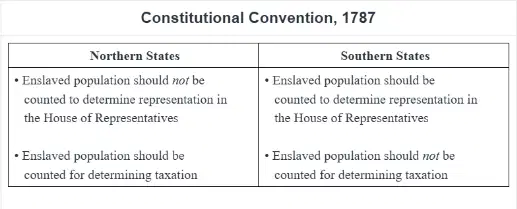
Use the information in the boxes to answer the question that follows. What solution did the delegates at the Constitutional Convention design to resolve the debate on whether the enslaved population should be counted or not?
the Virginia Plan
the New Jersey Plan
the U.S. Constitution
the Three-Fifths Clause
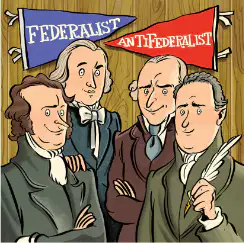
During the period from the Constitutional Convention until the final ratification of the Constitution, Federalists and Anti-Federalists made different arguments about the proper form of government for the United States. Which one of the following statements represents an argument that Anti-Federalists made?
The Articles of Confederation needed to be replaced.
The Constitution adequately protected individual freedoms.
A strong national government threatened individual freedoms.
The national government needed to be stronger than state governments.
Which statement summarized the original Federalist position on the Bill of Rights?
Additional amendments were needed, given the Constitution's lack of individual protections.
Adopting the Bill of Rights was too risky because it might threaten ratification of the Constitution.
The Bill of Rights should be adopted because national sovereignty should always come before states' rights.
No amendments were needed, as the Constitution already had protections against excessive government power.
Read the passage and then answer the question below: . . . there should be a confederated national government, but it should be one that would have a control over national and external matters only, and not interfere with the internal regulations and police of the different states in the union. Such a government, while it would give us respectability abroad, would not . . . subvert our liberties at home. —An Observer, Boston American Herald, December 3, 1787 The author wrote this passage to argue that ratifying the Constitution would have what result?
a weakening of the rights of states and citizens
the return of British rule over the United States
stronger protection for the rights of states and citizens
a proper balance between the states and national government
Read the excerpt from the Preamble to the U.S. Constitution (1787): "We the People of the United States, in Order to form a more perfect Union, establish Justice, insure domestic Tranquility, provide for the common defence, promote the general Welfare, and secure the Blessings of Liberty to ourselves and our Posterity, do ordain and establish this Constitution for the United States of America." Based on the excerpt, which statement best describes the overall purpose of the Constitution as stated in its Preamble?
To outline the specific rights of individual citizens
To explain the reasons for separating from Great Britain
To state the goals of the new government for the United States
To list the powers of each branch of government
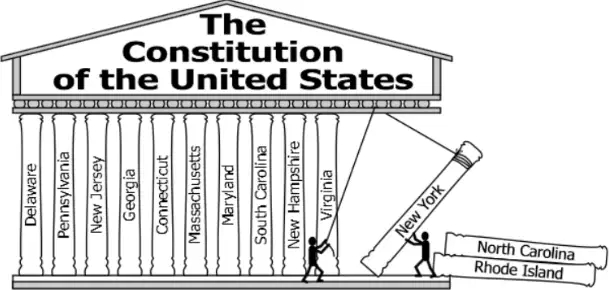
Consider the cartoon showing the Constitution supported by pillars labeled with the names of the original states, with a worker placing additional state blocks labeled North Carolina and Rhode Island. Which goal of the Preamble to the Constitution of the United States is illustrated by this cartoon?
Provide defense
Ensure domestic tranquility
Establish justice
Form a more perfect union
Which goal of the Preamble to the Constitution of the United States is illustrated by this headline? Headline: “House passes defense bill to raise troop pay and overhaul weapons purchases.”
Provide for the common defense
Insure domestic tranquility
Establish justice
Form a more perfect union
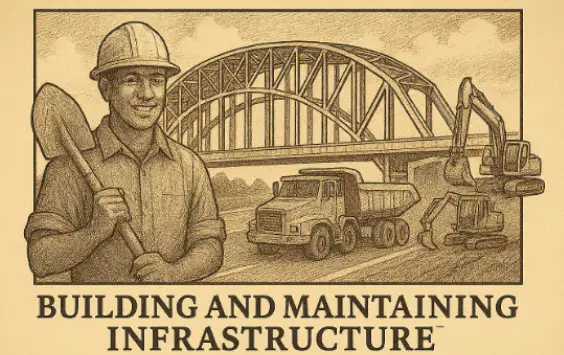
Which goal of the Preamble to the Constitution of the United States is illustrated by this image?
Provide defense
Ensure domestic tranquility
Establish justice
promote the general Welfare
Which Fundamental Concept is explained by the following statement: Special, Primary, and General... held every 1–2 years at the local, state, and federal levels as a way for the citizens to decide who they want to represent them in an official capacity in government.
Due Process
Equal Justice Under the Law
Elections
Rule of Law
Supremacy Clause
Which Fundamental Concept is demonstrated by the following statement: The U.S. Constitution establishes clear and fair rules that the government must follow before it can take away someone's life, freedom, or property
Due Process
Equal Justice Under the Law
Equal Protection
Elections
Supremacy Clause
Which Fundamental Concept is demonstrated by the following event: NEW YORK (AP) — Powerful Sen. Bob Menendez of New Jersey was charged Friday with secretly aiding the authoritarian government of Egypt and trying to thwart the criminal prosecution of a friend in exchange for gold bars and cash under a corruption indictment that accuses him of using his foreign affairs influence for personal gain. Menendez was forced to relinquish his chairmanship of the Senate Foreign Relations Committee but said he would not resign from Congress, though New Jersey’s governor, a fellow Democrat, and other Democrats in the state’s congressional delegation said he should. The indictment, the second in eight years against the 69-year-old senator, alleges an illegal commingling of Menendez’s obligations to advance U.S. priorities and his private interest in cultivating relationships with wealthy businessmen. It also includes charges against his wife and three New Jersey businessmen who authorities say showered the couple with money, gold and a luxury car in exchange for official favors.
Due Process
Equal Justice Under the Law
Equal Protection
Elections
Rule of Law
Which Fundamental Concept is demonstrated by the following scenario: At the last city council meeting in Seattle, the Seattle Police Chief and Fire Chief presented a plan that would drastically reduce the number of police officers and firefighters available to respond to certain minority neighborhoods, mainly those with high rates of violent attacks. The NAACP and the ACLU both come out against this plan.
Due Process
Equal Justice Under the Law
Equal Protection
Elections
Rule of Law
Which Fundamental Concept is demonstrated by the following scenario: The state of California passes a law that lowers the voting age for state and federal elections. However, the Supreme Court rules that the law is unconstitutional since the 26th Amendment states that the voting age for federal elections is 18.
Due Process
Equal Justice Under the Law
Supremacy Clause
Elections
Rule of Law
The legal standing that all individuals in the United States have constitutional protection against unfair governmental actions and laws is the Fundamental Concept known as
Equal Protection
Rule of Law
Equal Justice Under the Law
Due Process
Elections
Which Fundamental Concept establishes that the U.S. Constitution is the supreme law of the land?
Equal Protection
Rule of Law
Supremacy Clause
Due Process
Elections
Which Fundamental Concept is defined as a formal and organized choice by vote of a person for a political office or other position?
Equal Protection
Rule of Law
Elections
Supremacy Clause
Equal Justice
The 14th Amendment that guarantees that no person or group will be denied the protection that is enjoyed by similar persons or groups. This is known as the Fundamental Concept of
Equal Protection
Due Process
Equal Justice Under the Law
Rule of Law
Supremacy Clause
The belief that everyone should be treated equally before the law is known as the Fundamental Concept of
Equal Protection
Equal Justice Under the Law
Rule of Law
Elections
Due Process
The belief that everyone, including government officials, must follow the law, is tied to the Fundamental Concept of
Equal Protection
Rule of Law
Due Process
Supremacy Clause
Elections
"The proposed Constitution, so far from implying an abolition of the State governments, makes them constituent parts of the national sovereignty, by allowing them a direct representation in the Senate, and leaves in their possession certain exclusive and very important portions of sovereign power." —Publius, The Independent Journal, November 21, 1787
The author of this passage wrote it in support of what political cause?
declaring independence
ratifying the Constitution
adding states to the Union
amending the Constitution
Since the U.S. Constitution was ratified in 1788, how many amendments have been added?
10
17
24
27
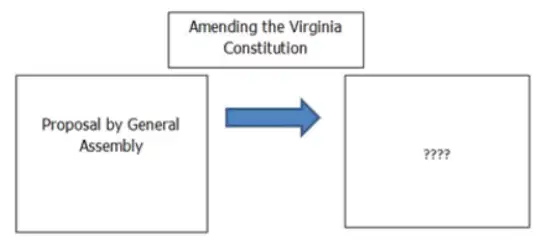
Refer to the diagram: Which phrase best completes the diagram?
Ratification by Governor
Ratification by House of Delegates
Ratification by Virginia voters
Ratification by Virginia Senate
After a constitutional amendment is proposed by Congress, what step occurs next?
Declared constitutional by the U.S. Supreme Court
Confirmed by the national legislature
Signed into law by the president
Ratification by the states
Why did the Founding Fathers make it hard to change the U.S. Constitution?
To make sure only important changes that many people agree on would happen
To stop any changes for 100 years
To let only the President decide on changes
To require more participation by the states
In order for the 28th Amendment to be ratified, it would need to pass Congress with a ____ vote before being presented to the states for consideration.
one-half (50%)
six-tenths (60%)
two-thirds (67%)
three-fourths (75%)
Once two-thirds of Congress have agreed on a proposed constitutional amendment, at least ______ of the states would need to approve of the new amendment in order to be ratified.
one-half (50%)
six-tenths (60%)
two-thirds (67%)
three-fourths (75%)

