
 Worksheets
Sankshe:pa Ra:ma:yanam Quiz
Total questions: 20
Worksheet time: 17mins
What is Sankshe:pa Ra:ma:yanam?
Concise summary of Ra:ma:yanam narrated by sage Na:rada to sage Va:limiki
Last sarga in Ra:ma:yanam
It is the first sarga appearing at the beginning of Bala Kanda
Summary of Ra:ma:yanam narrated by sage Va:limiki to sage Na:rada
How many slokas are in Sankshe:pa Ra:ma:yanam?
100
75
50
25
What do the first 5 slokas in Sankshe:pa Ra:ma:yanam describe?
Valmiki asks Narada about an unparalleled and ideal human who perfectly embodies all virtues
Life story of Sri Ra:ma
Life story of Krishna
Hanuma:n
Slokas 6-19 are Narada's reply to Valimiki's curiosity about the ideal human
True
False
Name some qualities of Ra:ma
The woman who is the virtuous, the best among all women, and perfectly suited to Ra:ma is (a)
For how many years did Kaike:yi asked Dasarattha to exile Ra:ma?
14 years
12 years
13 years
10 years
Who is the devoted brother of Ra:ma who always accompanied him?
Bharata
Shatrughna
Lakshmana
Hanuma:n
Who refused to sit on the throne of Ayodhya and kept Ra:ma’s sandals as a symbol of Ra:ma’s rule?
Bharata
Lakshmana
Satrughna
Sumantra
Dheergam is a long vowel
True
False
Maha:pra:na consonants are pronounced with aspiration(say it with extra breath)
True
False
Which way should you say the sound ख (kha)?
Softly, no extra breath
With a puff of air
Which vowel is long (Dheergam) in the word Ra:ma?
अ (a)
आ (a:)
इ (i)
उ (u)
Letters like ट(ta), ठ(tta), ड(da), ढ(dha), ण(na) are called (a) letters because the tongue touches the roof of the mouth.

Whom does this sloka refer to?
(a)

Whom does this sloka refer to?
(a)

Whom does this sloka refer to?
(a)

What does this sloka say?
(a)
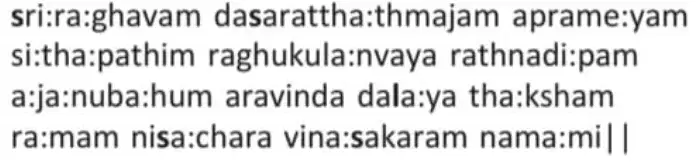
Whom does this sloka refer to?
(a)

Who said this sloka and when?
(a)

