
 Worksheets
MIS - Ch2 - Slide (1)
Total questions: 87
Worksheet time: 44mins
From the slide titled Learning Objectives, answer: What are business processes, and how are they related to information systems?
Coordinated sets of activities that transform inputs into outputs; information systems capture, store, and route the data and workflows that enable, automate, and monitor these activities
Random, one-off tasks performed without structure; information systems are unrelated and only used for entertainment
Government regulations that firms must follow; information systems merely archive legal documents
Physical movement of materials only; information systems do not affect processes
From the slide titled Learning Objectives, answer: How do systems serve the different management groups in a business, and how do systems that link the enterprise improve organizational performance?
They provide tailored information and tools for operational, middle, and senior managers, while enterprise-wide systems integrate data and processes across functions to improve coordination, visibility, and decision quality
They are accessible only to senior executives, and enterprise systems separate departments to reduce collaboration and information sharing
They replace managers entirely, and enterprise systems remove reporting so performance is judged by intuition
They focus solely on external customers, and enterprise systems ignore internal processes
From the slide titled Learning Objectives, answer: What is the role of the information systems function in a business?
To plan, develop, operate, and govern technology and data services that support strategy, decision making, and core business processes
To police employee behavior and enforce non-technical company policies
To eliminate communication between departments by restricting information flow
To handle only printing and basic office equipment without involvement in strategy
According to the slide, which description best defines business processes?
Flows of material, information, and knowledge
Individual goals unrelated to operations
Random ad‑hoc tasks with no sequence
Only financial transactions recorded by accounting
Which statement about the scope of business processes is stated on the slide?
They may be tied to a functional area or be cross‑functional
They must be limited to a single department only
They apply only to manufacturing operations
They exclude information and knowledge flows
How are businesses characterized on the slide?
As collections of business processes
As isolated activities performed once
As purely financial entities
As informal groups without defined steps

Based on the Standard Admission Process diagram, which step comes immediately after Eligibility Check?
Application Received
Entrance Test
Fee Offering
Onboarding
From the Standard Admission Process diagram, what is the first step shown in the sequence?
Qualified Enquiry
Entrance Test
Payment
Onboarding

In the Standard Admission Process diagram, which step occurs directly before Enroll?
Fee Offering
Payment
Onboarding
Eligibility Check
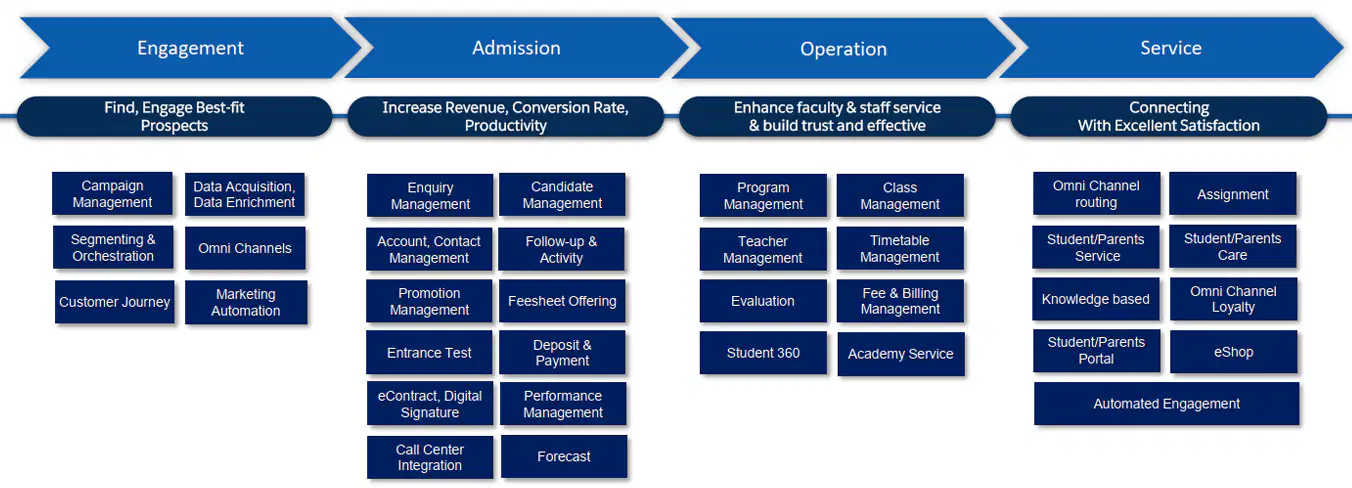
Based on the Connected Education Solution Package diagram, which stage is associated with the statement Increase Revenue, Conversion Rate, Productivity?
Engagement
Admission
Operation
Service
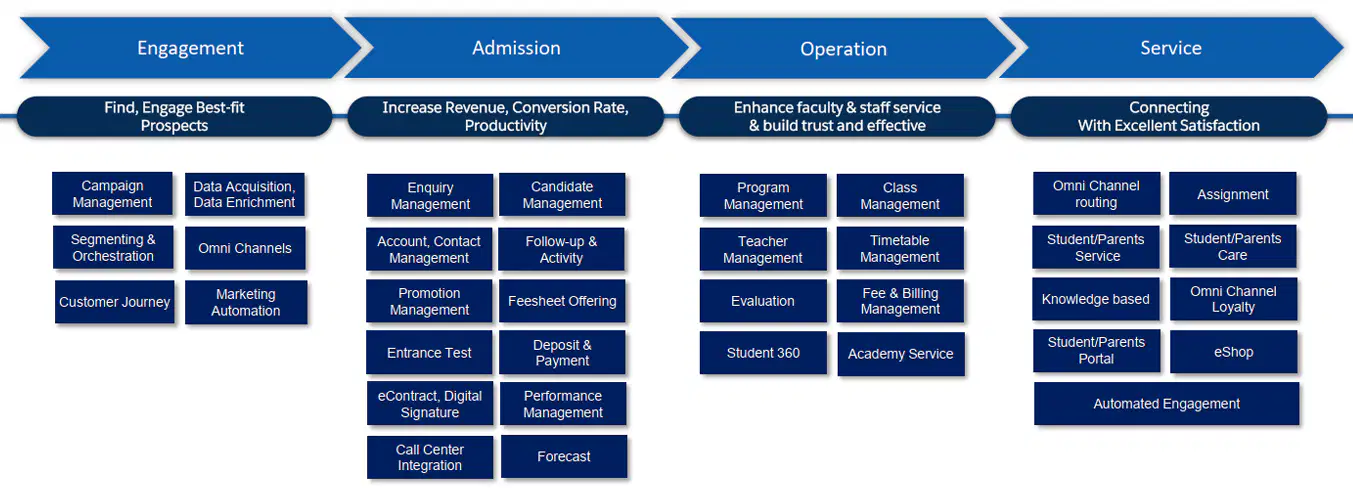
In the Connected Education Solution Package diagram, which stage contains Campaign Management as one of its activities?
Engagement
Admission
Operation
Service
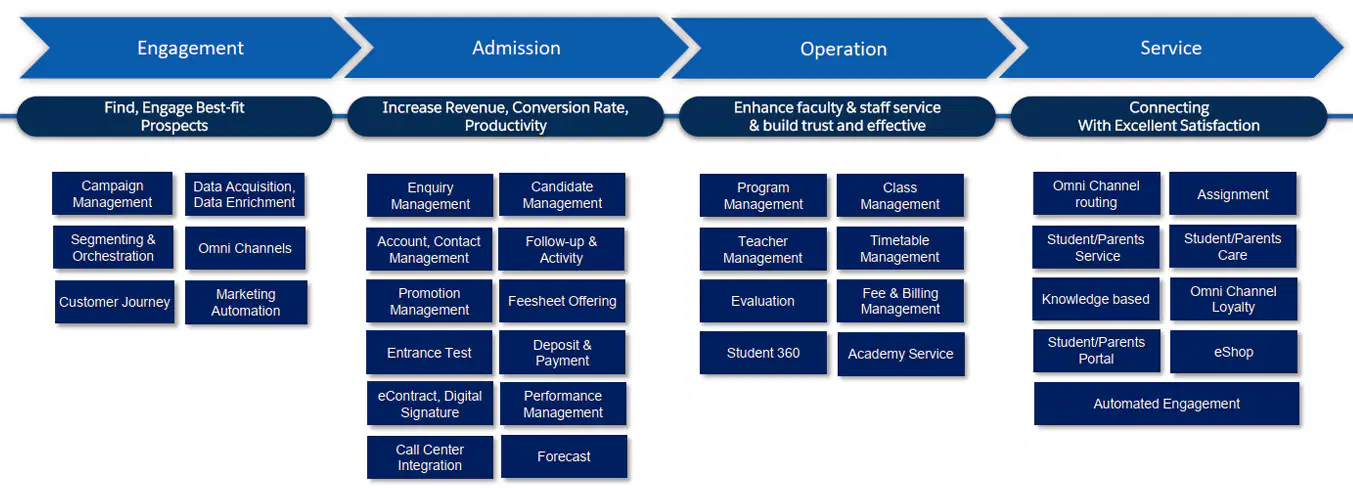
According to the diagram, which activity belongs to the Admission stage?
Enquiry Management
Class Management
Student/Parents Portal
Knowledge based
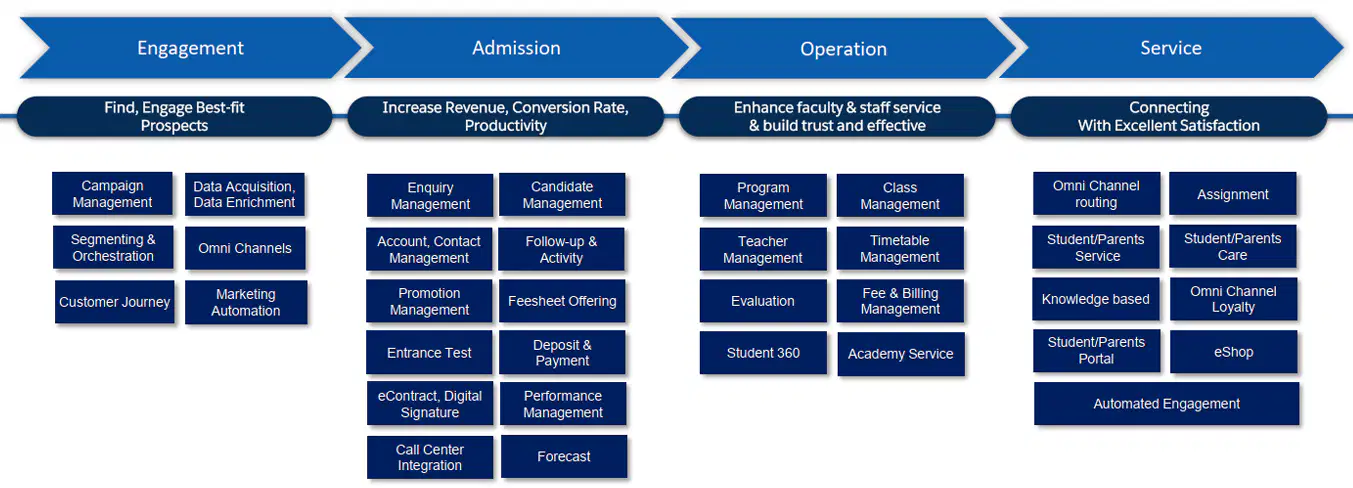
In the diagram, Omni Channel routing appears under which stage?
Engagement
Admission
Operation
Service
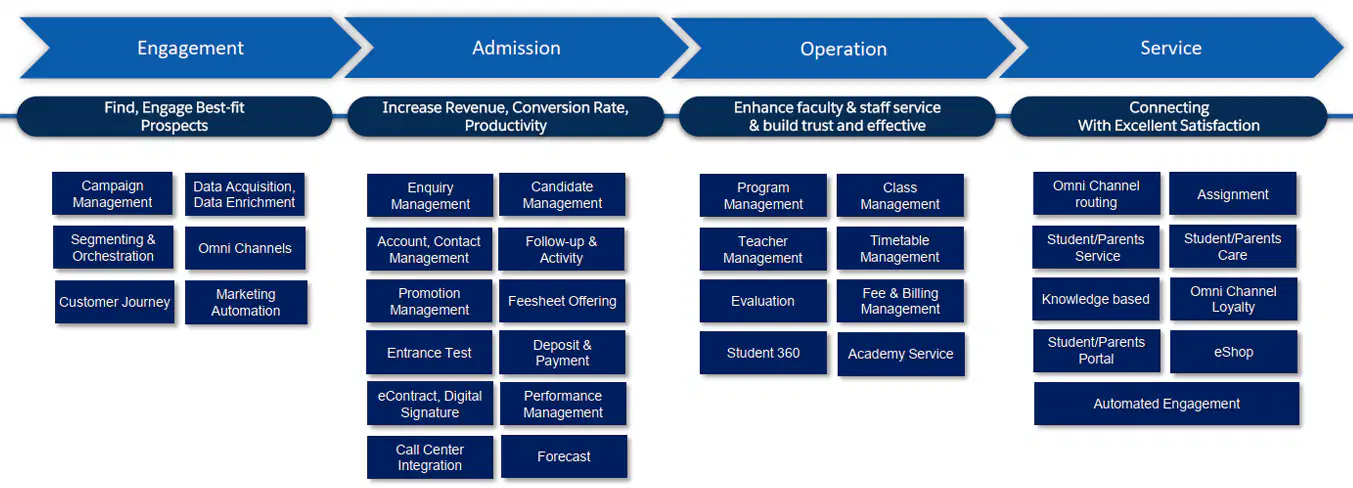
Which benefit statement is shown under the Engagement stage in the diagram?
Find, Engage Best-fit Prospects
Increase Revenue, Conversion Rate, Productivity
Enhance faculty & staff service & build trust and effective
Connecting With Excellent Satisfaction
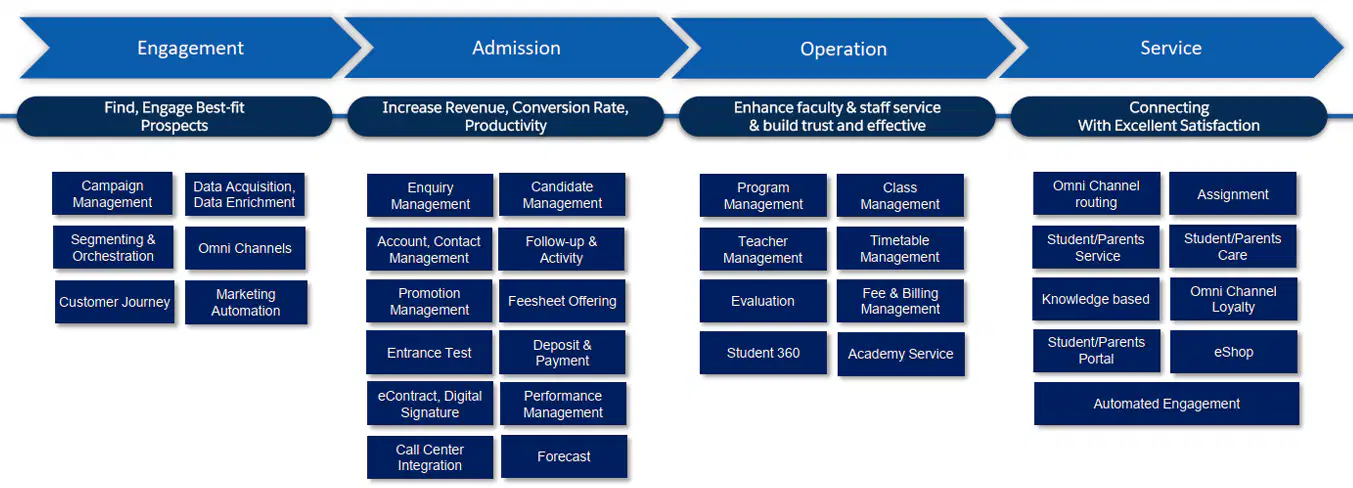
According to the diagram, Knowledge based is categorized under which stage?
Engagement
Admission
Operation
Service

In the diagram, eContract, Digital Signature is placed under which stage?
Engagement
Admission
Operation
Service
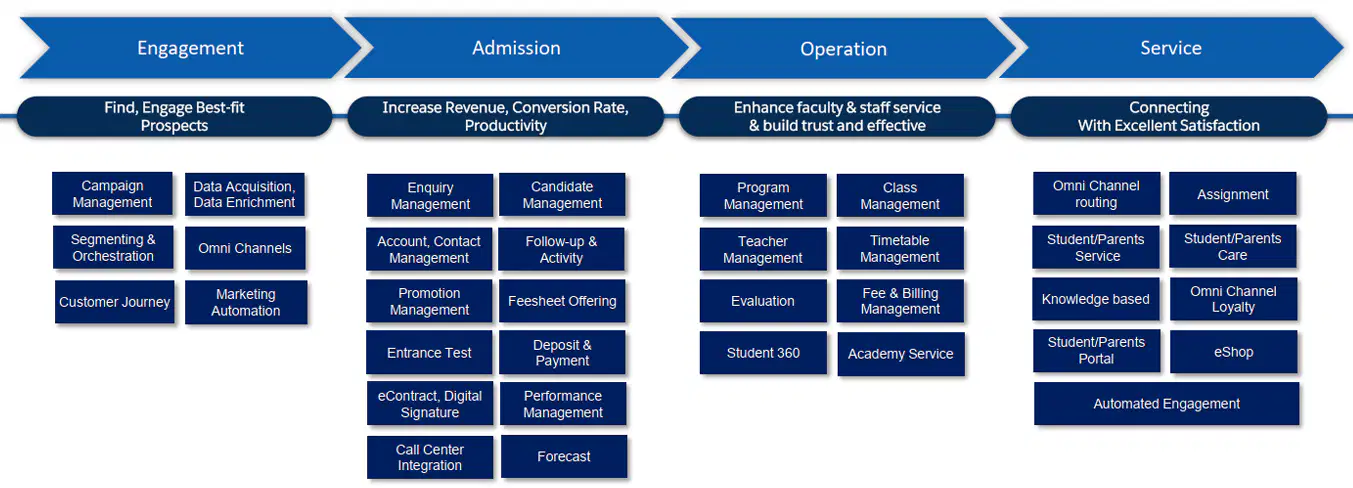
Marketing Automation is listed under which stage of the diagram?
Engagement
Admission
Operation
Service
List different departments in business processes?
Manufacturing and production; Sales and Marketing; Finance and Accounting; Human Resources
Research and Development; Logistics; Customer Service; Legal
Operations; Procurement; Information Technology; Public Relations
Manufacturing and production only

How did information technology improve business process?
By automating key workflows and enabling real-time data sharing, reducing cycle times and errors
By increasing manual paperwork to improve oversight
By isolating departments and slowing decision-making to avoid risks
By eliminating the need for any processes or standards
According to the slide on how information technology improves business processes, which action best increases the efficiency of existing processes by reducing manual effort?
Automating steps that were manual
Adding additional approval layers
Expanding paper-based forms
Outsourcing routine work to external vendors
Based on the listed outcomes for enabling entirely new processes, which of the following are described as effects of information technology on business processes? Select all that apply.
Change flow of information
Replace sequential steps with parallel steps
Eliminate delays in decision making
Support new business models
Automating steps that were manual
In the pyramid of systems for different management groups, which system type corresponds to the operational level?
Transaction Processing Systems (TPS)
Decision-Support Systems (DSS)
Management Information Systems (MIS)
Executive Support Systems (ESS)
Which system type in the diagram is associated with the strategic level?
Executive Support Systems (ESS)
Management Information Systems (MIS)
Decision-Support Systems (DSS)
Transaction Processing Systems (TPS)
Which example shown in the pyramid belongs to the Finance and Accounting functional area at the operational level?
Payroll, Accounts Payable
Material Movement Control
Order Processing
Employee Recordkeeping
Transaction processing systems primarily serve which group within the organization?
Operational supervisors and staff
Senior executives
External auditors
Retail customers
Which activities are given as examples of daily routine transactions recorded by a transaction processing system? Select all that apply.
Sales order entry
Payroll
Shipping
Strategic planning
According to the slide on TPS, what do these systems allow supervisors to monitor?
Status of operations
Long-term market trends
Corporate vision statements
Regulatory policy debates
What type of goals and decision making do transaction processing systems serve?
Predefined, structured
Unstructured and ad hoc
Intuitive and informal
Exploratory and open-ended
Referring to the payroll TPS schematic, which of the following is an output generated by the payroll system?
Employee paychecks
Capital budgeting proposals
Marketing campaign briefs
Product design specifications
According to the slide titled “Systems for Different Management Groups — Systems for Business Intelligence,” business intelligence is described as data and software tools for what activity?
organizing and analyzing data
collecting and storing data only
encrypting and hiding data
deleting redundant data
On the slide “Systems for Business Intelligence,” business intelligence is used to help which group make improved decisions?
managers and users
customers and suppliers
auditors and regulators
programmers and network administrators
Which of the following is listed on the slide as a type of business intelligence system?
Management information systems
Transaction processing systems
Manufacturing execution systems
Customer billing systems
According to the slide, which is identified as a business intelligence system?
Executive support systems
Order entry systems
Content management systems
Quality assurance systems
According to the slide, Management information systems primarily serve which organizational level?
Top management
Middle management
Operational staff only
External auditors
According to the slide, what do Management information systems provide?
Real-time control of shop-floor machines
Reports on the firm's current performance based on data from transaction processing systems
Long-term strategic forecasts using external market models
Automated payroll and benefits processing
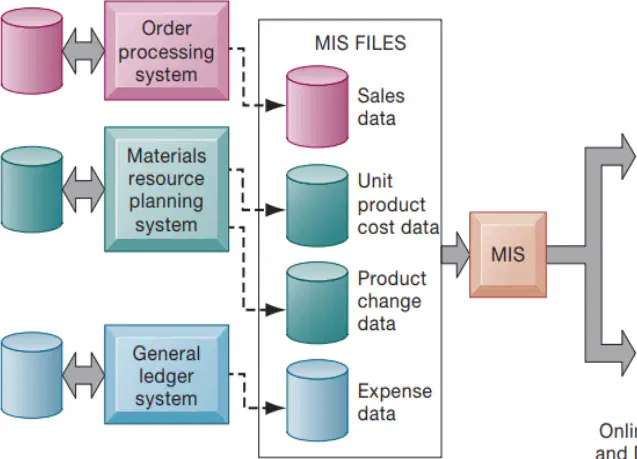
Based on the diagram, what outputs do MIS provide to managers?
Reports and online displays/dashboards
Purchase orders and customer invoices
Manufacturing schedules only
Raw, unprocessed transaction logs
According to the slide, which statement best describes what management information systems typically provide?
Answers to routine questions using predefined procedures
Exploratory data mining for novel insights
Enterprise-wide strategic planning simulations
Real-time process control for factory equipment
According to the slide, which statement best describes the analytic capability of management information systems?
They typically have little analytic capability
They routinely perform deep learning on unstructured data
They provide advanced predictive modeling for long-term strategy
They optimize complex supply chains in real time
According to the slide on decision support systems, which management level do decision support systems primarily serve?
Middle management
Senior management
Operational staff
External partners
On the decision support systems slide, what kind of decision making do DSS primarily support?
Routine, structured decisions
Non‑routine decision making
Automated transaction processing
Policy compliance checks
Based on the decision support systems slide, which sources of information are used by DSS?
External information
TPS/MIS data
Only executive memos
Unstructured social media rumors
From the examples listed on the decision support systems slide, which is identified as a model‑driven DSS?
Voyage‑estimating system
Payroll processing
Email archiving
Inventory barcode scanning
From the examples listed on the decision support systems slide, which is identified as a data‑driven DSS?
Intrawest’s marketing analysis system
Weather forecasting for shipping
Supplier EDI gateway
Manufacturing control loop
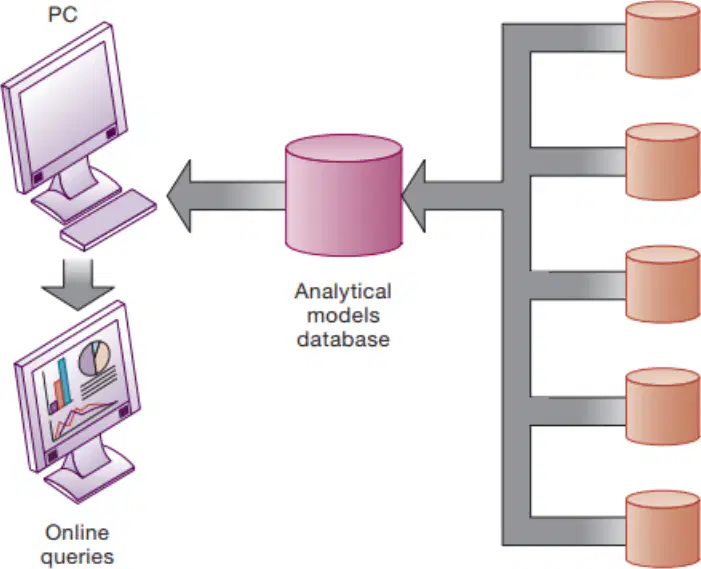
In the model‑driven DSS (voyage‑estimating) slide, which inputs are given to the models?
Customer delivery schedule
Offered freight rate
Employee vacation requests
Harbor souvenir sales
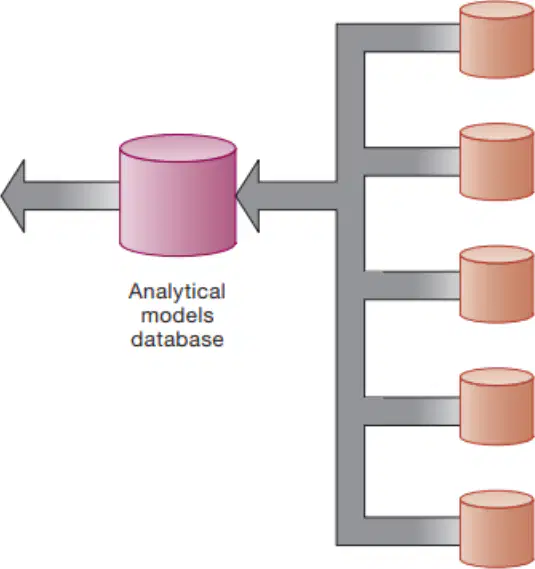
Referring to the voyage‑estimating DSS diagram, which files feed into the analytical models database? Select all that apply.
Ship file (speed, capacity)
Fuel consumption cost file
Port expense file
Customer social media sentiment file
According to the model‑driven DSS slide, which decision is among the questions this system is designed to answer?
What is the optimal speed?
Which color should ships be painted?
How to design a company logo?
What is the best employee cafeteria menu?
In the data‑driven DSS slide about Intrawest and Vail Resort’s marketing analysis systems, which data sources are provided to the software? Select all that apply.
Call center customer data
Lodging and dining reservations
Ski schools and equipment rental stores
Satellite weather telemetry only
According to the data‑driven DSS slide, which kind of question is addressed by the marketing analysis systems?
What is value or revenue potential?
Which vessel should be assigned to a route?
How to calculate fuel mix for cargo ships?
How to set machine speeds on a factory line?
According to the executive support systems slide, which management level do ESS primarily support?
Senior management
Middle management
Line workers
External auditors
On the ESS slide, what type of decisions are ESS designed to address?
Non‑routine decisions requiring judgment, evaluation, insight and strategy
Highly routine payroll approvals
Barcode scanning exceptions
Daily point‑of‑sale transactions
Based on the ESS slide, which information sources are incorporated by ESS? Select all that apply.
Data about external events (e.g., new tax laws or competitors)
Summarized information from internal MIS and DSS
Only raw transaction logs with no summarization
Anonymous internet forums
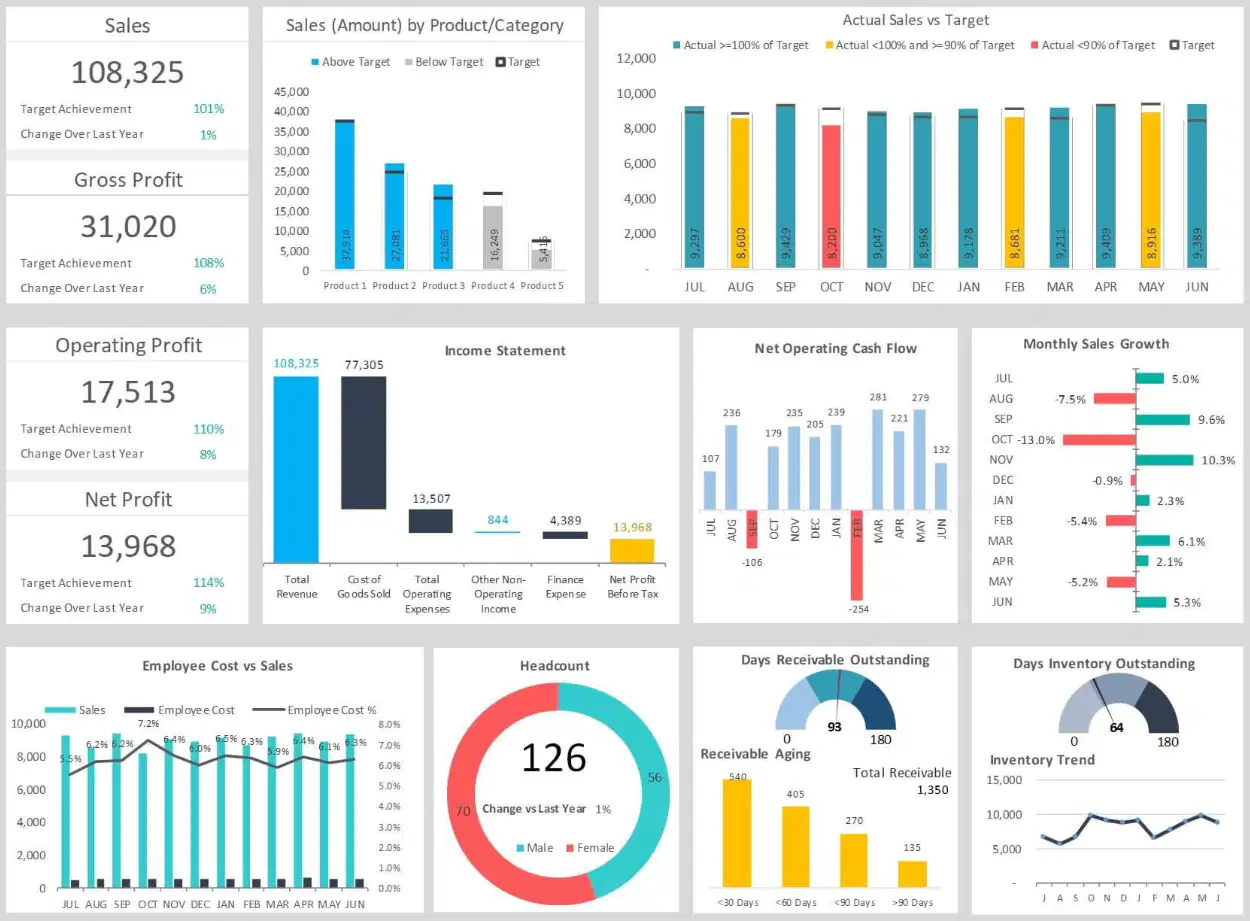
The dashboard showing YTD metrics (sales, profit, cash flow, headcount, receivables, inventory) exemplifies which system for business intelligence?
Executive Support System (ESS)
Decision Support System (DSS)
Transaction Processing System (TPS)
Manufacturing Execution System (MES)
Which item is listed as a tool for collaboration and teamwork on the worksheet?
E-mail and instant messaging
Data warehousing software
3D printing devices
Payroll processing systems
According to the worksheet, virtual meeting systems are described as what?
Telepresence
Blockchain consensus
Gamification engines
Hardware virtualization
Which services are explicitly cited as cloud collaboration services on the worksheet? Select all that apply.
Google Drive
Microsoft OneDrive
Adobe Photoshop
Oracle ERP Cloud
Dropbox
Which platform is named under collaboration and social business platforms on the worksheet?
Microsoft SharePoint
SAP HANA
TensorFlow
QuickBooks Online
According to the slide, enterprise applications span what within a firm?
Functional areas
Only the human resources unit
Only the finance department
Individual employee preferences
Which item is explicitly stated on the slide as being included by enterprise applications?
All levels of management
Only top management
Only front-line staff
Only external consultants
Which of the following is NOT listed among the four major enterprise applications on the slide?
Enterprise systems (ERP)
Supply chain management systems
Customer relationship management systems
Project portfolio management systems
According to the slide, which major application is abbreviated as ERP?
Enterprise systems
Supply chain management systems
Customer relationship management systems
Knowledge management systems
Enterprise systems (Enterprise Resource Planning – ERP) collect data from different firm functions and store it in what kind of repository?
A single central data repository
Separate departmental databases
Temporary local spreadsheets
External third‑party archives
According to the content, what key data problem do enterprise systems (ERP) resolve?
Fragmented data
Data duplication due to backups
Slow network throughput
Unauthorized external data sharing
Which outcome is explicitly enabled by enterprise systems (ERP)?
Coordination of daily activities
Isolation of departmental decision making
Elimination of all managerial oversight
Removal of inventory records
Which ERP-enabled response is highlighted for customer orders?
Efficient response linked to production and inventory
Marketing-only campaign scheduling
Finance-only budget freezes
Delayed fulfillment to reduce workload
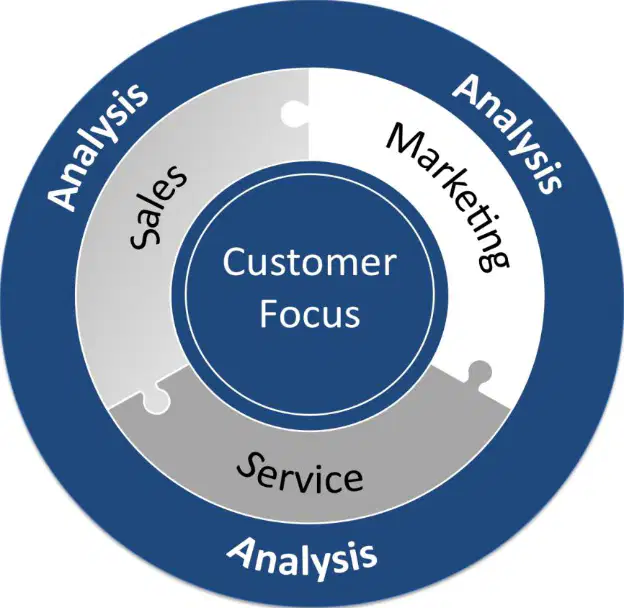
According to the slide on customer relationship management systems, which business processes are coordinated by CRM to deal with customers? Choose the single best answer.
Sales, marketing, customer service, and commerce
Manufacturing, logistics, accounting, and payroll
Human resources, legal, facilities, and procurement
Research, development, compliance, and training
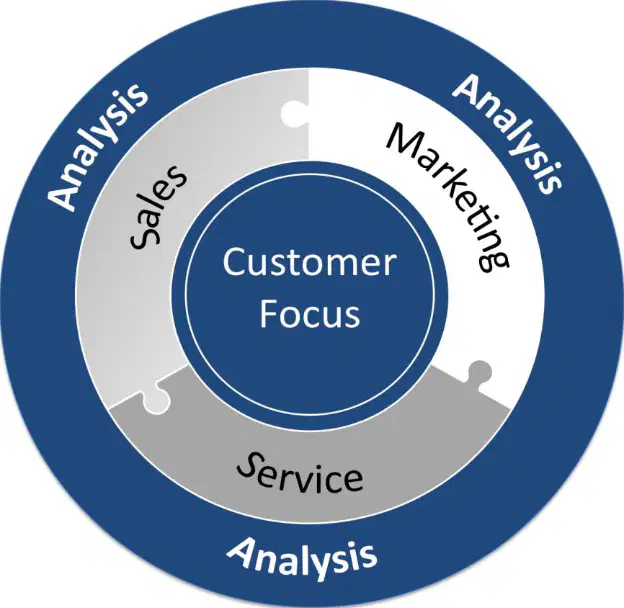
On the CRM slide, what is a primary benefit stated for firms that implement customer relationship management systems?
Helping firms identify, attract, and retain their most profitable customers
Reducing the number of customer interactions to lower service costs
Eliminating the need for sales and marketing teams
Outsourcing all customer support to vendors
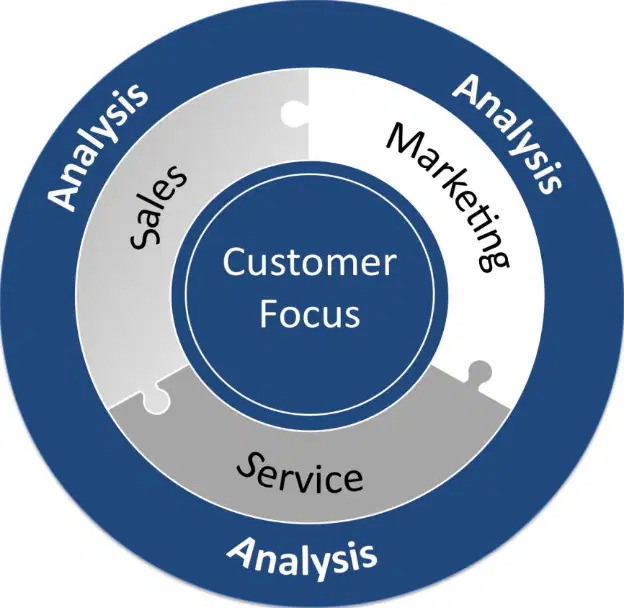
The CRM slide states that these systems provide information to coordinate all of the business processes that deal with customers. Which statement best reflects the role of information in CRM?
It integrates customer-facing processes across functions
It replaces back-office enterprise resource planning
It restricts analysis to post-sale service only
It focuses exclusively on e-commerce transactions

On the knowledge management systems (KMS) slide, what core purpose is highlighted for KMS within a firm?
Supporting processes for capturing and applying knowledge and expertise
Automating payroll and tax withholding for employees
Managing supplier payments and invoices
Replacing all internal communication with public forums

Which example from the KMS slide illustrates the type of knowledge these systems help manage?
How to create, produce, and deliver products and services
The market prices of publicly traded stocks
National tax codes and statutes for all countries
Customer credit scores from external bureaus

According to the KMS slide, how do knowledge management systems make organizational know-how available?
By collecting internal knowledge and experience within the firm and making it available to employees
By limiting access to a single executive portal
By encrypting all documents and deleting prior versions
By outsourcing knowledge storage to vendors without employee access

What external orientation of KMS is mentioned on the slide?
Linking to external sources of knowledge
Blocking external information for security
Replacing customer relationship systems entirely
Publishing all internal documents to the public web
On the intranets and extranets slide, what rationale is given for using these networks in the enterprise?
To increase integration and expedite the flow of information when enterprise applications are costly and difficult to implement
To slow down information sharing to improve security
To replace all enterprise applications immediately
To ensure only vendors receive internal memos
Based on the slide definitions, which description best matches an intranet?
Internal company websites accessible only by employees
Public websites open to anyone on the Internet
Web portals used only by customers for purchases
Vendor-managed portals for advertising campaigns
According to the slide, what is an extranet primarily used for?
Company websites accessible externally only to vendors and suppliers, often used to coordinate the supply chain
Internal knowledge bases restricted to management
Public-facing marketing pages for brand awareness
Employee-only portals for benefits enrollment
On the slide titled E-business, E-commerce, and E-government, which statement correctly defines e-business?
Use of digital technology and the Internet to drive major business processes
Buying and selling goods and services exclusively in physical stores
Government provision of services only to agencies
Designing hardware for data centers
What relationship between e-business and e-commerce is stated on the slide?
E-commerce is a subset of e-business
E-business is a subset of e-commerce
They are identical terms with no difference
E-commerce excludes any Internet use
Which definition of e-government is provided on the slide?
Using Internet technology to deliver information and services to citizens, employees, and businesses
Using government networks to monitor private emails
Limiting public access to online information
Collecting taxes only through mobile apps
According to the Information Systems Function in Business slide, what is the information systems department?
A formal organizational unit responsible for information technology services
An informal volunteer group that manages office events
A temporary project team for marketing campaigns
An external consulting firm hired for audits
Who often heads the information systems department, as stated on the slide?
Chief information officer (CIO)
Chief marketing officer (CMO)
Chief financial officer (CFO)
Chief operating officer (COO)
Which senior positions are listed on the slide as part of the information systems function? Select all that apply.
Chief security officer (CSO)
Chief knowledge officer (CKO)
Chief privacy officer (CPO)
Chief sales officer (CSO - sales)
Which roles are included in the information systems department according to the slide?
Programmers, systems analysts, and information systems managers
Sales representatives, cashiers, and delivery drivers
Graphic designers, copywriters, and brand strategists
Machine operators, line supervisors, and warehouse pickers
Refer to the slide titled The Information Systems Function in Business. Under End users, who are end users described as?
Representatives of other departments for whom applications are developed
IT specialists within the information systems department
External customers purchasing products
Senior executives setting organizational strategy
According to the slide titled The Information Systems Function in Business, what is stated about the role of end users in system design and development?
They have an increasing role
They have a decreasing role
They have no role
They participate only during testing
On the slide titled The Information Systems Function in Business, which of the following is included under IT Governance?
Strategies and policies for using IT in the organization
Programming language syntax rules for developers
Procedures for hardware repair and maintenance
Marketing campaign planning processes
According to the IT Governance points on the slide titled The Information Systems Function in Business, IT governance establishes which of the following?
Decision rights and a framework of accountability
Daily task lists for individual developers
Hiring policies for all departments only
Budget approval authority for external vendors
Which organizational aspect is identified under IT Governance on the slide titled The Information Systems Function in Business?
Organization of the information systems function
Office interior design standards
Cafeteria menu planning
Corporate social media content calendar
Which structural approach is explicitly mentioned under IT Governance on the slide titled The Information Systems Function in Business?
Centralized and decentralized structures
Franchising-only structures
Outsourced-only models
Open-source licensing models

