
 Worksheets
Cell Membranes and Lipids — Extraction-Based Test (Grade 13)
Total questions: 42
Worksheet time: 21mins
In eukaryotic cells, the lumen of a membrane-bound compartment is topologically equivalent to which space of the cell?
The extracellular space
The cytosol
The nucleoplasm
The mitochondrial matrix
Which organelles are not topologically equivalent to any other cellular compartment because they do not use vesicular transport to exchange cargo?
Mitochondria and chloroplasts
Endoplasmic reticulum and Golgi apparatus
Lysosomes and endosomes
Nucleus and cytosol
Which statement best characterizes the plasma membrane of cells?
It separates the interior of the cell from the extracellular environment and exhibits selective permeability.
It allows all solutes to cross freely to maintain equilibrium.
Only eukaryotic cells possess a plasma membrane.
It is impermeable to gases regardless of size.
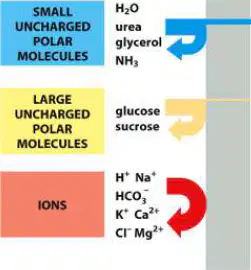
According to the selective permeability of the plasma membrane, which class of molecules can diffuse across without the aid of transport proteins?
Small hydrophobic molecules and some gases
Large uncharged polar molecules
Ions such as Na+ and Cl−
Any molecule with a charge
Which authors proposed the fluid mosaic model that incorporated lateral movement of molecules and the concept of membrane fluidity?
Singer and Nicolson (1973)
Gorter and Grendel (1925)
Davson and Danielli (1935)
Simons and van Meer (1998)
Which contribution is attributed to Gorter and Grendel (1925) regarding membrane organization?
A lipid bilayer model
Protein-lined sandwich model
Specialized membrane domains (lipid rafts)
Active transport channels
Which concept is associated with Simons and van Meer (1998) in models of membrane organization?
Specialized membrane domains known as lipid rafts
Strictly uniform membrane composition across the membrane
Elimination of proteins from membranes
Removal of lateral diffusion from models
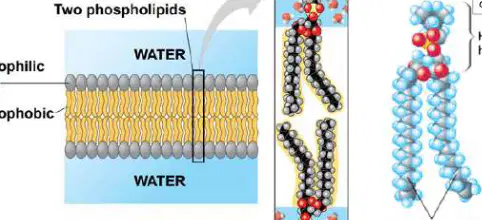
Phospholipids are described as amphipathic molecules. What does this mean for their structure?
They have a hydrophilic head region and two hydrophobic fatty acid tails.
They are entirely hydrophilic and dissolve completely in water.
They are entirely hydrophobic and insoluble in water.
They possess three hydrophobic tails and no polar head.
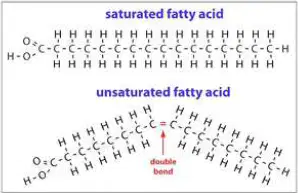
Which statement about fatty acids in membrane phospholipids is correct?
Unsaturated chains with cis double bonds introduce curvature and reduce tight packing.
Saturated chains introduce kinks that increase fluidity.
Double bonds straighten hydrocarbon chains to promote rigidity.
Chain saturation has no effect on membrane packing.
Which factor increases the tight packing and rigidity of the membrane?
Higher proportion of saturated fatty acid chains
Higher proportion of unsaturated fatty acid chains
Shorter hydrocarbon chains
Presence of kinks due to double bonds
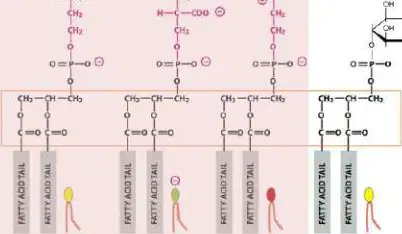
Based on classification by backbone, which pair correctly contrasts two major phospholipid classes?
Glycerophospholipids have a glycerol backbone with phosphate head groups, whereas sphingolipids share similar head groups but use sphingosine as the backbone.
Both glycerophospholipids and sphingolipids use glycerol as the backbone.
Sphingolipids lack fatty acid chains.
Glycerophospholipids are defined by having sugar head groups instead of phosphate.
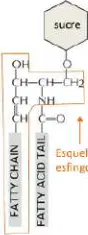
Which feature distinguishes glycolipids from phospholipids in membranes?
Glycolipids have a sugar head group instead of phosphate and are predominantly found on the external leaflet.
Glycolipids have three fatty acid tails and no polar head.
Glycolipids are uniformly distributed on both leaflets of the bilayer.
Glycolipids are absent from nervous tissue membranes.
Which statement reflects a recognized role of glycolipids in the plasma membrane?
They mediate recognition and adhesion, including interactions with lectins and roles in pathogen attachment.
They primarily function as channels for ion transport.
They are exclusive to mitochondrial membranes.
They suppress interactions with immune cells.
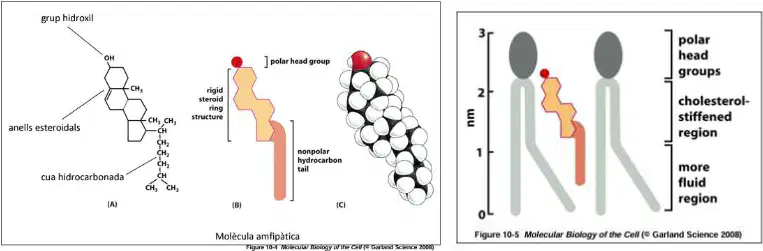
Which property of cholesterol is correctly described for its behavior in membranes?
Cholesterol is amphipathic and intercalates between phospholipids, aligning its hydroxyl group near polar head groups; it cannot form lipid bilayers by itself.
Cholesterol is fully hydrophilic and dissolves in the aqueous phase.
Cholesterol forms stable bilayers on its own due to its long hydrocarbon tail.
Cholesterol locates exclusively in the center of the bilayer away from head groups.
Which effect does cholesterol have on membrane physical properties?
It increases phospholipid packing and impermeability while helping control fluidity and expand the temperature range over which the membrane remains functional.
It uniformly decreases membrane rigidity and permeability.
It eliminates the need for membrane proteins.
It prevents lateral diffusion of lipids.
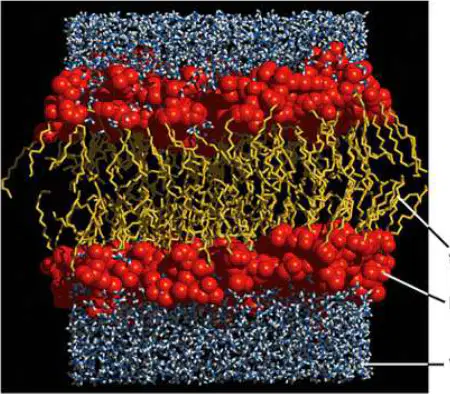
Which movement of membrane phospholipids is least spontaneous and requires specific enzymes to occur efficiently?
Transverse flip–flop between leaflets
Rotation around the hydrocarbon chain axis
Flexion of tails
Lateral diffusion within a leaflet
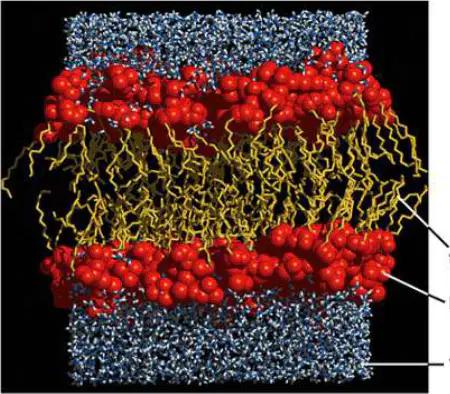
What statement best captures the dynamic nature of the plasma membrane highlighted in the material?
It is a highly dynamic and flexible structure where vesicles constantly form and fuse.
It is static and rigid with no molecular mobility.
It prohibits the formation of vesicles due to low fluidity.
It lacks any lateral displacement of lipids.
Define vesicular transport in cells.
Communication between different organelles using vesicles
Movement of ions through membrane channels only
Replication of organelle DNA during cell division
Passive diffusion of metabolites across membranes
In vesicular transport, what is the transported cargo typically composed of?
Soluble molecules or membrane molecules
Only nucleic acids
Only structural proteins
Only small inorganic ions
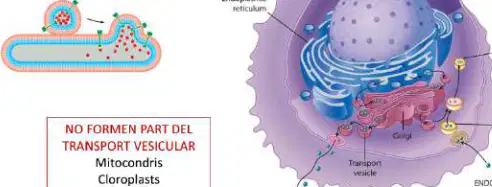
According to the material, which organelles are not part of the vesicular transport system and receive molecules by other routes?
Mitochondria, chloroplasts, and peroxisomes
Endoplasmic reticulum, Golgi apparatus, and lysosomes
Endosomes, plasma membrane, and nucleus
Vacuoles, ribosomes, and centrioles
The journey of material from the endoplasmic reticulum to the plasma membrane is referred to as which pathway?
Biosynthetic‑secretory (exocytosis, anterograde) pathway
Glycolytic pathway
Apoptotic signaling pathway
Endocytic retrograde pathway
Which process compensates the biosynthetic‑secretory pathway to maintain a constant movement of molecules in the cell?
Return pathways such as endocytosis and retrograde transport
Mitosis and cytokinesis
DNA repair pathways
Photosynthetic electron transport
What are typical destinies of material transported by vesicles within the cell?
To be secreted, degraded, or targeted to different organelles
To remain permanently in the cytosol
To integrate into mitochondrial DNA
To be exported only via ion channels
Which cytoskeletal elements play a key role in vesicle transport and in maintaining compartments at defined cellular locations?
Microtubules and the actin cytoskeleton
Intermediate filaments and myosin only
Collagen fibers and keratin
Desmosomes and tight junctions
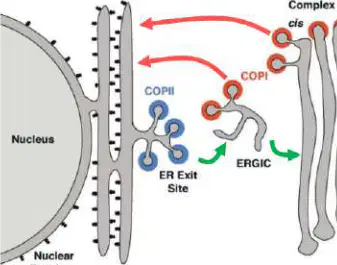
Based on the diagram, which coat protein is primarily associated with vesicles moving from the endoplasmic reticulum toward the Golgi apparatus (anterograde)?
COPII
COPI
Clathrin
Caveolin
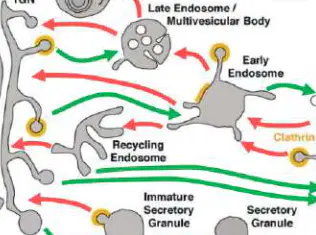
According to the figure, which pathway terms correspond to movement from the plasma membrane toward internal compartments (return)?
Endocytic or retrograde transport
Exocytosis or anterograde transport
Glycosylation pathway
Secretory granule maturation
According to the described sequence of events in vesicle biogenesis, which process occurs simultaneously at the beginning of vesicle formation: recruitment of coat proteins together with cargo selection, membrane fusion, or SNARE assembly?
Recruitment of coat proteins together with cargo selection
Membrane fusion
SNARE assembly
Tethering to the target compartment
In the outlined steps of vesicle formation, what does the budding process involve?
Stretching and inflating the membrane to generate a bud
Immediate fusion with the target compartment
Insertion of SNAREs into the target membrane
Complete loss of all coat proteins before scission
What marks the formation of a transport vesicle during the process described?
Scission from the donor compartment followed by removal of coat proteins
Assembly of t-SNAREs at the donor compartment
Direct translocation without uncoating
Recruitment of cytoskeletal motors before budding
According to the provided definitions, what is the donor compartment?
The compartment from which the vesicle exits
The compartment where the vesicle arrives
The cytosol where coat proteins assemble
The endosome where cargo is degraded
According to the provided definitions, what is the target (receptor) compartment?
The compartment where the vesicle goes or arrives
The compartment from which the vesicle exits
The cytosol where GTPases are activated
The ER lumen where cargo is folded

Which step completes the transport process as described in the sequence of vesicle biogenesis?
Fusion of the vesicle with the target compartment
Uncoating at the donor compartment
Cargo selection after fusion
GEF-mediated activation of Sar1 at the target membrane
In the mechanism of vesicle formation, what is the role of the small GTPase Sar1 when in its active, GTP-bound form?
It binds effectors and recruits coat proteins
It hydrolyzes cargo molecules
It disassembles SNARE complexes
It inhibits GEFs at the membrane

Which factor attracts GTPases such as Sar1 to the membrane where the vesicle will form and activates them?
GEFs (guanine nucleotide exchange factors)
GAPs (GTPase-activating proteins)
Kinases that phosphorylate cargo
Cytoskeletal motors
According to the described functions, which tasks are carried out by coat proteins during vesicle formation?
Selecting vesicle cargo
Facilitating membrane curvature
Hydrolyzing GTP on Sar1
Assembling t-SNAREs on the target membrane
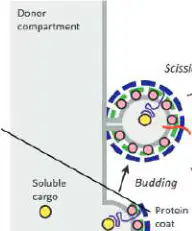
Which sequence best matches the order of events depicted for a coated vesicle from the donor compartment to the target compartment?
Recruitment and cargo selection → budding → scission → uncoating → translocation → tethering → SNARE assembly → fusion
Fusion → SNARE assembly → tethering → translocation → uncoating → scission → budding → recruitment and cargo selection
Uncoating → recruitment and cargo selection → budding → scission → tethering → translocation → fusion
Translocation → budding → scission → uncoating → recruitment and cargo selection → fusion
According to the passage on COPII biogenesis at ER exit sites, what is the specific role of Sec12 with respect to Sar1 at the ER membrane?
It catalyzes nucleotide exchange on Sar1 and recruits Sar1 to the ER membrane
It hydrolyzes GTP on Sar1 to trigger coat disassembly
It forms the outer coat heterodimer with Sec31
It binds directly to transmembrane cargo to initiate scission
Which protein heterodimer constitutes the inner COPII coat that is recruited by Sar1 at the membrane?
Sec13–Sec31
Sec23–Sec24
Sec12–Sar1
Clathrin heavy–light chains
Which proteins assemble to form the outer COPII coat on budding vesicles?
Sec23 and Sec24
Sec12 and Sar1
Sec13 and Sec31
Dynamin and arf1
Upon activation by a membrane GEF, what key event involving Sar1 initiates COPII vesicle formation from the ER?
Sar1 dissociates from the membrane and releases cargo
Sar1 changes conformation, inserts into the membrane, and promotes curvature to start vesicle formation
Sar1 binds clathrin and recruits dynamin
Sar1 phosphorylates Sec23 to trigger scission
What triggers COPII coat disassembly after a vesicle has separated from the ER membrane?
Phosphorylation of Sec31
ATP hydrolysis by Sec23
GTP hydrolysis on Sar1 converting Sar1-GTP to Sar1-GDP
Binding of soluble cargo to Sec12
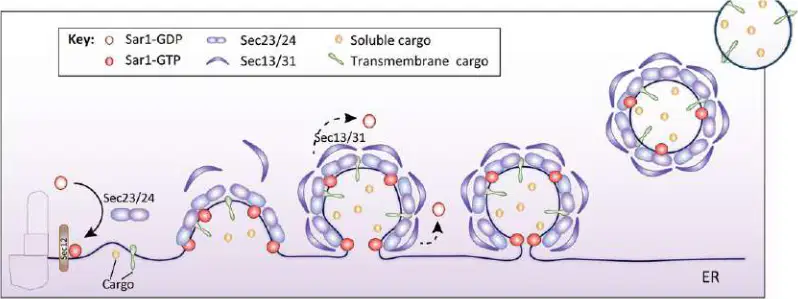
In the referenced diagram of COPII budding, which types of cargo are shown as being captured by COPII vesicles?
Only soluble cargo
Only transmembrane cargo
Both soluble and transmembrane cargo
Neither soluble nor transmembrane cargo

