
Font size
 Worksheets
Genetic Disease in Vietnamese Society
Total questions: 90
Worksheet time: 45mins
A rare premature aging condition appears in some families in Vietnam. Which statement best describes how genetic diseases can impact a community?
They spread like infections through casual contact
They cause temporary illness that always fully recovers
They can influence families, healthcare, and social support
They affect only one person without family concerns
A student reads about a premature aging disease in Vietnam. Which action would most help local families manage this genetic condition?
Avoid visiting hospitals during the rainy season
Limit outdoor activities for all teenagers
Encourage sharing clothes to build community
Increase access to genetic counseling services
A news report describes a child with rapid aging symptoms in Vietnam. Using reasoning, which explanation best fits why early diagnosis matters for genetic diseases?
It makes the condition less noticeable to classmates
It helps plan care, monitor complications, and support families
It guarantees the disease will be cured quickly
It prevents the gene from ever being inherited again
Which gene is commonly associated with Hutchinson–Gilford Progeria Syndrome (HGPS)?
BRCA1 gene variants cause HGPS
LMNA gene variants cause HGPS
MYH7 gene variants cause HGPS
TP53 gene mutations cause HGPS
What does a pathogenic variant mean in genetics?
A disease-causing DNA change
A temporary environmental effect
A change that improves health
A harmless change with no effect
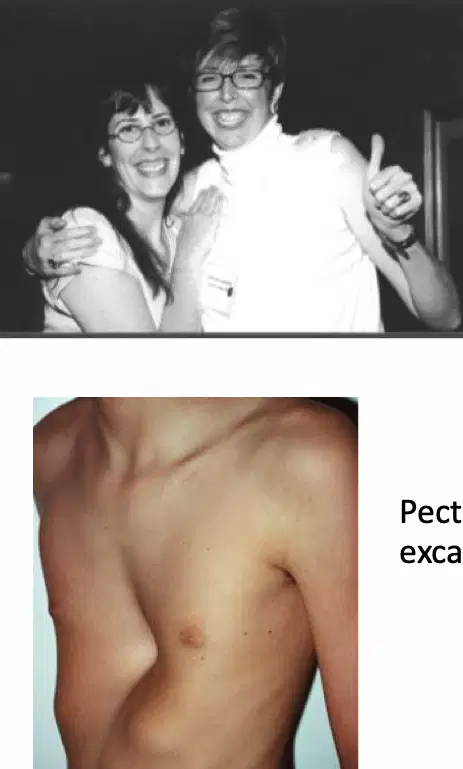
Match the chest shape term to its description.
Dolichocephaly: long narrow head
Pectus carinatum: chest protruding outward
Pectus excavatum: chest sunken inward
All three: normal chest shape
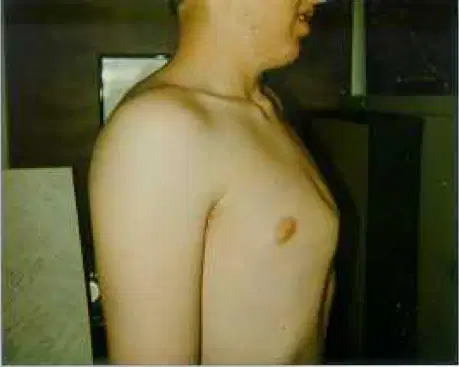
A new LMNA variant is found in a patient with a protruding chest and long narrow head. Which phenotype names best fit these features?
Pectus excavatum and brachycephaly
Pectus carinatum and dolichocephaly
Scoliosis and hydrocephalus
Kyphosis and microcephaly
Classic HGPS and nonclassic HGPS are both linked to LMNA variants. What mainly differs between them?
They are unrelated to DNA changes
They involve different body organs only
They have distinct sets of phenotypic features
They occur in different species
In HGVS nomenclature, which prefix indicates a change described at the coding DNA level (using exon positions)?
p.
g.
c.
r.
A variant is noted as c.76A>G. What does this tell you about the change?
RNA base at position 76 switched from A to G
Genomic position 76 changed from A to G
Amino acid number 76 changed from A to G
An adenine became guanine at coding DNA position 76
Which part of a gene includes exons but excludes introns?
Coding sequence forming mRNA
Noncoding intronic sequence
Upstream promoter region
3' and 5' UTR only
A variant is written as p.Gly12Val. Which statement best interprets it?
Glycine in exon 12 changed to valine base
Glycine at RNA position 12 changed to valine
Guanine at DNA position 12 changed to valine
Glycine at protein position 12 changed to valine
Which term describes when a genetic trait is present in a person’s DNA but does not always appear in their physical traits?
Incomplete penetrance
Complete penetrance
Variable expressivity
Locus heterogeneity
What does variability of expression mean for a genetic disorder?
Symptoms skip every other generation
Different people show different severity of symptoms
The disease appears the same in everyone
Only one gene can cause the disease
Pleiotropy best describes which situation?
Traits are only caused by environment
One gene has no effect on traits
Multiple genes affect one trait
One gene affects multiple traits
Which term refers to different mutations within the same gene causing a similar disease?
Complete penetrance
Locus heterogeneity
Allelic heterogeneity
Variable expressivity
Locus heterogeneity means that:
The environment alone causes the disease
Different genes can cause the same disease
One gene causes many different diseases
All patients have identical DNA changes
Which statement best describes a mechanism of disease?
The number of genes in the genome
A list of patient symptoms
The way doctors name diseases
The biological process that causes the disorder
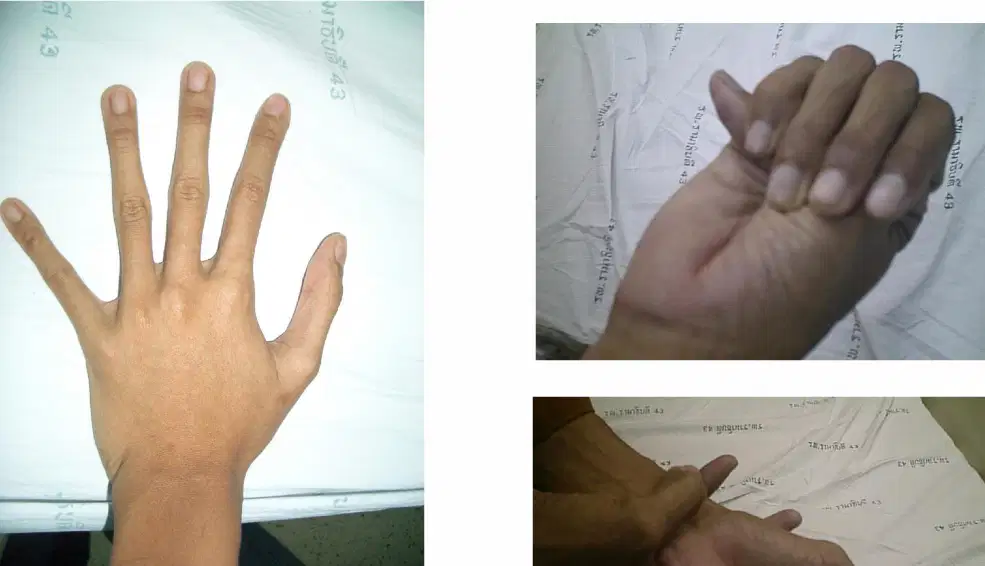
Look at the images labeled arachnodactyly, thumb’s sign, and wrist’s sign. What shared idea do these visual signs illustrate about genetic disorders?
They prove complete penetrance in all patients
They show pleiotropy across unrelated organs
They are examples of variable expressivity in physical traits
They rule out heterogeneity between different genes
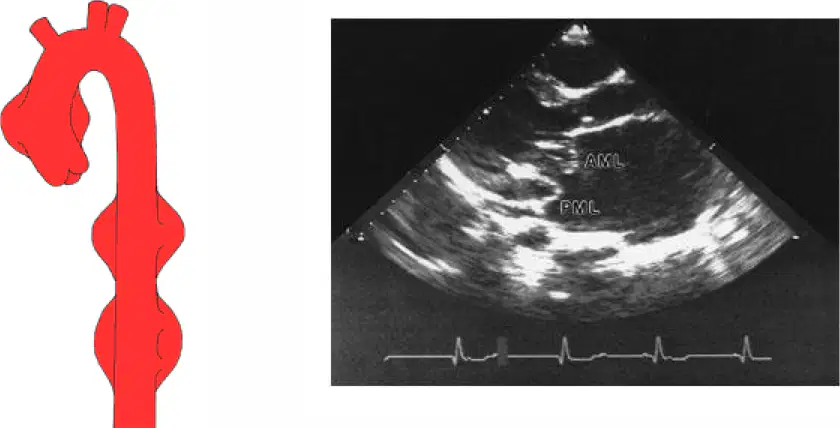
Which statement best describes autosomal dominant inheritance for conditions like Marfan syndrome and achondroplasia?
One mutated gene can cause the trait
Two mutated genes are always required
Traits skip every other generation
Only sons inherit the condition from fathers
Which gene is most commonly mutated in Marfan Syndrome?
BRCA1 gene mutation
COL1A1 gene mutation
MYH7 gene mutation
FBN1 gene mutation
Marfan Syndrome follows which inheritance pattern in families?
Autosomal recessive inheritance
X-linked dominant inheritance
Autosomal dominant inheritance
Mitochondrial inheritance
Which body system is primarily affected by Marfan Syndrome?
Endocrine glands
Blood-forming tissues
Digestive system tissues
Connective tissue system
A parent with Marfan Syndrome has a child. What is the chance the child inherits the condition?
About 25 percent chance
Always 100 percent chance
About 75 percent chance
About 50 percent chance
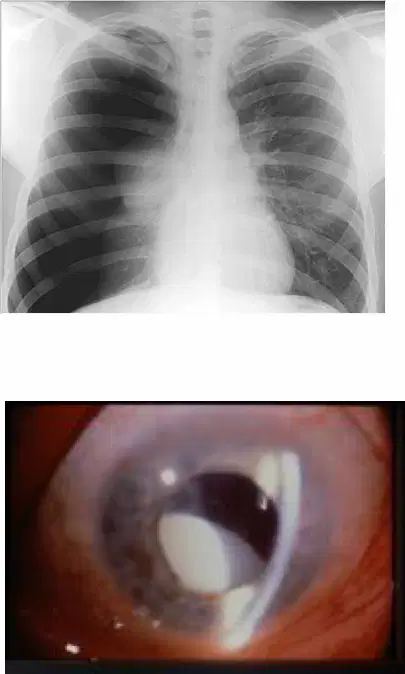
Look at the images showing an apical lung bleb, severe myopia with ectopia lentis, and lumbosacral dural ectasia. Which set best represents key clinical features students should remember for Marfan Syndrome?
Joint fractures, bone tumors, muscle tears
Frequent infections, swollen glands, fever spikes
Apical lung blebs, eye lens displacement, dural ectasia
Skin rashes, hair loss, brittle nails
Which term describes an unusually long, narrow head shape often seen in Marfan Syndrome?
Pectus carinatum
Arachnodactyly
Kyphoscoliosis
Dolichocephaly
A chest that curves inward like a shallow bowl is called what?
Pectus carinatum
Thumb's sign
High-arch palate
Pectus excavatum
Which feature means the chest sticks outward like a keel?
Kyphoscoliosis
Pectus carinatum
Wrist's sign
Pectus excavatum
What does high-arch palate refer to?
Roof of mouth is unusually high
Elbow cannot fully extend
Spine curves sideways and forward
Fingers are exceptionally long
Kyphoscoliosis combines which two spine curves?
Flat back and inward chest
Forward hunch and sideways curve
Sideways curve and flat back
Forward hunch and straight spine
Arachnodactyly is best described as:
Long, slender fingers
Outward-curved chest
Inward-curved chest
High roof of mouth
In the thumb’s sign, the thumb does what when the hand is closed?
Bends backward at the knuckle
Stays hidden under the fingers
Touches the wrist bone
Protrudes beyond the palm edge
Which hand test shows overlapping fingers around the wrist due to slender hands?
Chest keel test
Wrist’s sign
Thumb’s sign
High-arch test
Which skin change is commonly seen in Marfan Syndrome and appears as thin, stretch-like lines on the skin?
Reduced elbow extension
Striae atrophicae
Inguinal hernia
Incisional hernia
A student notices a person cannot fully straighten their elbow. Which Marfan-related manifestation best explains this observation?
Inguinal hernia
Incisional hernia
Reduced elbow extension
Striae atrophicae
If someone with Marfan Syndrome has a bulge in the groin after heavy lifting and later develops a bulge at a surgical scar, which two manifestations are most likely involved?
Striae atrophicae and reduced elbow extension
Reduced elbow extension and inguinal hernia
Inguinal hernia and incisional hernia
Striae atrophicae and inguinal hernia
Which heart problem is commonly linked to Marfan Syndrome and involves the main artery leaving the heart becoming enlarged?
Mitral valve prolapse enlargement of leaflets
Aortic root dilatation widening near the heart
Aortic regurgitation backward blood flow
Apical lung bleb small air pocket in lung
A student with Marfan Syndrome suddenly develops chest pain and trouble breathing. Which lung issue could most likely explain this?
Severe myopia blurry distant vision
Apical lung bleb air pocket at lung top
Ectopia lentis lens moved from center
Lumbosacral dural ectasia widened spinal covering
Which eye finding best matches Marfan Syndrome and can cause very poor distance vision?
Severe myopia needing strong minus lenses
Aortic regurgitation valve leak causing murmur
Mitral valve prolapse click sound with beat
Dural ectasia ballooning of spinal dura
A doctor suspects Marfan Syndrome in a teen with back pain and nerve symptoms. Which spinal feature supports this suspicion?
Apical lung bleb small upper lung blister
Ectopia lentis displaced eye lens
Lumbosacral dural ectasia expanded spinal dura
Aortic root dilatation near the heart
Which heart problem in Marfan Syndrome involves the main body artery becoming wider than normal?
Spontaneous pneumothorax
Mitral valve prolapse
Aortic dissection
Aortic dilatation
What is a dangerous tear in the wall of the aorta called?
Dural ectasia
Valve stenosis
Aortic dissection
Aortic dilatation
Which valve issue in Marfan Syndrome happens when a valve flap bulges backward?
Aortic dissection
Hindfoot deformity
Mitral valve prolapse
Pulmonary stenosis
A student can test the wrist-and-thumb sign. Which outcome suggests Marfan features?
Wrist feels wider than palm
Thumb cannot reach the palm
Thumb stops at the palm edge
Thumb overlaps beyond the palm
Which chest shape is part of the systemic score for Marfan Syndrome?
Barrel chest
Flat chest
Pectus carinatum
Funnel chest
Which finding is a foot-related sign counted in the systemic score?
Hindfoot deformity
Extra toe present
Clubbed toes
High arch only
Which problem is a sudden air leak causing a collapsed lung and can occur in Marfan Syndrome?
Mitral valve prolapse
Dural ectasia
Aortic dilatation
Spontaneous pneumothorax
Doctors add points for different body signs to make a systemic score. What is the main purpose of this score?
Choose heart surgery dates
Measure exercise stamina
Help diagnose Marfan Syndrome
Predict eye color in patients
A teen with tall build has wrist-and-thumb sign and pectus carinatum. Which action helps decide if they have Marfan Syndrome?
Calculate the systemic score
Ignore the body signs
Only test for allergies
Treat with antibiotics
What is the main purpose of a Marfan Syndrome Z-score calculator shown in the screenshot?
Predicting future height growth in teenagers
Assessing aortic root dilatation using measurements
Estimating general heart rate during exercise
Calculating daily medication doses for patients
A student measures an aortic root size and enters age and body size into the calculator. Which step best explains how the Z-score helps with diagnosis?
It converts the size into a blood pressure reading
It directly diagnoses Marfan without other tests
It hides measurement errors by rounding numbers
It compares the value to average healthy ranges
Which term describes when a genetic trait appears in some individuals who carry the mutation but not in others?
Stable phenotype without variation
Complete penetrance in all carriers
Variable penetrance among carriers
Uniform expression across tissues
What does variability of expression in Marfan syndrome mean?
Only the heart is affected
Symptoms range from mild to severe
The mutation changes every generation
All patients look exactly the same
Which concept explains why a single Marfan syndrome mutation can affect eyes, heart, and skeleton?
Expression limited to one organ
Heterogeneity within one locus
Pleiotropy with multiple systems
Penetrance across all carriers
Allelic heterogeneity in Marfan syndrome refers to what?
Different mutations within FBN1
Different genes cause the same disease
Same mutation in all patients
One mutation causes many traits
Locus heterogeneity in Marfan-like conditions means what?
Features occur without any gene changes
One gene creates several proteins
Multiple genes can cause similar features
Only FBN1 is ever involved
Which mechanism best summarizes how Marfan syndrome develops at the molecular level?
Loss of melanin production in skin
Gain of hemoglobin function
Defective fibrillin-1 affects connective tissue
Overactive insulin signaling in muscles
Which gene change most commonly causes achondroplasia?
Extra copy of chromosome 21
Deletion of hemoglobin gene
Variant in FGFR3 gene
Mutation in collagen type I
How is achondroplasia usually inherited within families?
X-linked recessive pattern
Autosomal dominant pattern
Mitochondrial inheritance
Autosomal recessive pattern
Which physical feature is most typical of achondroplasia?
Thin bones with frequent fractures
Delayed puberty and growth
Disproportionate short stature
Tall height with long limbs
A parent has achondroplasia. What is the chance each child will inherit it?
About one in ten
About one in two
About nine in ten
Zero percent always
Which complication can be associated with achondroplasia as children grow?
Severe hearing loss always
Spinal stenosis and breathing issues
High blood sugar and diabetes
Immune system deficiency
Which feature best describes the pattern of limb shortening commonly seen in achondroplasia?
Distal segments shorter than middle segments
Proximal segments shorter than distal segments
All limb segments equally short
Proximal segments disproportionately shorter than middle and distal
What hand appearance is often associated with achondroplasia?
Extra thumb called polydactyly
Three-way finger spacing called a trident hand
Curved fingers called ulnar clawing
Fused fingers forming a mitten shape
Which facial feature combination is typical in achondroplasia?
Midface hypoplasia with depressed nasal bridge
Flat forehead with long nasal bridge
Wide midface with elevated nasal bridge
Prominent chin with wide nasal bridge
A student compares two skeleton drawings. In achondroplasia, which body proportion is most accurate?
Short trunk with normal limb length
Normal trunk with disproportionate short limbs
Normal trunk and limbs, reduced skull size
Long trunk with long limbs and small hands
During a simple movement test, which joint limitation might be observed in someone with achondroplasia?
Knee hyperextension
Wrist flexion limitation
Hip flexion limitation
Elbow extension limitation
Which lower limb feature can be present in achondroplasia?
Tibial bowing
Fibular bowing
Femoral bowing only
No bowing anywhere
Look at the X-ray diagrams showing Achondroplasia. Which feature best explains why people with Achondroplasia often have spinal stenosis?
Extra ribs increasing chest width
Long vertebral bodies widening the canal
Thick intervertebral discs adding space
Narrow spinal canal due to short pedicles
In pelvic X-rays of Achondroplasia, which pelvic shape is most characteristic?
Square pelvis with wide sciatic notches
Trident-shaped pelvis with flared iliac wings
Round pelvis with enlarged acetabula
Triangular pelvis with narrow inlet
Which complication involves narrowing of the cervical spine and can press on the spinal cord?
Anesthetic risks during surgical procedures
C-spine stenosis causing cord compression
Respiratory insufficiency from small chest
Hydrocephalus causing brain fluid buildup
What is hydrocephalus best described as in people with achondroplasia?
Narrowing of the spinal canal
Weak bones in the arms and legs
Excess fluid in the brain ventricles
Poor oxygen exchange in the lungs
A patient with achondroplasia needs surgery. Which risk should the medical team plan for first?
No need for neck positioning checks
Reduced bleeding due to strong clotting
Greater chance of rapid bone growth
Higher anesthetic risks requiring careful airway
Spinal stenosis in achondroplasia most likely leads to which symptom pattern?
Stronger breathing during exercise
Headaches relieved by hydration
Leg numbness and walking difficulty
Improved balance and faster reflexes
Respiratory insufficiency in achondroplasia usually happens because of which factor?
Overactive immune cells in airways
Small chest size limiting lung expansion
Too much blood clotting in vessels
Extra cerebrospinal fluid in brain
Which term describes when a genetic trait like achondroplasia appears in all individuals who carry the mutation?
Variable expressivity across carriers
Complete penetrance in carriers
Incomplete penetrance in carriers
Genetic heterogeneity among carriers
Achondroplasia shows variability of expression. What does this mean for affected individuals?
Symptoms appear only in adults
Mutation never causes symptoms
Features vary in severity
All have identical features
Pleiotropy in achondroplasia best describes which situation?
One gene copies itself twice
Many genes affect one trait
A trait is only environmental
One gene affects many traits
Allelic heterogeneity in achondroplasia involves what pattern at the same gene?
Different traits, same mutation
No mutations, same trait
Same mutation, different genes
Different mutations, same gene
Locus heterogeneity related to skeletal disorders means what?
The locus changes during aging
Different loci cause similar traits
One locus causes many traits
A single trait has no genetic cause
Which mechanism most directly explains achondroplasia at the molecular level?
FGFR3 gain-of-function mutation
Chromosome number change
Mitochondrial DNA deletion
F8C clotting factor deficiency
Which statement best describes autosomal recessive inheritance?
A trait appears when one mutated allele is present
A trait appears only when two mutated alleles are present
A trait is passed only from fathers to sons
A trait affects males but never females
Which disease is an example of an autosomal recessive disorder?
Huntington disease with dominant inheritance
Thalassemias involving hemoglobin gene mutations
Color blindness linked to the X-chromosome
Hemophilia A affecting X-chromosome gene F8
What do thalassemias and hemoglobinopathies mainly affect in the blood?
White blood cell infection defense
Platelet clot formation ability
Globin chain production in red cells
Blood sugar transport molecules
Which best describes the genetic basis of thalassemias and hemoglobinopathies?
Mutations in globin genes
Radiation damage to body tissues
Extra copies of chromosome 21
Bacterial DNA inserted into cells
What is a common consequence of globin gene mutations in these disorders?
Hemolysis causing red cell breakdown
Stronger heart muscle contractions
Higher oxygen levels in tissues
Increased bone growth in limbs
How are thalassemias and many hemoglobinopathies usually inherited?
Autosomal dominant inheritance
Autosomal recessive inheritance
X-linked dominant inheritance
Mitochondrial maternal inheritance
A population has a high carrier frequency for a hemoglobinopathy. Which situation is most likely?
Instant cure for affected individuals
Fewer genes related to blood formation
More children born with the disorder
No effect on future inheritance patterns
Which statement best defines thalassemia in relation to hemoglobin?
A dietary condition increasing iron absorption
A qualitative variant changing hemoglobin structure
A quantitative variant reducing hemoglobin production
A contagious illness affecting red blood cells
Hemoglobinopathy is most accurately described as which type of change to hemoglobin?
A qualitative variant altering protein structure
A quantitative variant lowering gene expression
A temporary change from exercise levels
A variant increasing the number of red cells

