
 Worksheets
Connecting Rural and Urban Communities
Total questions: 8
Worksheet time: 4mins

What is social inclusion in the context of digital technologies?
Social inclusion in digital technologies involves creating exclusive online communities for specific demographics.
Social inclusion in digital technologies means ensuring equal access and participation for all individuals in the digital world.
Social inclusion in digital technologies refers to limiting access to certain groups.
Social inclusion in digital technologies means prioritizing speed over accessibility for users.
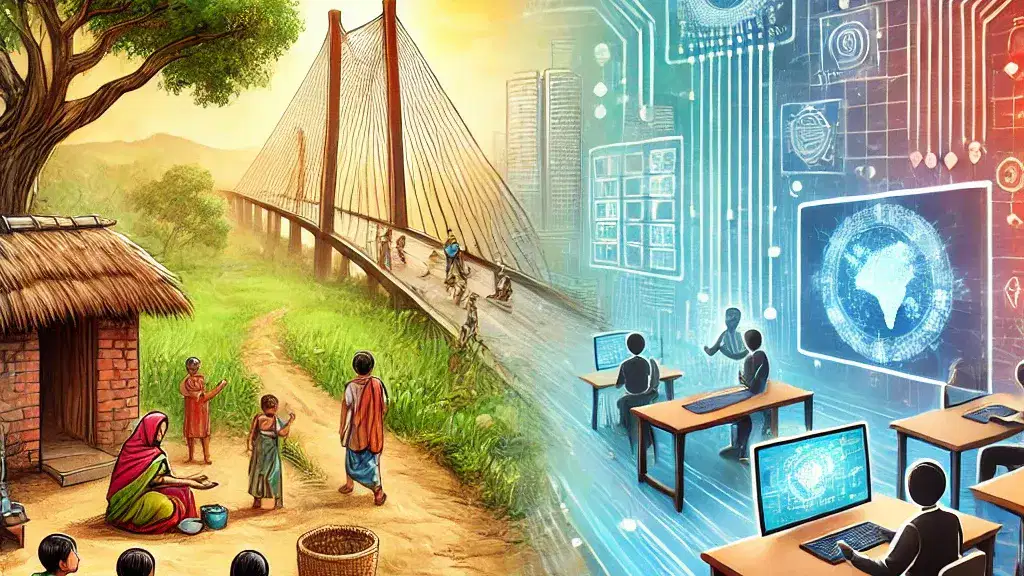
How can digital technologies help bridge the rural-urban divide?
Digital technologies can enhance connectivity, access to services, and economic opportunities in rural areas.
Digital technologies can solely focus on urban development.
Digital technologies can reduce urban population growth.
Digital technologies can eliminate all rural challenges.

Name one benefit of increased internet access in rural areas.
Reduced local business growth.
Improved educational opportunities.
Higher internet costs.
Increased job competition.

What role do mobile phones play in enhancing social inclusion?
Mobile phones promote isolation by encouraging virtual over real-life connections.
Mobile phones facilitate communication, access to information, and participation in social networks, promoting social inclusion.
Mobile phones hinder face-to-face interactions and create social barriers.
Mobile phones limit access to information and reduce community engagement.

How can online education platforms support rural students?
Online education platforms hinder rural students by limiting their access to local resources.
Online education platforms focus solely on urban students and ignore rural needs.
Online education platforms support rural students by providing access to quality resources, flexible learning, and community support.
Online education platforms only provide rigid schedules that do not accommodate rural students.

What challenges do rural communities face in accessing digital technologies?
Abundant access to public Wi-Fi.
Limited internet connectivity and infrastructure.
High levels of urban migration.
Strong government support for technology.

Give an example of a digital initiative that promotes social inclusion.
Online Gaming Community
Virtual Reality Experience
Digital Literacy Program
Social Media Campaign

Why is it important to consider both rural and urban perspectives in technology development?
It is crucial to focus solely on urban needs for effective technology.
Rural perspectives are irrelevant in modern technology development.
Urban technology should dominate to drive economic growth.
It is important to ensure technology is inclusive and meets the diverse needs of both rural and urban communities.

