
 Worksheets
SMU12102 - SESSION 1
Total questions: 30
Worksheet time: 15mins
Which of the following topics is NOT discussed in Module 2: Kenali SPRM?
Background of SPRM
Vision, mission, and principles of SPRM
History of Malaysian Parliament
Main activities implemented with examples
What is one of the main focuses of Module 2: Kenali SPRM?
Peranan mekanisme check and balance
International law
Environmental policies
Economic theories
What was the main function of the Unit Pencegahan Rasuah (UPR) when it was first established?
Conducting criminal investigations
Prosecuting corruption cases
Implementing anti-corruption awareness programs
Managing government finances
In which year was the Enakmen Pencegahan Rasuah Negeri-Negeri Melayu Bersekutu established?
1950
1938
1973
2009
Compare the scope of the Kanun Keseksaan Negeri-Negeri Selat 1871 and the Ordinan Pencegahan Rasuah 1950 in terms of their enforcement areas.
Both were enforced only in Negeri-Negeri Selat.
Kanun Keseksaan was enforced in Negeri-Negeri Selat, while Ordinan Pencegahan Rasuah was enforced throughout Tanah Melayu.
Both were enforced throughout Tanah Melayu.
Ordinan Pencegahan Rasuah was enforced only in Negeri-Negeri Melayu Bersekutu.
What is one of the main visions of SPRM?
To create a society in Malaysia free from corruption.
To increase the population of Malaysia.
To promote tourism in Malaysia.
To improve the education system in Malaysia.
What is one of the main missions of SPRM in Malaysia?
To promote tourism in Malaysia
To lead efforts in preventing corruption in Malaysia
To improve transportation systems
To develop sports programs

According to the notes, how should society view corruption?
As a common practice
As a respectable act
As a disgusting act
As a necessary evil
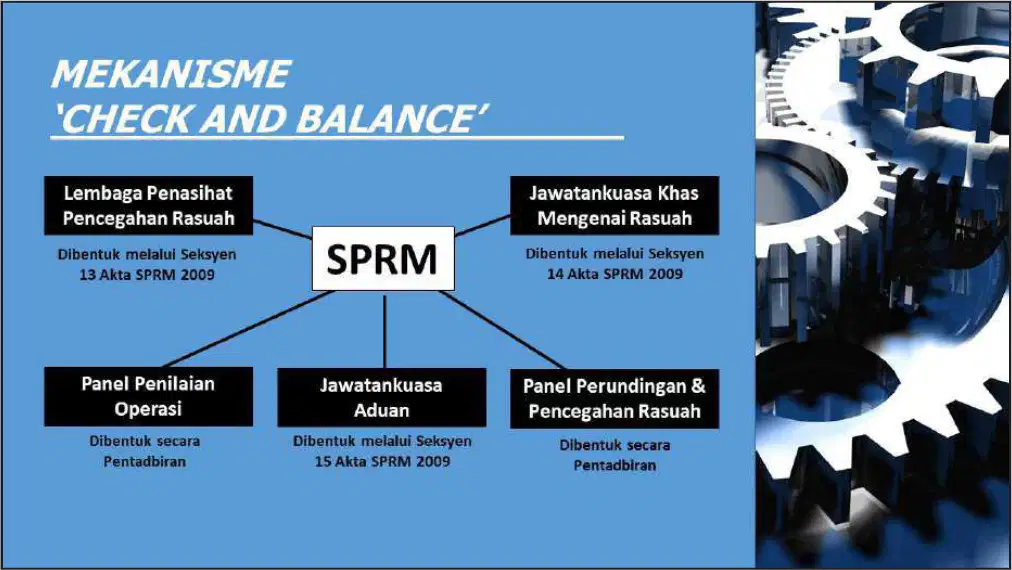
Which act established the SPRM monitoring mechanism in Malaysia?
Akta SPRM 2009
Akta Pendidikan 1996
Akta Perdagangan 2010
Akta Keselamatan 2005
Is there any other agency in Malaysia with a monitoring mechanism like SPRM?
Yes, there are several
No, SPRM is the only one
Only in the private sector
Only in the education sector
Under which section of the SPRM Act 2009 was the Jawatankuasa Khas Mengenai Rasuah (JKMR) established?
Section 14
Section 10
Section 21
Section 5
Which groups do the members of JKMR represent?
Government and opposition parties
Only government parties
Only opposition parties
Civil society organizations
What is an example of a recommendation made by JKMR to the Prime Minister?
Suggesting that SPRM should have its own service commission
Proposing a new tax law
Recommending the closure of SPRM
Suggesting SPRM merges with the police
If JKA finds a weakness in SPRM's procedures, what is their next step?
Make recommendations for improvement
Ignore the weakness
Report it to the police
Fire the responsible officer
Why is the implementation of community education activities important for PPPR?
To increase public awareness and support
To reduce government spending
To improve international relations
To promote sports events
If a complaint is not investigated by SPRM, what must happen according to the PPO guidelines?
It must be presented to PPO for approval.
It can be ignored.
It should be sent to another agency.
It must be published in the media.
Why is it important for SPRM not to refer to anyone when conducting investigations?
To ensure independence and unbiased investigations
To follow government orders
To increase public relations
To reduce workload
What is one purpose of SPRM training for its officers?
To increase capability and capacity to perform tasks
To prepare for international missions
To improve public speaking skills
To learn foreign languages
If the public feels that SPRM is not performing professionally, what can they do?
Make a complaint to the Complaints Committee
Ignore the issue
Contact the police directly
Write a letter to the Prime Minister
Why is it important for SPRM to carry out its duties with a high level of professionalism?
To ensure tasks are performed effectively and ethically
To increase the number of officers
To reduce working hours
To avoid public events
Which of the following is a reason for practicing the principle of separation of powers in a country?
To avoid misuse of power when the same agency performs investigation and prosecution
To increase the number of agencies involved in legal processes
To reduce the number of legal cases
To allow agencies to work independently without any oversight
Which agencies are involved in the process described by the principle of separation of powers?
SPRM, Jabatan Peguam Negara, Mahkamah
Police, Hospital, School
Parliament, Library, Museum
SPRM, Police, Fire Department
The principle of separation of powers acts as a 'check & balance' in the legal system by:
Allowing different agencies to monitor each other, preventing abuse of power and ensuring decisions are based on facts rather than personal sentiment.
Letting agencies work independently without any communication.
Reducing the number of agencies involved in legal matters.
Allowing one agency to control all aspects of the legal process.
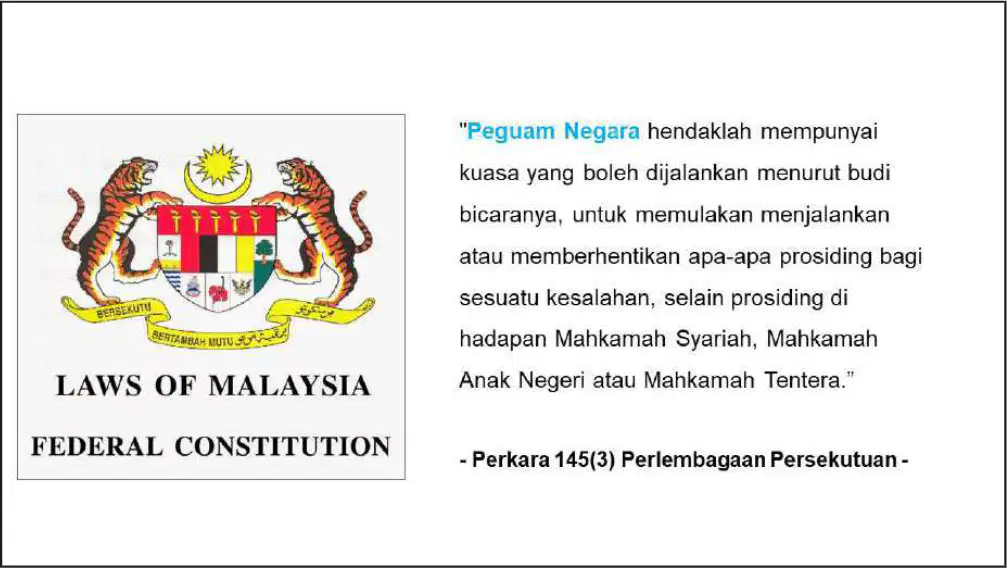
According to Perkara 145(3) of the Federal Constitution, what power does the Attorney General (Peguam Negara) have?
The power to initiate or discontinue any proceedings for any offense, except those before Syariah Court, Native Court, or Military Court.
The power to make laws for the country.
The power to appoint judges to the Federal Court.
The power to enforce police regulations.

According to the lecturer's notes, what will the next slide explain?
Strategies implemented by SPRM
History of SPRM
Financial reports of SPRM
International collaborations of SPRM
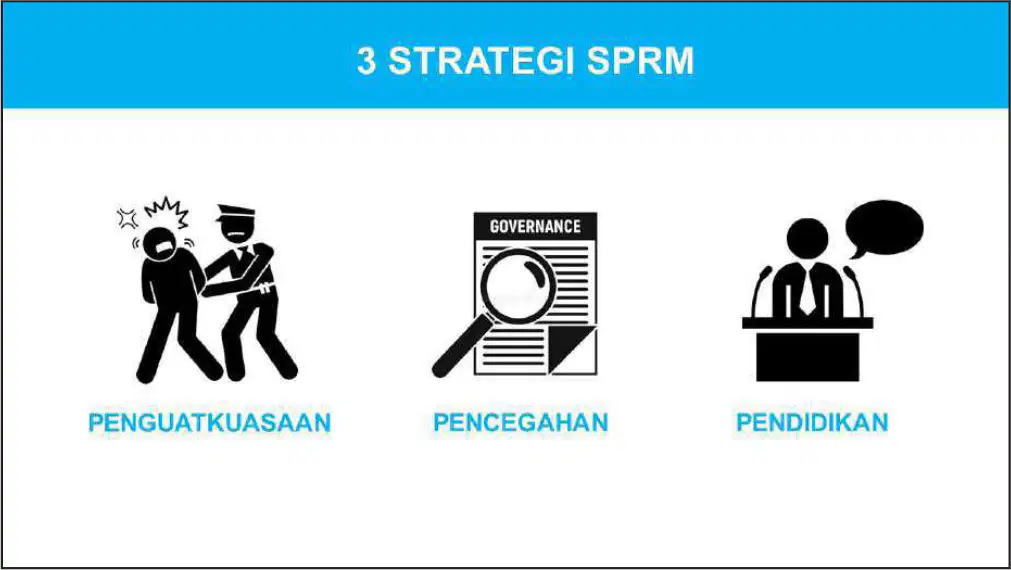
Which of the following is NOT one of the three main strategies of SPRM?
Enforcement
Prevention
Education
Investigation
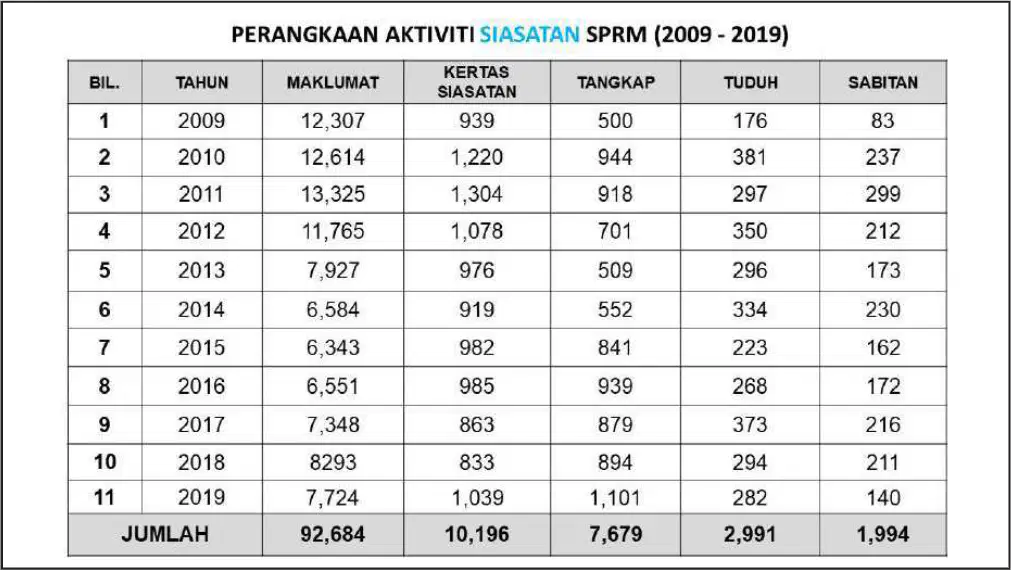
What is the average number of individuals arrested each year for corruption, abuse of power, and misconduct according to the SPRM statistics from 2009 to 2019?
200 to 400
800 to 1,000
1,500 to 2,000
100 to 300
What is the total number of convictions (Sabitan) achieved by SPRM from 2009 to 2019?
2,991
1,994
10,196
7,679
Which organization is mentioned as investigating high-profile cases of public interest?
SPRM
WHO
UNESCO
IMF
To ensure a thorough and unbiased investigation in a high-profile public interest case, which of the following steps should be taken?
Only interview suspects
Collect evidence, interview witnesses, maintain transparency, and follow legal procedures
Ignore public opinion
Rely solely on media reports

