
 Worksheets
7.1: Human Influence on Groundwater & Surface Water (TEKS 7.11.A) A
Total questions: 18
Worksheet time: 54mins


Ririe Reservoir, located along the Snake River in Idaho, was built to store water for urban areas and farming irrigation. Many fisherman visit the dam for the diverse Trout, Salmon and Perch population. How might the dam have impacted the the Snake River system.
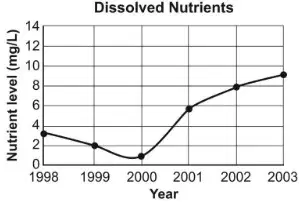
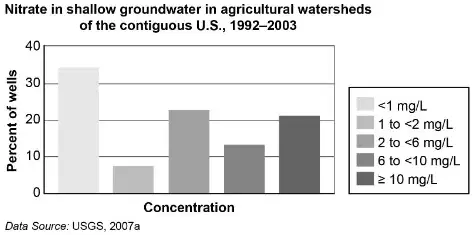
The EPA's drinking water standard for nitrate is a maximum contaminant level of 10 mg/L. Analyze the chart. Which statement identifies the effects of nitrate concentrations in watersheds?
What percentage of wells have a concentration of nitrate less than 1 mg/L?
35%
22%
23%
8%
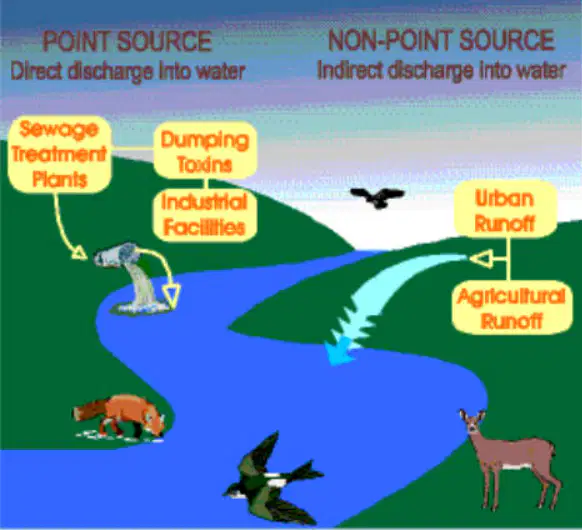
Which action addresses and prevents nonpoint source pollution.
Nitrogen and Phosphorus and chemical compounds often found in (a) . When rain washes over farmers fields these chemicals get into the ground water and streams in a process know as (b) . Excess nitrates and phosphorus causes (c) killing fish and plants.

True or False: Nitrogen and Phosphorous are used in fertilizer to help plants grow. More Nitrogen and phosphorus in the water is great for steam health and makes water more safe for drinking.
True
False
How can human activities such as agriculture affect groundwater quality in a watershed?
They have no effect on groundwater quality.
They can introduce pollutants like pesticides and fertilizers into the groundwater.
They improve groundwater quality by adding nutrients.
They only affect surface water, not groundwater.
Which of the following is a beneficial influence of human activity on surface water in a watershed?
Dumping industrial waste into rivers.
Constructing wetlands to filter pollutants.
Over-extracting water for irrigation.
Building dams that disrupt ecosystems.
What is a potential harmful effect of urban development on a watershed?
Increased groundwater recharge.
Improved water quality due to better infrastructure.
Increased runoff and pollution from paved surfaces.
Enhanced biodiversity in urban areas.
Which human activity is most likely to recharge groundwater in a watershed?
Over-pumping for agricultural use.
Planting trees and vegetation.
Paving large areas with concrete.
Diverting rivers for industrial use.
How can human activity lead to the depletion of groundwater resources in a watershed?
By increasing natural recharge rates.
By over-extracting water for agricultural and industrial use.
By reducing surface runoff.
By enhancing aquifer recharge.
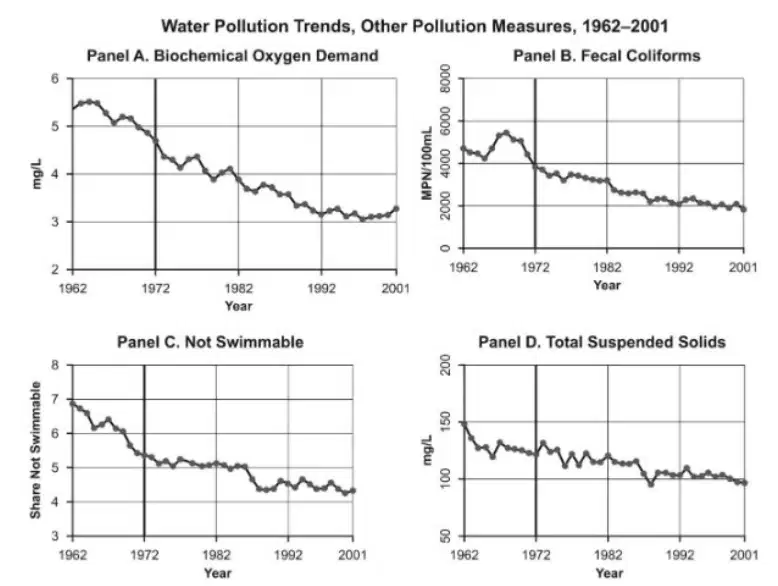
In 1972 the Clean Water Act was put into effect. Based on this data can scientist confirm that all pollution will eventually be brought down to 0?
It is not possible to eliminate all water pollution.
Based on the negative trend that all water pollution will be 0.
This data does not provide information about future pollution. It cannot be determined if pollution will be 0.
We will live in a world that is water pollutant free because we will stop driving cars.

