
 Worksheets
Introduction to Slip
Total questions: 10
Worksheet time: 5mins
An induction motor runs with synchronous speed Ns = 1500 rpm and rotor speed Nr = 1410 rpm. What is the slip percentage?
7.5 percent slip approximately
6.0 percent slip approximately
5.5 percent slip approximately
6.8 percent slip approximately
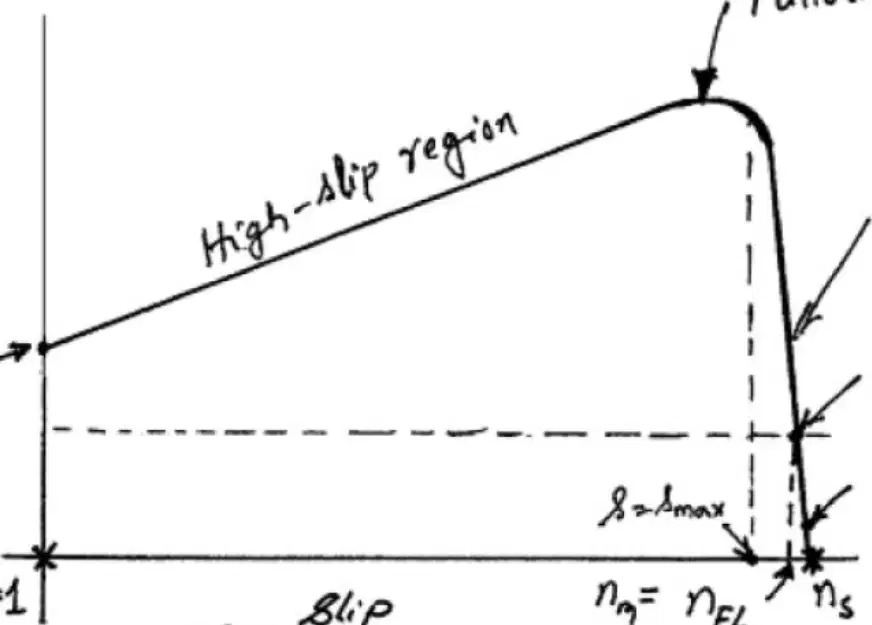
In the torque–speed curve of an induction motor, which label denotes the maximum torque the motor can produce before it begins to decelerate and stall as load increases?
Rated torque at operating point
Starting torque at standstill
Pullout or breakdown torque
Pull-up torque during acceleration
During acceleration from standstill, which statement best defines pull-up torque for an induction motor?
Initial torque with rotor locked
Torque at design operating speed
Maximum torque before stalling under load
Minimum torque available while accelerating
An induction motor has synchronous speed Ns and rotor speed Nr. Which expression correctly defines per unit slip s?
s equals Nr divided by Ns times 100
s equals Ns divided by Nr minus Ns
s equals Nr minus Ns over Nr
s equals Ns minus Nr over Ns
Given i2 ∝ e2 and T ∝ i2, what is the resulting relationship between torque T and slip s for small slips?
Torque is proportional to slip squared
Torque is independent of slip
Torque is inversely proportional to slip
Torque is directly proportional to slip
An induction motor runs with slip s. Which expression correctly gives the rotor current frequency?
2πf × s times inductance L
f × s exactly proportional to slip
f × (1 − s) inversely with slip
Ns × s divided by pole pairs
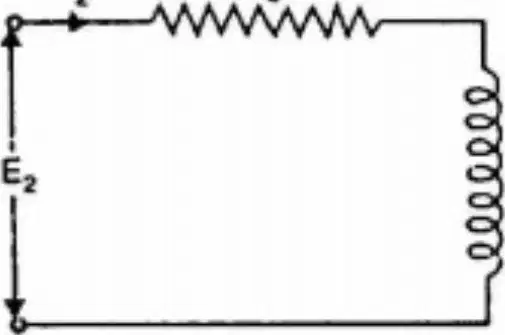
For a wound-rotor induction motor, which expression gives rotor current per phase at standstill (s = 1) in terms of rotor induced emf E2, rotor resistance R2, and rotor reactance X2?
I2 = E2R2/(R22+X22)
I2 = sE2 / R22+(sX2)2
I2 = E2 / R22+X22
I2 = E2 / (R2 + sX2)
For an induction motor at standstill, starting torque Ts is proportional to E2 I2 cos φ2. Which expression correctly gives Ts in terms of rotor resistance R2 and reactance X2 when E2 is constant?
Ts = K1 R2 over R2 squared plus X2 squared
Ts = K E2 squared over R2 squared plus X2 squared
Ts = K1 X2 over R2 squared plus X2 squared
Ts = K R2 X2 over R2 squared plus X2 squared
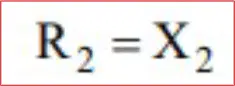
For an induction motor at standstill, starting torque Ts is proportional to R2 divided by R2 squared plus X2 squared. Differentiating with respect to R2 and setting dTs/dR2 = 0, what condition yields maximum starting torque?
Rotor reactance equals stator leakage reactance
Rotor resistance equals standstill rotor reactance
Rotor reactance equals magnetizing reactance
Rotor resistance equals stator winding resistance
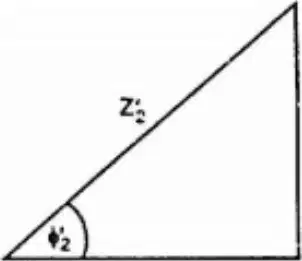
For an induction motor with rotor resistance R2 and standstill reactance X2, running torque Tr varies with slip s as Tr ∝ sR2/[R22+(sX2)2] . At what slip does Tr reach its maximum value?
s = R2 / X2
s = X2 / R2
s = √(R2/X2)
s = (R2 + X2)/2

