
 Worksheets
Introduction to Coronary Physiology
Total questions: 29
Worksheet time: 15mins
Which limitation of coronary angiography best explains why physiological assessment is needed for ischemia evaluation?
It provides a 2D lumen image only, not ischemia
It measures microvascular resistance directly at rest
It captures overall coronary flow during adenosine stress
It reliably correlates lesion severity with patient symptoms
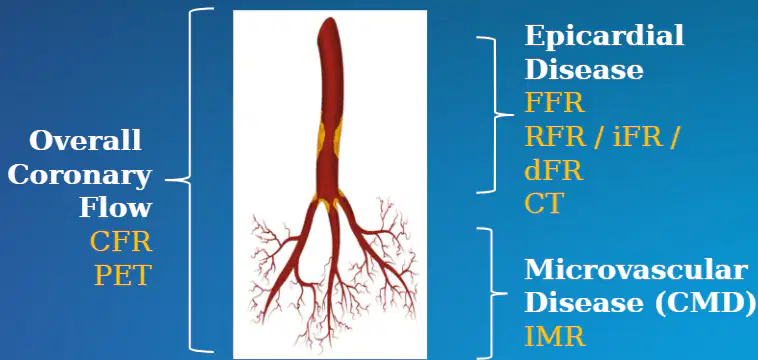
Which index primarily assesses epicardial stenosis to determine whether a lesion is flow-limiting?
Fractional Flow Reserve (FFR)
Index of Microcirculatory Resistance (IMR)
Coronary Flow Reserve (CFR)
Positron Emission Tomography (PET)
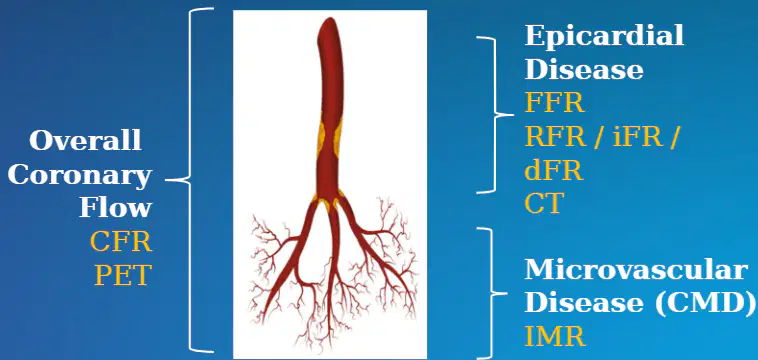
A patient has persistent angina despite non-obstructive epicardial arteries on angiography. Which physiological measure best targets microvascular disease?
Index of Microcirculatory Resistance (IMR)
Computed Tomography angiography (CT)
Fractional Flow Reserve (FFR)
Resting Full-cycle Ratio (RFR)
Which statement best defines fractional flow reserve (FFR) in coronary physiology?
Noninvasive flow ratio computed from CT angiography
Ratio of distal to proximal pressure during maximal hyperemia
Average distal-to-aortic pressure during the full cardiac cycle
Diastolic-only distal-to-aortic pressure without hyperemia
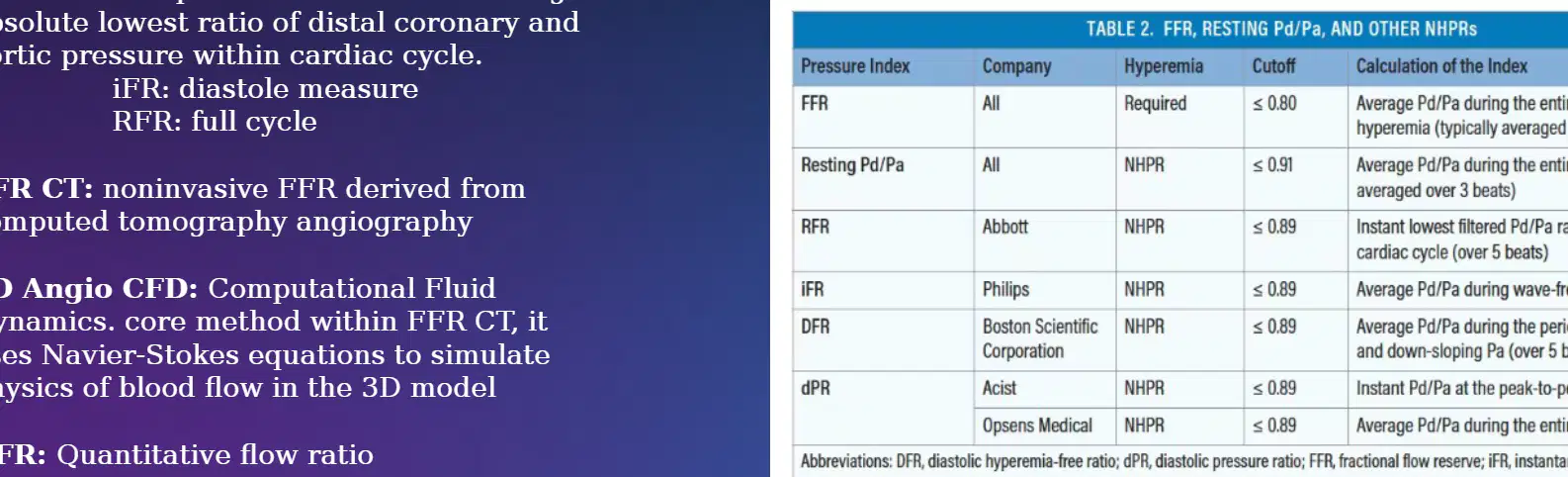
A patient is assessed with iFR rather than FFR. Which procedural feature most distinguishes iFR from FFR?
Measured in diastole without vasodilator drugs
Requires pharmacologic hyperemia to be induced
Computed from 3D CT fluid simulations
Uses intravascular ultrasound pressure sensors
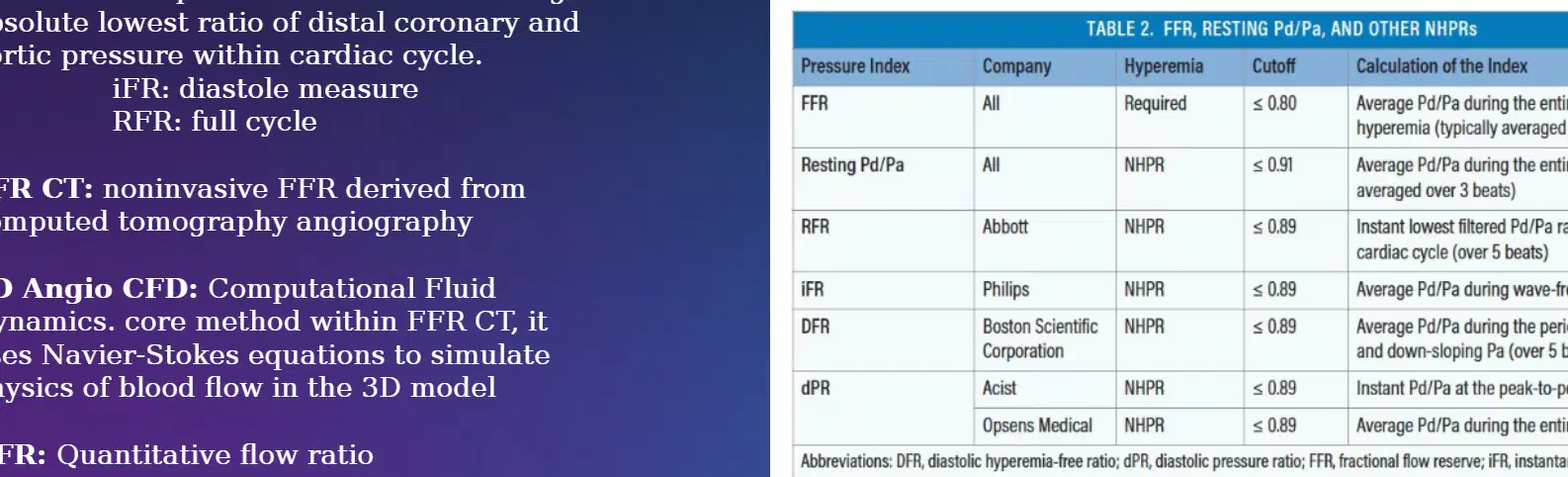
What is the typical agreed cut-off value indicating a significant lesion when using pressure-wire based FFR?
Greater than or equal to 0.89 is abnormal
Less than or equal to 0.75 is abnormal
Greater than or equal to 0.91 is abnormal
Less than or equal to 0.80 is abnormal
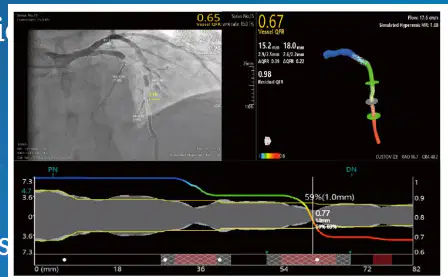
A study aims to reduce unnecessary PCI by guiding decisions with physiological metrics. Which approach aligns with evidence from FAME and subsequent trials?
Adopt FFR guidance validated in randomized trials
Apply QFR without prior intravascular validation
Rely solely on OCT-derived optical flow ratio (OFR)
Use angiographic diameter stenosis thresholds alone
Which statement best defines fractional flow reserve in coronary physiology?
A microvascular resistance metric during resting flow
A noninvasive estimate of ejection fraction during stress
A lesion-specific physiological index at maximum hyperemia
A vessel-level index of global myocardial perfusion
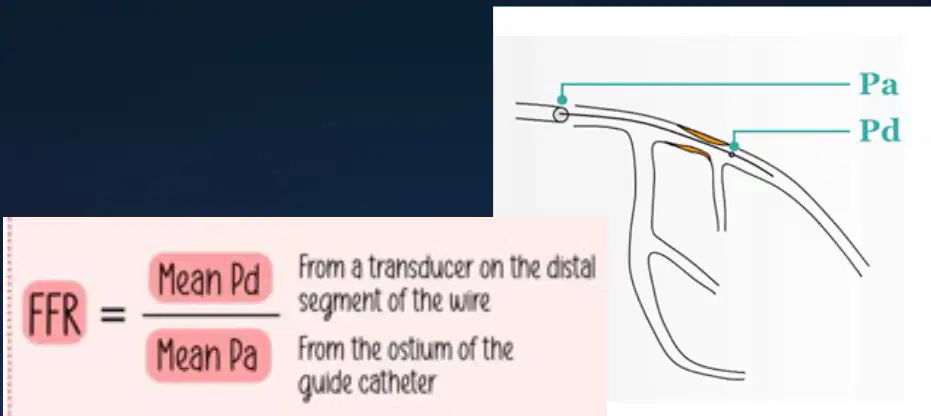
During invasive FFR, what is the correct formula for calculating the index?
Distal flow divided by proximal flow at baseline
Mean Pd divided by mean Pa at hyperemia
Systolic Pd divided by diastolic Pa during pacing
Mean Pa divided by mean Pd at rest
Why is maximum hyperemia required when measuring FFR?
It stabilizes heart rate variability during wire measurements
It reduces distal pressure to highlight collateral circulation
It eliminates microvascular resistance to relate pressure to flow
It increases arterial pressure uniformly across vessels
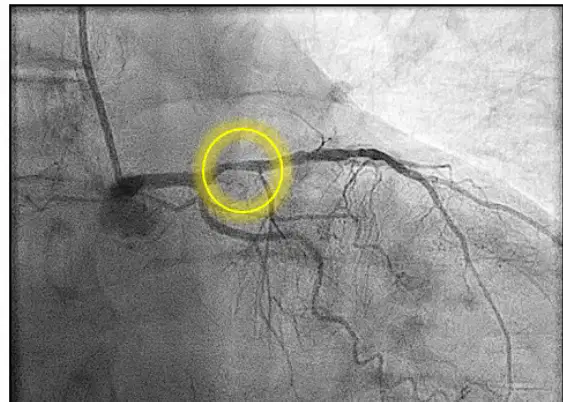
A patient with stable ischemic heart disease has an FFR of 0.78 across a mid-LAD stenosis. What management implication is most consistent with accepted cut-off values?
Further testing is unnecessary due to high FFR accuracy
Revascularization is generally deferred given borderline value
Revascularization is favored because FFR is ≤0.80
Medical therapy alone is preferred regardless of symptoms
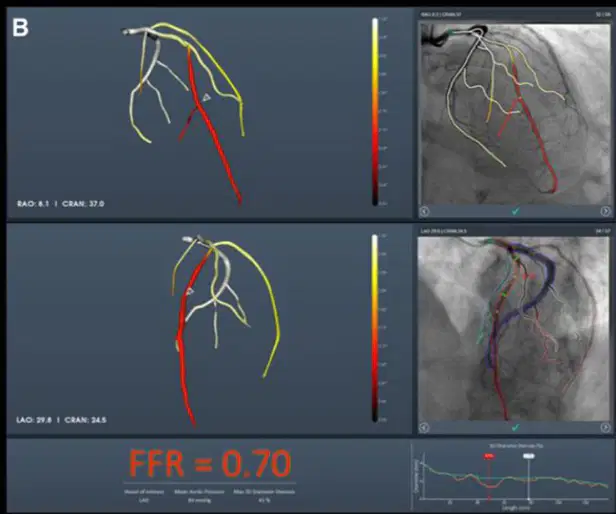
FFRangio primarily differs from wire-based FFR by relying on which method?
Direct pressure wire sensing with adenosine-induced hyperemia
3D angiographic reconstruction to estimate flow across stenosis
Doppler ultrasound to calculate coronary flow reserve
Thermodilution to quantify coronary blood flow at rest
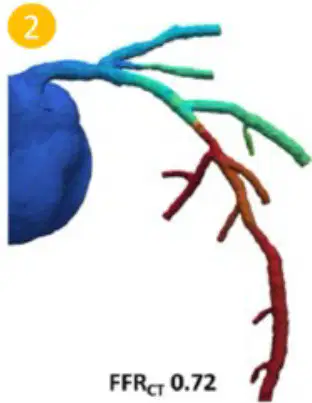
FFRCT uses CTA and computational fluid dynamics. Which limitation most accurately reflects its current clinical use?
Reliably models flow through stents and bypass grafts
Validated for acute MI and unstable angina presentations
Unaffected by timing and typically completed in under 10 minutes
Accuracy depends on image quality and challenging anatomy
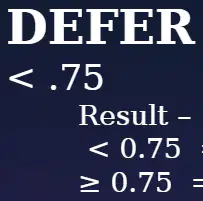
In the DEFER trial, what clinical implication is associated with an FFR value of ≥0.75 in a lesion scheduled for PCI?
Proceed with stenting due to ischemia risk
Switch to iFR-guided revascularization
Perform angiography-guided PCI urgently
Defer PCI with no additional benefit observed
Which statement best captures the primary advantage demonstrated by the FAME study when using FFR guidance compared with angiography alone in multivessel CAD?
Improved combined MACE with fewer MI events
Lower repeat revascularization at two years
Shorter procedure time with similar safety
Reduced contrast use without outcome changes
In FAME 2, what strategy led to improved outcomes compared with medical therapy alone in stable CAD?
PCI guided by FFR with DES stenting
Routine PCI regardless of FFR
Exclusive nuclear perfusion imaging
Angiography-guided PCI of all lesions
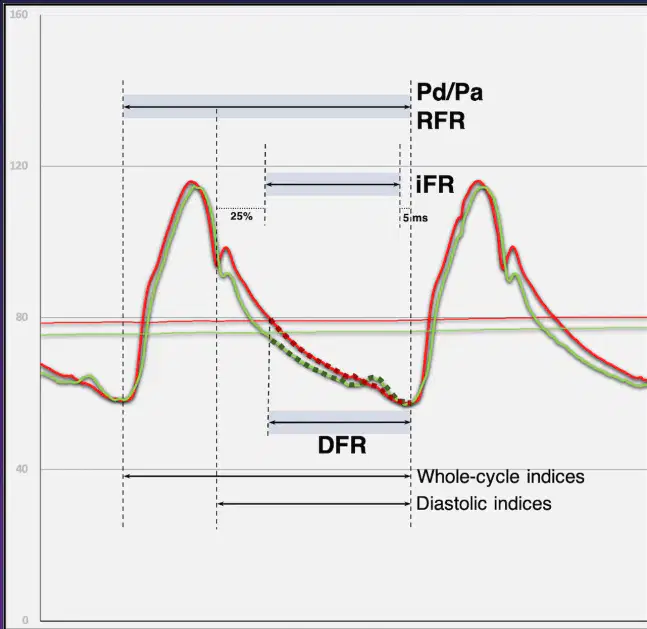
Which statement best describes the physiological basis of iFR and related non-hyperemic indices?
They average Pd/Pa over three beats only in tachycardia
They calculate systolic peak velocities across coronary stenoses
They assess pressure ratio during the diastolic wave-free period at rest
They measure flow during pharmacologic hyperemia using adenosine
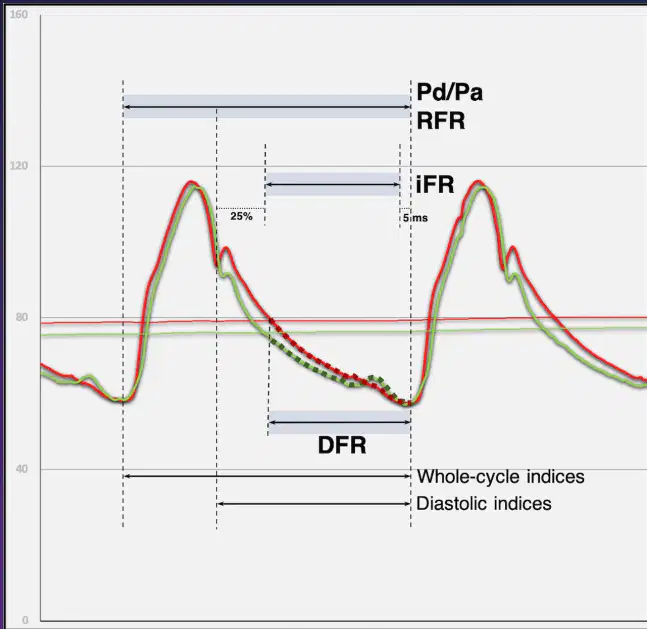
A lesion has iFR ≤0.89 with discordant FFR. What is the most reasonable clinical interpretation?
Means RFR and dPR will necessarily be normal
Likely due to microvascular dysfunction causing less hyperemic response
Always indicates measurement error and should be discarded
Proves the stenosis is non-significant with high certainty
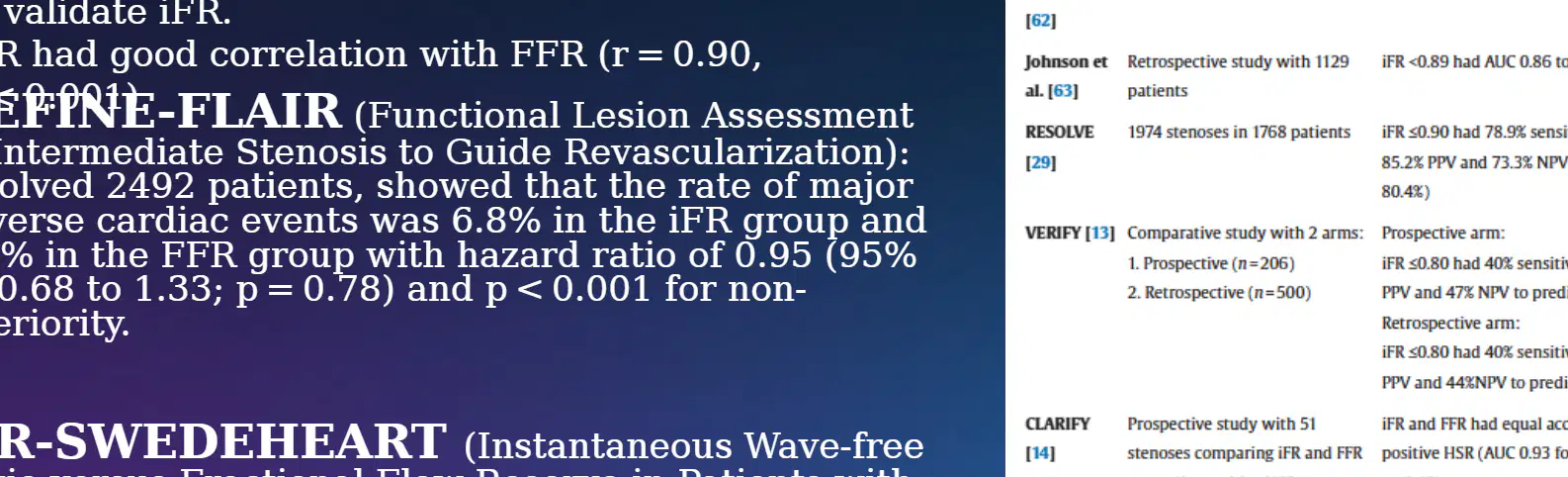
Which trial design outcome supports using iFR instead of FFR for guiding PCI?
DEFINE-FLAIR reported non-inferior MACE rates between iFR- and FFR-guided PCI
ADVISE showed superiority of iFR over FFR with p<0.001 for mortality
iFR-SWEDEHEART found higher revascularization rates with iFR guidance
VERIFY proved iFR had 100% sensitivity predicting positive HSR
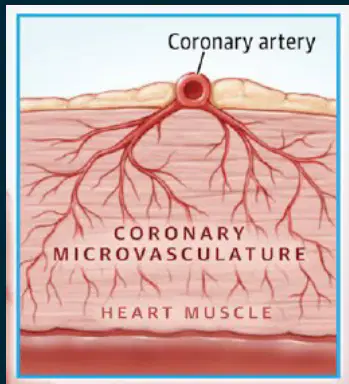
Which statement best defines coronary microvascular dysfunction (CMD)?
Primary myocardial fiber thickening reducing contractility
Aneurysmal dilation of coronary veins increasing capacitance
Abnormalities of microcirculation reducing perfusion
Damage to large epicardial coronary arteries causing focal stenosis

Based on the wheel diagram, which clinical context commonly associates CMD with angina in the absence of obstructive epicardial disease?
INOCA or MINOCA presentations with functional mechanisms
HFpEF due to predominant cardiac fibrosis alone
Takotsubo syndrome with systolic anterior motion
Iatrogenic causes from chronic beta-blocker therapy

Which formula correctly defines Coronary Flow Reserve under adenosine-induced maximal vasodilation?
Hyperemic flow / resting flow
Resting flow -hyperemic flow
Resting flow / hyperemic flow
Hyperemic flow - resting flow

Which parameter combination most supports a diagnosis of coronary microvascular dysfunction in patients with nonobstructive coronary arteries?
CFR greater than 2.5 and IMR less than 25
CFR less than 2.5 and IMR greater than or equal to 25
CFR equal to 2.5 and IMR equal to 25
CFR greater than or equal to 3.0 and IMR equal to 20

What is the correct expression for Index of Microvascular Resistance measured at maximal hyperemia?
IMR = Pd / Tmn
IMR = Pv x Tmn
IMR = Pd x Tmn
IMR = (Pd - Pv) x Tmn

Which first-line regimen best aligns with structural coronary microvascular dysfunction management?
Beta-blocker, ACE inhibitor, statin
Calcium channel blocker, long-acting nitrate
Aspirin, statin, ACE inhibitor, beta-blocker
High-dose calcium channel blocker, nitrate
In the CorMicA trial, what outcome supported tailored therapy after invasive diagnosis of CMD?
Reduced need for vasodilator testing
Improved angina questionnaire scores and QoL
Lower incidence of acute coronary occlusion
Elimination of epicardial spasm episodes
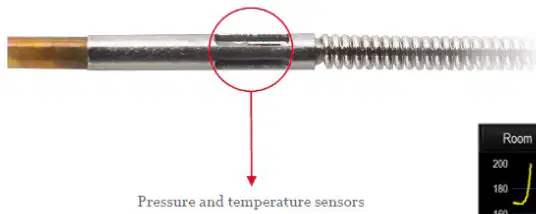
Which physiologic indices measured with a dual pressure–temperature guidewire help diagnose CMD?
Pulmonary capillary wedge pressure and heart rate variability
Left ventricular end-diastolic pressure and TIMI frame count
Fractional Flow Reserve and wall shear stress
Index of Microvascular Resistance and Coronary Flow Reserve
What happens when an arteriole vasoconstricts?
Radius decreases
Resistance increases
Pressure increases
Flow decreases
Epicardial coronaries represent (a) of the coronary resistance to flow when no obstructive stenosis is present.

