
 Worksheets
25-26 E&S Science Mid-Term
Total questions: 65
Worksheet time: 1hrs 2mins
Falling objects on Earth speed up (accelerate) at ___ m/s².
10
7.4
9.8
44
Why does the Moon turn red during a lunar eclipse?
It's hot
Red light waves are longer and pass through the atmosphere
A jaguar attacked the Moon and tried to eat it
Red light waves are shorter and pass through the atmosphere
Solar eclipses occur during which moon phase?
New Moon
Waning Crescent
Waxing Crescent
Waning Gibbous
A lunar eclipse occurs during which moon phase?
quarter moon
new moon
full moon
crescent moon
What phenomenon explains why the sky appears blue? It is also the reason the moon turns red during a lunar eclipse.
Rayleigh scattering
Reflection of ocean water
Blue light reflecting off the Moon
Thermal heat
The Moon goes through all its phases in ______ days.
365.25
29.5
24
100
A main reason why lunar eclipses do not occur every month is due to the Moon's tilted orbit.
True
False
Sometimes, the Moon is closer to Earth than at other times during the year due to its _____________ orbit.
Circular
Elliptical
Linear
Triangular
Visible light and other types of radiation are measured in frequency and __________.
Mass
Wavelength
Temperature
Speed
Changing seasons are primarily due to Earth's axial tilt.
True
False
Earth's axis is tilted ______ degrees.
29.5
23.5
365.25
240
During a lunar eclipse, the Moon turns red when it passes through Earth's ________________ (darker shadow).
Umbra
Penumbra
Meteorite
Fission
What causes Earth's day/night cycle?
Revolution around the Sun
Eclipses
Rotation on its axis.
Rayleigh scattering
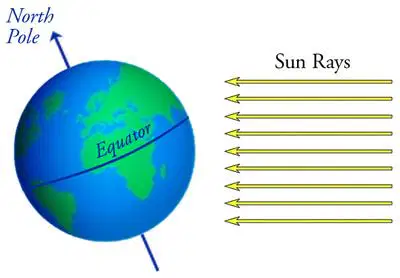
In the Northern Hemisphere, Earth's axis points ______________ the Sun in the summer.
Towards
Away
Earth's axis always points in the direction of the star named _____________.
Sirius
Sun
Polaris
Big Dipper
Daylight is longest or shortest during a ______________.
solstice
equinox
During winter, Earth's axis is tilted _________________ away from the Sun.
towards
away
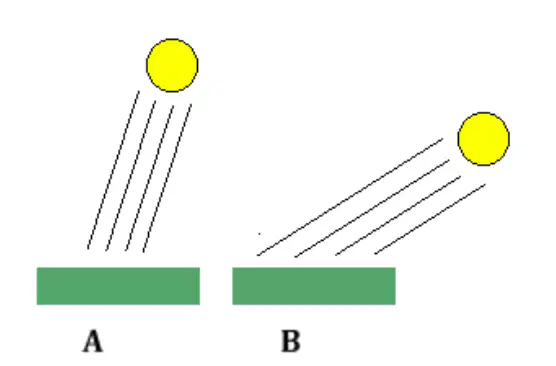
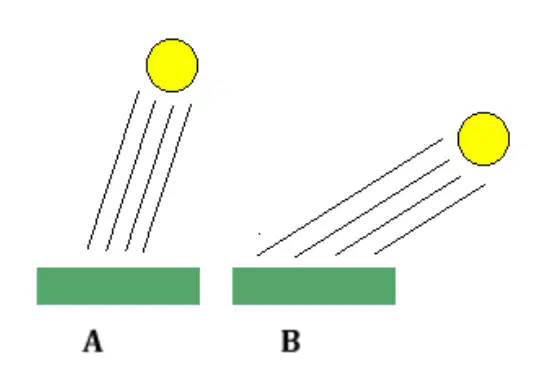
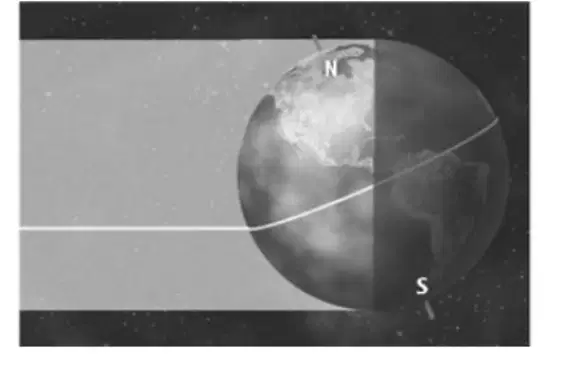
In the illustration, which season is shown in the Northern Hemisphere?
Spring
Autumn
Winter
Summer
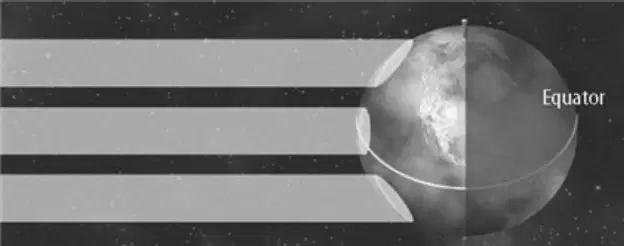
The summer solstice occurs in June in the Northern Hemisphere and December in the Southern Hemisphere.
True
False
Gravity causes objects to ____________.
Repel
Attract
A brick and a pencil are dropped at the same time from the same height with no air resistance. Which one would hit the ground first?
The brick
The pencil
The brick and the pencil would hit the ground at the same time.
As a rocket travels farther in space, Earth's gravity decreases on the rocket.
True
False
An object with mass is surrounded by a gravitational field.
True
False
The skydiver falls toward Earth because Earth has more mass than an airplane.
True
False
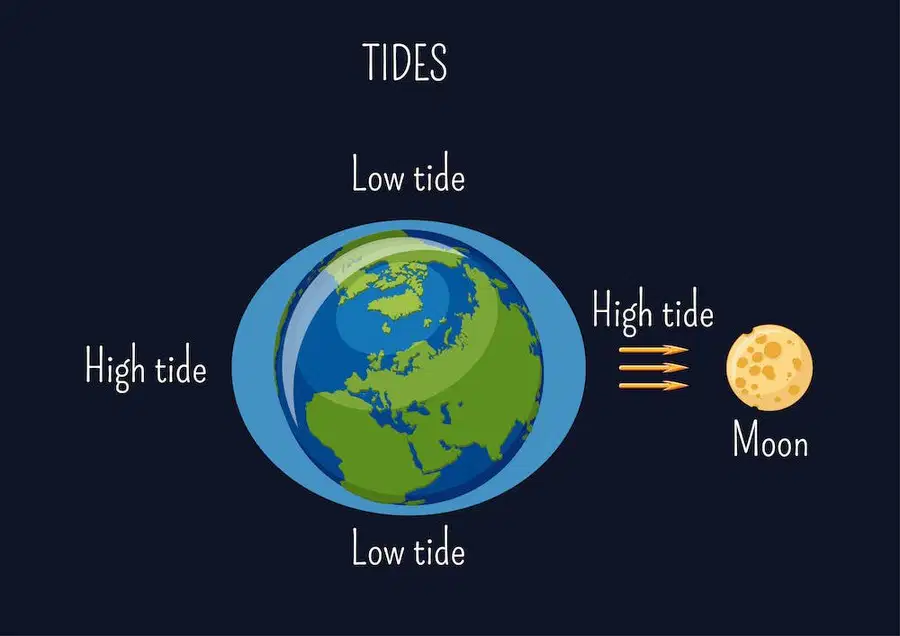
In the diagram, what causes high tide?
The moon's gravity on Earth.
The rotation of Earth.
Earth's gravity on the moon.
Rain
Weight = _________ × 9.8 m/s²
Speed
Mass
Distance
Number
Your weight would be _____ on the Moon because the Moon's gravity is lower than Earth's gravity.
More
Less
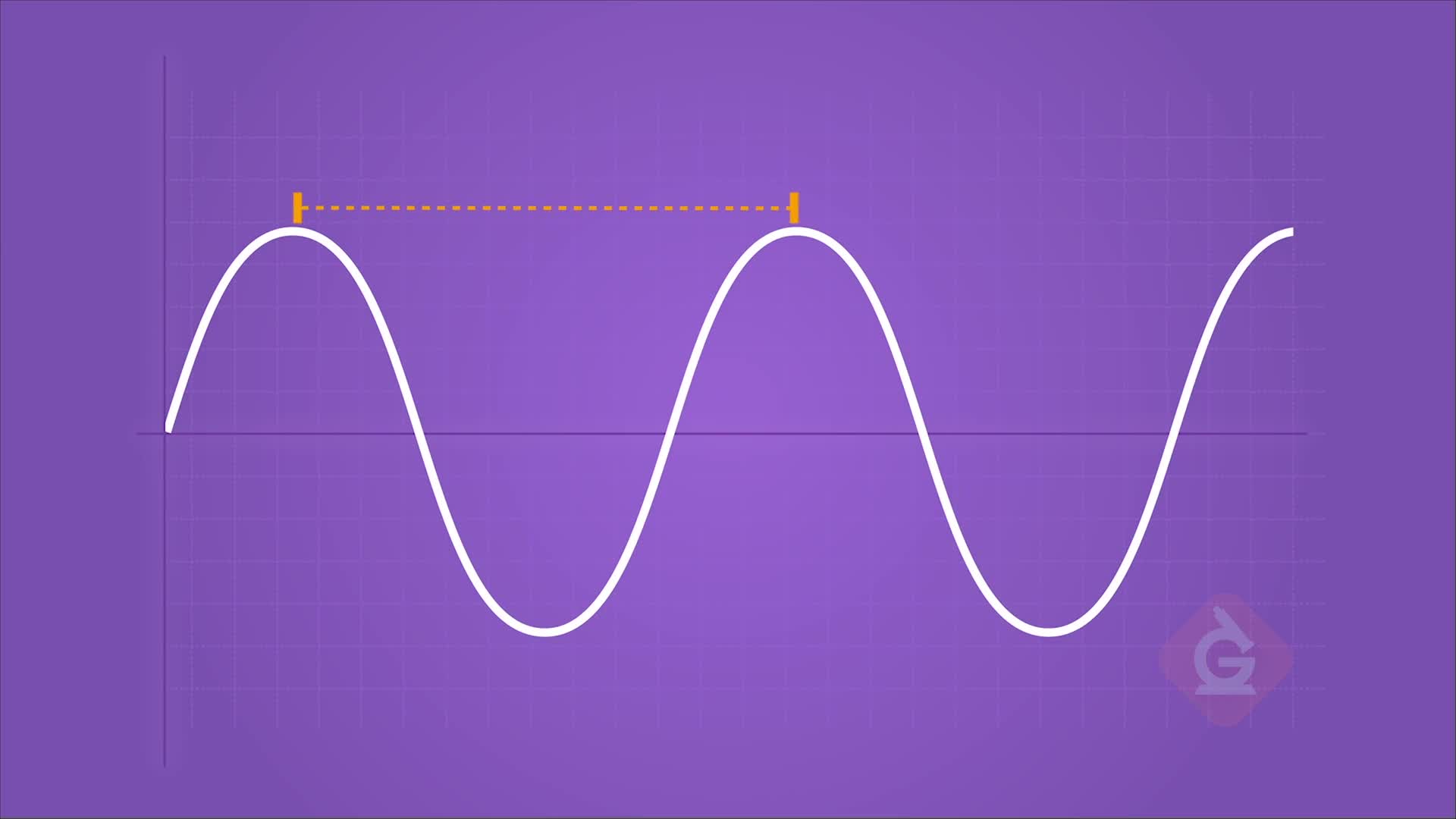
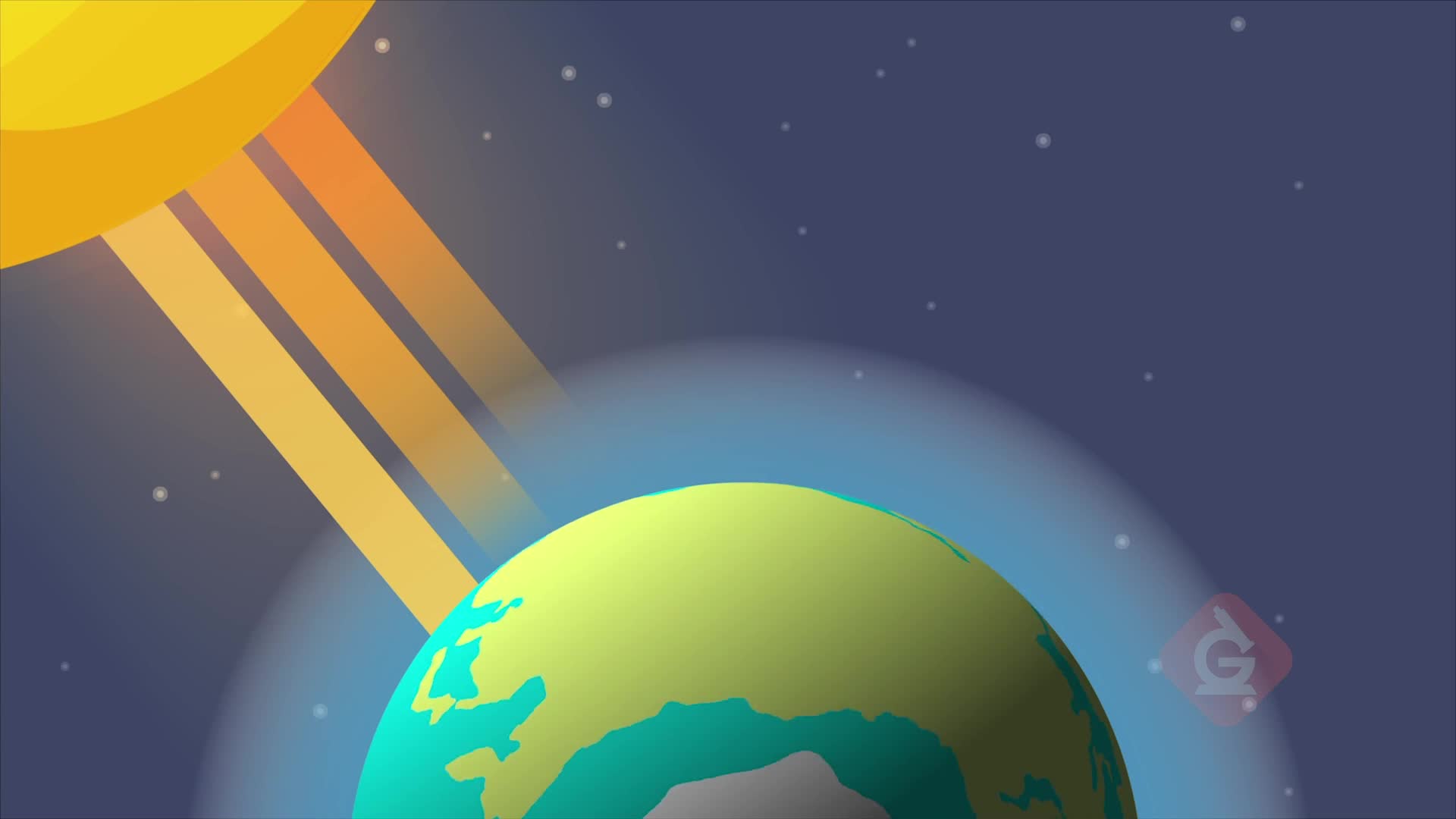
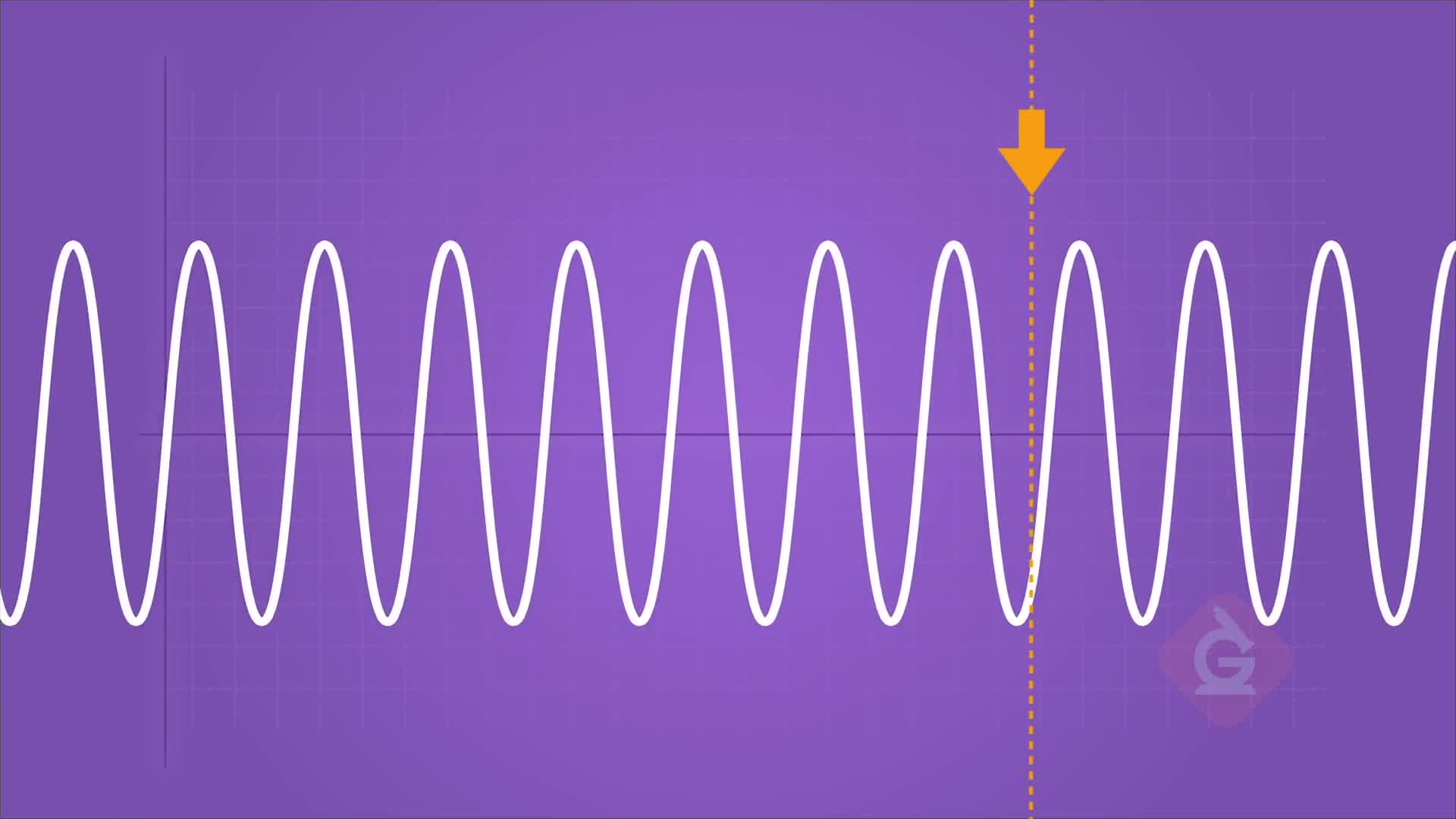


What is a photon?
The photoelectric effect.
A tiny packet, or particle, of light energy.
The subatomic particle opposite the electron.
A paper that Albert Einstein wrote in 1905.
What is the color of the light that is refracted the most in a rainbow?
Red light
Blue light
Green light
Yellow light
The raindrops act as small ............. in the rain.
mirrors
prisms
colors

Which part of the Earth is receiving the most direct Sunlight?
Northern Hemisphere
Southern Hemisphere
Polar Hemisphere
MidAtlantic Hemisphere
How many stars are in our Solar System?
Billions
1
5,000
8
Which of these planets is the farthest from the sun?
Mercury
Earth
Neptune
Jupiter
Which is the largest planet in our Solar System?
Saturn
Neptune
Earth
Jupiter
Which of these sets of planets are terrestrial planets?
Mercury, Saturn, Mars, Venus
Mars, Earth, Venus, Mercury
Earth, Mars, Neptune, Jupiter
Venus, Mercury, Earth, Uranus
What is in our Solar System?
Planets
Moons
Sun
All of the above
Which planet is the hottest in the Solar System?
Earth
Mercury
Venus
Mars
Which planet is the sixth from the sun?
Venus
Jupiter
Uranus
Saturn
Which planet has the Big Red Spot?
Jupiter
Saturn
Mars
Neptune
Which planet is third from the sun?
Venus
Mars
Jupiter
Earth
The average distance from Earth to the Sun (Approx. 150,000,000 km)
AU
Big Bang
Cosmic Radiation
Gravity
the galaxy in which the Sun, Earth, and our solary system is located
gravity
milky way
nebula
galaxy
a large group of billions of stars, their solar systems, gas and dust that are held together by gravity.
star
galaxy
nebula
light year

