
 Worksheets
Enrichment - Unit 1 Review of Earth Systems and Interactions
Total questions: 61
Worksheet time: 40mins
Your body temperature rises as you walk around outside in Bangladesh on a hot afternoon. The sensors in your skin detect the rise in your surface temperature so you start to sweat.
Positive Feedback
Negative Feedback
Higher temperatures cause more evaporation which leads to more water vapor in the atmosphere. Water vapor is a greenhouse gas so will trap more heat so the atmosphere will warm more.
Positive Feedback
Negative Feedback
As carbon dioxide levels in the atmosphere rise, the temperature of the Earth rises. As the Earth warms the rate of photosynthesis in plants increases, more carbon dioxide is therefore removed from the atmosphere by plants, reducing the greenhouse effect and reducing global temperatures.
Positive Feedback
Negative Feedback
As the Earth warms, ice cover melts, exposing soil or water. Albedo decreases (albedo is the fraction of light that is reflected by a body or surface). More energy is absorbed by the Earth’s surface. Global temperature rises. More ice melts.
Positive Feedback
Negative Feedback
As the Earth warms, organic matter in soil is decomposed faster, more carbon dioxide is released. The enhanced greenhouse effect occurs, the Earth warms further and rates of decomposition increase
Positive Feedback
Negative Feedback
As the Earth warms, evaporation increases. Snowfall at high latitudes increases, icecaps enlarge. More energy is reflected by increased albedo of ice cover. The Earth cools. Rates of evaporation fall.
Positive Feedback
Negative Feedback
As the Earth warms, polar icecaps melt, releasing large numbers of icebergs into oceans. Warm ocean currents such as the Gulf Stream are disrupted by additional freshwater input into oceans. Reduced transfer of energy to the poles reduces temperature at high altitudes. Ice sheets reform and icebergs retreat. Warm currents are re-established.
Positive Feedback
Negative Feedback
A ________________ feedback loop makes a system more stable.
Positive
Neutral
Negative
Circular
A _________________ feedback loop moves a system to an extreme.
Positive
Neutral
Circular
Negative
Polar Ice Caps are melting due to an increase in Earth's temperature. This lowers the albedo of Earth, which in turn increases Earth's temperature. This is an example of what type of feedback?
Negative
Neutral
Positive
Ecosystem

What is the relationship between the two systems in the graph?
An increase in vertebrate extinctions is leading to an increase in human population.
An increase in human population is leading to an increase in vertebrate extinctions.
An increase in human population is leading to a decrease in extinctions.
An increase in extinctions is leading to a decrease in human population.
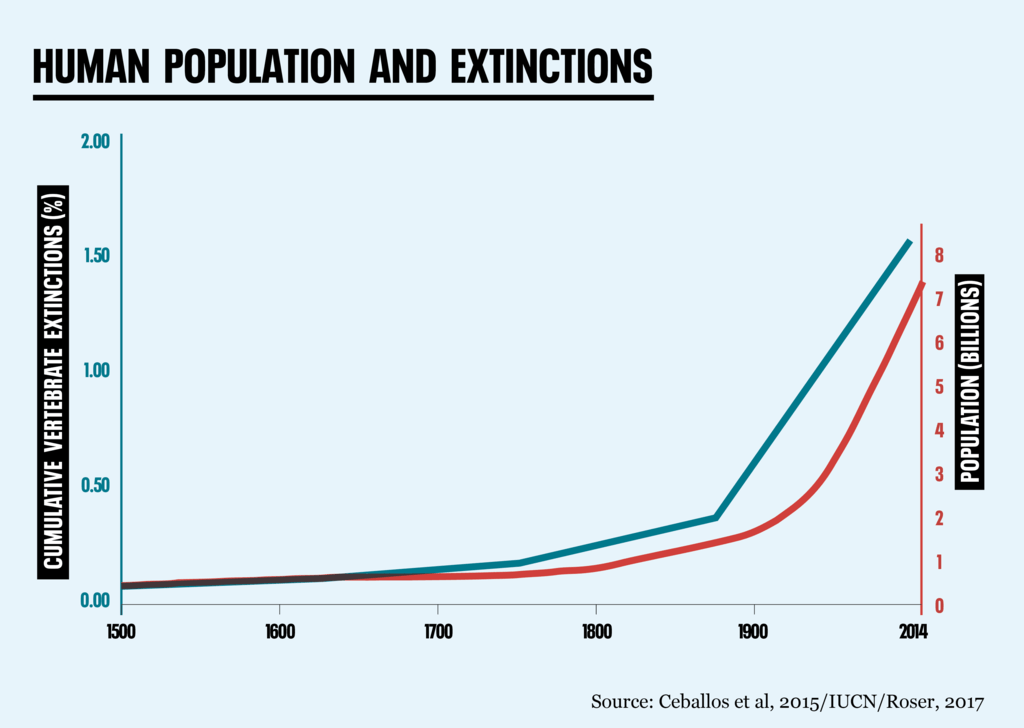
Is the graph showing positive or negative feedback?
Positive
Negative


Based on the graph, which country releases the most greenhouse gases?
Russia
Brazil
China
U.S.

The gases that make up Earth’s atmosphere are commonly referred to as air. What are the two most abundant gases in the atmosphere?
nitrogen and carbon dioxide
nitrogen and oxygen
water vapor and argon
oxygen and carbon dioxide
The lava from a volcano destroying a nearby forest is an example of
the atmosphere interacting with the biosphere.
the geosphere interacting with the biosphere.
the geosphere interacting with the hydrosphere.
the hydrosphere interacting with the geosphere.

Hydrosphere
Feature on the surface of Earth such as a mountain, hill, dune, ocean, or river
All of the water in the air, oceans, rivers, lakes, icecaps, soil, rocks, and organisms of Earth
The layer of gas surrounding Earth; held in place by gravity and composed of a limited number of elements—primarily nitrogen and oxygen
Rock heated to a temperature that is sufficient to turn it into a thick liquid
What is one way the hydrosphere affects the atmosphere?
Oceans affect the weather by making the atmosphere drier in that area.
Oceans affect the weather by making the atmosphere more humid in that area.
Oceans affect the weather by making the atmosphere colder in that area.
Oceans have no effect on the weather.
What are ways humans interact with the geosphere?
Humans use river water to hydrate their plants.
Humans build things out of rock.
Humans hunt and kill animals for food.
Humans breathe in oxygen and breathe out carbon dioxide.
Which of Earth’s spheres contains living things?
Biosphere
Hydrosphere
Geosphere
Atmosphere
Which sphere are gases found in?
Hydrosphere
Geosphere
Biosphere
Atmosphere
All of the water in the air, oceans, rivers, lakes, icecaps, soil, rocks, and organisms of Earth
Biosphere
Atmosphere
Hydrosphere
Geosphere
The layer of gas surrounding Earth; held in place by gravity and composed of a limited number of elements—primarily nitrogen and oxygen
Hydrosphere
Landform
Atmosphere
Biosphere
A tree is blown down by wind. This is an example of which two Earth systems interacting?
Atmosphere and Geosphere
Hydrosphere and Atmosphere
Biosphere and Atmosphere
Biosphere and Hydrosphere
Water vapor condenses to form clouds in the sky. This is an example of which two Earth systems interacting?
Geosphere and Atmosphere
Hydrosphere and Geosphere
Hydrosphere and Biosphere
Atmosphere and Hydrosphere
Water vapor condenses to form clouds in the sky. This is an example of which two Earth systems interacting?
Geosphere and Atmosphere
Hydrosphere and Geosphere
Hydrosphere and Biosphere
Atmosphere and Hydrosphere
A monkey uses a rock as a tool to get some food. This is an example of which two Earth systems interacting?
Biosphere and Hydrosphere
Geosphere and Atmosphere
Biosphere and Geosphere
Biosphere and Atmosphere
An example of a the HYDROsphere and GEOsphere interacting is:
waves moving sand on beach
fish swimming in water
water evaporating to make clouds
humans transporting rocks
Water freezes in the crack of a rock and begins splitting the rock apart. This is an example of which two Earth's systems interacting?
atmosphere and biosphere
hydrosphere and geosphere
atmosphere and geosphere
hydrosphere and biosphere

The graph shows the composition of the atmosphere for planet
Venus
Mars
Earth
Mercury

Which of the following data tables most likely matches the graph?


CO2 was added to two simulated “atmospheres” in the lab. The temperature was measured as shown below. Which of the following best shows the greenhouse effect?
The blue, because it has a higher temperature indicating more heat was trapped in the atmosphere.
The red, because it has the lower temperature indicating less heat was trapped in the atmosphere.
The blue, because it has a lower temperature indicating less heat was trapped in the atmosphere.
The red, because it has the higher temperature indicating more heat was trapped in the atmosphere.

Which of the following gases do Mars and Venus have in large concentrations compared to Earth?
Oxygen
Nitrogen
Carbon Dioxide
Hydrogen
If too many greenhouse gases are released into the atmosphere,
then a planet can become too warm.
then a planet can become too cold.
then a planet will have just the right concentration of heat.
What is the function (job) of greenhouse gases?
To trap heat on the planet
to make the air suitable for breathing
to balance the amount of oxygen in the atmosphere
to move carbon dioxide (CO2) to the plants and oxygen (O2) to the animals.
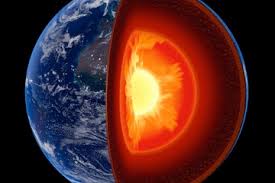
A process in which an event acts as both an input and output of the same system is called a(n)
Earth system.
feedback loop.
photosynthesis.
lithosphere.
Oceans, polar ice caps, and groundwater would all be considered part of Earth’s __________________________.
geosphere
biosphere
hydrosphere
atmosphere
In a ____________________ feedback loop, the output of a system moving in one direction acts as input that causes the system to move in the other direction.
positive
negative
neutral
Negative and positive feedback loops are similar because
inputs of the cycle are also outputs of the cycle.
True
False
Choose the correct statement about feedback loops:
Negative feedback loops destabilize a system and are rare in natural systems.
Negative feedback loops stabilize a system and are rare in natural systems.
Positive feedback loops destabilize a system and are rare in natural systems.
Positive feedback loops destabilize a system and are common in natural systems.
Positive feedback destabilizes a system and drives it toward a(n) __________________________.
extreme
low
Calm
In a positive feedback loop, each action creates a consequence that _____________________ the other action.
decreases
has no effect on
amplifies
In a negative feedback loop, each action creates a consequence that _____________________ the other action.
decreases
has no effect on
amplifies
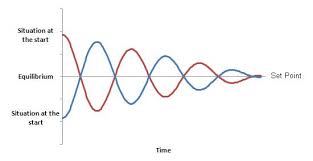
Does the graph show positive or negative feedback?
Positive, because when the red line shifts, the blue one does also
Negative, because the blue line starts below equilibrium
Negative, because the two actions are keeping each other near equilibrium
Both positive and negative because the graph moves up and down

The process by which rocks are broken down into sediments is called_____________________.
deposition
weathering
sediments
erosion

The rock cycle takes place in which Earth System?
atmosphere
biosphere
geosphere
hydrosphere
You are now standing on the earth’s crust. Which sphere does earth’s crust belong?
a. Biosphere
b. Hydrosphere
c. Atmosphere
d. Geosphere
There are two systems, which govern the earth, the open and close system. What do you mean by closed system?
a. Materials flow freely within, in and out of the system.
b. Materials flow freely within but cannot exit and enter the system.
c. Materials and energy flow freely within, in and out of the system.
d. Materials and energy flow freely within but cannot exit and enter the system
Which of the following is NOT an example of an interaction between the hydrosphere and geosphere?
a. Water drank by people
b. Erosion of soil after the typhoon
c. Landslide after heavy rains
d. Underground water stored in the soil.
Which of the following is not a part of the Biosphere?
a. plants and animals
b. dead organic matter produced by different organisms
c. different bacteria and microorganisms.
d. none of the above.
Which of the following shows the correct pairing of subsystem and its components?
a. Hydrosphere – comprises of human beings whose actions affect all other subsystems.
b. Atmosphere – includes the rocks of the crust and mantle, the metallic liquid outer core,
and the solid metallic inner core.
c. Geosphere – includes the oceanic water, surface and groundwater, glaciers and
icebergs, water vapor in the air.
d. Biosphere – covers all ecosystems, from the soil to the rainforest, from mangroves to
coral reefs, and from plant-rich ocean’s surface to the deep sea.
Ecosystems are comprised of living things. In which sphere you can find this?
a. Atmosphere
b. Lithosphere
c. Biosphere
d. Hydrosphere

The graph shows how air pressure changes with altitude in the Earth's atmosphere. In the troposphere:
Air pressure increases and altitude increases
Air pressure stays the same as altitude increasees
Air pressure decreases as altitude increases
Air pressure alternately increases and decreases as altitude increases
Which of the following is true about the distribution of water in the hydrosphere?
None of these is true
The amount of water in the hydrosphere significantly decreases over time
The amount of water in the hydrosphere significantly increases over time
The amount of water in the hydrosphere remains constant.
The rock, dust, soil, and minerals of the Earth's solid crust and outer mantle make up the _____.
Atmosphere
Geosphere
Cryosphere
Biosphere
During the latest ice age on Earth, huge frozen glaciers of snow and ice slowly crept along the surface of the planet, These glaciers crushed and flattened many solid, rock feathers on the land.
This is an example of the ______ interacting with the _______.
Cryosphere; Geosphere
Hydrosphere; Cryosphere
Geosphere; Biosphere
Biosphere; Cryosphere
Within the atmosphere, as altitude increases,
air pressure stays the same.
air pressure increases.
air beocmes heavier.
air pressure decreases.

