
 Worksheets
Semester 1 ESS Final
Total questions: 35
Worksheet time: 1hrs 3mins
Which sentence is an example of a claim?
Air is matter. When we pump air into the ball, the ball's weight increases by 5 grams. This shows that air has weight, one of the characteristics of matter.
Air is matter.
When we pump air into the ball, the ball's weight increases by 5 grams.
This shows that air has weight, one of the characteristics of matter.
Select the best evidence to support this claim:
High school students should wear school uniforms.
At one school where students were recently required to wear uniforms, student attendance increased by 25%, and the dropout rate decreased by 10%.
One student reported that wearing their own clothes gives them a way to express their personal style.
You can buy uniforms online.
Uniforms can cost up to $200.
"Mushrooms are more closely related to animals than plants. Plant cells have a cell wall and a large water storage compartment. Animal cells do not have a cell wall, and they only have a small water storage compartment. When you look at mushroom cells under a microscope, you can see that they have no cell wall."
Which of the following would make the best reasoning statement?
Because mushroom cells are more similar to animal cells than plant cells, mushrooms are more closely related to animals than plants.
Even though mushrooms come out of the ground like plants, they are actually more like animals.
There are more than 14,000 different kinds of mushrooms.
Mushrooms don't look like animals, but they are more closely related to animals than plants.
The closer a planet is to its host star:
the shorter the orbital period.
the longer the semi-major axis.
the colder the temperature.
the more eccentric the orbit.
An exoplanet is:
a planet that is about to supernova.
any planet outside our Solar System.
too small to be a regular planet—like Pluto :(
usually very similar to Earth.

Earth and the other planets closest to the Sun are made mostly of ______.
gas
metal
water
rock
This type of planet is very cold and icy.
Terrestrial
Jovian
An example of this type of planet is Mars.
Terrestrial
Jovian
Which evidence best explains how scientists know that Earth has a liquid outer core?
Volcano locations
P-waves do not travel through parts of the Earth
S-waves do not travel through part of Earth
Magnetic field strength
Which statement correctly compares P-waves and S-waves?
Both travel only through solids
P-waves travel faster than S-waves
S-waves travel through liquids but P-waves do not
Both waves stop at the mantle
Which sequence correctly lists Earth’s layers from least dense to most dense?
Inner core → outer core → mantle → crust
Crust → mantle → outer core → inner core
Mantle → crust → outer core → inner core
Crust → outer core → mantle → inner core
What causes tectonic plates to move?
Earth’s rotation
Wind and water erosion
Convection currents in the mantle
Seismic waves
Which type of plate boundary occurs when two plates move apart?
Convergent
Transform
Divergent
Subduction
Which feature is most likely formed at a convergent boundary between two continental plates?
Mid-ocean ridge
Volcano chain
Mountain range
Rift valley
Compare contact metamorphism and regional metamorphism by describing one difference between them.
A rock has visible layers and mineral alignment.
a) What type of rock is it?
b) What process formed it?
A student creates a rock cycle model showing sedimentary rock turning directly into igneous rock without melting.
What is missing or incorrect in the model?
Why are sedimentary rocks often layered?
They cool slowly underground
Sediments are deposited over time
They melt repeatedly
Crystals grow large
Which condition increases crystal size in igneous rocks?
Fast cooling
Slow cooling
High pressure only
Weathering
Which statement best explains why the rock cycle never stops?
Rocks always melt when heated
Energy from Earth’s interior and the Sun continually drives changes
Sedimentary rocks always turn into igneous rocks
Rocks only change at Earth’s surface

Which rock would most likely be found near a volcano?
Limestone
Marble
Basalt
Gneiss

Based on the ESRT, which statement is true?
Pegmatite is extrusive
Rhyolite has a crystal size of 10 mm or larger
Granite has a fine texture
Obsidian has a glassy texture

What is Pangaea?
A German scientist
The name of the supercontinent that existed millions of years ago
Continental drift
An ancient fossil
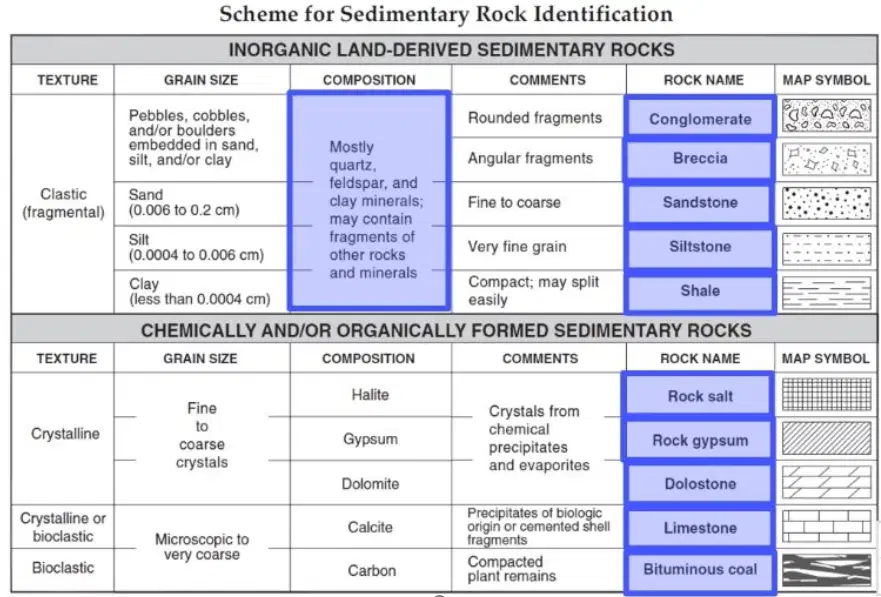
Based on the ESRT, which statement is false?
Sandstone has very fine grains.
Limestone is composed of Calcite.
Shale's grain size is microscopic to very coarse.
Shale, Siltstone, Sandstone, and Conglomerate fall under Clastic.
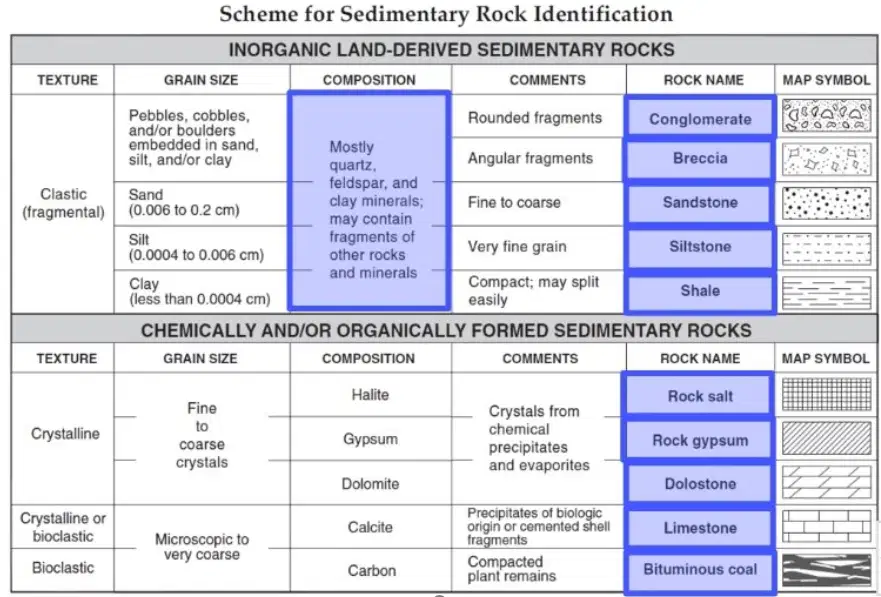
Which sedimentary rock is not composed mostly of quartz, feldspar, and clay minerals?
Breccia
Rock gypsum
Shale
Sandstone
What does ESRT stand for?
Earth Science Reference Table
Earth Space Reference Table
Every Scientist Rocks Test
Every Science Reference Table
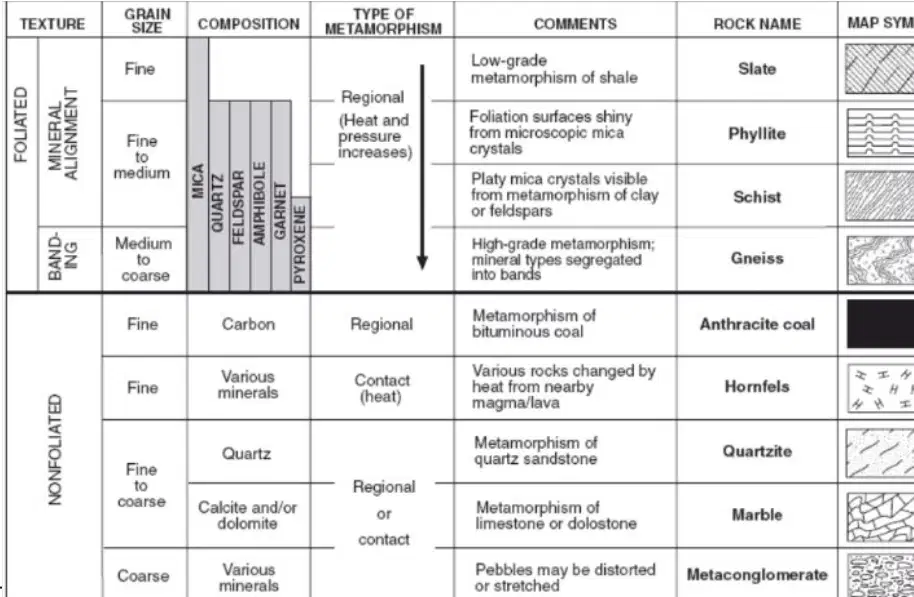
Which statement best describes the rock Gneiss?
This rock is a low-grade metamorphism of shale.
This rock has a fine grain size.
This rock is composed of calcite and/or dolomite.
This rock has foliated banding.
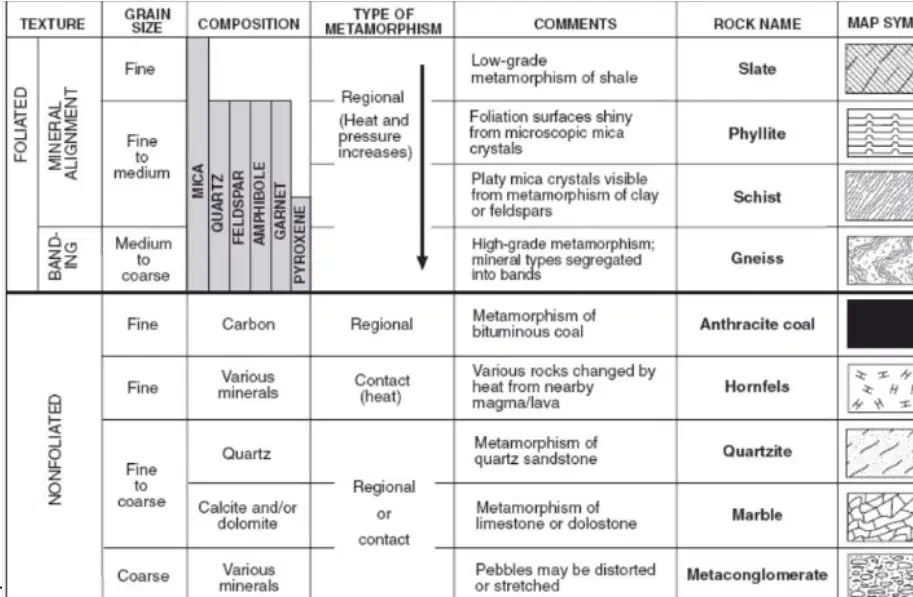
Which rock is non-foliated?
Marble
Slate
Phyllite
Schist

Organic sedimentary rocks are...
Formed by heat
Formed when water evaporates and minerals crystallize
Formed from the remains of dead animals or plants
Formed from pieces of other rocks

This rock started as molten magma. What type of rock is it?
Sedimentary
Igneous
Metamorphic

What type of rock is made up of tiny fragments of rocks?
SEDIMENTARY
IGNEOUS
METAMORPHIC
Which two gases make up most of the Sun?
Hydrogen & Helium
Oxygen & Nitrogen
Carbon & Oxygen
Hydrogen & Nitrogen

