
 Worksheets
Foundations of Life and Cell Biology
Total questions: 122
Worksheet time: 1hrs 1mins
Which prefix means same, like in homogeneous?
Hetero
Homo
Hypo
Hyper
What do all living things do to make more of themselves?
Evaporate
Hibernate
Dissolve
Reproduce
Which group is single-celled and has no nucleus?
Eukaryotes
Prokaryotes
Plants
Fungi
Which group can be single-celled or multi-celled and has a nucleus?
Bacteria
Viruses
Prokaryotes
Eukaryotes

What does the cell membrane do?
Digests waste
Controls entry
Makes sugar
Stores water
Which organelle holds DNA?
Nucleus
Vacuole
Golgi body
Ribosome
Which organelle makes proteins?
Ribosomes
Chloroplasts
Lysosomes
Mitochondria
What process do plants use chloroplasts for?
Digestion
Fermentation
Photosynthesis
Respiration
Which feature gives cells structure, support, and protection?
Cell wall
Smooth ER
Cytoplasm
Golgi
Which two organelles move and package proteins?
Golgi apparatus
Rough ER
Mitochondria
Vacuole
Which group of molecules gives quick energy for the body?
Nucleic acids
Lipids
Carbohydrates
Proteins
What are the building blocks of proteins?
Nucleotide parts
Monosaccharide sugars
Fatty acids chains
Amino acids pieces
Which pair shows a macromolecule and an example of it?
Nucleic acids and olive oil
Proteins and glucose
Carbohydrates and collagen
Lipids and butter
What is the main job of DNA?
Store genetic information
Make cell insulation
Provide short-term energy
Build transport proteins
Select all functions of lipids in living things.
Membrane structure
Chemical reactions as enzymes
Insulation for organisms
Long-term energy storage
Enzymes help reactions by lowering what?
Body temperature
Cell pH
Substrate amount
Activation energy
Which statement best describes how an enzyme fits with its substrate?
They fit like a lock and key
They change DNA information
They connect by random chance
They only work at high heat
Which factors affect enzyme activity? Choose all that apply.
Temperature
pH
Type of nucleotide
Concentration
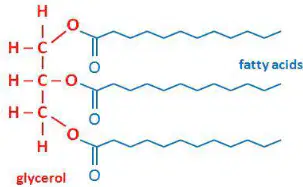
In the Lipid—Triglyceride diagram, what are the long tails?
Fatty acids chains
Amino acids groups
Sugar ring pieces
Nitrogenous bases
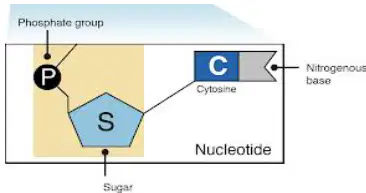
Which three parts are found together in a nucleotide?
Glucose, starch links
Glycerol, fatty acids
Phosphate, sugar, base
Collagen, transport protein
Where does photosynthesis occur in a cell?
In mitochondria
In nucleus
In ribosomes
In chloroplasts
Where does cellular respiration mostly happen?
In chloroplasts
In cell wall
In mitochondria
In vacuoles
What do plants use to make sugar during photosynthesis?
Water
Oxygen gas
Carbon dioxide
Light energy
Which products are made during cellular respiration?
Energy as ATP
Glucose sugar
Carbon dioxide
Light energy
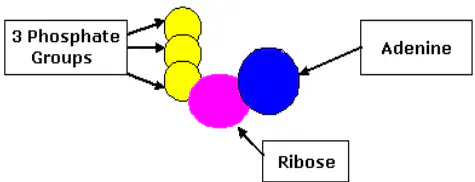
What does ATP do for cells?
Letting water in only
Carrying genetic code
Storing and giving energy
Building cell walls
What does selectively permeable mean for the plasma membrane?
Lets all substances through
Blocks everything
Allows some substances, blocks others
Moves food
Which phrase best describes the phospholipid bilayer?
No layers
Three layers of proteins
Two layers of phospholipids
One layer of fats
What does the fluid mosaic model say about the membrane?
All parts are fixed
Many parts can move
Only sugars are present
Membranes are made of rocks
Which transport moves things without using energy?
Active transport uses energy
Passive transport uses no energy
Endocytosis uses energy
Exocytosis uses energy
What is diffusion?
Particles move from high to low
Water moves across membranes
Large proteins cross by pumps
Cell parts move into vesicles
What is osmosis mainly about?
Moving oxygen into vesicles
Moving sugars through pumps
Moving waste out by exocytosis
Moving water across membranes
Facilitated diffusion uses what helper to move big molecules like glucose?
Cholesterol makes pores
Vesicles grab molecules
Phospholipids make energy
Transport proteins help carry
What does active transport do that passive transport does not?
Works only for small particles
Moves with concentration gradient
Happens only in water movement
Uses energy to push against gradient
Which is an example of a pump used in active transport?
Simple diffusion pore
Exocytosis vesicle
Osmosis water channel
Sodium–potassium pump
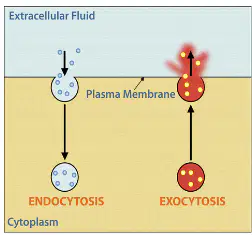
What happens during endocytosis?
Cell moves materials out
Cell moves materials in
Water slips through membrane
Sugars slide down gradient

What happens during exocytosis?
Glucose uses a protein
Cell takes in a vesicle
Cell releases a vesicle
Water moves by osmosis
Homeostasis helps the body do what?
Grow only in warm weather
Stop all changes forever
Make energy from sunlight
Keep inside conditions stable
Which pair shows positive feedback?
Kidneys removing extra water
Sweating to cool the body
Platelets forming bigger clots
Insulin lowering blood sugar
Which pair best shows negative feedback?
Insulin reduces blood sugar
High blood sugar lowers insulin
More platelets make more clots
Cold air increases body heat
Passive transport follows concentration gradients. What does that mean?
Moves from low to high areas
Moves from high to low areas
Moves only through vesicles
Moves only with added energy
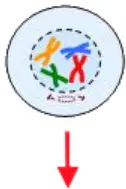
Which stage of mitosis shows chromosomes condensing into visible shapes?
Anaphase pulling apart
Telophase membranes reform
Metaphase in the middle
Prophase condensing shapes
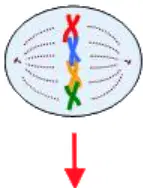
In mitosis, during metaphase, what do the chromosomes do?
Turn into organelles
Line up in the middle
Disappear completely
Stick to cell wall
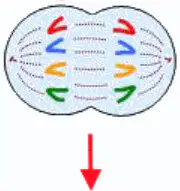
Which stage of mitosis pulls chromosomes to opposite sides?
Metaphase line up middle
Telophase new membranes
Prophase start condense
Anaphase pulled apart
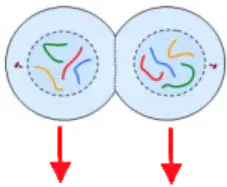
What happens during telophase in mitosis?
Chromosomes condense again
Nuclear membranes reform
Chromosomes line up
Cytoplasm disappears
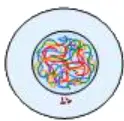
After mitosis and cytokinesis, how many and what type of cells are produced?
Two identical diploid cells
Two different haploid cells
Four identical haploid cells
Four different diploid cells
Which list shows the correct order of mitosis stages?
AMPT: Anaphase, Metaphase, Prophase, Telophase
MAPT: Metaphase, Anaphase, Prophase, Telophase
PTAM: Prophase, Telophase, Anaphase, Metaphase
PMAT: Prophase, Metaphase, Anaphase, Telophase
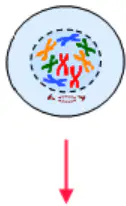
What special event happens during prophase I of meiosis?
Crossing over occurs
Nuclei disappear
Cytokinesis begins
Chromosomes line up
Meiosis is used to make which cells?
Gametes like sperm and eggs
Blood platelets
Bacteria cells
Skin and bone cells
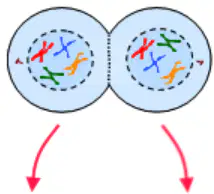
At the end of telophase I, how many and what type of cells are formed?
Four haploid cells
Four diploid cells
Two haploid cells
Two diploid cells
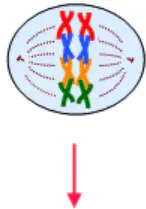
What do chromosomes do during metaphase I of meiosis?
Move out of the cell
Pair with ribosomes
Line up in the middle
Turn into proteins
Which statement about haploid cells is correct for humans?
Haploid cells have no chromosomes
Haploid cells have 46 chromosomes
Haploid cells have 23 chromosomes
Haploid cells have double DNA
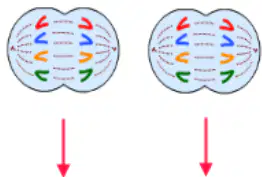
What happens during anaphase II of meiosis?
Cells fuse together
Chromosomes condense again
Chromosomes are pulled apart
Crossing over starts
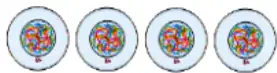
What is the result after cytokinesis in meiosis II?
Two diploid cells
Four haploid cells
Three mixed cells
One big diploid cell
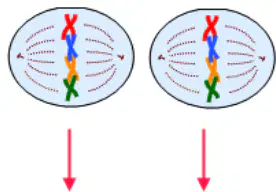
In which stage of meiosis II do chromosomes line up in the middle?
Telophase II
Anaphase II
Metaphase II
Prophase II
Which process makes identical cells for growth and repair?
Cytokinesis makes identical
Mitosis makes identical cells
Meiosis makes identical cells
Crossing over makes identical
Which letters pair together in DNA?
G pairs with T
A pairs with C
C pairs with T
A pairs with T
What is the shape of DNA?
A double helix
A single circle
A straight ladder
A triangle rope
What is the first step in DNA replication?
Sugar groups fall off
Bases change their letters
Strands unwind and separate
Chromosomes break apart
DNA replication makes two copies that are:
Completely new letters
Mixed with RNA
Half-size molecules
Identical molecules
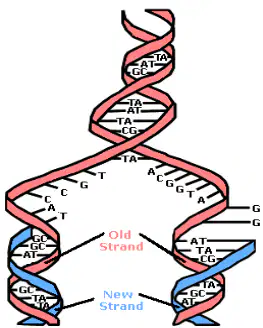
Semi-conservative replication means each new DNA has:
Three strands total
Two old strands only
One old strand and one new strand
Two brand-new strands
What do genes do?
Make bones
Stop cells moving
Create food
Control traits
If an individual is homozygous, it has:
Three mixed alleles
Two identical alleles
Two different alleles
No alleles at all
Genotype means:
The alleles someone has
How tall someone is
The color you see
How cells divide
Phenotype is:
The trait you can observe
The letters in genes
The food you eat
The number of cells
Dominant vs. recessive means:
Alleles never change
Both alleles disappear
One allele can hide another
Traits always mix evenly
In co-dominance, both alleles are:
Fully expressed together
Hidden and silent
Broken into pieces
Turned into recessive
Incomplete dominance produces which type of phenotype?
Unchanged by parents
Always recessive
Always dominant
A blend or mix
Sex-linked traits are found on:
Mitochondria only
All chromosomes
Autosomes only
The X chromosome
Polygenic traits are controlled by:
One gene
Y chromosome only
Many genes
No genes
Multiple alleles means a gene has:
One form
No forms
Two forms
More than two forms
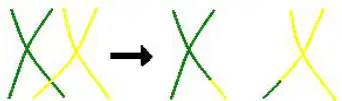
Meiosis increases genetic diversity by:
Making identical somatic cells
Crossing over
Random allele assortment
Using only one parent
Mitosis mainly helps the body with:
Growth and repair
Changing blood types
Adding alleles
Making gametes
How many cells are made from one cell during meiosis?
One giant cell
Four haploid cells
Three mixed cells
Two diploid cells
What does DNA do in a cell?
Stores genetic instructions for traits
Makes food for the cell
Cleans waste from the cell
Controls cell movement
Which pair shows the steps of the central dogma in order?
Mutation then transcription
Translation then transcription
Transcription then translation
Replication then translation
Where does transcription occur in the cell?
Golgi
Cell membrane
Ribosome
Nucleus
What is made during transcription?
Chromosomes from ribosomes
mRNA from DNA
Protein from amino acids
Sugar from sunlight
Which base is found in RNA but not in DNA?
Uracil
Guanine
Thymine
Adenine
Where does translation happen?
In the nucleus
At ribosomes in cytoplasm
In lysosomes
In the cell wall
What does a codon code for?
One sugar molecule
One protein
One chromosome
One amino acid
Which codon starts translation?
TTT
CGA
AUG
UAA
Which molecules join during translation to build protein?
DNA joins mRNA and rRNA
mRNA joins tRNA and rRNA
tRNA joins DNA and ribose
Golgi joins mRNA and tRNA
What does an anticodon belong to?
tRNA
mRNA
DNA
Ribosome
What tells translation to stop?
Start codon AUG
Thymine base
Ribose sugar
Stop codon UAA
Which is a point mutation?
Insertion adds a nucleotide
Deletion removes a nucleotide
Substitution swaps one nucleotide
Crossing-over is a point change
What does a frameshift mutation do to a gene?
Shift codon reading frame
Make extra ribosomes grow
Turn DNA into sugar
Stop meiosis completely
Which idea explains how living things change over generations?
Evolution happens over time
Recycling happens every week
Weather changes every season
Planets move in space
Natural selection means individuals with helpful traits are more likely to do what?
Share food with neighbors
Hide and never eat
Sleep and hibernate
Survive and have babies
Genetic drift is best described as changes in a small group caused by what?
Strong muscles
Weather patterns
Planning by adults
Random chance
Gene flow happens when individuals move to a new group and bring what?
New leaders
Extra food
More water
New genes
What can a helpful mutation do?
Make seasons switch faster
Stop animals from eating
Give an advantage to survive
Change rocks into fossils
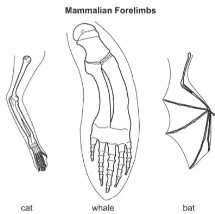
Homologous structures are similar because of what?
A common ancestor shared
The same daily exercise
Living in identical habitats
Eating the same favorite food
Analogous structures do the same job but are NOT what?
Inherited from a common ancestor
Found on any living thing
Helpful in cold weather
Made of bones and muscles
Vestigial structures are what?
Reduced and no longer useful
Always growing much bigger
Brand new and very helpful
Only found in plants
Which evidence shows that vertebrate embryos look similar early in growth?
Embryological evidence
Weather station records
Map and globe pictures
Sports team charts
When DNA codes are more similar, species are usually what?
Never change at all
More closely related
More far apart
Always exactly the same
Allopatric speciation happens when two groups are separated by what?
A louder animal call
A tasty new food
A physical barrier
A longer summertime
Sympatric speciation means a new species forms without what?
A physical barrier
Any genes in the group
Any parents or babies
Any changes in traits
Which term describes non-living parts of an environment like sand and saltwater?
Trophic factors
Symbiotic factors
Abiotic factors
Biotic factors
Which group makes its own food and is called producers?
Heterotrophs
Autotrophs
Carnivores
Detritivores
A deer eats only plants. What type of consumer is it?
Omnivore
Carnivore
Detritivore
Herbivore
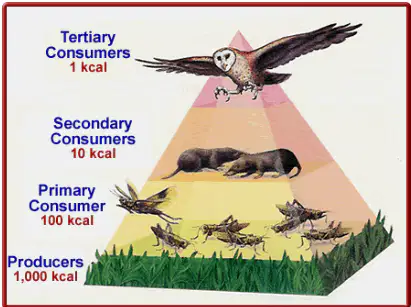
Which statement about energy pyramids is true?
Energy increases at higher trophic levels
Most energy is lost between each level
Consumers gain energy from sunlight
Only producers lose energy in pyramids
Choose all types of symbiosis that benefit both organisms.
Predation
Parasitism
Commensalism
Mutualism
Which pair shows commensalism, where one benefits and the other is not harmed?
Cleaner shrimp and fish
Tick and human
Remora fish and shark
Owl and mouse
Which statement best describes a food web?
A single path of energy flow
A chart of abiotic factors
Many connected food chains
A diagram of only producers
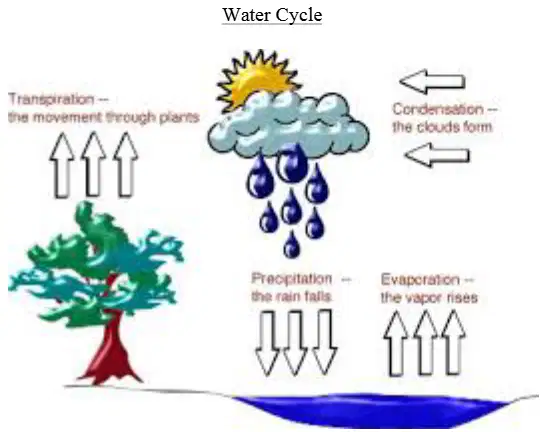
Which step shows water falling from clouds to the ground?
Transpiration from green plants
Precipitation as rain drops
Condensation forming clouds
Evaporation from warm lakes
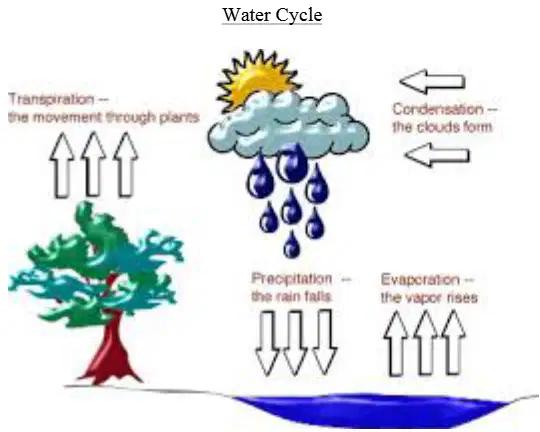
In the water cycle, which arrow shows water vapor turning into clouds?
Transpiration by trees
Runoff to rivers
Condensation in the sky
Precipitation to ground
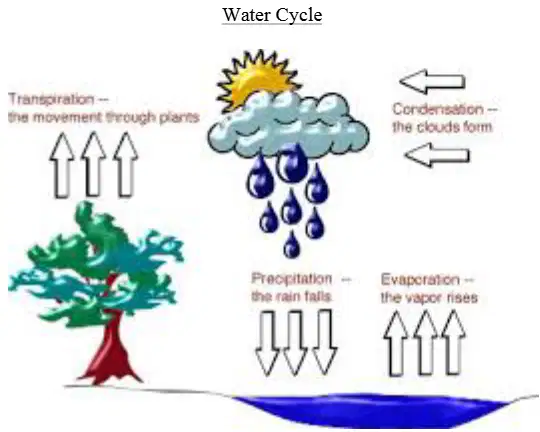
Which two steps add water vapor to the air in the water cycle? Select both.
Condensation in clouds
Evaporation from surfaces
Transpiration from plants
Precipitation as rain
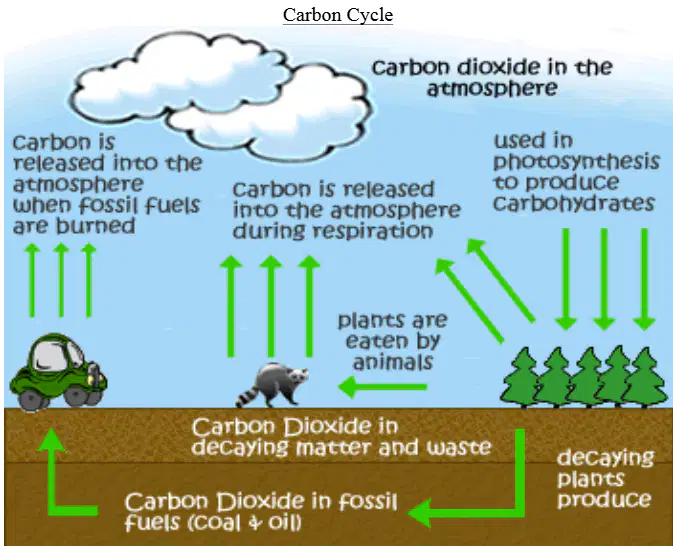
Which source adds carbon dioxide to the air in the carbon cycle?
Decaying plants only
Photosynthesis in plants
Eating by animals
Burning fossil fuels
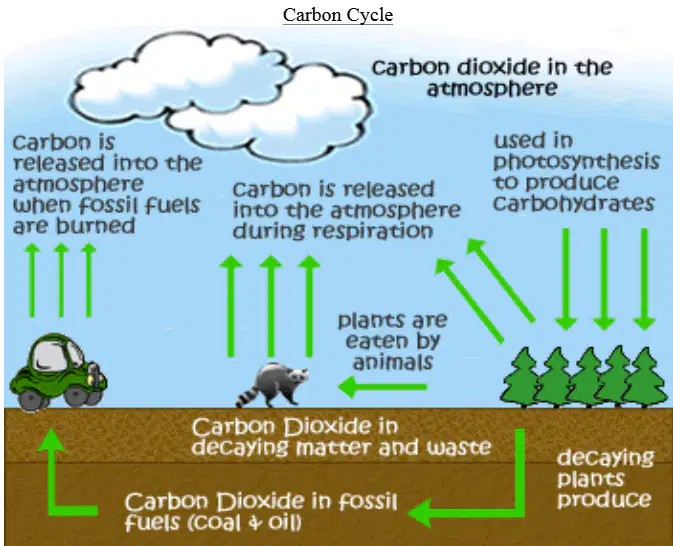
Which processes release carbon dioxide to the atmosphere? Select two.
Photosynthesis in leaves
Respiration by living things
Cloud formation
Burning fossil fuels
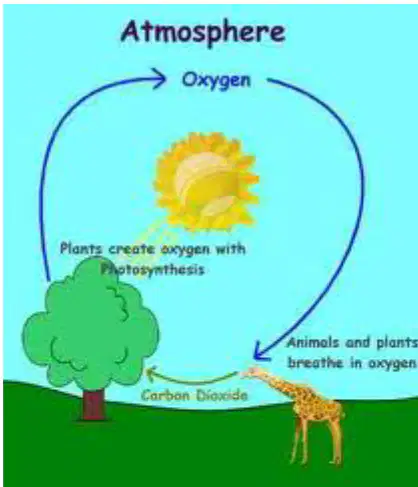
Who breathes in oxygen?
Only plants at night
Clouds and sunshine
Animals and plants
Only animals in forests
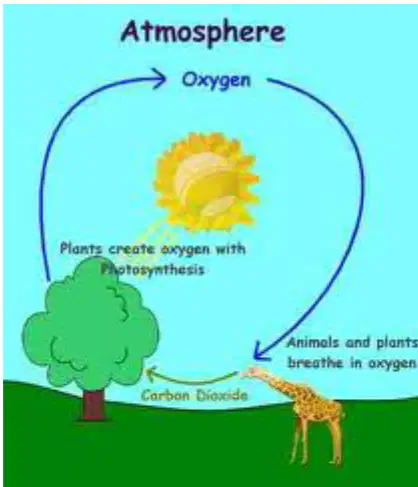
What do plants make using photosynthesis?
Rain for the clouds
Oxygen for the air
Nitrogen for soil
Fossil fuels underground
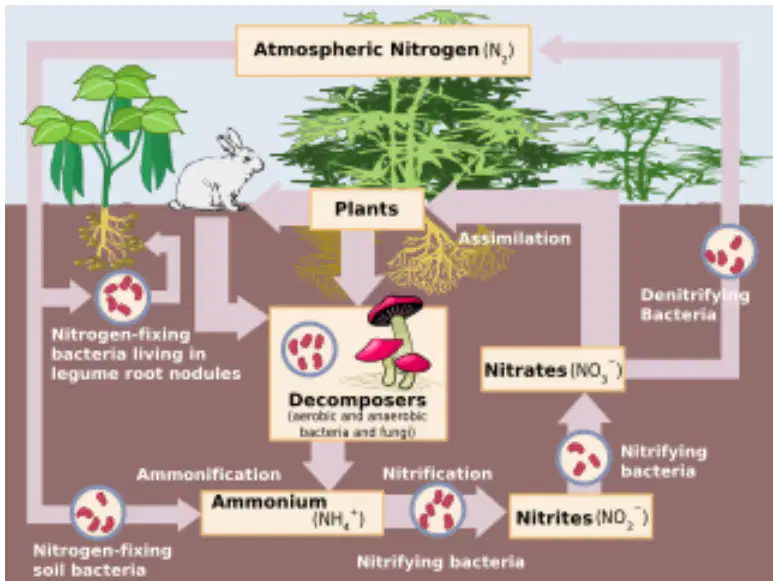
Which living things change atmospheric nitrogen into forms plants can use?
Denitrifying bacteria
Decomposers only
Animals eating plants
Nitrogen-fixing bacteria
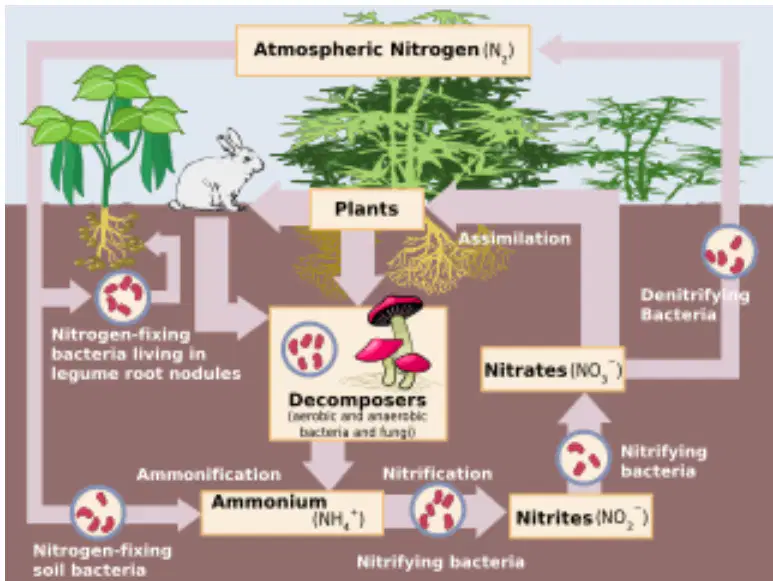
Which two steps in the nitrogen cycle return nitrogen to the air? Select both.
Nitrification by bacteria
Ammonification by decomposers
Assimilation by plants
Denitrifying bacteria action
Which environmental disturbance breaks habitats into smaller pieces?
Overexploitation of species
Fragmentation of habitat
Bio-magnification of toxins
Nonnative species arrival
When too many nutrients enter lakes, what happens first in eutrophication?
Forests spread quickly
Carbon dioxide disappears
Algal blooms grow fast
Oxygen increases greatly
Climate change is long-term changes that affect the biosphere. What do these changes do?
Increase average temperature
Create more fossils fast
Stop the water cycle
Remove all nitrogen
Which sentence best describes a hypothesis?
A guess you cannot test
A testable idea explaining something
A rule that never changes
Steps for an experiment
Which variable does the scientist change in an experiment?
Control group
Independent variable
Dependent variable
Measured result
Which variable changes because of the independent variable?
Unrelated constant
Background factor
Dependent variable
Control condition
Which set lists steps of the scientific method in order?
Test first, conclude, form hypothesis, collect, interpret
Form hypothesis, test, collect data, interpret, conclude
Collect data, test, conclude, form hypothesis, interpret
Interpret data, form hypothesis, conclude, test, collect
Which are smart test-taking tips? Select all that apply.
Leave blanks instead of guessing
Go back to hard questions later
Read carefully for needed info
Eliminate clear wrong answers

