
 Worksheets
final fms I (manifesting an A++++)
Total questions: 127
Worksheet time: 1hrs 4mins
Gout is a disorder associated with abnormal amounts of urates in the body. A drug used primarily to treat this hyperuricemia and its complications prevents uric acid synthesis by inhibiting the enzyme xanthin oxidase. The name of this drug is _______
Voltaren
Colchicine
Probenecid
Aspirin
Allopurinol
Endocytosis is a cellular process in which substances are brought into the cell. Which of the following substances is most likely to be brought into a cell by receptor-mediated endocytosis?
A sodium ion
Water
Glucose
LDL particle
An amino acid
The spontaneous loss of amino groups from cytosine (C) results in uracil (U), an uncommon base, opposite guanine in DNA. What combination of enzymes could repair such damage?
Nuclease, telomerase, primase
DNA ligase, helicase, RNAse H
Topoisomerase, helicase, RNA polymerase
Nuclease, DNA polymerase, DNA ligase
Topoisomerase, primase, DNA polymerase
Below are two ways to demonstrate pluripotency:
In vitro producing teratoma and in vivo producing allergy
In vitro producing embryoid bodies and in vivo producing teratoma
In vitro producing embryoid bodies and in vivo producing immune rejection
In vitro producing teratoma and in vivo producing embryoid bodies
In vitro producing blastocyst and in vivo producing tetraploid cells
Cancer is often the result of activation of ____ to ____ and the inactivation of ____ genes.
Oncogenes, tumor-suppressor genes, proto-oncogenes
Oncogenes, proto-suppressor genes, proto-genes
Oncogenes, proto-oncogenes, tumor-suppressor genes
Proto-suppressor genes, suppressors, oncogenes
Proto-oncogenes, oncogenes, tumor-suppressor genes
Vitamins often function as co-enzyme in a reaction. Which vitamin is essential for the enzyme pyruvate dehydrogenase to properly function and its deficiency causes disease called beri-beri?
Vitamin A
Vitamin C
Vitamin D
Vitamin B1 (thiamine)
Vitamin B12 (cobalamine)
Which of the following definitions is NOT properly matched with the respective proteins?
Insulin: Controls glucose metabolism
Antibody: Immune system molecule
Collagen: Structural protein
Actin: Required for muscle contraction
Amylase: Transport/storage protei
In 2012, Prof. Yamanaka from Kyoto University was awarded the Nobel Prize in Physiology and Medicine for the development of induced pluripotent stem cells or iPS cells. This discovery has been a promise for an unlimited source of pluripotent cells, although there are pros and cons. What is the disadvantage of iPS cells?
iPS cells can provide unlimited reservoir of stem cells minus the ethical controversy of embryonic materials
iPS cells are universally accessible
iPS cells can produce patient-specific or disease-specific cells of any lineage for therapeutic use
Viruses that integrate into the host cell genome have intrinsic risks ?
Autologous iPS cells have reduced chances of immune rejection
Two broad classes of genes - proto-oncogenes and tumor-suppressor genes - play a key role in cancer induction. Of the many known oncogenes, all but a few are derived from normal cellular genes (i.e., proto-oncogenes) whose products participate in cellular growth-controlling pathways. Proto-oncogenes can be transformed to oncogenes by all of the following mechanisms except:
During a viral infection cycle
Radiation induced mutation
Elimination of their start signals for translation
Chemically induced mutagenesis
Chromosomal rearrangements
Which of the following statements about the synthesis of fatty acids is correct?
NADH is used for fatty acid synthesis
NADH is formed from fatty acid synthesis
NADPH is used for fatty acid synthesis
NADPH is formed from fatty acid synthesis
None of these
Each of us has enough DNA to reach from here to the sun and back, more than 300 times. Certain proteins compact chromosomal DNA into the microscopic space of the eukaryotic nucleus. What proteins are integral part of human chromosome?
Heterochromatin
Euchromatin
Histones
Solenoid
Nucleosome
Ni Luh Andini (PBL Week 7) was just diagnosed with an aggressive form of breast cancer. The histopathology is interpreted as showing a poorly differentiated carcinoma with negative estrogen-receptor status and HER2-positive. The cancer started because
She has a rare deletion in the BRCA1 gene
Her affected cells have extra genes for epidermal growth factor
Estrogen affects DNA repair
Estrogen receptor is tumor suppresor
Her affected cells have many extra receptors for epidermal growth factor
The heart functions as the motor of the circulatory system, which consists of the heart, blood vessels and blood. A cell from heart muscle would have an unusually high proportion of these organelles:
Golgi bodies
Mitochondria
Cytoskeleton
Lysosomes
mRNA
Fibroblast growth factor (FGF) is a ligand that will stimulate the cell proliferation and differentiation when it is attached to its receptor on cell membrane. FGF receptor is a type of enzyme-linked receptor. Which of following is not the criteria of enzyme-linked receptor?
Autophosphorylation
Consist of 7 pass trans membrane alpha helix
Has ligand binding on extracellular side
For example, receptor serine/threonine kinase
Has kinase domain on cytosol side
Alpha-1 antitrypsin deciency is an inherited disorder that may cause lung disease and liver disease. Individuals with S allele of the gene have moderately low levels, and individuals with Z allele have very little alpha-1 antitrypsin protein in their serum. Individuals with SZ allele have an increased risk of developing lung diseases (such as emphysema), particularly if they smoke. This type of inheritance is also called:
Multiple alleles
Incomplete dominance
Co-dominance
Polygenic inheritance
Complete dominance
Which of following statements is TRUE for glucagon?
It is secreted by pancreatic β cells as response to high glucose concentration in blood
It is secreted by pancreatic β cells as response to low glucose concentration in blood
It is secreted by adrenal gland as response to “fight-or flight” condition
It is secreted by pancreatic α cells as response to low glucose concentration in blood
It is secreted by pancreatic α cells as response to high glucose concentration in blood
Which of the following enzyme groups can catalyse oxidation reactions?
Hydrolases
Isomerases
Lyases
Ligases
Dehydrogenases
A woman's body undergoes many transformations during the nine months of pregnancy. Some of these physical changes are visible, such as an expanding belly and weight gain, while others are well known, such as an enlarged uterus. The enlarged uterus of a pregnant woman is an example of which adaptive behavior?
Atrophy
Metaplasia
Dysplasia
Hypertrophy
Hyperplasia
Pentasomy 49, XXXXY incidence is around 1/85000 male births. Signs and symptoms of 49, XXXXY syndrome can vary but may include learning difficulties or intellectual disability; low muscle tone; infertility; delayed growth; distinctive facial features; and a variety of birth defects that may affect the heart, bones, brain and/or kidneys. A 49, XXXXY karyotype is thought to arise from
Maternal non-disjunction in meiosis I and II
Paternal non-disjunction in meiosis I and II
Non-disjunction in meiosis II
Maternal non-disjunction in meiosis I
Paternal non-disjunction in meiosis I
One of challenges in stem cell technology is to produce embryonic stem cells without the creation of embryo. A variation in stem cell technology where cdx2 gene (a gene to form placenta) is turned off in patient’s nucleus before it is transferred to donor egg called as...
Parthenogenesis
ANT
Fusion
SCNT using embryo at mitosis
SCNT
Insulin is a protein that is produced by certain pancreatic cells and secreted into the bloodstream. Which of the following choices best describes the route of insulin from its production in the rough ER to its exit from the cell?
Golgi apparatus, plasma membrane
Lysosomes, transport vesicles, plasma membrane
Transport vesicles, Golgi apparatus, transport vesicles, plasma membrane
Lysosome, plasma membrane
Golgi apparatus, smooth ER, cell membrane
Which of the following is not stem cell characteristics?
Capable to differentiate into adult cells
Finite
Capable to regenerate into other stem cells
One cell can give rise to an entire organ system
Self-renew
One of the cells responses against viral infection is by the secretion of antiviral cytokine. Cytokines may affect the cell itself and its surrounding. Cytokine receptor is usually associated with
Inositol phospholipid
Calmodulin
Protein Serine/Threonine Kinase
Grb protein
Janus Kinase
Which of the following statements about the TCA cycle is true?
Two molecules of carbon dioxides are produced in one turn of the TCA cycle
Three molecules of NADH and one molecule of FADH2 are produced in one turn of the TCA cycle
Two turns of TCA cycles are needed to oxidize one molecule of glucose
The TCA cycle occurs in mitochondrial matrix
All statements are true
Gene therapy is an experimental technique that uses genes to treat or prevent disease. In the future, this technique may allow doctors to treat a disorder by inserting a gene into a patient's cells instead of using drugs or surgery. In order for a gene therapy to work, it needs to be delivered to the affected tissue using:
Vector
Transcription factor
Promoter
Bacteria
Vaccine
Structural abnormalities in chromosomes could occur when chromosomes break and reunite in an abnormal way. Which of the following structural abnormalities involve two chromosomes:
Deletion and Translocation
Inversions and Deletion
Dicentric Chromosome and Deletion
Ring Chromosome and Inversions
Isochromosome and Translocation
A tumor is any abnormal proliferation of cells, which may be either benign or malignant. How do the cells of benign and malignant tumors differ?
Benign cells growth into adjacent tissue; malignant cells displace adjacent tissue
Malignant cells are not encapsulated; benign cells are encapsulated
Benign cells grow fast and are small; malignant cells grow slow but large
Malignant cells have well defned border; benign cells' border are less de ned
All are correct
A simple method to distinguish two types of bacteria is their ability in retaining the crystal violet dye (Gram staining). What is the characteristic of Gram positive bacteria?
Releases endotoxin
A lower peptidoglycan and higher lipid content
A larger periplasmic space
A higher peptidogylcan and lower lipid content
Two outer membranes
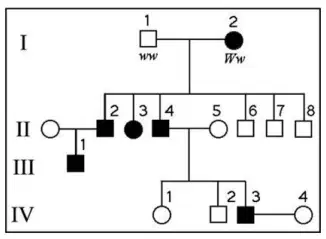
What is the genotype of individual II-5?
WW or ww
Ww
ww or Ww
WW
ww
The chemical bonds in DNA by which the sugar components of adjacent nucleotides are linked through the phosphate groups are called _____________ bonds.
Phosphodiester
Hydrophobic
Hydrophilic
Ionic
Hydrogen
During mitosis one cell divides once to form two identical cells. The major purpose of mitosis is for growth and to replace worn out cells. Meiosis is a more specific type of cell division, in which the daughter cells further divide and there are Meiosis I and Meiosis II. Meiosis II is similar to mitosis in that
Sister chromatids separate during anaphase
Homologous chromosomes form a pair
The chromosome number is reduced
DNA replicates before the division
The daughter cells are diploid
A 21-year-old woman is presented to the Emergency Room with extreme muscle weakness, difculty in swallowing and breathing. Diagnosis of myasthenia gravis was made based on the history, examination and laboratory test. Myasthenia gravis is a condition of an improper functioning at the neuromuscular junction. What is blocked at neuromuscular junction in this case?
Blocked acetylcholine receptor
Blocked GABA receptor
Defect in Na+ voltage-gated receptor
Damage in dendrites
Failure to release acetylcholine vesicles
Blastocyst is the source of embryonic stem cell which consists of inner cell mass and trophoblast. Naturally, trophoblast will proliferate/differentiate into which type of cells?
Pluripotent stem cells
Placenta and extraembryonic tissue
Hematopoietic stem cells
Brain stem cells and specialized brain cells
All types of specialized cells
Knowing what you know about phospholipid bilayers; if you wanted to build your own membrane protein, what would your amino acids need to have in order to stay in the membrane?
Glycosylations
Negatively charged groups
Hydrophobic groups
Hydrophilic groups
Positively charged groups
Cell cycle checkpoints are control mechanisms in eukaryotic cells which ensure proper division of the cell. At the center of the cell cycle control system is Cdk, a protein that
Manufactures growth factors
Is dephosphorylated to become active
Binds to different cyclins
Is only active during mitosis
Is degraded before it is active
What is the basis for the difference in how the leading and lagging strands of DNA molecules are synthesized?
The origins of replication occur only at the 5' end
DNA polymerase can join new nucleotides only to the 3' end of a growing strand
Helicases and single-strand binding proteins work at the 5' end
DNA ligase works only in the 3 5 direction
Polymerase can work on only one strand at a time
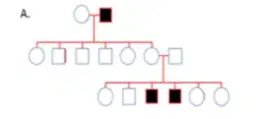
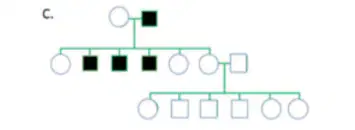
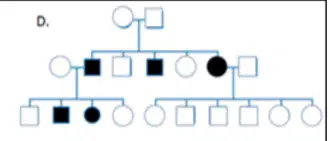
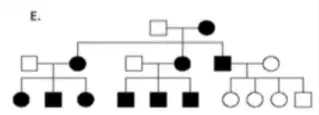
Leber's hereditary optic neuropathy (LHON) is an inherited form of vision loss. This inheritance applies to genes contained in mitochondrial DNA. Which of the following pedigree best describes the inheritance of LHON

In eukaryotes, there are three different RNA polymerases. The RNA polymerase responsible for synthesis of mRNA is ____
RNA polymerase I
RNA polymerase II
RNA polymerase III
RNA polymerase IV
None of these
A 60 year-old woman suffer from cirrhosis of liver. Toxins such as ammonia are not properly metabolized by the liver and can damage the brain. Which of the following compounds should be in highest concentration in brain as a result of detoxification of ammonia?
Glycine
Alpha ketoglutarate
Glutamate
Glutamine
Asparagine
The proteins that makeup the electron transport chain in animals are located____
In the mitochondrial matrix
On the outer mitochondrial membrane
In the cytoplasm
In the nucleus
On the inner mitochondrial membrane
Which of the following hormones is called “fight-or-flight” hormone and is secreted by the adrenal gland?
Somatostatin
Oxytocin
Insulin
Glucagon
Epinephrine
A patient has been detected to be homozygous for the mutation 39X in the gene coding for Beta-hemoglobin. Which of the following statements is TRUE.
The patient's blood contains normal Hb
Glutamine at position 39 is changed to asparagine, resulting in a functional protein with slightly different activity
The patient is a carrier for this mutation
It is a silent mutation, it does not have any effects at all
Glutamine at position 39 is changed to a stop codon, no functional Beta-hemoglobin can be synthesized
Which type of bonding is responsible for the secondary structure of proteins?
Ionic bonds between charged side chains of amino acids
Covalent bonds joining different parts of the peptide backbone
Disulphide bridges between cysteine residues
Hydrogen bonding between the C=O and N-H groups of peptide bonds
Peptide bonds between amino acids
The oxidative deamination of the amino acid alanine in muscle produces:
One molecule of pyruvate and a molecule of water
One molecule of pyruvate and a molecule of urea
One molecule of pyruvate and a molecule of carbon dioxide
One molecule of pyruvate and a molecule of ammonia
One molecule of pyruvate and a molecule of oxygen
Glycolysis takes places in the __________ and produces __________, which in the presence of oxygen then enters the __________.
Cytosol; pyruvate; mitochondrion to complete cellular respiration
Nucleus; acetyl-CoA; cytosol to complete gluconeogenesis
Mitochondrion; pyruvate; chloroplast to complete photosynthesis
Cytosol; glucose; mitochondrion to complete fermentation
Cytosol; pyruvate; mitochondrion to complete fermentation
Protesting the government's policy, a 25-year-old man went on hunger strike. Which of the following metabolites are the most heavily elevated in his blood plasma after 3 days?
Un-esterified fatty acids
Glucose
Ketone bodies
Triacylglycero
Glycogen
Hereditary Nonpolyposis Colon Cancer (HNPCC) patients have genes with microsatellite instability, in which many gene regions contain abnormal, small loops of unpaired DNA. These DNA loops are the result of a mutation affecting which of the following:
Non Homologous End Joining repair
Mismatch repair
Nucleotide excision repair
Base Excision repair
Single Strand Break repair
Positron emission tomography (PET) imaging using 18F-fluorodeoxyglucose (18F-FDG) has been a powerful cancer imaging tool for many decades. Of the many hallmarks of cancer that include biological capabilities acquired during the multistep development of human tumors; which one is put to use when imaging cancer using PET:
Sustained angiogenesis
Limitless replicative potential
Evading apoptosis
Reprogramming metabolism
Self-sufficiency in growth signal
Among the common causes of cancer are infection by cancer-causing (oncogenic) viruses. The following statement is true for oncogenic viruses except:
Human Papillomavirus (HPV) expresses E6 oncogenic protein
Hepatitis B Virus (HBV) integrates viral genome into cellular DNA
Human Immunodeficiency Virus (HIV) increases alternative splicing of angiogenesis-related genes
Hepatitis C Virus (HCV) promotes DNA repair
Epstein Barr Virus oncogene LMP1 inhibits p53 function
In a globular protein the amino acid Valine is localized more likely within the interior of the molecule, because ________ Select one:
It is nonpolar and hydrophobic
Its side chain is positively charged
It is polar and hydrophilic
It is an acidic amino acid
It is a basic amino acid
A researcher made an interesting observation about a protein that was translocated into the rough endoplasmic reticulum (ER) during its synthesis and eventually ending up in the plasma membrane. Significantly, the protein in the plasma membrane was found to be slightly larger than the related protein in the ER. The protein was probably changed in the _________
Smooth endoplasmic reticulum
Mitochondrion
Nucleus
Lysosome
Golgi apparatus
Tommy, a 58-year-old man had severe pain in his thoracic region when he was skiing (PBL Case Week 8). The spinal x-ray showed a compression fracture of T4. Tommy is diagnosed to have multiple myeloma (cancer of plasma cell) based on laboratory results i.e. 2-microglobulin of 1966.95 μmol/L, positive Bence-Jones proteins in urine, also high level calcium (12 mg/dL), urea (66 mg/dL) and creatinine (1.9 mg/dL) in serum. Tommy will receive chemotherapy and hematopoietic stem cell (HSC) transplant for the management of the disease. Which of the following is not suitable as the source of hematopoietic stem cell for Tommy?
Inner cell mass
Peripheral blood
iPS cell
Cord blood
Myoblast
A man who is an achondroplastic dwarf with normal vision marries a color-blind woman of normal height. The man's father was six feet tall, and both the woman's parents were of average height. Achondroplastic dwarfism is autosomal dominant, and red-green color blindness is X-linked recessive. What proportion of their sons would be color-blind and of normal height?
One out of four
None
All
Half
Three out of four
The ribosome is a highly complex cellular machine, found within all living cells. Which of the following statements about ribosomes is true?
They are an integral part of transcription
They are composed of three subunits of unequal size
They are bound together so tightly they cannot dissociate under physiologic conditions
They are composed of RNA, DNA and proteins
They are found in cytoplasm and mitochondria
Mother of a mal nourished child has been instructed to include a complete protein in diet for her child, which out of the following proteins should be recommended?
Wheat
Soy Protein
Vegetables
Milk
Nuts
Mutations can change the overall structure of proteins. Predict the outcome of a harmful mutation that modifies the microfilaments of the cytoskeleton of a white blood cell.
It would improve the structural support of the cell
It would increase the transport of secretory vesicles
It would result in decrease levels of centriole activity
It would increase the spindle formation during mitosis
It would decrease its ability to phagocytose other cells
A 35-year-old Indonesian living in Europe came to his doctor with stomach cramps and diarrhea after drinking milk. What is the most likely cause for this man's problem?
Lack of pancreatic amylase
Excessive growth of bacteria and yeast in the large intestine
Lactase deficiency in the small intestine (lactose intolerance)
Aldolase B deficiency (fructose intolerance)
Lack of sucrose-isomaltase of the small intestine
The process of translation requires the presence of:
mRNA, ribosomes and RNA polymerase
Free nucleotide bases, amino acids and ribosomes
mRNA, tRNA and ribosomes
DNA, mRNA and RNA polymerase
Chromatin, DNA and amino acids
The sequence between 5’ methyl-guanosine cap (5’ cap) and start codon in eukaryotic mRNA is called_____
Last intron
Termination codon
5’ UTR (untranslated region)
Last exon
3’ UTR (untranslated region)
The nuclear envelope (NE) is a highly regulated membrane barrier that separates the nucleus from the cytoplasm in eukaryotic cells. Which of the following statements does not apply to the nuclear envelope?
It is a double membrane
It has pores through which protein enters
It is continuous with the endoplasmic reticulum
It has pores through which material leaves
Its outer layer folds to form cristae
Tommy, a 58-year-old man had severe pain in his thoracic region when he was skiing (PBL Case Week 8). The spinal x-ray showed a compression fracture of T4. Tommy is diagnosed to have multiple myeloma (cancer of plasma cell) based on laboratory results i.e. 2-microglobulin of 1966.95 μmol/L, positive Bence-Jones proteins in urine, also high level calcium (12 mg/dL), urea (66 mg/dL) and creatinine (1.9 mg/dL) in serum. Tommy will receive chemotherapy and hematopoietic stem cell (HSC) transplant for the management of the disease. Which of the following is not true about HSC transplantation?
Donor and recipient must have perfectly matched HLA
Peripheral stem cell collection produces a lower yield compare to bone marrow collection
Allogenic transplantation is when the donor and recipient are the same species
The higher the degree of mismatched HLA the more complications with engraftment and graft versus host syndrome
Immunosuppressant can be used to prevent GVHD
Cells die through either of two distinct processes: necrosis or apoptosis. Necrosis is death due to unexpected and accidental cell damage. Apoptosis is also called programmed cell death. Which of the following events is NOT a change experienced by a typical cell committed to apoptosis?
Nuclear envelope disassembles
Cytoskeleton collapses
DNA breaks into fragments
Cell swells and bursts
Loss of mitochondrial membrane functions
In a nucleosome, the DNA is wrapped around…
Short arm
Chromosome
Centromere
Chromatids
Histones
The region of a gene located at -10 and -35 with respect to the start of transcription are termed :
Promoters
Coding region
Termination sequence
Control region
Enhancer/Silencer
Which type of chloride channel protein is defective in Cystic Fibrosis?
Calcium ion sensitive chloride channels
Cation-chloride cotransporters
Cystic fibrosis transmembrane conductance regulator
CLC chloride channels and transporters
None of the above
The synthesis of mRNA occurs in 3 stages. In Transcription, the RNA polymerase replicates the DNA sequence into a complementary sequence of mRNA. This process runs in… direction
5’ to 3’ direction
2’ to 5’ direction
3’ to 5’ direction
A and C are correct
All of the above are wrong
In analyzing the number of different bases in a DNA sample, which result would be consistent with the base pairing rules?
G = C
G = T
A+T = G+C
A = T
A+G = T+C
There are 3 types of protein transport. One of it requires ATP as the energy. What is it?
RNA polymerase I
ATP-powered pump (ATPase pump)
Ion channel
Transporter
Uniporter
Which one of the following statement that is true about DNA replication?
Occurs in ribosomes
The mechanism of copying DNA parental to make one daughter DNAs
DNA helicase unwinds dsDNA parental at replication forks
RNase H synthesize RNA primers
All of the above are wrong
Daughter strands in a replication are always made of one strand of old DNA and one newly synthesized complementary strand. This nature of DNA replication is referred as :
Bidirectional
Starts from replication forks
Semi-discontinuous
Semiconservative
Conservative
UV radiation can cause DNA damage in form of thymine dimers formation. This DNA damage is usually repaired by the DNA repair mechanism of
MMR
NER
Single-strand damages
BER
Double-strand breaks
Condition at which one or more nucleotides removed from the DNA strand is called
Nonsense mutation
Silent mutation
Insertion mutation
Deletion mutation
Point mutation
β-Thalassemia, common in Southeast Asia, is due to a point mutation in β-globin. What mutation causes it?
Stop at position 26 with lysine as the last amino acid
Glutamate is swapped with lysine at amino acid no. 26
Aspartate is swapped with lysine at amino acid no. 26
Excessive amount of Protein 𝞫-globin
no protein β-globin is made
Which enzymes remove supercoiling during DNA replication ahead of the replication Fork?
Ligases
Primases
Helicases
DNA polymerases
Topoisomerases
Human Genome Project Objectives. Which of the following was (were) the objective(s) of the Human Genome Project?
Obtain a detailed genetic map of every human chromosome
Determine the sequence of all expressed human genes
Determine the complete DNA sequence of each human chromosome
A and B are true
A, B, and C are true
Which enzymes remove supercoiling during DNA replication ahead of the replication fork?
Primases
Ligases
DNA Polymerases
Helicases
Topoisomerases
A pluripotent stem cell is
A specialized cell that mainly differentiate into blood cell
An undifferentiated cell that is capable of dividing and giving rise to one or more distinct types of specialized cells to make an individua
An undifferentiated cell that is capable of dividing and giving rise to one or more distinct types of specialized cells, except for fetal supporting tissues
Specialized cell that is capable of dividing and giving rise to one or more distinct types of undifferentiated cells
A specialized cell that is capable of dividing and giving rise of central nervous system
Cells fall into one of two broad categories: prokaryotic and eukaryotic. The single-celled organisms of the domains Bacteria and Archaea are classified as prokaryotes. Animal cells, plant cells, fungi, and protists are eukaryotes. Which of the following is a feature found in BOTH prokaryotic and eukaryotic cells?
Extensive array of intermediate filaments
Multiple linear chromosomes in each cell
Mitotic spindles that partition chromosomes into the daughter cells
Ribosomes that accomplish protein synthesis
All of the above are found in both types of cells
Embryonic stem cells are self-renewal, immortal and have an almost unlimited differentiation potential. Those characteristics are results of inhibiting differentiation and apoptosis. Which of the following is the correct network for the regulation of embryonic stem cell self-renewal?
Myc-FGF-LIF
FGF-Nanog-Oct4
cMyc-FGF-Oct4
LIF-Sox2-cMyc
Sox2-Nanog-Oct4
The pathway of a tRNA during polypeptide elongation on the ribosome is:
A site --> P site --> E site
P site --> A site --> E site
A site --> P site --> entry site
P site --> entry site --> exit site
None of the above
Which of the following statements about the role of the pentose phosphate pathway is correct?
The pentose phosphate pathway is directly connected to TCA cycle
The pentose phosphate pathway oxidizes glucose-6-phosphate completely to carbon dioxide and water
The pentose phosphate pathway delivers –NH3 for amino acid synthesis
The pentose phosphate pathway occurs in the mitochondria of most cells
The pentose phosphate pathway produces ribose-5-phosphate and NADPH
p53 (also known as TP53) is a gene whose activation induces apoptosis, cell cycle arrest, or senescence in response to distinct stimuli, including DNA damage (senescence = the process by which cells irreversibly stop dividing and enter a state of permanent growth arrest without undergoing cell death). Which of the following best described the role of p53?
Tumor suppressor gene
DNA repair gene
Oncogene
Proto-oncogene
Proto-suppressor gene
Carcinogenesis involved three steps: Initiation, Promotion and Progression. Chemical carcinogen can initiate cells through mutational inactivation of following pathways, except:
Apoptotic proteins
Tumor suppressors
Growth factor receptors
DNA repair
Anti-oxidant response
Cancer is unchecked cell growth. Mutations in certain genes can cause cancer by accelerating cell division rates. Any drug that blocks the process of cell replication has therefore potential as a treatment for cancer. Which one of the following would be a potential target drug for cancer treatment?
Drug that disrupts microtubule assembly
Drug that disrupts cyclin and cyclin dependent kinase complex
Drug that stabilizes microtubule structure
Drug that inhibits proteasome functionAll options are potential target drug
A father with type A blood and a mother with type B blood have three children with blood of type AB and type O. What is the explanation?
Three different genes cause A, B, and O type
There are multiple alleles for A, B, and O
A and B genes are recessive
Gene is partially expressed
A and B genes are pleiotropic
Which of the following is true of methyl groups' effect in the epigenetic mechanism?
They reduce protein stability
They directly inhibit ribosome assembly
They directly inhibit nuclear pore transport
They directly inhibit transcription
They directly inhibit protein translation
Color blindness is a trait in which the eye fails to distinguish red and green colors. The color blindness is more likely to occur in males than in females because:
The trait is dominant in males and recessive in females
In females colour blindness appears when one of the sex chromosomes expresses the gene
Color blindness is not inherited
Genes for color blindness are located on the Xchromosomes
The Y-chromosome of males have the genes for distinguishing colors
Below are clinical applications of somatic cell nuclear transfer except:
Treat cystic fibrosis disease by injecting patient with pluripotent cell derived from SCNT technique carrying the gene to fix chloride channel
Modify the genetic of Dolly sheep
To bring back dinosaurs alive
To bring back Einstein alive
None of the above
Which of the following statements is not true about cancer stem cells?
Can start from mutated progenitor cells
May be a result of loss of regulation of mutated stem cell
"Tumor initiating cell"
They can self-renew
Not related with changes on niche requirements.
Which of the following statements about gluconeogenesis is correct?
Gluconeogenesis uses all the SAME enzymes that are also used in glycolysis
Gluconeogenesis enables the liver to maintain blood glucose levels during starvation
The enzyme glucose-6-phosphatase hydrolyses glucose-6-phosphate and is present in most cells
Fatty acids are plentiful in the blood during starvation and are used for glucose synthesis
Muscles have a large glycogen store which gives rise to blood glucose during prolonged starvation
What is the effect of a nonsense mutation in a gene?
It alters the reading frame of the mRNA
It has no effect on the amino acid sequence of the encoded protein
It introduces a premature stop codon into the mRNA
It prevents introns from being excised
It changes an amino acid in the encoded protein
Signal sequences are
Short peptide sequences attached to a protein that initiates its degradation by digestive enzymes
Short peptide sequences to transport a protein to the nucleus
Short peptide sequences that serve as an address for transporting newly synthesized proteins to the correct location
Glycoproteins that serve as an address for transporting newly synthesized proteins to the correct location
Short peptide sequences that are synthesized by signal peptidase
A phenotypically normal woman with a translocation involving chromosomes 14 and 21 karyotype has a karyotypically normal husband. Among their liveborn offspring, which of the following karyotype is LEAST likely?
Balanced Carrier
Normal
Translocation chr 21 and 14
Monosomy 21
Trisomy 21
Phenylketonuria (PKU) is a disease which causes mental retardation and reduced hair and skin pigmentation. It involves the enzyme phenylalanine hydroxylase, which is encoded by the PAH gene in chromosome 12. This enzyme converts the amino acid phenylalanine to tyrosine. Depending on the mutation involved, conversion of phenylalanine to tyrosine is reduced or stops entirely. Unconverted phenylalanine builds up in the bloodstream and can lead to levels that are toxic to the developing nervous system of newborn and infant children. Which variation to Mendelian Law best describes the phenotype of PKU?
Multiple alleles
Polygenic inheritance
Pleiotropy
Incomplete dominance
Epistasis
a single pass transmembrane protein that acts a self-marker is:
cAMP
ECM
G-protein
MP
MHC
Which one of the following statements describes NON-essential amino acids?
They are less important in cells than essential amino acids
They are stored in adequate amounts so are not needed in the diet
They can be synthesized from metabolic intermediates
They are ingested but not used in protein synthesis
They only can be found in complete proteins
Aneuploidy is the second major category of chromosome mutations in which chromosome number is abnormal. Of the following human aneuploidies, which is the one that generally has the most severe impact on the health of the individual?
47, 21+
47, XXX O
45, X
47, XXY
47, XV
The effect of cell to cell communication may be broad to whole body or limited to certain part of body. Insulin secretion is an example of a way which acts at distance and influence the whole body, as know as
Phosphorylation cascade
Paracrine
Endocrine
Autocrine
Intracrine
Tommy, a 58-year-old man had severe pain in his thoracic region when he was skiing (PBL Case Week 8). The spinal x-ray showed a compression fracture of T4. Tommy is diagnosed to have multiple myeloma (cancer of plasma cell) based on laboratory results i.e. β2-microglobulin of 1966.95 μmol/L, positive Bence-Jones proteins in urine, also high level calcium (12 mg/dL), urea (66 mg/dL) and creatinine (1.9 mg/dL) in serum. Tommy will receive chemotherapy and hematopoietic stem cell (HSC) transplant for the management of the disease. HSC needs to be characterized before transplantation. Which of the following is a characteristic of HSC?
Able to produce embryoid body in vitro
Can be derived from mesenchymal tissue
Cannot undergo apoptosis
CD133+/34
Addition of cytokines such as GM-CSF will cause the cells to differentiate to lymphoid progenitor
A single nucleotide polymorphism (SNP) refers to any position in the nuclear genome where there is at least one variant nucleotide that occurs at a frequency of 1% or more of within the population. A SNP may alter function of a protein due to
Synonymous change in exon
Non-synonymous change in intron
Non-synonymous change in exon
Synonymous change in intron
Non-synonymous change in promoter
Alpha Antitrypsin (AAT) is a protease inhibitor encoded by SERPINA1 gene on chromosome 14. Over 100 genetic variants of the SERPINA1 gene have been described, although only several are associated with the disease. In the Z allele, the amino acid glutamine (G) in position 342 is substituted for a lysine (A) amino acid, resulting in an incorrectly folded protein. What is the effect of this mutant protein in the cell?
Reduced chronic inflammation
Increased level of AAT in the plasma
Increased level of neutrophil apoptosis
Formation of secretory vesicles
Formation of protein accumulation in the ER
DNA differs from RNA in the following features
DNA is located in nucleus and mitochondria; RNA is found only in cytoplasm
DNA is synthesized by DNA polymerase; RNA is synthesized by RNA polymerase
DNA has deoxyribose residues; RNA has ribose residues
DNA contains the A, C, G and T bases; RNA contains A, C, G, and U
All TRUE, except A
Robertsonian translocation is an unusual type of chromosome rearrangement caused by two acrocentric chromosomes joining together. Which of the following is not possible in the offspring of a translocation carrier (involving acrocentric chromosomes 14 and 21) and a normal individual.
Monosomy 14
normal
Translocation Down syndrome
Monosomy 21
All are possible outcomes
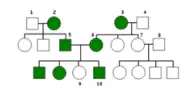
Describe the mode of inheritance of the following pedigree and the genotype of individual 5 and 6.
Autosomal recessive, Rr and Rr
Autosomal dominant, RR and RR
Autosomal recessive, Rr and rr
Autosomal recessive, rr and rr
Autosomal dominant, Rr and Rr
In the nucleus of each cell, the DNA molecule is packaged into thread-like structures called chromosomes. Each chromosome is made up of DNA tightly coiled many times around proteins that support its structure. Which of the following is not part of a human chromosome in any phase?
Centriole
Histone
Nucleosome
Chromatin
Centromere
Women who inherit one mutant BRCA1 gene have a 60% chance of developing breast cancer by the age of 50. The protein produced by the BRCA1 gene has been found to be involved in the DNA double-strand breaks repair. Which of the following processes is most likely to be negatively affected by a deficiency in the BRCA1 protein?
Homologous recombination
Removal of Carcinogen adducts
Correction of mismatch errors
Removal of RNA primers
Removal of thymine dimers
Which of the following factors can affect enzyme activity?
Temperature
pH
Salt concentration
The addition or removal of phosphate
All of the above
A 7-year old girl was brought to a pediatrician practice with enlarged spleen. As a medical geneticist, you analyze her DNA and find that she is homozygous for thalassemia. Assuming the disease is autosomal recessive, what can you conclude about the genotype of her parents?
Dad is a carrier of the disease, and Mom is normal
Dad is homozygous, and Mom is normal
Both Mom and Dad are carriers of the disease
Mom is a carrier of the disease, and Dad is normal
Mom is homozygous, and Dad is normal
The cytoskeleton is a network of fibers throughout the cells’ cytoplasm that helps the cell to maintain its shape and gives support to the cell. Which of the following is not the function of cytoskeleton?
Intracellular transport
Ion transport
Structural support nuclear envelope
Chromosomal separation in meiosis
Provides mechanical strength
In PBL Week 7, Ms. Wati’s doctor recommend a targeted therapy for her cancer. Targeted therapy is a cancer treatment that uses drugs. Contrary to chemotherapy, targeted therapy works by targeting specific genes or proteins to help stop cancer from growing and spreading. In this case what would be the best treatment for her cancer?
Antibody that binds to epidermal growth facto
Gene therapy to correct her BRCA1 gene
Gene therapy to correct the chromosomal translocation
Antibody that binds to epidermal growth factor receptor
Antigen that inhibits epidermal growth factor
All cells are broadly categorized into prokaryotic and eukaryotic cells. Examples for Prokaryotes are Bacteria; yeast and plant cells are examples for Eukaryotes. Which of the following statements concerning prokaryotic and eukaryotic cells is not correct?
Eukaryotic cells contain a membrane-bound nucleus
Prokaryotic cells lack a membrane-bound nucleus
DNA is present in the nucleus of eukaryotic cells
DNA is present in both prokaryotic cells and eukaryotic cells
Prokaryotic cells contain small membrane-enclosed organelles
A famous example of variation in Mendelian inheritance is the co-dominance inheritance for ABO blood system. If one of your parents is blood type A while the other is blood type B, which of the following blood types would you likely be?
A
B
O
AB
any of the above
Cholesterol has many important functions, including its role in membrane permeability, and in metabolism. Cells obtain cholesterol from two sources. They can synthesize cholesterol from Acetyl Co-A and uptake from environment using:
Constitutive Secretion
Fluid Phase Endocytosis
Receptor Mediated Endocytosis
Regulated Secretion
Pinocytosis
Which is TRUE about membrane protein.
Integral protein is also called as peripheral protein
Transmembrane protein spans the plasma membrane
Transmembrane protein is hydrophobic
Membrane protein cannot move laterally across membrane
All the above
Metabolism is divided into 2 classes. __________ is the breakdown of macromolecules (proteins, carbohydrates, fats) to produce energy. This class is characterized by __________ reactions. __________ is the construction of biomolecules from smaller precursors. This requires energy input. This class is characterized by __________ reactions. The energy intermediate is __________.
Anabolism, oxidative, catabolism, reductive, UTP.
Catabolism, oxidative, anabolism, reductive, ATP
Exergonism, exergonic, endergonism, endergonic, GTP
Antithesis, reduction, synthesis, oxidation, CTP
Anabolism, reductive, catabolism, oxidative, AMP
What will happen when solute binds to its pump in active transport?
Na+ influx
Pump does not change conformation
Flow of solute down its gradient concentration
Phosphorylation of pump
Movement of water toward lower water concentration area
Which of the following statements about the TCA cycle is true?
Two molecules of carbon dioxides are produced in one turn of the TCA cycle
Three molecules of NADH and one molecule of FADH2 are produced in one turn of the TCA cycle
Two turns of TCA cycles are needed to oxidize one molecule of glucose
The TCA cycle occurs in mitochondrial matrix
All statements are true
What is the function of anti-Cholinesterase for Myasthenia gravis patient?
Hydrolyzes the anti-Acetylcholine receptor
Prolongs acetylcholinesterase presence and effect in the synapse
Restores the Acetylcholine receptor
Reduces the inflammation caused by autoimmunity
Inhibits the enzyme that breaks acetylcholine
Nancy, five months pregnant, agrees to a routine genetic test that indicates she carries the mutation for the fatal disease, cystic fibrosis. She convinces her husband to get tested and discovers that he too is a carrier. Cystic fibrosis (CF) is an autosomal recessive genetic disorder due to a mutation of cystic fibrosis transmembrane protein (CFTR) gene. Which of the following is the correct characteristic of cystic fibrosis?
Sweat test shows low chloride content
Cl-, HCO3- and water secretion into the lumen of biliary duct is impaired
Dysfunctional NaCl absorption in sweat gland duct causes hypertonic sweat
Defective mucociliary clearance in nasal
When it affects the vas deferens, it may cause kidney stone
A 48-year-old woman has a malignant lymphoma involving lymph nodes near the aorta. She is treated with a chemotherapeutic agent which results in the loss of individual neoplastic cells through fragmentation of individual cell nuclei and cytoplasm. Over the next 2 months, the lymphoma decreases in size, as documented on abdominal CT scans. By which of the following mechanisms has her neoplasm primarily responded to therapy?
Acute inflammation
Apoptosis
Necrosis
Phagocytosis
Autophagocytosis
Metastasis is the movement or spreading of cancer cells from one part of the body/ organ or tissue to another. Cancer cells usually spread through the bloodstream or the lymph system. Which one of the following is the correct order of Metastasi
Invasion, Intravasation, Transport, Extravasation, Colonization
Invasion, Intravasation, Extravasation, Transport, Colonization
Intravasation, Extravasation, Invasion, Transport, Colonization
Intravasation, Extravasation, Transport, Colonization, Invasion
Intravasation, Extravasation, Transport, Invasion, Colonization
Biochemical mechanism responsible for "transmitting" extracellular signals inside the cell, which ultimately lead to the activation of target proteins that control metabolic pathways or regulate gene expression, called as
Signal transmission
Signal transduction
Metabolic regulation
Signal transformation
Gene expression regulation
A 48-year-old male patient screened for diabetes at a clinic has a fasting plasma glucose level of more than 200 mg/dL. Patient has associated symptoms such as polyuria and polydipsia. Further test showed that patient's pancreas has a defect in glucose transport thus affects the insulin production and release process. Pancreas takes up glucose from blood through
GLUT 2
GLUT 5
GLUT 3
GLUT 1
GLUT 4
A 57-year-old man receives radiation therapy for a squamous cell carcinoma of the lung. Despite therapy, the tumor progressively increases in size, and he dies 6 months later. His tumor cells contain a point mutation in the p53 gene (TP53), leading to an inactive gene product. Based on this finding, the progressive tumor growth despite irradiation therapy is most likely to be related to a defect in cell cycle arrest in which of the following phases of the cell cycle?
G1
G0
S
M
G2
DNA replication is discontinuous due to
Trinucleotide repeats
Polymerase slippage
Topoisomerases cutting the DNA in a random fashion
Being restricted to synthesis in the 5' to 3' direction
Sister chromatid exchange
One of the hallmarks of cancer is sustained Angiogenesis. Angiogenesis is a physiological process in which new blood vessel is formed from existing blood vessel. Which process does not happen in Angiogenesis?
Migration of epithelial cells
Activation of epidermal growth factor
Capillary sprouting formation
Regulation by hypoxia inducible factor 1 alpha
Degradation of extracellular matrix
A child with physical features suggestive of Down syndrome is born to a 39-year-old mother. A blood karyotype is performed and reveals a 47, XX, +21 chromosome pattern. What does this chromosome pattern likely indicate?
There was a chromosomal translocation event in one of the parents
Cannot be determined with the data provided
There was a mitotic non-disjunction event in one of the parents
There was a mixoploidy event in one of the parents
There was a meiotic non-disjunction event in one of the parents

