
Font size
 Worksheets
ELECTRONIC
Total questions: 62
Worksheet time: 31mins
Multiple Choice. Directions: Write the letter of the best answer on the space provided before each number. Who said that “there is a smaller particle than atom?”
James Chadwick
John Dalton
John Joseph Thomson
Neils Bohr
Multiple Choice. Directions: Write the letter of the best answer on the space provided before each number. Who gave the name corpuscles as the first name of the smallest particle of an atom?
James Chadwick
John Dalton
John Joseph Thomson
Neils Bohr
Multiple Choice. Directions: Write the letter of the best answer on the space provided before each number. JJ Thompson became unable to find the positively charge in an atom so he used a model. This model of an atom was known as?
Corpuscles
Electron
Atomic Model
Plum pudding
Multiple Choice. Directions: Write the letter of the best answer on the space provided before each number. Which part of atom contains the protons and neutrons?
Electron
Negative
Nucleus
Positive
Multiple Choice. Directions: Write the letter of the best answer on the space provided before each number. Protons and neutrons are known as?
Charges
Corpuscles
Nucleons
Nucleus
Multiple Choice. Directions: Write the letter of the best answer on the space provided before each number. Who proposed that electrons are moving in an orbit around the nucleus?
James Chadwick
John Dalton
John Joseph Thomson
Neils Bohr
Multiple Choice. Directions: Write the letter of the best answer on the space provided before each number. This indicates the number of electrons a shell can carry.
Energy Charge
Energy Levels
Valence Electrons
Valence Shell
Multiple Choice. Directions: Write the letter of the best answer on the space provided before each number. In 600 BCE a person accidentally found the magnetic property of amber. Who was this person?
Democritus
William Gilbert
Queen Elizabeth I
Thales of Melitus
Multiple Choice. Directions: Write the letter of the best answer on the space provided before each number. What of the following attracts light-weight objects when rubbed?
Amber
De Magnete
Lodestone
Magnesia
Multiple Choice. Directions: Write the letter of the best answer on the space provided before each number. He is known as the “Father of Electricity”.
Democritus
William Gilbert
Queen Elizabeth I
Thales of Melitus
Multiple Choice. Directions: Write the letter of the best answer on the space provided before each number. Which of the following does not belong to the group?
Wax
Sulphur
Metal
Glass
Multiple Choice. Directions: Write the letter of the best answer on the space provided before each number. William Gilbert wrote a book about the magnetism property of the earth known today as gravity. What is the title of his book?
Suma de Arithmithe
De Magnete
The force of Earth
No answer
Multiple Choice. Directions: Write the letter of the best answer on the space provided before each number. The history of electricity began thousands of years ago. To what country did it originate?
Ancient Rome
Italy
Ancient Greece
Ancient Egypt
Multiple Choice. Directions: Write the letter of the best answer on the space provided before each number. Which of the following stone has the ability of attracting light-weight objects when rubbed?
Magnet
Amber
iron
Metal
Multiple Choice. Directions: Write the letter of the best answer on the space provided before each number. Which part of an atom contains the protons?
Nucleus
Orbit
Protons
Nucleons
Read the passage: The story of electricity began many years ago in Ancient Greece. It began with the discovery by a philosopher and mathematician known as Thales of Miletus who lived in 600 BCE. Where did the story of electricity begin?
Ancient Greece
Ancient Egypt
Ancient Rome
Ancient China
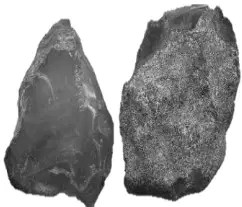
Thales noticed a yellowish stone. After cleaning it with his cloak and placing it on the table, he observed that small particles and dust nearby were sticking to it. What phenomenon did Thales observe after rubbing the stone?
Light objects and dust were attracted to the stone
The stone repelled all nearby objects
The stone produced light
The stone dissolved in water
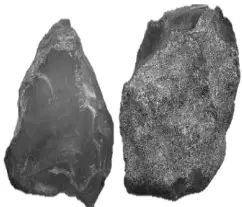
According to the passage, amber must be rubbed before it will attract light-weight objects, whereas lodestone attracts iron without being rubbed. Which material needs to be rubbed to show attraction?
Amber
Lodestone
Magnetite
Sulphur
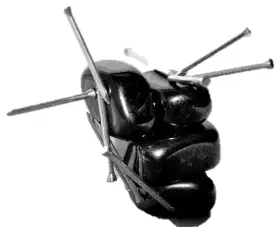
A lodestone is described as a natural magnet found in various parts of the world, acting the same way as a magnet and possessing the strange property of attracting iron. What is a lodestone?
A natural magnet that attracts iron
A synthetic magnet used in laboratories
A polished gemstone that shines
A piece of amber rubbed with cloth
Greeks called lodestone magnetite, a name associated with Magnes and the place Magnesia. What did the Greeks call the lodestone?
Magnetite
Amber
Sulphur
Graphite
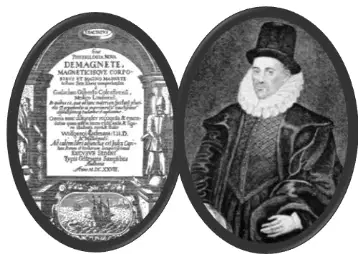
William Gilbert served as a physician of Queen Elizabeth I and wrote the book De Magnete in London, England. Who wrote De Magnete?
William Gilbert
Isaac Newton
Michael Faraday
Benjamin Franklin
Gilbert’s book states that amber is not the only thing with the ability to attract light objects when rubbed. According to Sir William Gilbert, which substances share this property when rubbed? Select all that apply.
Wax
Glass
Sulphur
Iron
Gilbert coined a new word for the mysterious attraction, derived from the Greek word Elektra for amber. What word did he coin?
Electricity
Magnetism
Static
Electromotive force
William Gilbert is considered the Father of Electricity and invented the electroscope. Which instrument did he invent?
Electroscope
Galvanometer
Microscope
Barometer
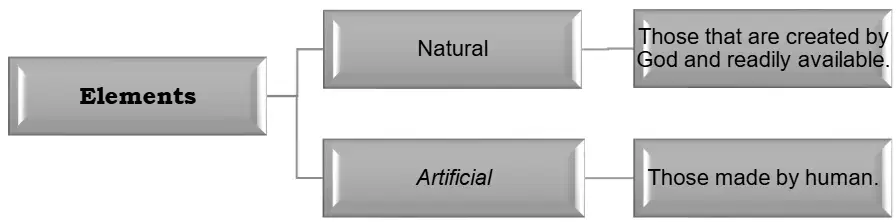
Elements in the passage are categorized into Natural (those that are created by God and readily available) and Artificial (those made by human). Which description matches Natural elements?
Those that are created by God and readily available
Those made by human
Those that are synthetic polymers
Those found only in laboratories
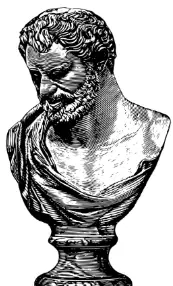
Democritus concluded that matter could not be divided into smaller and smaller pieces forever and that the smallest possible piece would be indivisible. What was Democritus’s conclusion about dividing matter?
There is a smallest piece beyond which matter cannot be divided
Matter can be divided endlessly
Matter is continuous with no smallest unit
Division increases the weight of matter
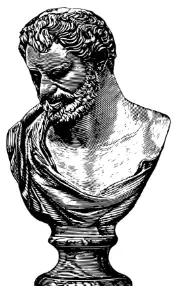
Democritus named the smallest piece atomos. What does atomos mean?
Uncuttable or indivisible
Invisible and weightless
Charged and magnetic
Small and spherical
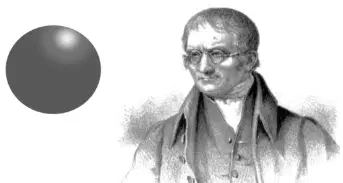
John Dalton introduced the Atomic Theory and stated that all objects are made of atoms. According to Dalton, what are all objects made of?
Atoms
Molecules only
Continuous fluid
Energy levels
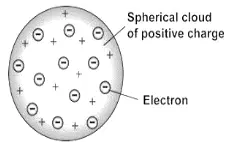
In 1897, John Joseph Thomson identified negatively charged particles smaller than the atom, calling them corpuscles; later they were named electrons. What name did Thomson originally use for these particles?
Corpuscles
Neutrons
Protons
Ions
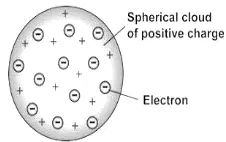
According to Thomson, an atom is neutral. If electrons are negatively charged, what must the atom contain to balance the negative charge and make it neutral?
Positively charged particles
More electrons than protons
Only neutrons
No charges at all

Ernest Rutherford proposed that an atom has a small, dense, positively charged center called the nucleus, with negatively charged electrons scattered outside the nucleus around the atom’s edge. Where did Rutherford place the electrons in his model?
Scattered outside the nucleus
Inside the nucleus
Fixed to the atom’s surface with no motion
Grouped in pairs within the nucleus
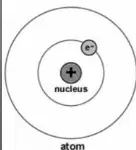
Neils Bohr placed each electron in a specific energy level (orbit). According to the passage, how many electrons are in the first energy level (first shell)?
2
8
18
32
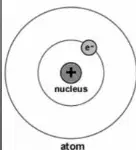
Energy levels indicate the number of electrons in an orbit: first shell 2, second 8, third 18, fourth 32. Which orbit contains 8 electrons?
Second orbit
First orbit
Third orbit
Fourth orbit
Valence shell/orbit electrons are those placed on the outermost part of an atom. Ionization is the process of ejecting one or more electrons from an atom. What is ionization?
Ejecting one or more electrons from an atom
Adding protons to the nucleus
Converting neutrons to protons
Fusing two atoms into one
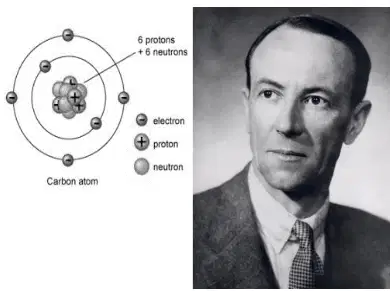
James Chadwick proved the existence of the neutron in the nucleus of an atom. Who proved the existence of the neutron?
James Chadwick
Ernest Rutherford
J. J. Thomson
John Dalton
The passage explains that an atom is neutral because the charge of electrons cancels the charge of protons. Which statement best explains why atoms are neutral?
Negative electron charge cancels positive proton charge
Neutrons give atoms a positive charge
Electrons and protons have identical charges
Atoms have no charged particles
The Atomic Number gives the idea of how many electrons and protons are in an atom and can be found on the periodic table. Where can the Atomic Number be found?
On the periodic table
Inside the atom’s nucleus
In the electron orbit diagram
On the electroscope scale
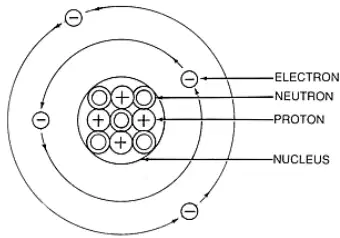
When charged particles come near one another, the force that pulls objects together is the force of attraction between oppositely charged particles. What is the force of attraction?
A pull that brings oppositely charged particles together
A push that separates like-charged particles
A pull that brings like-charged particles together
A force with no relation to charge
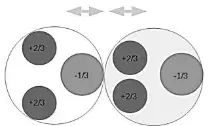
Electric charges behave according to the rule: like charges repel each other; unlike charges attract each other. Which statement matches this rule?
Like charges repel; unlike charges attract
Like charges attract; unlike charges repel
All charges attract regardless of type
Charges never interact
How do objects such as balloons and strands of hair develop an electric charge if these objects are made of neutral atoms?
By rubbing, which transfers electrons between objects and leaves one negatively charged and the other positively charged
By moving protons out of the nucleus during rubbing
By splitting neutrons into smaller particles that create charge
By exposure to magnetic fields without any contact or electron movement
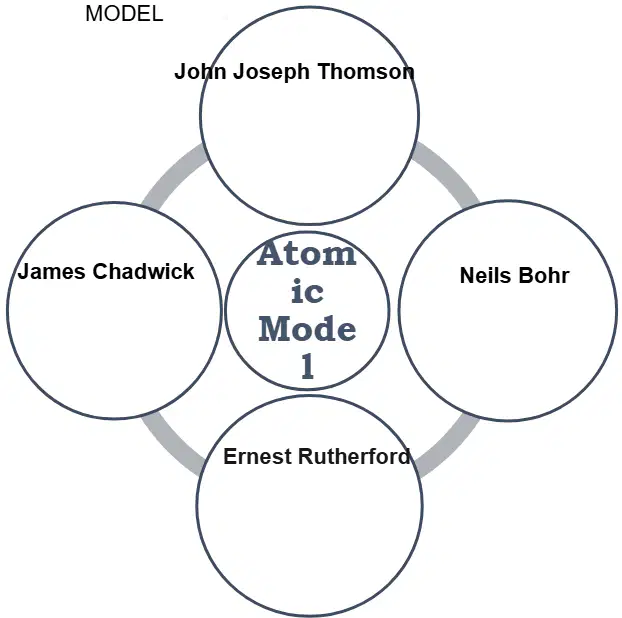
Independent Activity 1 — Supply the illustrated diagram with the appropriate atomic model or contribution: Based on the diagram showing four scientists around the label Atomic Model, which atomic model or contribution is associated with John Joseph Thomson?
Plum pudding model
Nuclear model
Planetary model
Discovery of the neutron
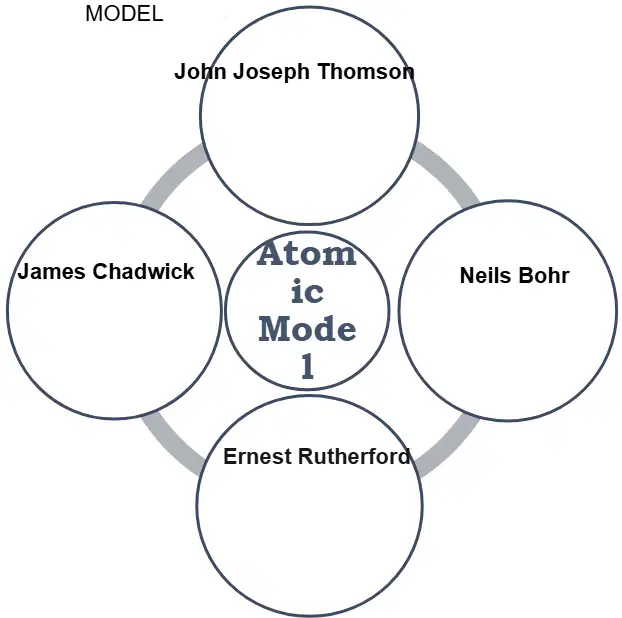
Independent Activity 1 — Supply the illustrated diagram with the appropriate atomic model or contribution: Based on the diagram showing four scientists around the label Atomic Model, which atomic model or contribution is associated with Ernest Rutherford?
Nuclear model
Plum pudding model
Planetary model
Discovery of the neutron
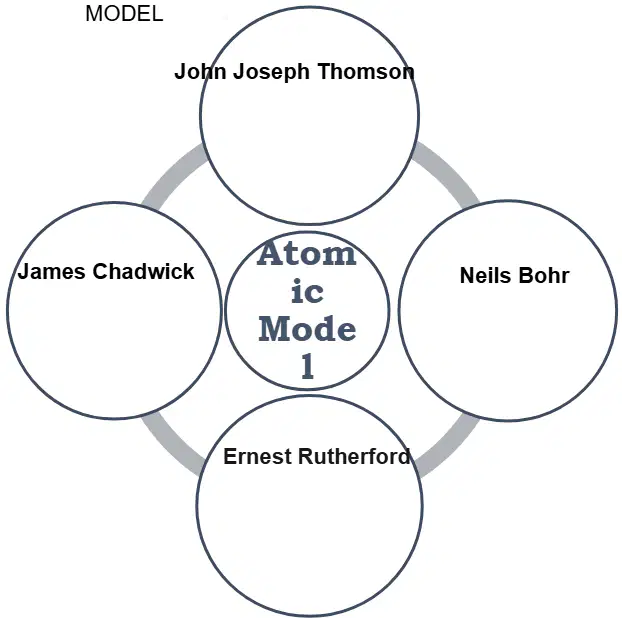
Independent Activity 1 — Supply the illustrated diagram with the appropriate atomic model or contribution: Based on the diagram showing four scientists around the label Atomic Model, which atomic model or contribution is associated with Neils Bohr?
Planetary model
Nuclear model
Plum pudding model
Discovery of the neutron
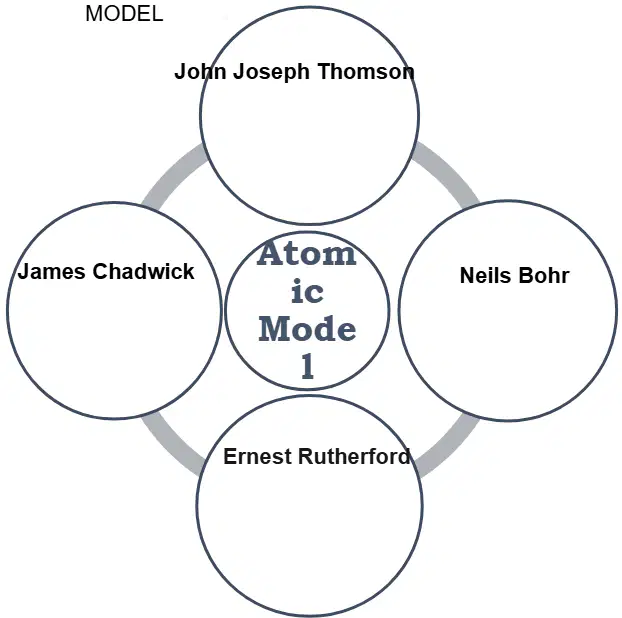
Independent Activity 1 — Supply the illustrated diagram with the appropriate atomic model or contribution: Based on the diagram showing four scientists around the label Atomic Model, which atomic model or contribution is associated with James Chadwick?
Discovery of the neutron
Plum pudding model
Nuclear model
Planetary model
Independent Assessment 1 — Determine whether the statement is correct or wrong: Electrons are the positively charge particle of an object.
True
False
Independent Assessment 1 — Determine whether the statement is correct or wrong: Nucleons is the term used for the sub-atomic particle found in the nucleus of an atom.
True
False
Independent Assessment 1 — Determine whether the statement is correct or wrong: Valence electron is the number of electrons and protons in an atom.
True
False
Independent Assessment 1 — Determine whether the statement is correct or wrong: The law of repulsion is applied when two different charge particle come close to each other.
True
False
Independent Assessment 1 — Determine whether the statement is correct or wrong: Plum pudding model was introduced by John Joseph Thomson.
True
False
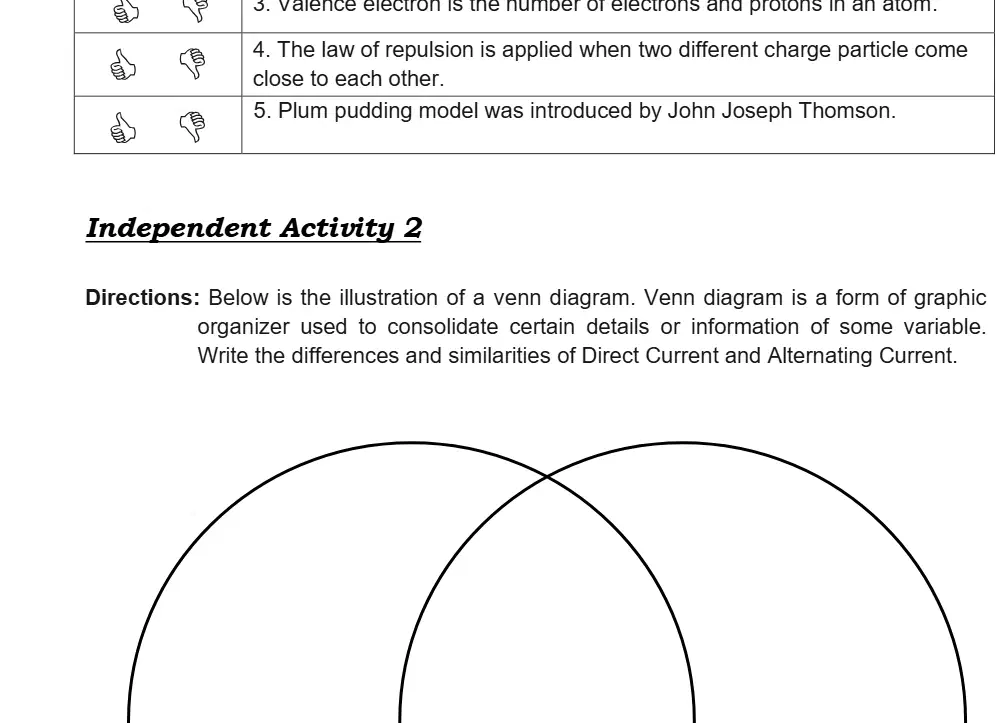
Independent Activity 2 — Use the Venn diagram to consolidate details: Which statement correctly describes a difference between Direct Current (DC) and Alternating Current (AC)?
DC flows in one constant direction while AC periodically reverses direction
DC and AC both change direction at fixed intervals
AC flows steadily in one direction while DC alternates direction
DC and AC are both generated only by batteries
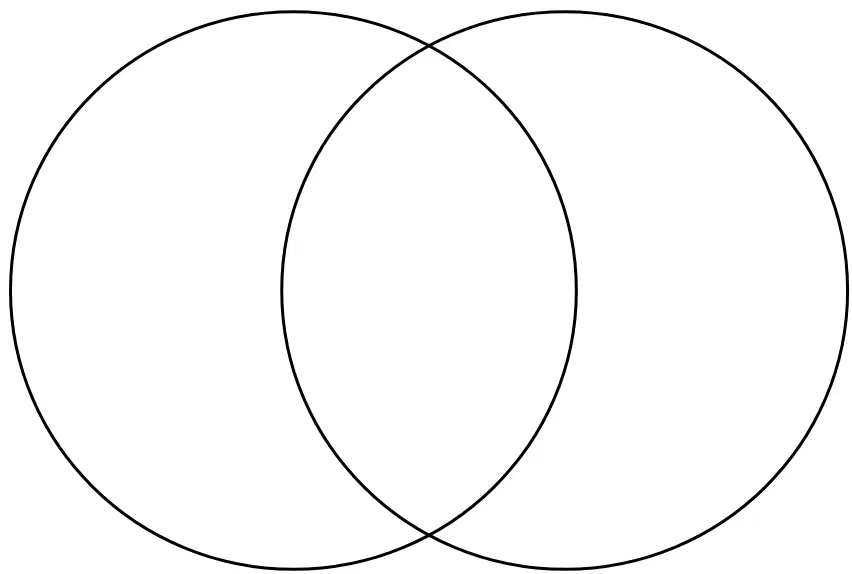
Independent Activity 2 — Use the Venn diagram to consolidate details: Which statement correctly describes a similarity between Direct Current (DC) and Alternating Current (AC)?
Both involve the movement of electric charges to transfer energy
Only AC can power household devices
Only DC can be transmitted through wires
Neither DC nor AC can light a bulb
Independent Assessment 2 — Read each description and write the term being described: Who said that there is a smaller particle than atom?
John Joseph Thomson
Ernest Rutherford
Neils Bohr
James Chadwick
Independent Assessment 2 — Read each description and write the term being described: Who gave the name corpuscles as the first name of the smallest particle of an atom?
John Joseph Thomson
Ernest Rutherford
Neils Bohr
James Chadwick
Independent Assessment 2 — Read each description and write the term being described: JJ Thompson became unable to find the positively charge in an atom so he used a model. This model of an atom is known as?
Plum pudding model
Nuclear model
Planetary model
Quantum mechanical model
Independent Assessment 2 — Read each description and write the term being described: What part of atom contains the protons and neutrons?
Nucleus
Electron cloud
Orbit
Shell
Independent Assessment 2 — Read each description and write the term being described: Protons and neutrons are known as?
Nucleons
Isotopes
Ions
Leptons
Independent Assessment 2 — Read each description and write the term being described: Who proposed that electrons are moving in an orbit around the nucleus?
Neils Bohr
Ernest Rutherford
James Chadwick
John Joseph Thomson
Independent Assessment 2 — Read each description and write the term being described: This indicates how many electrons an orbit can carry.
2n2
n2
2n
n/2
Independent Assessment 2 — Read each description and write the term being described: Enumerate Sub-Atomic Particles.
Protons
Neutrons
Electrons
Atoms
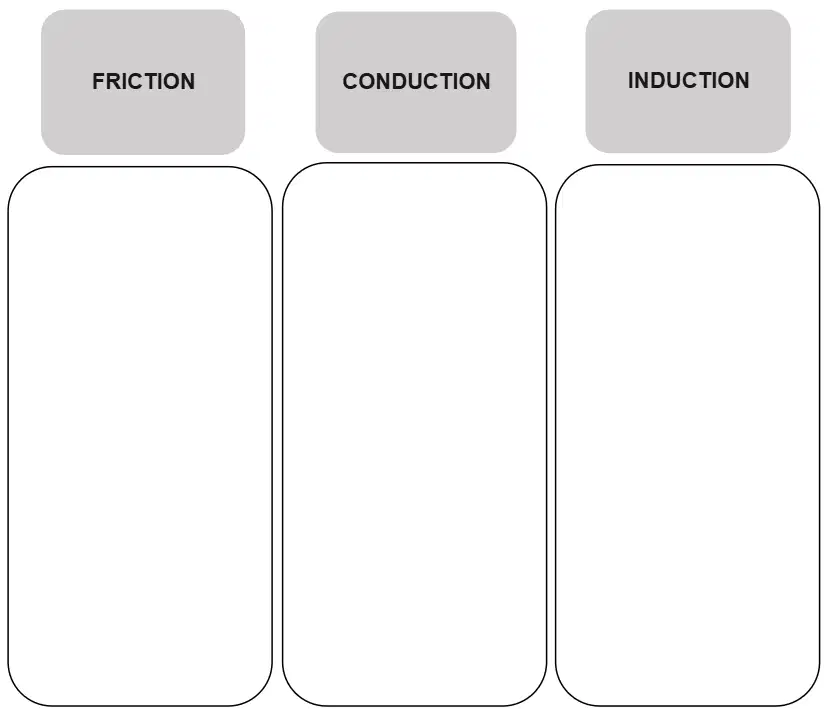
Independent Activity 3 — Supply the table given below: Which description best fits charging by friction?
Objects become charged after rubbing due to transfer of electrons
A charged object touches a neutral object to share charge
A charged object induces charge in a nearby neutral object without contact
Objects gain charge by connecting to the ground
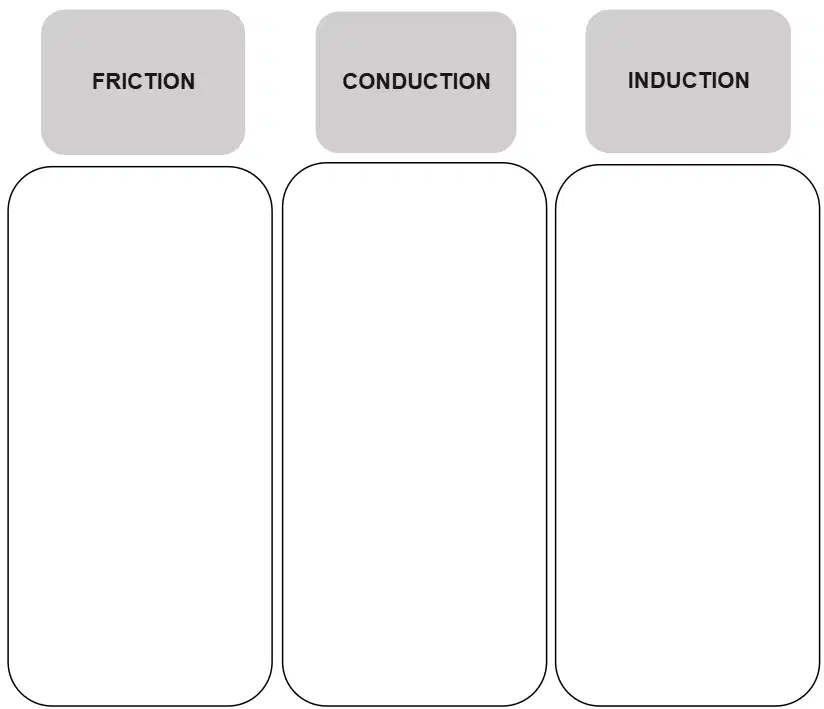
Independent Activity 3 — Supply the table given below: Which description best fits charging by conduction?
A charged object touches a neutral object so electrons move between them
Objects become charged after rubbing two materials together
A charged object induces charge in a nearby neutral object without contact
Charge flows only through insulators
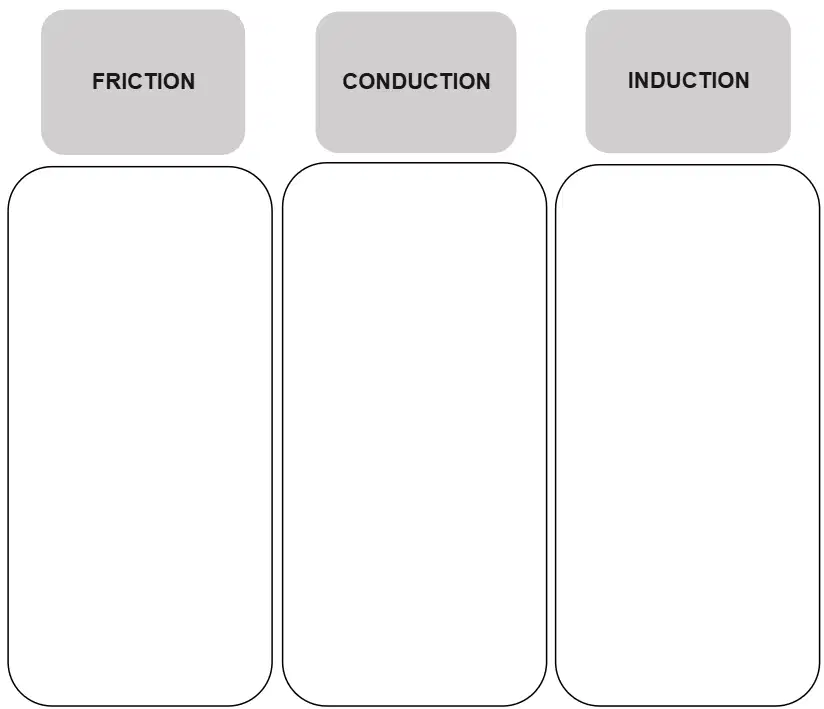
Independent Activity 3 — Supply the table given below: Which description best fits charging by induction?
A nearby charged object causes charge separation in a neutral object without direct contact
A charged object touches a neutral object so charge is shared
Objects become charged after rubbing and transferring electrons
Charge can be created from nothing without a source

