
 Worksheets
Attili Review Exemplar 5A
Total questions: 15
Worksheet time: 15mins
Which example best shows kinetic energy rather than potential energy?
Gas in a gas can in the garage
A tennis ball bouncing on the floor
A 9-volt battery in the package
A parked car at the top of a hill at a stop sign
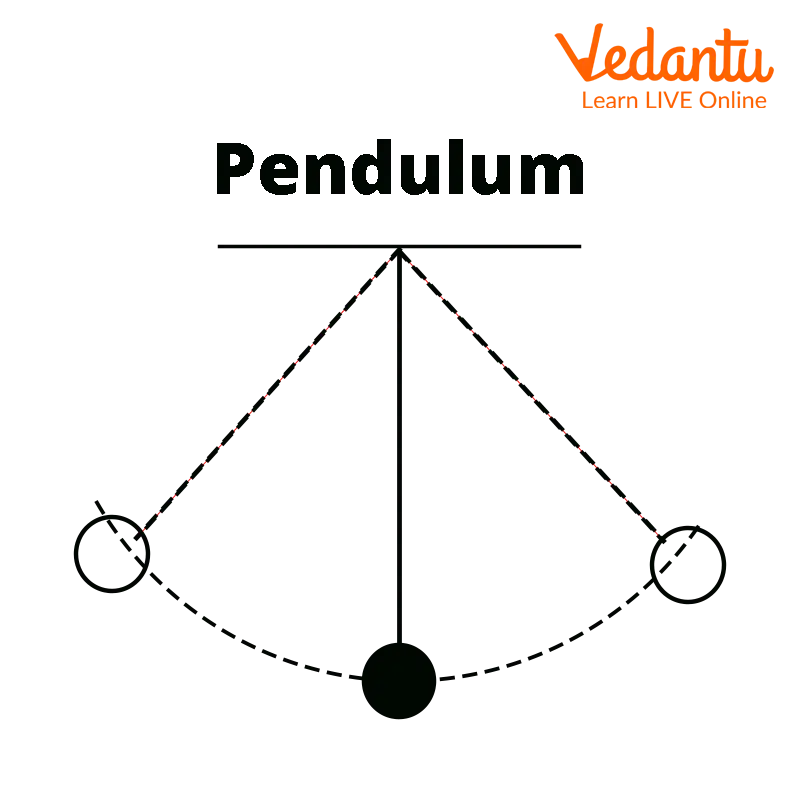
Elijah sets up a pendulum in a closed system and lets it swing from its highest point. What amount of its energy becomes kinetic energy at the lowest point?
All of the energy
Three quarters of the energy
Half of the energy
One quarter of the energy
Which device primarily converts electrical energy into thermal energy?
An electric toothbrush
An alarm clock
A laser pointer
A toaster oven

At a large factory, machines are powered by hydroelectricity that is generated on-site. The factory uses water heated by electricity converting to steam that spins a turbine and produces electricity for surrounding homes. What main energy transformation produces the electricity for surrounding homes in this process?
mechanical energy changes to electric energy
Thermal energy changes to chemical energy
Electric energy changes to light energy
Light energy changes to potential energy
During a festival, a glow stick is activated and emits light. What is the primary energy transformation taking place?
Potential Chemical energy released as light energy
Radiant Heat energy released as light energy
Mechanical energy released as light energy
Electrical energy released as light energy
Mia is playing on a swing in the park. After she stops pushing herself, the swing gradually slows down and eventually stops. What explanation best describes why the motion ends?
Gravity becomes stronger, stopping motion
Chemical energy in the swing is used up
Elastic potential becomes kinetic, stopping motion
Kinetic energy becomes heat from friction
A student slides a footstool across the floor and it gradually comes to a stop. Where does most of the energy go as the box slows down?
To the air as potential energy
To the footstool as kinetic energy
To the student’s muscles as chemical energy
To the floor as thermal energy via friction
Kito leaves a metal spoon in a bowl of hot soup. After a short time, the handle of the fork becomes warm. Which process is primarily responsible for the heat reaching the fork's handle?
Convection within the soup
Conduction from soup to the spoon
Radiation from the bowl
Evaporation from the soup
A cold metal spoon at 15 °C is placed into hot tea at 70 °C. Which statement best describes what happens immediately after contact?
Heat flows from the tea into the spoon
Both objects reach the same temperature instantly
No heat flows because the spoon is solid
Heat flows from the spoon into the tea
Charlotte places a warm cup of tea and a cold glass of water next to each other in a room. After some time, both drinks reach the same temperature. What process leads to this result?
Hotter liquid pulls cooler molecules into its area
Cooler liquid absorbs heat without any contact
Cooler molecules push away hotter molecules and gain energy
Faster-moving hot molecules collide with cooler ones and transfer energy
William has four cups of water at different temperatures: Cup 1 = 22 °C, Cup 2 = 45 °C, Cup 3 = 35 °C, Cup 4 = 100 °C. If William places two cups in contact, which heat-flow scenario is correct?
Heat flows from Cup 2 to Cup 3
Heat flows from Cup 2 to Cup 4
Heat flows from Cup 1 to Cup 4
Heat flows from Cup 1 to Cup 3
Charlotte is boiling water to make tea. She notices that water vapor forms above the boiling water, and drops appear on the pot lid. What explains how liquid forms on the lid?
Steam was caught by the lid before heating
Lid heated steam above boiling then turned it liquid
Steam cooled on the lid and condensed to liquid
Liquid stayed liquid and collected on the lid
A metal rod at 45 °C is submerged into a tank of water at 20 °C. After heat exchange, what is the final temperature of the water?
Exactly 20 °C because water mass is greater
Exactly 45 °C because metal determines temperature
Between 20 °C and 45 °C due to energy transfer
Lower than 20 °C because heat escapes to surroundings
Anika places a metal spoon in a cup of hot tea. After some time, both the spoon and the tea reach the same temperature. Which condition indicates that the spoon and the tea have reached thermal equilibrium?
No net heat transfer occurs between them
They have different temperatures but equal masses
Heat flows from the colder to the hotter object
They only exchange energy via conduction
In which situation would condensation most likely increase on a surface?
Surface and vapor at equal temperature
Surface warmer than surrounding vapor
Surface insulated from surrounding air
Surface cooler than surrounding vapor

