
 Worksheets
Ancient Persia 2026
Total questions: 44
Worksheet time: 26mins
Aria is studying for her history exam and comes across a question about the Persian Empire. She wonders which description is accurate.
A small kingdom that briefly existed in the desert
Largest empire of its time, founded by Cyrus
Largest empire of its time, founded by Darius
A nomadic tribe with no permanent capital
Anika is researching ancient civilizations for her history project. She discovers that Ancient Persia was centered in what is today the country of
Iran
Iraq
Egypt
Canada
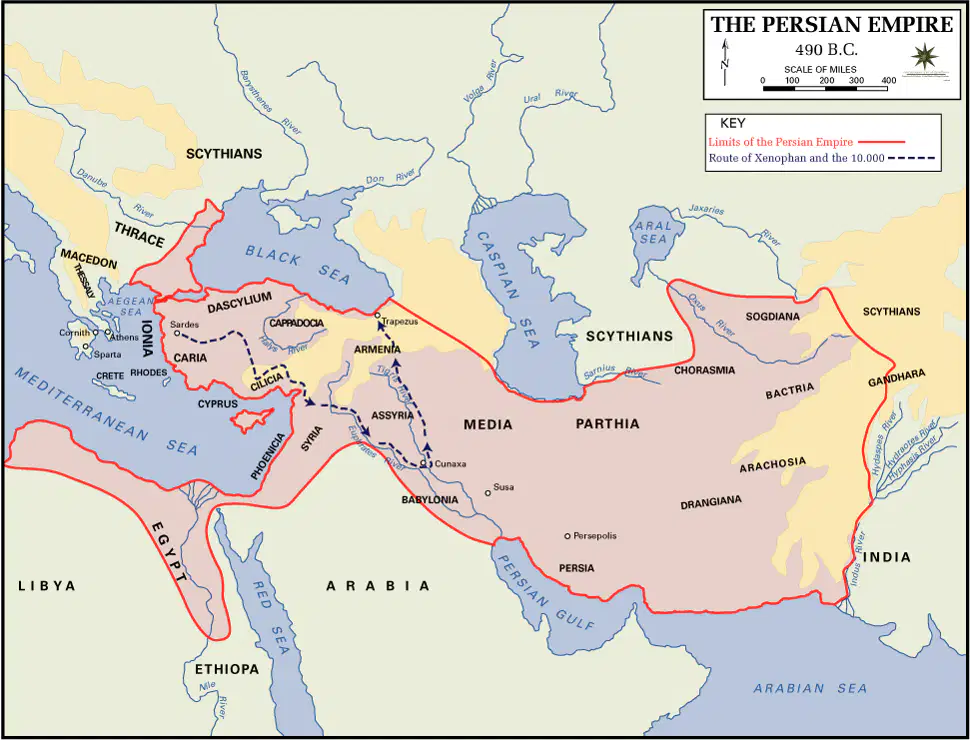
Daniel is studying a map of the Persian Empire for his history class. He wants to know which body of water is located to the west of the Persian Empire. Which one should he choose?
Mediterranean Sea
Caspian Sea
Arabian Sea
Red Sea
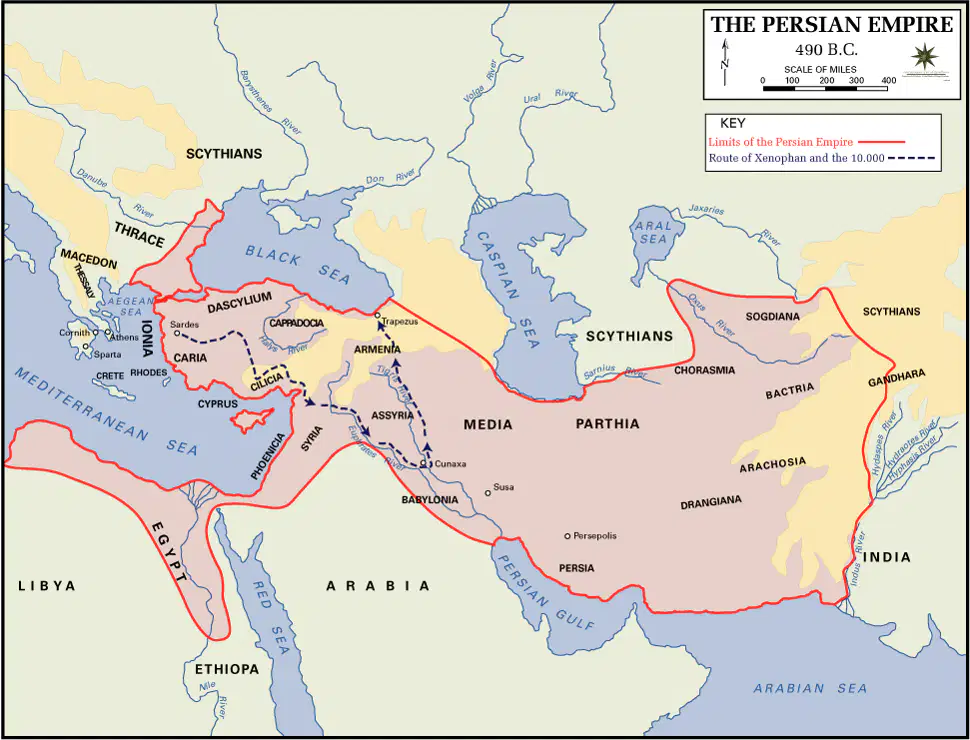
Lily is studying a map of the ancient Persian Empire for her history project. She wants to visit a city that is located near the center of the Persian Empire. Which city should she choose?
Babylon
Persepolis
Athens
Memphis
Imagine a history museum is hosting an exhibit about influential leaders. One section features Cyrus the Great. Which statement best matches the description provided in the exhibit?
Founded the Persian Empire and was a tolerant conqueror; conquered Jerusalem and Babylon
Ruled Greece and defeated Persia at Marathon
Was the last Persian king who ended the empire
Founded the Persian Empire and was a tolerant conqueror; conquered Athens and Sparta
Imagine you are a leader like Cyrus, ruling over a diverse empire with many different cultures and religions. What are some examples of a tolerant method of governing that you could use? Select all that apply.
Honored local customs and religions
Allowed the Jewish people, who had been driven from their homeland by the Babylonians, to return to Jerusalem
Under Persian rule, the Jewish people rebuilt their city and temple
Forced conquered areas to pay taxes to Persia
Lily is researching ancient artifacts and wants to see the Cyrus Cylinder in person. Where should she plan to visit?
The British Museum in London
The Louvre in Paris
The Metropolitan Museum of Art in New York
The National Museum of Iran in Tehran
Before coins were invented, how might Scarlett and Sophia have exchanged goods in ancient Persia?
Using a barter system
Using paper money
Using bank checks
Using a currency system
Imagine Daniel is giving a presentation about ancient history. He asks the audience: "Who introduced coins to Persia after conquering Lydia?"
Cyrus
Darius
Xerxes
Nebuchadnezzar
Imagine you are an advisor to Darius, tasked with helping him manage his vast empire. What methods and tools could you recommend to Darius to help him hold together his empire? Select all that apply.
Satraps
Royal Road
Tax Collectors
Royal Spies
Alliances with Greek city states
Mia is learning about the Persian Empire in her history class. She comes across the term "satrap" and wants to know what it means. What was a satrap in the Persian Empire?
A royal governor of a province
A soldier in the Immortals
A trader on the Royal Road
A temple priest
What responsibility did satraps have in their provinces?
Running seaports
Collecting taxes and enforcing laws
Leading foreign invasions
Writing poetry for the king
How did Darius ensure satraps stayed loyal to him?
He bought each of them a new Lamborghini and Nike athletic shoes
He sent officials and spies to monitor them
He allowed them complete independence
He paid them with foreign gold only
Why did the satrapy system help keep the Persian Empire stable?
It allowed governors to manage smaller areas
They were all tied together using rope and a very strong adhesive glue
It replaced roads with canals
It removed taxes from provinces
Mason is studying ancient coins for his history project. He comes across a collection of Persian coins and wonders what image commonly appeared on them. What image is he most likely to find?
A king or a soldier with a bow and arrow
A sailing ship
A wheat sheaf
A lion and sun emblem
The following could describe Darius the Great's rule: Which statement is most accurate?
He created an organized and efficient government, expanded the empire, and was considered a just leader
He dismantled the empire’s administration and reduced its size
He focused only on building temples and ignored governance
He created an unorganized and in-efficient government, reduced the size of the empire, and was considered a unjust leader
How did Darius the Great expand the Persian Empire?
By adding about 500 miles of territory
By conquering only one small city
By adding 10,000 miles to the empire
By forming a peace alliance without territorial changes
Why did Darius have Persepolis built in a remote mountain location?
It provided safety for treasures and important artifacts
It was the only available farmland
It was close to the Mediterranean ports
It prevented all travel into the empire
What was one way King Darius made the Royal Road more efficient in terms of communication?
It had relay stations with fresh horses
It avoided all major cities
It had motorcycle relay stations
It had relay stations with fresh donkeys
Isla is studying ancient communication systems for her history project. She wants to know: What was the fastest communication system of its time?
Relay couriers on the Royal Road
Smoke signals from mountain tops
Merchant ships along the Persian Gulf
Pigeons trained to carry messages
How long did it take a horse messenger to travel the entire Royal Road?
One week
15 days
One month
Two days
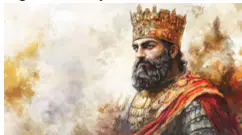
How did Darius the Great improve communication on the Royal Road?
He added postal stations along the Royal Road
He replaced horses with chariots
He limited couriers to palace messages only
He closed local roads to increase security
What improvement did Darius make to the Persian coin system?
He created a standard gold coin used across the empire
He banned gold coins and used silver only
He allowed each city to mint its own style of coin
He replaced coins with barter tokens
Maya is visiting Persepolis, the ancient capital of Persia, as part of her history class. Her teacher asks: Which description best explains why Persepolis is evidence of an advanced civilization?
It featured massive palaces, audience halls, and intricate stone reliefs and served as a center for political and cultural gatherings
It featured a massive military, jet fighter planes, tanks, aircraft carriers, battleships, destroyers, nuclear bombs, and beautiful buildings, water features, and gardens to go along with this high powered weaponry.
It consisted of simple huts with no artwork or public spaces
It was an isolated farming village with little contact with the empire
Aria is studying ancient civilizations and comes across information about the Persian road systems. She wants to know which statement about these road systems is accurate. Which should she choose?
Satrapies or provinces were linked by over 8,000 miles of highway, including the Royal Road from Susa to Sardis
Satrapies or provinces were linked by over 8 billion miles of highway, the speed limit was 85mph, and it included the Royal Road from Las Vegas to Los Angeles
Only foot messengers could use the roads, never mounted couriers
The empire built fewer than 100 miles of roads in total
Imagine Sophia is tasked with improving the communication system across a vast empire, inspired by Darius the Great's methods. How did Darius the Great develop the postal system further?
He extended postal stations to 111 along a 1,700+ mile road across the empire
He extended postal stations to 11 along a 1,700+ mile road across the empire
He extended postal stations to 1 trillion along a 1,700+ mile road across the empire
He ended the service created by Cyrus
Benjamin is studying ancient water systems for his history project. He comes across a structure called a qanat, which was used for irrigation and other purposes. What is a qanat?
An underground tunnel system that brings water from a mother well, used for irrigation and other purposes
An above ground aqueduct system that brings water from a mother well, used for irrigation and other purposes
A royal coin minted from silver
A harbor exclusively for military ships
Imagine Grace is an archaeologist studying ancient taxation systems. She discovers records showing that Persian rulers (excluding the Indian satrapy) received a yearly silver tribute. Approximately how much silver tribute was paid each year to these Persian rulers?
About 7,740 talents of silver (around 232,200 kg)
About 100 talents of silver (around 3,000 kg)
About 50 talents of silver (around 1,500 kg)
About 40 trillion, billion, million, thousand, talents of silver (around 50 million kg)
Lily is planning a history project about ancient infrastructure. She discovers that Darius built a famous Royal Road. How long was the Royal Road built by Darius?
1677 miles
8000 miles
100 miles
26.2 miles
Aria is studying Ancient Persian civilization for her history project. She discovers that a standardized currency was introduced and widely accepted throughout the empire. What was this currency?
The daric (gold coinage)
The drachma (silver coinage)
The gordoic (leprechaun gold)
Bronze bars used for barter
Imagine you are a historian researching ancient battles. You come across records about Darius I, King of Persia, who aimed to conquer the Greeks with a vast army. In which year did Darius I launch his attempt to conquer Greece?
490 BC
480 BC
500 BC
460 BC
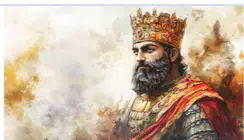
Imagine you are a historian giving a lecture about ancient military campaigns. You ask your audience: What was the First Invasion of Greece?
Darius I’s campaign in 490 BC that led to the Battle of Marathon
Alexander’s invasion of Persia in 334 BC
Xerxes’ invasion culminating in the Battle of Thermopylae
Rome’s conquest of Athens in the first century BC
Who were the Greeks?
A collection of city-states like Sparta and Athens that often fought each other but united against Persia
A single empire ruled from Athens with no rival city-states
Nomadic tribes living only in the mountains
A collection of city-states like Persia and Rome that often fought each other but united against Sparta
Battle of Marathon: How far did the Athenian messenger Pheidippides run to deliver the news of victory?
26.2 miles
15 miles
Around the world 5 times (even over water)
50 miles
Battle of Thermopylae: What was the strategic result of the stand by Leonidas and his 300 Spartans and other Greeks at the pass?
They were annihilated but allowed other Greek forces time to prepare for Xerxes’ invasion
They completely destroyed the Persian army and ended the war
They surrendered and joined the Persian forces
They fought hard to get a movie deal in Hollywood about the event that made the very rich.
Identify the battle described as effectively ending the Persian war: an outnumbered Greek fleet defeated the Persians by sinking over 200 ships, forcing the Persians to retreat to Asia Minor.
Battle of Salamis
Battle of Marathon
Battle of Thermopylae
Siege of Troy
During a visit to a maritime museum, Evelyn sees an exhibit describing Greek naval power: a sleek, light warship powered by 170 oars arranged in three vertical tiers, manned by skilled sailors for rapid, complex maneuvers, and equipped with a battering ram at the bow. What was this type of ship called?
A Greek warship called a Trireme.
A nuclear submarine.
A Greek warship called a Man-a-War.
A Roman siege engine that launched heavy stones
A Persian official argues that building and maintaining the Royal Road was worth the cost to the empire.
Which reason is the best support for this argument?
The road helped artists travel and share new styles of art
The road allowed the king to quickly respond to rebellions or emergencies
The road made travel more comfortable for wealthy nobles
The road reduced the need for written records
The road encouraged people to settle far from cities
A Persian governor is deciding how to supply water to a desert city year-round, even during long dry seasons.
Which option best explains why the qanat system was an effective solution?
It used above-ground canals that collected rainwater quickly
It depended on rivers that flooded regularly
It carried underground water from mountains while reducing evaporation
It stored water in large open pools near cities
It required constant pumping by workers
A visiting ambassador from another empire walks through the Royal Palace of Persepolis for the first time. He sees massive stone columns, detailed carvings, and carefully planned buildings.
Which conclusion is the best answer he could make about the Persian Empire?
The Persians cared more about decoration than government
The Persians relied only on slave labor to build monuments
The Persians had advanced engineering, organization, and skilled workers
The Persians wanted the palace hidden from foreign visitors
The Persians built the palace mainly as a military fortress
The Persian king rules over many different regions, each with its own resources. Instead of demanding the same payment from everyone, officials collect different forms of tribute from different areas.
Which explanation is the best answer for how this system helped make the empire wealthy?
It punished poorer regions to force them to produce more
It allowed the king to avoid using money altogether
It took advantage of each region’s strengths to increase overall wealth
It reduced the need for trade between regions
It ensured all regions paid exactly the same amount
Some critics argue that collecting taxes and tribute could weaken an empire by angering its people. Persian leaders disagreed.
Which reason best explains why the Persian tax system strengthened the empire instead?
Taxes were collected only during wartime
Tribute was used mainly for building palaces
Collected wealth paid for roads, armies, and public projects
Taxes eliminated the need for local governments
Tribute was optional for most regions
Some historians argue that Cyrus the Great’s policies were not only moral but also strategic.
Which option is the best answer explaining how Cyrus’s support for human rights could also help him maintain control of the empire?
It eliminated the need for a strong Persian army
It encouraged conquered peoples to rebel less and cooperate more
It allowed Persia to stop collecting taxes
It prevented other empires from attacking Persia
It caused Persian culture to disappear
Advancements of the Ancient Persian Empire
The Ancient Persian Empire was known for its remarkable achievements in agriculture. Persian farmers developed advanced irrigation systems, including underground canals called qanats, which transported water from distant sources to arid lands. These techniques allowed them to cultivate crops in regions with limited rainfall, ensuring food security for their vast empire. Their agricultural innovations were crucial for sustaining a growing population and supporting trade.
One of the most impressive features of the Persian Empire was the Persian Royal Road. This extensive network of roads stretched over 1,500 miles, connecting major cities and regions. The road facilitated efficient communication and trade across the empire, with relay stations placed at regular intervals for messengers to rest and exchange horses. This system allowed messages to travel quickly, demonstrating the empire's organizational skills and commitment to connectivity.
Persian architecture and engineering were equally advanced for their time. The empire's builders created grand palaces, such as Persepolis, which showcased intricate carvings and impressive stonework. They also constructed bridges and dams that demonstrated their understanding of engineering principles. These structures not only served practical purposes but also reflected the empire's wealth and artistic achievements.
The Ancient Persian Empire's advancements in agriculture, transportation, and construction highlight its sophistication and innovation. By mastering these areas, the Persians were able to create a thriving civilization that influenced future empires. Their legacy serves as a testament to the ingenuity and resourcefulness of ancient societies.
What was the primary purpose of qanats in the Ancient Persian Empire?
To transport water to arid lands
To build grand palaces
To connect major cities
To facilitate trade
How long was the Persian Royal Road?
1,500 miles
500 miles
2,000 miles
1,000 miles
Which structure is an example of Persian architectural achievement?
Persepolis
The Great Wall of China
The Colosseum
The Hanging Gardens of Babylon
What was the main function of relay stations on the Persian Royal Road?
To allow messengers to rest and exchange horses
To store agricultural products
To serve as military outposts
To host trade fairs
What was one of the key factors that contributed to the Persian Empire's food security?
Advanced irrigation systems
Extensive road networks
Grand palaces
Military strength

