
 Worksheets
Introduction to Model-Based Design
Total questions: 15
Worksheet time: 10mins
A team must choose a development approach for a safety‑critical controller. Which plan best leverages Model‑Based Design to minimize late defects while maintaining hardware flexibility?
Create a mathematical and graphical model used across lifecycle
Write hardware‑specific code first then model later for tests
Do manual coding and debugging before any modeling work
Develop separate models for design and different test phases
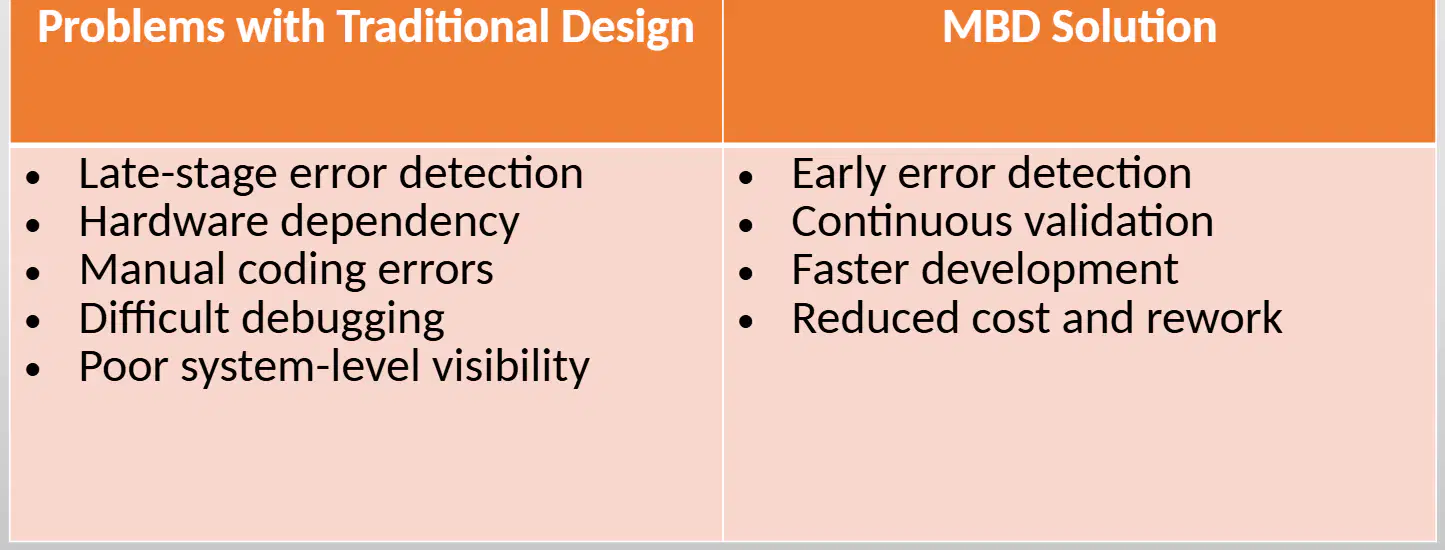
You are asked to justify investment in MBD tools. Which evidence‑based argument is strongest given typical problems in traditional design?
Early error detection reduces costly late‑stage rework
Manual coding increases performance on embedded targets
Hardware dependency speeds debugging across platforms
Poor system‑level visibility makes validation faster
A project intends to use one artifact as the central element for design, verification, and implementation. What artifact should be specified to align with MBD principles?
A prototype built only for hardware debugging
Separate documents for analysis, testing, and coding
A set of platform‑specific drivers and libraries
A refined system model used for simulation and code
You are leading a control system project and must choose an approach that minimizes late-stage surprises. Using the diagram, which practice best ensures defects are discovered as designs evolve, not only at the end?
One-off verification after integration
Deferred testing after hardware build
Continuous verification at every stage
Occasional reviews during milestones
A team wants to validate algorithms before hardware exists. Given the principles shown, which strategy most directly supports early evidence about behavior?
Code stubs without model semantics
Manual prototyping with breadboards
Simulation-driven development using executable models
Paper specifications with peer reviews
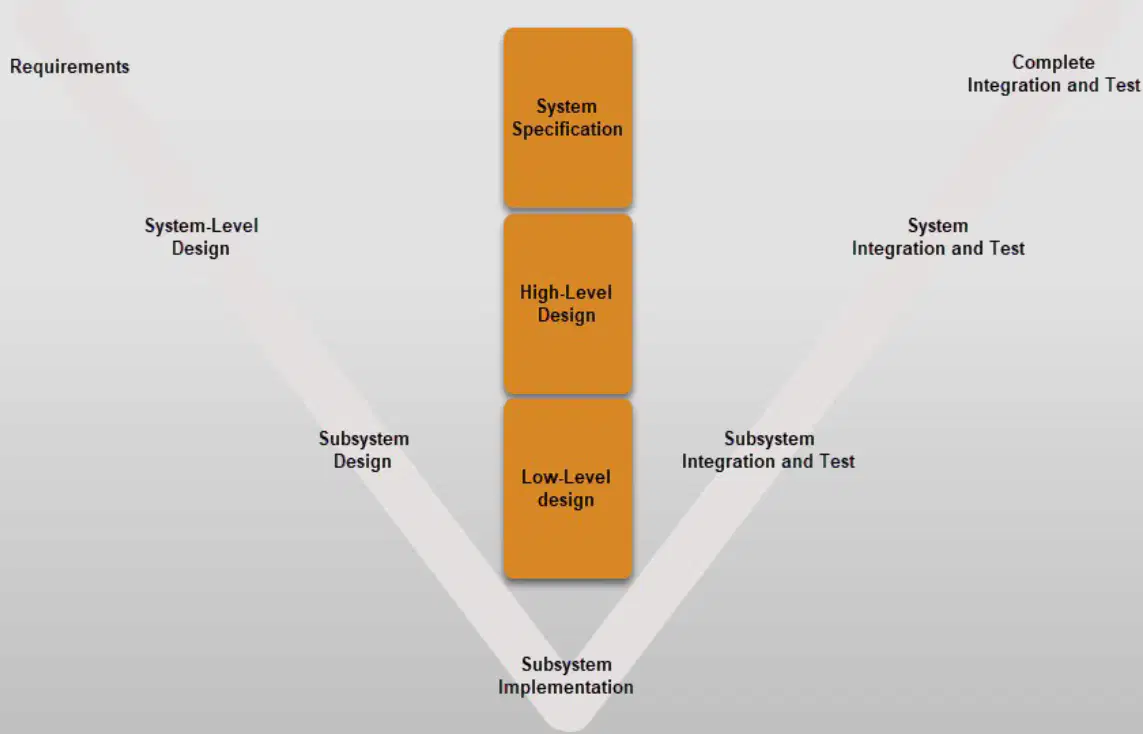
You must plan the order of activities for a complex embedded system. According to the V-model workflow diagram, which sequence aligns with sound planning from requirements to verification?
Complete integration and test, subsystem implementation, requirements
Subsystem implementation, high-level design, system specification
System specification, high-level design, low-level design
System integration and test, subsystem design, requirements
You must choose an MBD activity to address a requirement change discovered after initial modelling. Which sequence best minimizes rework while maintaining verification rigor?
Modify deployed hardware then adjust requirements later
Rewrite manual code then backfill model and tests
Revise model then rerun early simulation and verification
Update requirements then regenerate code directly
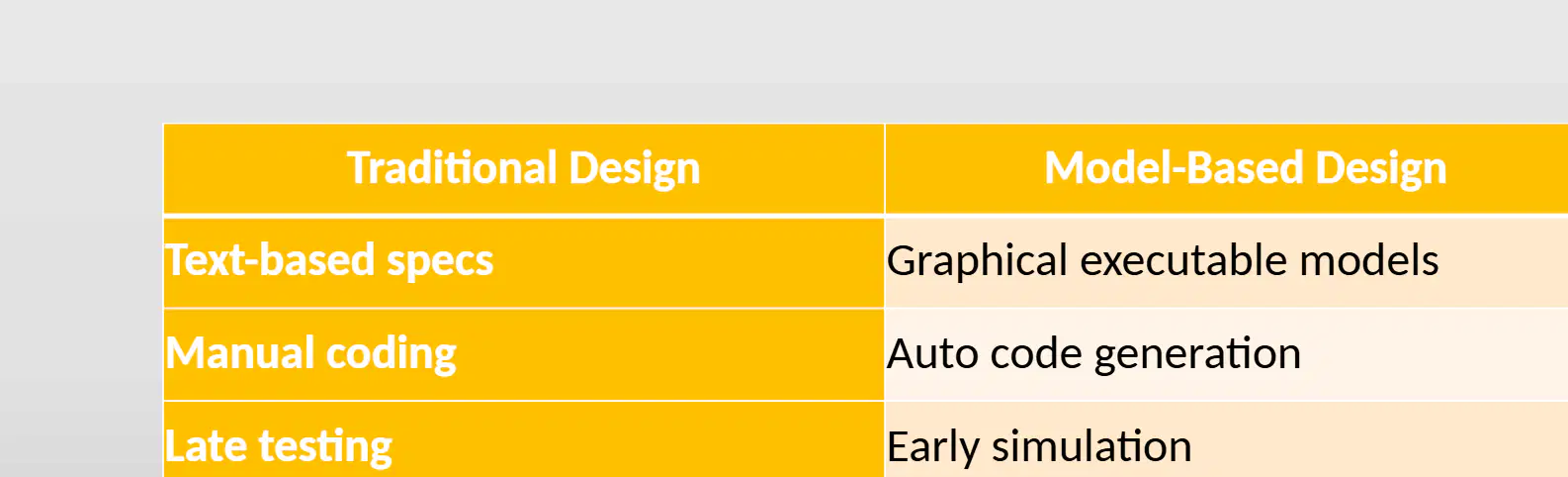
A team currently does text-based specs with late testing and manual coding. To strategically lower defects and cost, which transition plan aligns with MBD principles?
Keep text specs and add more manual reviews
Focus on hardware tuning before simulation begins
Adopt executable models and enable auto code generation
Delay testing further but hire expert coders
You are tasked with designing a temperature control system for a lab oven. Choose the best initial workflow that minimizes time-to-deployment while improving reliability, given access to modeling tools and a microcontroller.
Prototype hardware first then design the control algorithm
Model temperature dynamics and simulate controller behavior
Write algorithm then test on hardware and fix errors
Implement code directly and tune parameters on the bench
You must justify tool selection to generate embedded code for a simulated controller and deploy to a microcontroller. Which pair of platforms most directly supports this workflow for model-based design?
MATLAB/Simulink and LabVIEW
Spreadsheet macros and a C compiler
Scilab/Xcos and OpenModelica
Dymola and a custom IDE
You need to model hybrid logic with discrete states and later auto-generate embedded C for deployment. Which toolchain best fits this workflow and why?
LabVIEW due to visual programming focus
MATLAB/Simulink with Stateflow and codegen
LabVIEW for dataflow and HIL strengths
Neither; both lack embedded code support
A lab setup must stream sensor data to a controller, run real-time HIL tests, and minimize ramp-up time for new users. Which platform most directly satisfies these constraints?
MATLAB/Simulink given excellent control design
Either platform since features are equivalent
LabVIEW with strong hardware integration
MATLAB due to strong modeling capability
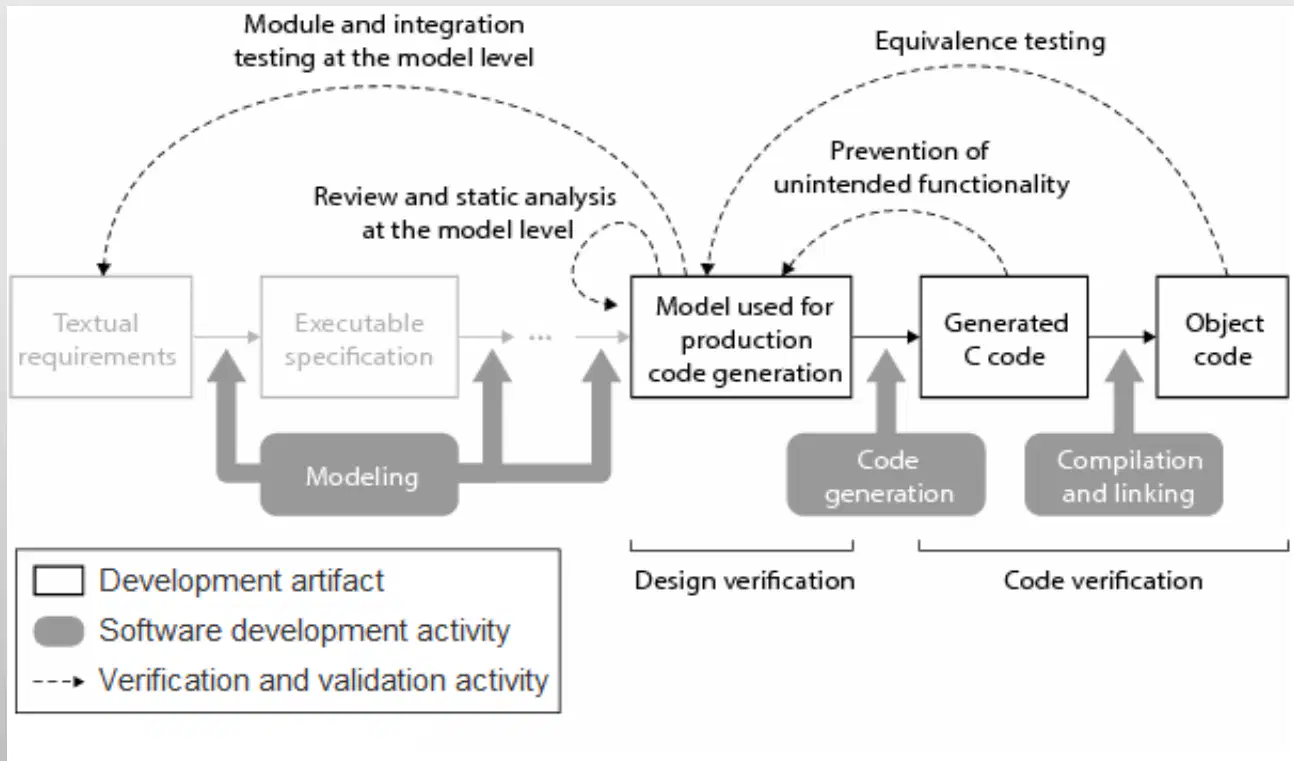
Using the diagram showing artifacts and activities from textual requirements to object code, which verification step best ensures the generated C code maintains intended behavior from the production model, and why would choosing an alternative step be less reliable for catching unintended functionality?
Compilation and linking checks for binary size differences only
Equivalence testing across model and object code, tracing behaviors
Review and static analysis of textual requirements alone, reading documents
Module testing at object code level without model context, isolated cases
A team adopts the MBD tool chain stages listed—system modeling, simulation and validation, auto code generation, compiler and IDE, embedded hardware, testing and debugging. Which sequence best minimizes integration risk while planning for design and code verification, and what trade-off justifies this ordering?
Model → Simulate → Auto-generate code → Compile → Deploy to hardware → Test, prioritizing early behavior validation
Compile first with stubs → Model later → Generate code → Test → Deploy, prioritizing tool familiarity
Auto-generate code before modeling → Compile → Simulate → Test → Deploy, prioritizing speed
Deploy to hardware immediately → Test → Model → Generate code → Compile, prioritizing real-device feedback
A company must prioritize Model-Based Design deployment for one system first. Given the domains shown, which system offers the strongest early gains from simulation-driven control validation, considering safety-critical feedback loops and certification needs visible in the visual?
Power electronics inverter switching schedules
Industrial automation conveyor sequencing controllers
Automotive braking and cruise control modules
Robotics low-level joint position servos

