
 Worksheets
The Fire Triangle
Total questions: 10
Worksheet time: 5mins
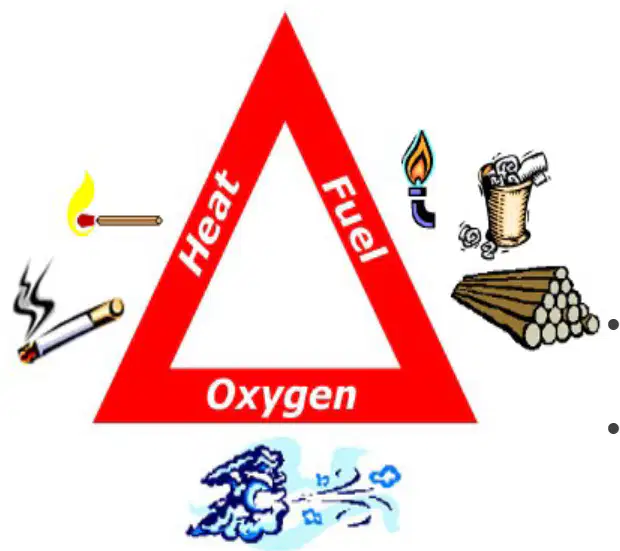
You arrive at a small trash fire. A lid can fully seal the metal bin, and a foam extinguisher is available. Which single action most reliably interrupts the fire triangle for safe extinguishment in this scenario? (Refer to the diagram of the fire triangle on the slide.)
Add water to cool below ignition
Spray foam to enhance chemical reaction
Cover the bin to starve oxygen
Spread debris to reduce fuel load

A kitchen deep-fat fryer ignites. You have extinguishers labeled for Class A only, Class B only, and Class F only. Which extinguisher label should you select, and why?
Class A only, solid combustibles burn
Class F only, cooking oils and fats burn
Class B only, liquids like petrol burn
Class C only, flammable gases burn

A water extinguisher displays a blue icon permitting use on paper and wood, with red strike-through icons over flammable liquids and electrical equipment. Faced with a small wastepaper bin fire near a plugged-in toaster, what is the safest plan?
Switch to a Class B extinguisher for both
Use water on paper only, avoid electrical
Unplug toaster then spray water widely
Use water directly on bin and toaster
You discover a small wastebasket fire in a lab. A colleague is coughing nearby and the building alarm is silent. Using the information shown, which action sequence best manages risk before attempting extinguishing?
Call 999 immediately, then assist the colleague to safety
Assist the colleague first, then call 999 or activate the alarm
Start extinguishing right away, then call 999 afterward
Activate the alarm only, then watch the fire closely
A coworker argues that an ABC extinguisher ensures any fire is safe to fight. Evaluate this claim and choose the best response.
Disagree due to possible toxic combustion
Agree because ABC covers every hazard
Agree if flames are under thirty centimeters
Disagree only when no exit sign is visible
While evacuating during a fire, which door-use strategy best slows smoke and flame spread without adding risk?
Prop doors open for faster movement
Ignore doors to maintain speed
Close doors behind you as you leave
Lock doors to prevent reentry
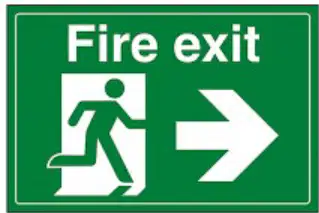
Two floors share identical exit signs but different layouts. Which reasoning best guides your evacuation map development?
Base routes solely on extinguisher locations
Use one standard plan for simplicity
Select the fastest-looking staircase only
Customize procedures for each premises
Smoke is increasing and you cannot confirm the fuel. Which decision pathway balances life safety and uncertainty?
Test-spray the extinguisher for a minute
Evacuate early and let fire department handle
Run to fetch a second extinguisher nearby
Wait to learn the fuel before leaving
During training recap, your team evaluates how to avoid being trapped when suppression fails. Which practice should be emphasized?
Move closer to smoke to observe flames
Stand in doorway to block exit sign
Maintain a clear escape route behind you
Always approach from deep inside room
You are the safety lead reviewing an evacuation. Which evidence best indicates procedures were implemented properly by the company?
Site-specific plans distributed to teams
Staff improvised routes during drill
No training yet but exits are labeled
Extinguishers stored near decorative signs

