
 Worksheets
HL A.3.2.2 Exercise Prescription
Total questions: 30
Worksheet time: 15mins
Which component of FITT-P primarily addresses how hard you should work during each session?
Frequency of weekly sessions
Intensity of effort level
Time per exercise bout
Type of activities selected
A beginner increases walking from 20 to 30 minutes per day without changing pace. Which FITT-P element changed?
Time was modified
Intensity was modified
Type was modified
Frequency was modified
To apply progressive overload safely, which plan best balances improvement and injury risk?
Train daily at constant high intensity
Increase training volume gradually each week
Add random workouts without tracking changes
Jump immediately to maximal sprint intervals
On a physical activity prescription form, checking “moderate” intensity typically indicates what experience during exercise?
Breathing very comfortably
Starting to sweat but can still talk
Unable to speak two sentences
Breathing heavily with difficulty
Which choice best explains why structured planning improves effectiveness of a training program?
It replaces technique coaching entirely
It removes the need for rest days
It tailors variables to individual goals
It guarantees identical results for everyone
An athlete aiming to improve sport performance most likely needs which approach?
General activity without progression
Specific plan focused on sport skills
Random workouts chosen daily
Only low-intensity flexibility sessions
Regular aerobic exercise helps reduce anxiety primarily by which mechanism?
Eliminating all negative emotions permanently
Raising cortisol and stress responses
Suppressing dopamine and serotonin release
Lowering stress hormones and boosting endorphins
Which physiological change best explains why moderate exercise can immediately improve mood after a workout?
Cortisol spikes sustain stress responses
Dopamine blockade limits reward pathways
Endorphin release reduces pain perception
Serotonin depletion enhances alertness
A 72-year-old begins walking daily. Which benefit aligns most directly with preventing cognitive decline?
Enhanced hippocampal-dependent memory
Improved joint lubrication efficiency
Increased basal metabolic rate
Greater peripheral muscle hypertrophy
Which statement best differentiates exercise as an adjunctive treatment for depression?
It cures depression in all cases
It replaces psychotherapy entirely
It is only effective at high intensities
It complements therapy and medication
Regular aerobic or strength training most consistently reduces which cluster of symptoms in depression?
Hallucinations, delusions, paranoia
Mania, grandiosity, rapid speech
Sadness, hopelessness, low motivation
Catatonia, mutism, waxy flexibility
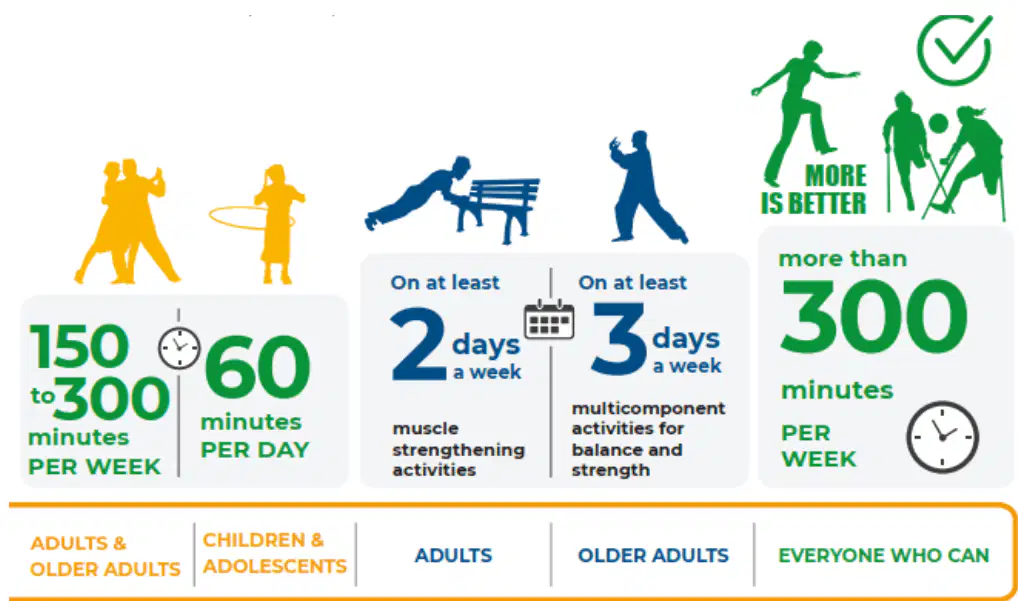
A client with anxiety wants a weekly plan. Which schedule aligns with WHO guidance for mental health benefits?
150 minutes moderate intensity weekly
30 minutes light activity monthly
45 minutes vigorous activity yearly
10 minutes stretching daily only
Which neurotransmitter change is most associated with improved reward sensitivity after consistent training?
Increased dopamine signaling
Reduced acetylcholine release
Lowered histamine activity
Suppressed GABA transmission
Improved body image from regular physical activity is most directly mediated by which physical adaptation?
Increased sweat rate and thermoregulation
Reduced body fat and higher muscle tone
Elevated resting heart rate and VO2max
Greater joint laxity and flexibility
Design a plan to enhance stress management using exercise. Which choice shows sound reasoning?
Schedule three balanced sessions weekly
Perform one maximal test monthly
Avoid activity to conserve cortisol
Random workouts without progression
Which option best explains how regular exercise influences cortisol during ongoing stress?
It has no measurable impact on cortisol levels
It regulates cortisol production and reduces cumulative effects
It prevents cortisol spikes entirely during stress
It increases cortisol to enhance energy availability
A student experiences frequent mood swings. Which exercise-related mechanism most directly helps stabilize mood over time?
Increased lactic acid in skeletal muscle
Improved balance of serotonin and dopamine
Greater oxygen uptake during intervals
Enhanced joint proprioception from training
Which statement best describes neuroplasticity in the context of physical activity?
Growth of new brain cells in stress-related regions
Temporary adrenaline boosts after high-intensity bouts
Improved muscle fiber recruitment during movement
Reduced peripheral nerve sensitivity to pain
An individual wants to build emotional resilience through exercise. Which plan reflects effective strategic use of activity?
Only competitive events without practice sessions
Daily maximal efforts with minimal rest periods
Consistent routine with achievable goals and recovery
Irregular intense sessions whenever time allows
Which benefit is most closely tied to maintaining a positive body image over time?
Greater appetite and caloric intake
Lower resting heart rate and VO2max
Faster sprint speed and jump height
Improved mental health and reduced stress
Why does long-term exercise adherence function as a coping strategy?
It eliminates all future stressors permanently
It adds unpredictability that distracts from stress
Its routine and structure foster control and stability
It relies solely on competitive motivation
For children and adolescents, which daily activity guideline aligns with mental health and resilience goals?
Ten minutes of meditation without movement
Two hours of high-intensity training every day
At least sixty minutes of moderate to vigorous activity
Thirty minutes of light stretching only
A 10-year-old plans weekly activity. Which schedule best meets recommendations for children and adolescents?
Vigorous activity 3 days without daily aerobic
30 minutes daily mostly strength training
60 minutes daily mostly aerobic activity
60 minutes daily with vigorous 1 day
Which safety advice is most appropriate for pediatric exercise?
Choose age-appropriate and avoid heavy weights
Maximize intensity to accelerate progress
Increase screen time to prevent overtraining
Prefer high-impact sports to build bone
An older adult wants to reduce fall risk. Which plan emphasizes balance?
Tai chi, yoga, single-leg stance
Heavy barbell squats daily
Sprint intervals on a track
High-impact dance routines
To address sarcopenia in seniors, which approach is most suitable?
Light resistance with bands or bodyweight
Long periods of bed rest for recovery
Only stretching without strength work
High-impact plyometrics every session
Which recommendation best supports bone health in older adults?
Avoid all resistance to protect joints
Weight-bearing and resistance activities
Exclusive flexibility without loading
Only swimming and non-weight bearing
A pregnant client asks about safe aerobic options. Which is most appropriate?
Walking, swimming, stationary cycling
Contact sports and hot yoga classes
Supine exercise after first trimester
High-impact jumping workouts
Which precaution should a pregnant woman prioritize during workouts?
Stay hydrated and avoid excessive heat
Lift maximal loads for strength gains
Use supine core work throughout pregnancy
Train to exhaustion several times weekly
In early postpartum recovery, which focus is most appropriate?
Maximal-intensity core training day one
High-impact running and contact sports
Pelvic floor, gentle stretching, light walking
Prolonged bed rest without movement

