
 Worksheets
Math Test Preparation Tips Quiz
Total questions: 25
Worksheet time: 13mins
How many tips will you learn that work best for a math test?
One
Two
Three
Four
What is the first math tip mentioned in the material?
Use a calculator for all problems.
Memorize all formulas.
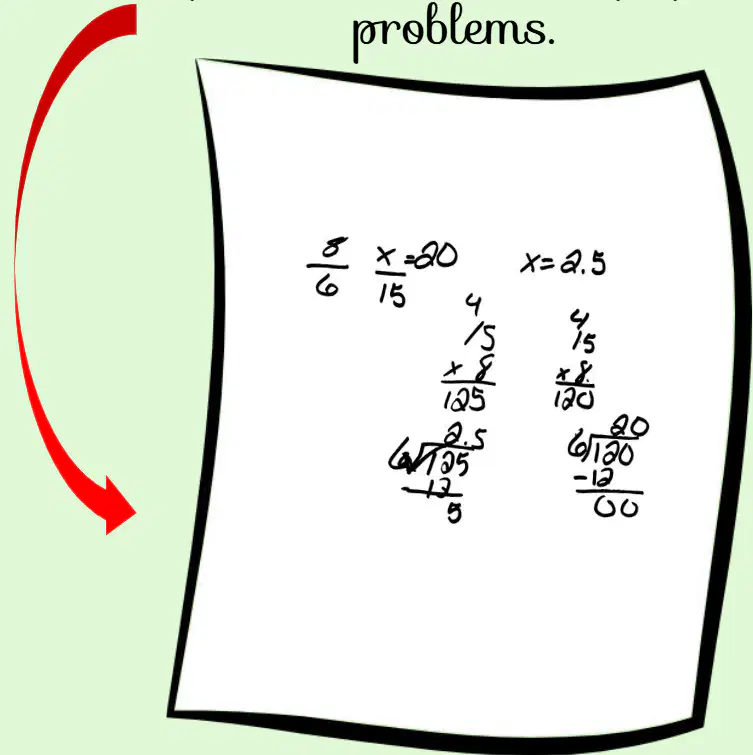
Use scratch paper to solve the math problems.
Ask a friend for answers.
According to the math tip, when should you use scratch paper?
Only for very simple problems
Only when you forget the answer
For most problems, especially complicated ones
Never use scratch paper
Besides calculations, how else can scratch paper help you in math?
By drawing pictures or diagrams to help figure out problems
By making paper airplanes
By doodling for fun
By writing jokes
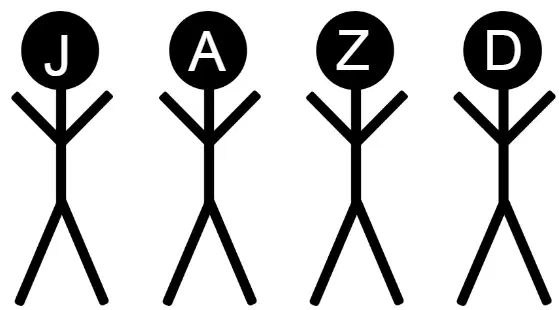
Jake, Ally, Zoe, and Dan all ran a race together. Dan got 3rd place. Zoe was right behind Dan. Ally finished before Jake. What place did Jake get?
1st
2nd
3rd
4th
Who finished in first place in the race?
Jake
Ally
Dan
Zoe
Why might drawing problems on scratch paper help you?
It makes the problem harder
It helps you see the answer more easily
It wastes time
It confuses you
What is the main advice given in Math Tip #2?
Use a calculator for all math problems.
Choose the correct operation when solving math problems.
Always guess the answer.
Skip difficult questions.
What operation should you use if a problem asks, "How much do they have altogether?"
Addition
Subtraction
Multiplication
Division
If a question asks, "How many more times did Kate jump than Annie?" which operation should you use?
Subtraction
Addition
Multiplication
Division
When a problem says, "The class had 30 students and was divided into groups of 5," which operation is needed?
Division
Addition
Subtraction
Multiplication
If a girl brought 30 cookies for 10 people in the class, and you are asked, "How many cookies does each child get?" which operation should you use?
Division
Addition
Subtraction
Multiplication

What is the main idea of Math Tip #2 in the image?
Always use addition for every math problem
Check if your answer makes sense with the operation you chose
Ignore the operation and guess the answer
Only use subtraction in math problems
If you solve 5 + ___ = 7, what number should go in the blank?
1
2
3
5
What should you do if your answer does not make sense in a math problem?
Use the same operation again
Check if you used the correct operation
Ignore the mistake
Change the numbers in the problem
What operation should you use to solve the problem: "Jackie ate 2 crackers. Esther ate 5. How many crackers did they eat in all?"
Subtraction
Addition
Division
Multiplication

What is the main purpose of double-checking your work during a test?
To solve all the problems again from the beginning
To quickly check for careless errors or misread questions
To make the test take longer
To skip questions you don't know
Why does taking the test for the first time usually take longer?
Because you are double-checking your answers
Because you are seeing the problems for the first time and deciding how to solve them
Because you are copying answers from someone else
Because you are skipping questions
What should you do when double-checking your work?
Redo every problem from scratch
Quickly go through each equation to check for careless errors or misread questions
Ignore the questions you already answered
Ask the teacher for the correct answers
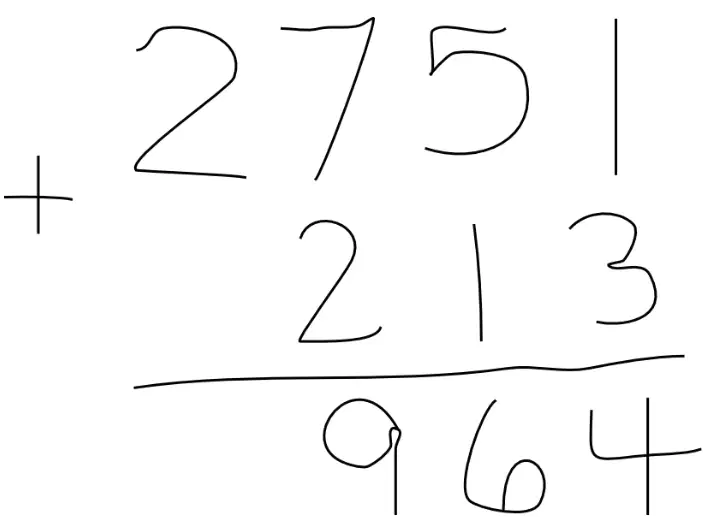
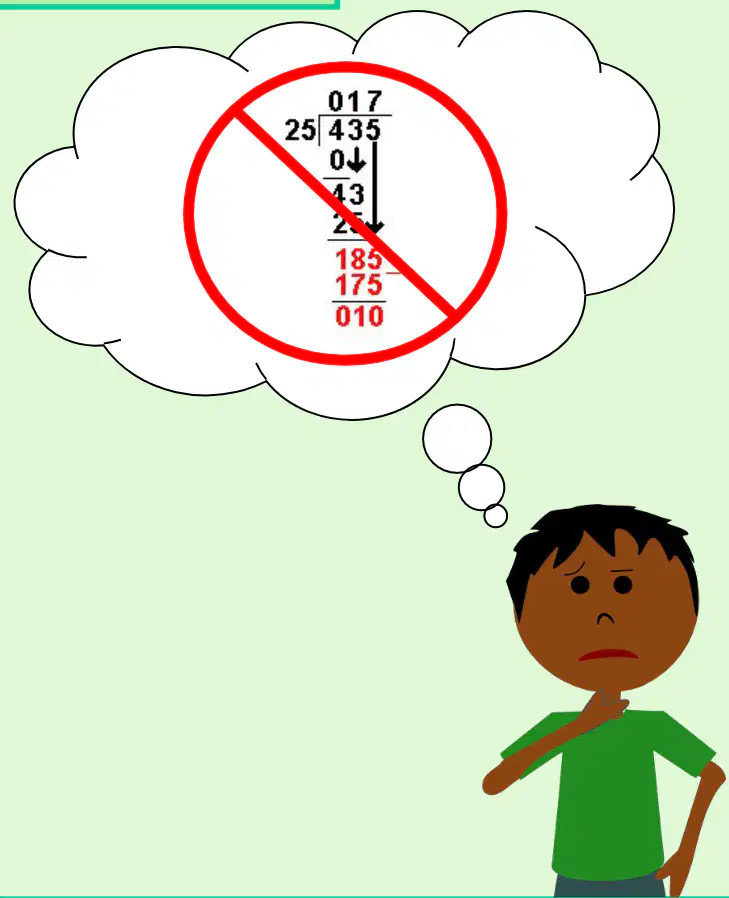
Jacie is double-checking her addition problem. Can you spot an error she made in the calculation shown below?
The sum is incorrect; 2751 + 213 does not equal 964.
The numbers are not lined up correctly.
The subtraction sign was used instead of addition.
The answer should be a smaller number.
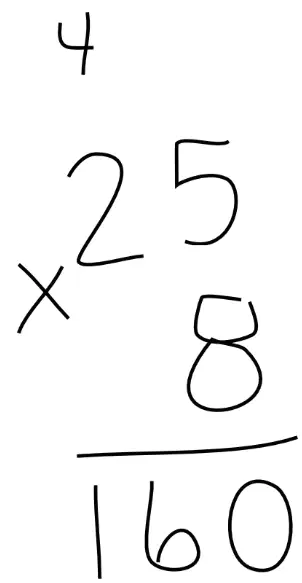
Arnold is double-checking his multiplication problem. What error did he make in the calculation of 25 × 8?
He added instead of multiplying.
He multiplied incorrectly; the correct answer should be 200.
He divided instead of multiplying.
He forgot to write the answer.
Why is it important to use scratch paper during a math test?
To draw, make diagrams, and solve problems without doing everything in your head.
To write your name and the date.
To doodle and pass the time.
To copy questions from the test.
What should you do to make sure you are using the correct operation in a math problem?
Underline key words and check if your answer makes sense with the operation you chose.
Guess the operation randomly.
Always use addition.
Ignore the operation and focus on the numbers.
What is the benefit of double-checking your work during a math test?
It helps you find and correct small errors you might have made.
It wastes time.
It confuses you more.
It makes your handwriting neater.


