
Font size
 Worksheets
MC Practice for Midterm (2026)
Total questions: 53
Worksheet time: 3hrs 39mins
Which statement about a mineral sample found in a field in Michigan is NOT an inference?
The sample was transported by a glacier.
The sample came from a meteorite.
The sample is white in color.
The sample is from a very long time ago.

Looking at the graph, what can we say about the relationship?
Direct and predictable
Indirect and unpredictable
Cyclic and unpredictable
Cyclic and predictable
Which type of energy transfer is involved by circulating air in the room?
radiation
insolation
conduction
convection
Which is an example of an observation?
The Sun burns like a campfire.
The Sun will someday engulf the Earth.
The Sun is yellow
The Sun will turn into a white dwarf in 4 billion years.
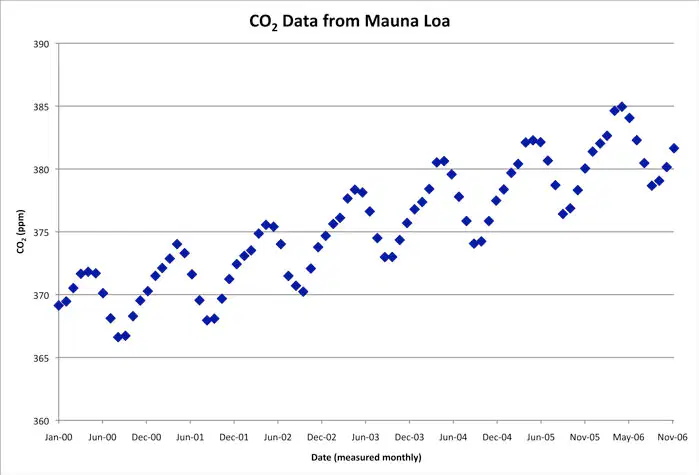
Which type of relationship is shown by the graph?
Direct
Indirect
Constant
Cyclic
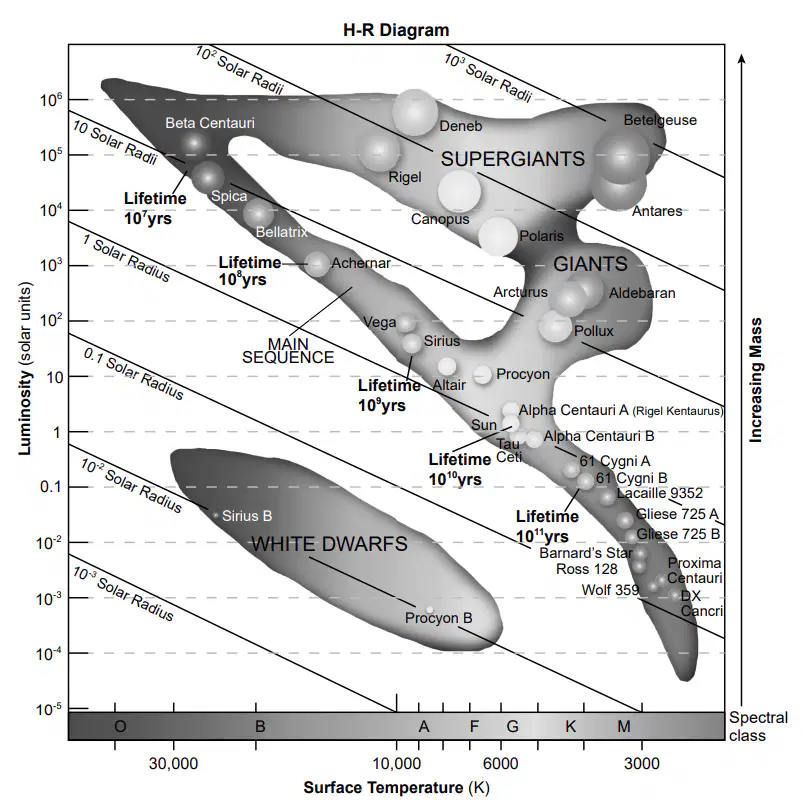
Using ESSRT pg. 4, Which star is hotter, and more luminous, than the Sun?
Procyon B
Aldebaran
Barnard's Star
Spica
Put the following terms in order from oldest to youngest (Milky Way galaxy, Solar System, Universe, the Moon)
Milky Way,
Moon,
Solar System,
Universe
Universe,
Milky Way,
Solar System,
Moon
Universe,
Solar System,
Milky Way,
Moon
Universe,
Moon,
Milky Way,
Solar System,
Which choice is NOT true in a heliocentric model.
The Sun is at the center of the solar system.
The Sun would revolve around the Earth.
The Moon would revolve around the Sun.
The Earth would revolve around the Sun.

On the grid map, what is the approximate latitude and longitude of point A?
45°N, 15°W
20°S, 45°W
45°S, 20°E
45°N, 15°E
The Earth's actual shape is most correctly described as
a circle
an eccentric ellipse
a perfect sphere
an oblate sphere
What is the shape of Earth's orbit?
An oblate sphere
A perfect circle
An eccentric ellipse
A flat line
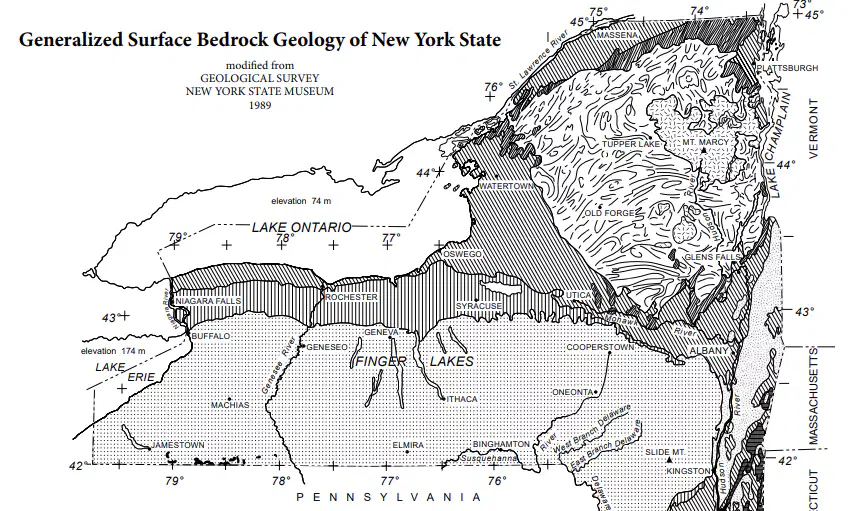
Which New York State city is located at 43°55' N 75°55' W? (Use pg. 8 in your ESSSRT!)
Plattsburgh
Ithaca
Watertown
Buffalo
If the altitude of Polaris is 44 degrees above the horizon, which city could the observer be located? (Hint: Use ESSRT pg. 8)
Riverhead
Watertown
Massena
Oswego
How does a difference in density dictate which object moves up and which moves down?
Less dense rises, more dense rises too.
More dense rises, but less dense rises less.
More dense rises, while less dense sinks
Less dense rises, while more dense sinks
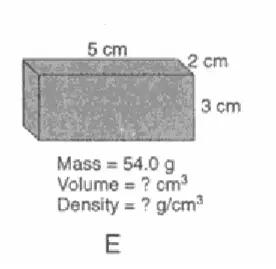
Calculate the density of Block E, knowing that the mass is 54.0 g and the object has sides of (5 cm x 2 cm x 3 cm).
1620 g/cm^3
1.2 g/cm^3
1.8 g/cm^3
30 g/cm^3
When comparing objects composed of the same element (Ex: an aluminum sphere & an aluminum cube), what value should be identical?
Density
Mass
Volume
Temperature
Which piece of evidence does NOT support the Big Bang theory for the origin of the universe?
Cosmic microwave background radiation
Red Shift
Cosmic Elemental Abundance
the different compositions of terrestrial and Jovian planets
On a spectral diagram, lines from a distant galaxy of the same element appear shifted toward the red compared to a laboratory pattern. What does this red shift indicate?
The element changed its identity
The galaxy is rotating toward Earth
The telescope altered the wavelengths
The galaxy is moving away from Earth
Scientists infer that the solar system formed approximately how long ago?
3.3 billion years in the past
13.7 billion years in the past
8.2 billion years in the past
4.6 billion years in the past
In order to observe the Sun directly overhead at your location, between which two latitudes must you be located?
23.5° N & 23.5° S
0° & 90° S
0° & 41°N
23.5° S & 90° S
Which type of radiation from Earth is the long‑wave energy absorbed by greenhouse gases?
Infrared radiation
Visible light radiation
Radio wave radiation
Ultraviolet radiation
The Earth surface that reflects the least short‑wave solar radiation has which characteristics?
Black and rough
Black and smooth
White and rough
White and smooth
What is the process called that creates energy (& helium) in the Sun and all stars in the Universe?
Nuclear Fusion
Nuclear decay
Nuclear Fission
Nuclear explosion
According to pg. 3 of the ESSRT, put the following forms of electromagnetic energy in order from longest wavelength to the shortest wavelength
Microwaves
Infrared
Red
Blue
Ultraviolet
Which one is NOT a proof for Earth's revolution around the Sun?
The sun rises in the East and sets in the West each day.
We observe different constellations in the night sky throughtout the year.
New York experiences 4 different seasons.
Polaris is always located over the North Pole.
If Earth's axial tilt increases from 23.5° to 45°, New York State's winters would become
Warmer, and summers become cooler
Warmer, and summers become warmer
Cooler, and summers become warmer
Cooler, and summers become cooler
When is it summer in the Northern Hemisphere (NH)?
When the NH is tilted away from the Sun.
When the NH is closest to the Sun
When the NH is tilted towards the Sun.
How can we create a cylinder with a lower porosity?
Fill it with sorted sediments
Fill it with unsorted sediments
Fill it with pebbles only
Fill it with clay only
How many days after the Full Moon will the Last Quarter phase occur?
1 day
2 days
7 days
14 days
29.5 days
Which evidence best supports the idea that the universe is expanding?
Presence of volcanic rocks on Earth
Formation of sedimentary layers
Movement of tectonic plates
Red shift of light from distant galaxies

What characteristics are used to classify stars?
Flammability, weight, and reactivity
Temperature/color and brightness
Conductivity, luster, and density
Malleability, distance, and viscoscity

Which spectral class does our star, the sun, belong to?
M
K
G
F
Which color of star would be the hottest?
Red
Yellow
White
Blue
Where would you expect to find a Star that is very bright and very hot? (Select ONE answer)
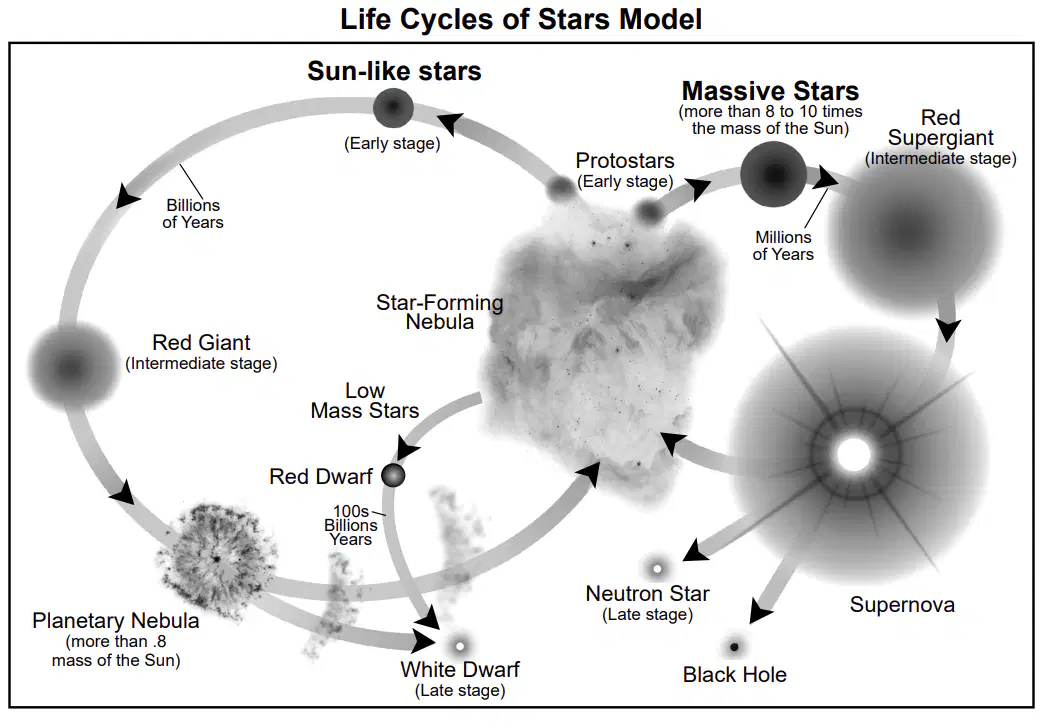
What is the next phase our Sun will turn into?
Red Dwarf
Neutron Star
White Dwarf
Red Giant
About how many days does it take to moon to go through a complete cycle?
7 days
365 days
29 days
20 days

When the visible (lit) portion of the moon is increasing, the moon is:
waning
full
waxing
new
Why do we always see the same side of the moon from Earth?
because the phases change
because it rotates and revolves at the same rate
because half of the moon always receives sunlight
The moon changes positions

Name the moon phase
Waxing Gibbous
Waxing Crescent
Waning Crescent
Waning Gibbous
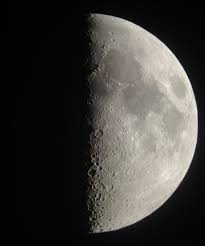
Name the moon phase
First Quarter
Last Quarter
New Moon
Full Moon

Which type of eclipse is shown in this picture?
Solar Eclipse
Orbit
Lunar Eclipse
Total Eclipse
Why do we not experience eclipses every month?
You have to be in the right spot
The Moon's orbit is tilted
Moon is smaller than the Sun
Earth's orbit is tilted

During the moon phases shown in the image Earth will experience a -
Spring Tide
Neap Tide

During the moon phase shown in the image Earth will experience a -
Spring Tide
Neap Tide
What causes tides?
gravity
wind
spring
neap
How many high tides does a place have each day?
3
4
5
2

Rain or meltwater that doesn't soak into the ground and flows over the Earth's surface is called
stormwater runoff
precipitation
infiltration
groundwater

The process of water soaking into the ground is called
Precipitation
Surface run-off
Infiltration
Condensation

Gravel
permeable surface
impermeable surface

clay
permeable
impermeable

If plants don't store up water, how does water leave the plant?
The roots get rid of excess water.
Most plants DO store water.
It is released from the leaves by TRANSPIRATION.

What process is show by letter A in the diagram?
condensation
evaporation
accumulation
precipitation
The top boundary of the zone of saturation in an aquifer which can fluctuate based on precipitation and the amount of draw from wells
aquifer
water table
watershed
drainage system

