
 Worksheets
History of SE Asia Preview
Total questions: 92
Worksheet time: 2hrs 17mins

What is nationalism?
loyalty based on geographic location
a feeling of belonging to a group that is highly educated and wealthy
a sense of belonging that is based on a written document like a constitution
loyalty to a group with whom one shares a common history, culture, and/or religion

Indian nationalism in the 1800s began as a reaction to
British rule
religious conflict
communist-led revolution
long period of drought and famine

Which was one of the early goals of the Indian National Congress?
working to modernize Indian farming
trying to bring more industry to India
greater independence from British control
ending the religious wars being fought all over India

Indians helped the British in World War I because they believed it would
end unemployment in India.
help Indians that were eager to go to war.
encourage the British to grant India greater freedom after the war.
develop a strong Indian military that could later force the British to leave.

Which was an effect of the massacre at Amritsar?
Indians were afraid to ask for more rights because they thought they might be killed.
The Amritsar massacre got little press coverage so it had very little effect on Indian feelings.
Most people were so angry about the killings they became more united against the British.
Most Indians felt the people gathered at Amritsar were breaking the law anyway and deserved punishment.

What was Mohandas Gandhi's plan of civil disobedience?
people should refuse to obey a law they felt was unfair
violent demonstrations were needed in India until the British left
it was best to go along with British laws to avoid making the colonial authorities angry
the best way to change the laws was through passing legislation in the Indian National Congress

What did Gandhi urge Indians to do during World War II?
Gandhi took no position on World War II.
Gandhi urged Indians to work for the Japanese.
Gandhi felt everyone should help the British war effort.
Gandhi did not want Indians to take sides during the war.

When independence finally came in 1947, what was it about the decision that made many Indians unhappy?
The country was divided among religious lines.
India was not allowed to have its own military.
Indians still had to depend on Britain for food and protection.
Most people in India wanted to turn down the offer of independence.

In 1947, which new countries were created in addition to independent India?
East and West Pakistan
North and South Korea
North and South Vietnam
Pakistan and Afghanistan

What was Gandhi's plan to refuse to obey unjust British laws?
Mahatma
monopoloy
disarmament
civil disobedience

One of Gandhi's main strategies in dealing with the British was to insist his followers use
non-violence
riots and strikes
their ability to read and write
military tactics and demonstrations

Which product did Gandhi boycott?
tea
salt
wool
sugar

When India became independent, what factor determined where people would live in the new states that were created?
wealth
religion
political connections
family ties to certain regions
How did the Rowlatt Acts of 1919 increase British control of India?
by forcing Indian men to enlist in the British military
by allowing the British to jail Indian protesters without a trial
by restricting the jobs that Indians were allowed to perform
by significantly increasing the taxes that Indians paid
Why did India continue to struggle after gaining its independence in 1947?
There was conflict between its Hindu and Muslim populations.
The United Kingdom's allies refused to trade with the country.
The country had access to very few valuable natural resources.
China pressured the government into adopting communist reforms.
Nationalism is NOT
the belief in one's country
loyalty in one's country
treason in one's country
pride in ones country
What are the first TWO groups to work for rights of Indians?
Indian National Congress
Gandhi Political Group
Muslim League
Rowlatt Act
When independence finally came in 1947, what was it about the decision that made many Indians unhappy?
The country was divided along religious lines
India was not allowed to have its own military
Indians still had to depend on Britain for food and protection
Most people in India wanted to turn down the offer of independence
The Indian National Congress, led by Mohandas Gandhi, and the Muslim League both fought for
Indian rights and independence.
the creation of an Indian theocracy.
the establishment of an official Indian religion.
equal status in a commonwealth with Great Britain.
Which of the following was NOT a form of civil disobedience advocated by Mohandas Gandhi?
boycotting British goods
engaging in guerrilla warfare
refusing to attend inferior schools
withholding payment of British taxes
All of the following are methods of nonviolent protest used by Mahatma Gandhi as part of the Indian independence movement EXCEPT
refusing to pay taxes to the British Crown.
organizing marches to protest unfair laws.
freeing political prisoners.
boycotting British products.
Through civil disobedience, Mahatma Gandhi believed that the Indian independence movement could
gain the support of the upper class in India.
seize control of the resources on which the British relied.
force change without resorting to violence.
intimidate the British government into giving up control of India.
How could Japan be describe immediately after WWII?
devastated with widespread destruction
powerful with newly gained territory
economically powerful with a weak military
strong military strength with a weak economy
Which US President asked Congress to declare war on Japan?
President Eisenhower
President Truman
President Roosevelt
President MacArthur
Which US President approved of the atomic bombs being dropped on two Japanese cities?
President Eisenhower
President Truman
President Roosevelt
President MacArthur
What two cities did the US drop the atomic bombs on?
Tokyo and Okinawa
Hiroshima and Nagasaki
Seoul and Taiwan
Valdosta and Hahira
an American general responsible for rebuilding Japan
President Franklin D. Roosevelt
General Douglas MacArthur
General Custer
Emperor Hirohito
The United States did NOT want Japan to follow in the footsteps of China and Vietnam and set up a _________ government.
Democratic
Communist
Theocratic
On which city was the first atomic bomb ever used in war dropped?
Hiroshima
Tokyo
Nagasaki
Berlin

What would be an accurate title for the list below?
Reasons the US Dropped Atomic Bombs on Japan
Reasons the US Help Japan Rebuild After WWII
Reasons to Keep Japan from Rebuilding its Military
Reasons to Blend Japan's Culture with Democracy
What form of government did General MacArthur establish for Japan after WWII?
Constitutional Monarchy (Parliamentary Democracy)
Presidential Democracy
Absolute Monarchy
Communist Oligarchy
Why did the US occupy Japan from 1945 to 1952?
They wanted to take Japan's natural resources so the U.S could use them to rebuild Pearl Harbor.
Japan invited the U.S. to help rebuild them because the Germans told them it would help them win the war.
Japan’s government, economy, and infrastructure was completely demolished. They needed help rebuilding & the US want to make sure that they wouldn’t be a military threat to other countries in the future.
What happened on December 7, 1941?
WWII began
WWII officially ended
Japan bombed Pearl Harbor
VJ Day
Which is one post World War II reform that took place in Japan under the U.S.'s guidance?
Japan began new alliances with China and Korea.
Japan rebuilt it's military and weapon production.
Japan focused on building up its agricultural production.
Japan adopted a new constitution and democratic government.
Which statement BEST describes the relationship of the U.S. and Japan after World War II?
The U.S. forced Japan to pay back war reparations as a result of Pearl Harbor which has caused economic problems for Japan.
The U.S. occupied Japan for four decades after World War II in an effort to make sure they did not rebuild their military.
The U.S. divided Japan along the 17th parallel line in order to occupy both nations and prevent the spread of communism.
The U.S. helped Japan rebuild economically and socially after World War II and has maintained a peaceful relationship.
What does Japan's constitution say about war?
They can only use traditional weapons, no nuclear weapons
They can never declar war on another country
They can declare war on any country except the US
None are correct
Why did President Truman decide to drop the atomic bombs on Japan?
He wanted to get revenge on the Japanese for bombing Pearl Harbor.
He knew that it would save many American lives and that Japan would eventually surrender.
The American people called for President Truman to drop the bombs in retaliation for Pearl Harbor.
So Japan would give the U.S. it's many natural resources.
Japanese _________ pilots crashed their planes into US ships on purpose, fully expecting to die.
Kawasaki
Kamikaze
Fiercerados
Quasimodo
The country’s ______________ (transportation, communication, sewage, water, and electric systems) was demolished.
inner structure
periodic structure
outer structure
infrastructure
What is the relationship like between the United States and Japan today?
There is still a lot of hatred between Japan and the U.S.
The U.S. has trade barriers in place against Japan.
The two countries have remained close allies and trading partners.
After the emperor was overthrown, what two political parties emerged in China?
Republican & Democrats
Nationalist & Communist
Fascists & Socialsts
The People for Republic of China & The Japanese Communist Party
Who was the leader of the Communist party?
Mao Zedong
Deng Xiaoping
George W. Bush
Emperor Hirohito
What did the Communist party promise to bring to China?
More freedom of speech
Freedom of religion
Food to the poor and more wealth to all Chinese, and land reforms
More personal freedoms
When was the Communist state of the People’s Republic of China established
1900
1989
2008
1949
Why did poor peasants support the Chinese Communist Party?
They wanted to work in communes
It promised them food and a better quality of life
They had no other option
Mao Zedong said he would give them money
What was the name of the economic plan that the Chinese government developed in order to boost China’s economy?
Great Leap Forward
The Cultural Revolution
China's Betterment Plan
Chinese Economic Plan for that moolah
What three problems caused the Great Leap Forward to fail within a year?
Lack of funds, people, and resources
Too much money, food, and resources
Too much government control, too much money, and the people were too eager to work
Environmental disasters, poor government management, and government corruption
What was the biggest consequence of the Great Leap Forward?
Famine, 20 million people died
The economy was boosted
China became a player in the international setting
Chinese citizens were given more freedoms.

What does this image represent?
The Great Leap Forward
Tiananmen Square
The Long March
VJ Day
When Mao died in 1976, who became the leader of China?
Hirohito
Sun Yixian
Ho Chi Minh
Den Xiaoping
How successful was the Great Leap Forward?
Very successful
Successful
Not that successful
An EPIC disaster
What is the name of the army of young students that Mao used to enforce policies in the 1960's?
The Red Guard
Hitler Youth
The Youth for Communism
The great Collective

This image represents:
Cultural Revolution
Tiananmen Square Massacre
Great Leap Forward
All of the above
In China there was a time when Mao wanted to eliminate anyone that criticized his government. What is this time called?
Long March
The Middle Way
The Great Leap Forward
The Cultural Revolution
What was the primary goal of The Red Guards during the Cultural Revolution?
To promote traditional Chinese values
To enforce Communist ideology
To support capitalist reforms
To overthrow the government
What was the primary demand of the protesters who gathered in Tiananmen Square in 1989?
Democratic reforms.
Economic reforms.
Environmental protections.
Increased military spending.
What was a major consequence of The Great Leap Forward?
Significant industrial advancement
Improvement in agricultural techniques
Severe famine and economic hardship
Stabilization of the Chinese government
What was the name of the economic campaign initiated by Mao Zedong in 1958 to boost China's industrial and agricultural production?
The Great Leap Forward
The New Deal
The Five-Year Plan
The Marshall Plan
What was the main purpose of the Cultural Revolution?
To modernize China's economy
To purge capitalist and traditional elements from Chinese society and enforce communism
To establish diplomatic relations with the United States
To reduce the population of China
During which event did the Chinese government implement martial law in response to protests in 1989?
The Shanghai Protests
The Tiananmen Square Massacre
The Guangzhou Uprising
The Beijing Lockdown
Which event marked the end of the Cultural Revolution in China?
The Shanghai Communique
The death of Mao Zedong
The Tiananmen Square protests
The Beijing Olympics
What was the outcome of the 1989 Tiananmen Square protests?
Implementation of democratic reforms
Resignation of key political leaders
Continuation of the status quo
Government crackdown on the protesters
Why did China abandon The Great Leap Forward in 1960?
the economy had grown to its desired level
China was invaded by Japan
the economy was near collapse
Mao Zedong died
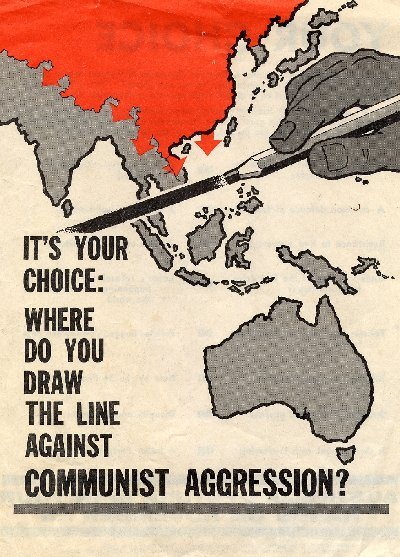
The U.S. got involved in Korea and Vietnam because of what foreign policy?
policy of containment
Good Neighbor policy
isolationism policy
Roosevelt Corollary

After WWII, North Korea was occupied by the ____________ and had a ____________ government.
U.S.S.R./Communist
U.S.S.R./Democratic
U.S.A./Communist
U.S.A./Democratic

What is the USSR named today?
Russia
Ukraine
China
the United Kingdom

After WWII, South Korea was occupied by ____________ and had a ____________ government.
U.S.S.R./Communist
U.S.S.R./Democratic
U.S.A./Communist
U.S.A./Democratic


What peacekeeping organization voted to aid South Korea?
League of Nations
NATO
United Nations
Warsaw Pact

Who was North Korean leader who led the invasion of South Korea in 1950?
Kim Il Sung
Kim Jong-il
Kim Jong-un
Kim El Paso

What were the results of the Korean War?
The two sections of Korea reunited
North Korea & South Korea remained divided
The Soviet Union took control of both sections of Korea
China set up a communist government

Who was the Communist leader of North Vietnam?
Ho Chi Minh
Mao Zedong
Kim Il Sung
Douglas MacArthur

What type of government does Vietnam have today?
Communism
Democracy
Dictatorship
Oligarchy

The United States, Soviet Union, and Great Britain made an agreement on how they would _______________________after World War II.
put the world back together
sever their alliance
industrialize their nations
rebuild their militia
They would work to _____________________________would be held so that their people could decide on their future government.
restore order and free elections
restore communism and monoarchy
restore communism and oligarchy
restore order and democracy
Once peace was declared, the Soviet Union found itself _______________________ its occupied countries.
reluctant to leave
eager to release
at odds with
wanting to fight

Which explains one way the Korean War and Vietnam War were alike?
American troops fought against Russian and Chinese forces.
American troops were under the direction of the United Nations.
The United States entered the wars to stop the spread of communism.
The United States supported the wars with money and supplies but not with troops.

What was the meaning of the Domino Theory?
Political decisions must be made slowly, like a game of dominoes.
International politics is a game, and there are always winners and losers.
Few countries would really be interested in communism if they knew what it was like.
If one country in a region became communist then others would quickly follow.
A compromise was reached and Vietnam was divided into North and South Vietnam at...
12th parallel
38th parallel
29th parallel
17th parallel
Who were the Vietcong?
Supporters of Ho Chi Minh living in South Vietnam helping the U.S. fight communism
Supporters of Ho Chi Minh living in North Vietnam helping the U.S. fight communism
Supporters of Ho Chi Minh living in South Vietnam fighting against the U.S
Protesters of Ho Chi Minh living in North Vietnam fighting for the U.S.
Even though the U.S military was had better training and better supplies, the Vietcong and North Vietnamese made up for their weaknesses by....
Getting more sleep and eating healthier food
engaging in ambush attacks using guerrilla warfare
having a 5 star general to guide them through the jungle
stealing supplies from the United States military
A theory or system of social organization based on the holding of all property in common, actual ownership being ascribed to the community as a whole or to the state.
Democracy
Dictatorship
Communism
Monarchy
American general, who commanded allied troops in the Pacific during World War II.
Ho Chi Minh
General Douglas MacArthur
Mao Zedong
Mohandas Gandhi
The US theory that stated, if Communism in Asia could be contained in the area the system would eventually die out.
Containment Theory
Communism
Democracy
Ho Chi Minh
U.S. had to fight against these forces in the Vietnam War
Viet Cong
Terrorists
Viet Minh
Democrats
sudden unexpected attacks carried out by an unofficial military group or groups that are trying to change the government by assaults on the armed forces
Sneak Attack
Viet Cong
Guerilla Warfare
Viet Minh
This was the name of the members of the communist guerrilla movement in Vietnam (North)
Viet Cong
Terrorists
Viet Minh
Republicans

