
 Worksheets
12/19 Review Game
Total questions: 68
Worksheet time: 34mins
What was a key change during Jacksonian Democracy that expanded participation in voting?
Most states dropped property requirements
Women won national voting rights
Only ministers chose presidential candidates
Voting was limited to wealthy landowners
Charles Finney is best known for leading which type of event?
School boards for education laws
Town courts for legal reforms
Closed-door party meetings
Large outdoor religious revivals
Which statement best describes social reform in the 1830s?
Organized efforts to improve life conditions
Private business plans to earn more money
Military actions to expand national borders
Secret clubs to protect traditional customs
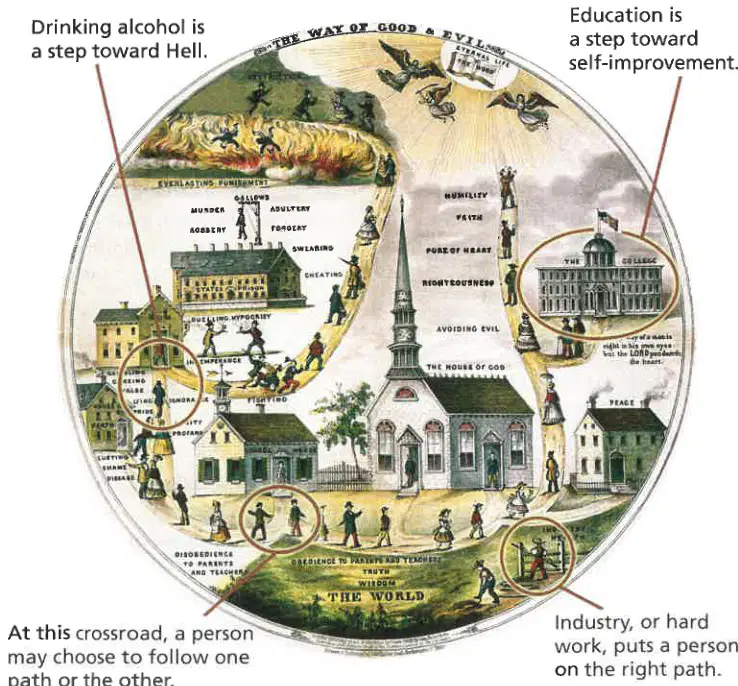
In the painting The Way of Good and Evil, what does choosing education represent?
A step toward self-improvement
A path leading directly to wealth
A punishment for wrongdoing
A sign that fate is already decided
How did reformers influenced by Jacksonian Democracy view equality?
Only landowners should make laws
Women should not speak in public
Ministers should run government
All men should vote and hold office
What did revival preachers urge people to do during the Second Great Awakening?
Repent and reform their lives
Invest in new factories
Avoid all public schools
Relocate to western territories
Which idea connects the Second Great Awakening to American democracy?
People’s choices affect salvation and society
Kings decide people’s spiritual futures
Ancient traditions control government power
Wealth alone determines a person’s rights
Which goal best describes why reformers created utopian communities in the 1800s?
To compete for land and power across new states
To train soldiers for upcoming national conflicts
To escape taxes by forming secret settlements
To model perfect, harmonious societies for others
Who founded the utopian community called New Harmony in Indiana in 1825?
Robert Owen, a social reformer
Henry Clay, a politician
Frederick Douglass, an orator
Susan B. Anthony, an activist
What was the main aim of the temperance movement?
To ban all caffeinated drinks nationwide
To make beer safer than water everywhere
To end alcohol abuse through organized efforts
To lower the price of imported whiskey
Why did many women support temperance during the 1800s?
Breweries refused to hire women workers
Women were not allowed to buy beverages
Alcohol tasted worse than milk and tea
Alcohol harmed families through abuse and neglect
What does prohibition mean in the context of alcohol laws?
A tax increase to discourage heavy drinking
A limit on serving sizes in public taverns
A rule to label alcohol with health warnings
A total ban on the sale and consumption of alcohol
Which problem did prison reformers try to fix in the 1800s?
Too many sports and classes offered in prisons
Prisons allowing weekend visits too often
Overuse of outdoor exercise for prisoners
Harsh conditions like cold cells and cramped spaces
How did Dorothea Dix contribute to social reform?
She organized railroads to connect rural towns
She led campaigns to lower trade tariffs
She wrote novels promoting frontier settlement
She investigated prisons and pushed for humane asylums
After reporting shocking conditions, what did the Massachusetts legislature do with Dix’s urging?
Funded a new mental hospital for humane treatment
Created a new college for training ministers
Banned all alcohol sales within Boston city limits
Closed all prisons and freed nonviolent inmates
Which statement describes a key difference between temperance and prohibition?
Temperance helps breweries; prohibition supports taverns
Temperance promotes moderation; prohibition bans alcohol
Temperance raises taxes; prohibition lowers prices
Temperance targets wine; prohibition targets beer
Why did most utopian communities fail to last very long?
Members disagreed about goals and actions
Leaders ran out of building materials
Residents refused to learn new trades
Farm soil could not grow any crops
Which idea did Horace Mann promote to strengthen democracy?
Learning only through church lessons
Shorter school years for children
Private tutors for wealthy families
Public schools funded by citizens
Why did reformers want better schools during the Jacksonian Era?
To help voters be informed citizens
To reduce taxes for communities
To limit immigration into cities
To replace public schools with private
Which statement best reflects Horace Mann’s belief about schooling?
Reading alone prepares people for voting
Character matters more than any knowledge
Schooling is only for students with talent
Education builds good citizens with strong minds
What change did Horace Mann lead in Massachusetts after 1837?
Closed rural schools and built factories
Raised teacher salaries and trained teachers
Ended public funding for education
Shortened the school year for farmers
Which region accepted public schools most quickly by the 1850s?
The mountain territories only
The Northeast with growing towns
The South with large plantations
The West with frontier camps
What barrier did African Americans face in Southern states?
Schools taught only farming tasks
Enslaved people were banned from reading
Teachers were chosen by churches
All students had to pay school fees
Who opened a school for African American girls in Connecticut?
Prudence Crandall the Quaker teacher
Sojourner Truth the activist
Harriet Tubman the conductor
Frederick Douglass the writer
What happened to Prudence Crandall’s school?
Hostile neighbors attacked and closed it
Students moved to nearby public schools
State officials expanded the campus
Neighbors supported and funded it
Which state first admitted African American students to public schools in 1855?
New York with many immigrants
Pennsylvania with coal towns
Ohio with river cities
Massachusetts with reform leaders
What was the goal of abolitionists in the mid-1800s?
Immediate end to slavery everywhere
Slow changes only in the South
New colonies for slaveholders
Better work hours for enslaved people
What did the Colonization Movement propose for enslaved people?
Keep them but pay small wages
Free them and send to Liberia
Move them to Western Territory
Train them for skilled factory jobs
Why did the Colonization Movement fail to attract most enslaved people?
They lacked money for passage
They feared ocean travel
They had grown up in the U.S.
They opposed living in cities
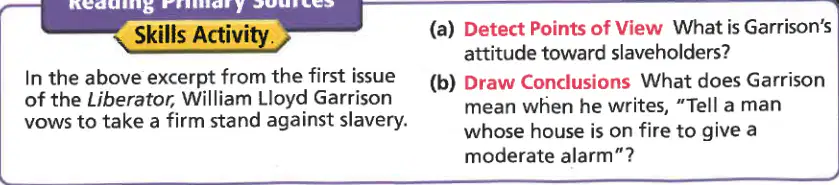
What was The Liberator?
A speech by Frederick Douglass
A secret route for runaway slaves
A law passed by Congress in 1831
An antislavery newspaper by Garrison
Who was a powerful African American speaker who escaped slavery and published The North Star?
Levi Coffin, Indiana Quaker
John Quincy Adams, former president
Harriet Tubman, railroad planner
Frederick Douglass, noted abolitionist
What risk did Frederick Douglass face by speaking publicly?
Ban from traveling by train
Losing his newspaper job
Being fined by Northern states
Being sent back into slavery
What was the Underground Railroad?
A new law ending slavery fast
A real train line for travel
A secret network aiding escapes
A group funding Western farms
Which conductor helped over 300 people reach freedom and never lost a single passenger?
Harriet Tubman, brave leader
William Lloyd Garrison, editor
Levi Coffin, state senator
Frederick Douglass, publisher

According to the map, which direction did most Underground Railroad routes travel toward freedom?
East toward the Atlantic Ocean
West toward the Pacific Ocean
South toward the Gulf of Mexico
North toward free states and Canada

Which individual is identified as a famous conductor on the Underground Railroad in the infographic?
Levi Coffin, Ohio shopkeeper
Frederick Douglass, newspaper editor
Harriet Tubman, Underground leader
John Brown, Kansas fighter
How did the Underground Railroad mainly work, as described in the text?
A real train carried people north
Secret routes and safe houses
Public marches through cities
Legal petitions in courts
Why did some northerners oppose abolition, according to the section?
They supported cotton tariffs
They wanted more railroads
They disliked northern weather
They feared losing factory jobs

Which city is shown near several Underground Railroad routes on the map?
Savannah on the coast
Indianapolis in the Midwest
Des Moines in the plains
Richmond in Virginia

What risk did abolitionist conductors face, based on the infographic’s prompt?
Being praised in newspapers
Paying higher travel fares
Being arrested or attacked
Losing voting rights only
Which statement best explains why southern merchants and planters opposed abolition?
They relied on profits from slave labor
They feared losing land to Canada
They wanted more gold from Mexico
They disliked maps of railroad routes
Which problem did many reformers notice about women's lives around 1820?
Women had equal voting rights everywhere
Women earned higher wages than most men
Women were limited to the home and lacked rights
Women led most juries and court trials
Who was the former slave who became a powerful speaker for equal rights?
Sojourner Truth
Emma Willard
Susan B. Anthony
Lucretia Mott
Why were Lucretia Mott and Elizabeth Cady Stanton angry at the London antislavery convention in 1840?
They were denied entry to the city
They were asked to lead the meetings
They were forced to change their speeches
They were excluded from active participation
What was the main purpose of the Seneca Falls Convention in 1848?
To plan a new national election for president
To raise money for local abolition groups
To start a college for women in New York
To discuss social, civil, and religious rights of women
Which document at Seneca Falls listed injustices and demanded equality for women?
Emancipation Proclamation
Bill of Rights
Declaration of Independence
Declaration of Sentiments
Which statement best matches Elizabeth Cady Stanton’s argument about taxation?
Taxes should be raised to pay for schools
Taxation without representation is unjust
Taxation is fair when only men consent
Taxes are unrelated to voting rights
Why did some delegates, including Lucretia Mott, worry about calling for women’s suffrage in 1848?
They thought voting would be too costly for the government
They feared it would be too controversial and harm other causes
They believed only married women should vote
They preferred to focus on property laws first
Which partnership worked for decades to win the right to vote?
Willard and Lyon
Mott and Lyon
Stanton and Anthony
Truth and Douglass
What did New York’s 1860 law protect for women after efforts by reformers?
Equal pay in factories
Jury service rights
Access to military service
Property rights of married women
How did Susan B. Anthony’s status as an unmarried woman help the movement?
She could travel freely to speak and organize
She could serve on juries nationwide
She could vote in local elections early
She could own large businesses legally
Which school founded by Mary Lyon became the first college for women in the United States?
Troy Female Seminary
Seneca Falls Academy
Stanton-Anthony Institute
Mount Holyoke Female Seminary
What was the goal of women who demanded suffrage?
To lower taxes for families
To win the right to vote in elections
To replace juries with councils
To end public speaking by women
Which amendment guaranteed women the right to vote in national elections across the United States?
Fifteenth Amendment protecting voting regardless of race
Seventeenth Amendment guaranteeing direct senatorial elections
Nineteenth Amendment guaranteeing women’s voting rights
Eighteenth Amendment banning manufacture of alcohol
What does the term suffragist most closely mean in this historical context?
A person who opposed women’s right to vote
A person who worked for women’s right to vote
A person who supported prohibition of alcohol
A person who fought for equal pay for work
Which leader is associated with organizing parades and picketing for a federal women’s suffrage amendment?
Frances Willard promoting military service for women
Elizabeth Blackwell leading colleges in engineering
Alice Paul advocating bold national actions
Carrie Chapman Catt focusing local school boards

What was a key reason some western states granted women the vote earlier than others in the late 1800s?
Congress ordered all territories to allow women to vote
Large cities demanded new public transportation systems
Railroad companies funded suffrage campaigns nationwide
Women’s work building farms and towns was recognized
Which statement best describes the main goal of the Women’s Christian Temperance Union (WCTU)?
To expand public high school enrollment
To secure voting rights for all citizens
To ban the sale and manufacture of alcohol
To require equal wages for men and women
What national law reflected the temperance movement’s success during the Progressive Era?
Nineteenth Amendment granting suffrage to women
Eighteenth Amendment establishing prohibition of alcohol
Sixteenth Amendment creating a federal income tax
Twentieth Amendment changing presidential terms
After the Nineteenth Amendment passed, what immediate change occurred for women nationwide?
Women could vote in all federal elections
Women could serve on every state’s juries
Women could automatically hold public office
Women could attend any college without fees
Why did many Progressives not prioritize women’s rights at first, even while reforms grew?
They planned to end state governments entirely
They focused on other social changes more urgently
They feared new technology would eliminate jobs
They believed women already voted nationwide
Which amendment guaranteed women the right to vote in the United States?
Thirteenth Amendment
Eighteenth Amendment
Nineteenth Amendment
Twenty-first Amendment
What was the main goal of the Eighteenth Amendment?
Expand voting rights
Ban the sale of alcohol
Protect child laborers
Create public libraries
What tactic did Carry Nation famously use to fight alcohol abuse?
Organizing library fundraisers
Smashing saloons with a hatchet
Leading factory boycotts
Writing doctoral theses
Why did many women join women’s clubs in the late 1800s?
To advance knowledge and become reformers
To oppose voting rights for men
To play sports together
To learn factory work skills
What was Prohibition?
A ban on women voting
A ban on the sale of alcohol
A tax on child labor
A rule for club membership
How did suffragists increase pressure for a constitutional amendment?
They supported keeping saloons open
They met with President Wilson and committed to action
They opposed all reforms in cities
They stopped reading and studying in clubs
What is one educational gain mentioned for women around 1900?
Women earned advanced degrees
Women closed all schools
Women banned doctoral study
Women taught only at home

