
 Worksheets
4th-9 5W BIG BELL RINGER Monday
Total questions: 66
Worksheet time: 51mins

In which hemisphere is the United States located?
Northern Hemisphere
Southern Hemisphere

Which of the following is located at Oo Latitude?
The north pole
The south pole
The equator
The prime meridian

What is the imaginary line that divides the east and west hemisphere called?
The prime meridian
The equator
The north and west line
Where on the map did the Pueblo People live?

What were the Apache People known for?
Skilled hunters and warriors
Great tree climbers
Skilled artisans and traders
Knowledgeable healers and shamans

The Navajo lived in homes called...
Hogans
Teepees
Yurts
Cabins

The Apache people lived in homes called...?
Teepee
Wickiup
Longhouse
Yurt
Which area of the is the Pacific Northwest

The tribes, like the Inuit, Yupik, and Aleut, adapted to the extreme cold by making their clothes from...
Caribou furs and other animal hides
Plant fibers
Cotton
Fish scales
Match the following
Executive Branch
Enforces Laws
Legislative Branch
Can override veto
Judicial Branch
Interpret laws
Match the following
Judicial Branch
Can rule whether laws are constitutional
Legislative Branch
Passes laws
Executive Branch
Signs or vetoes laws

How did Spain and France govern their colonies?
Through appointed governors with significant power and authority
Through direct control by the a standing army

How did the English govern their earlier colonies in the New World?
Elected monarchs and tribal leaders to give power to the tribes
By people who were elected to represent each settlement in the colony
The King governing colonies and military rule
Religious leaders and the churches made all of the choices
Where is the Mississippi river?
Where is the Ohio river?

Who was Squanto?
A Native American explorer who discovered America
An Native American who founded Jamestown
A Native American fur trader who explored the Great Lakes region
A Native American sailor who sailed around the world

13 colonies by region
Massachusetts
New Hampshire
Rhode Island
Connecticut
New York
New Jersey
Pennsylvania
Delaware
Maryland
Virginia
North Carolina
South Carolina
Georgia
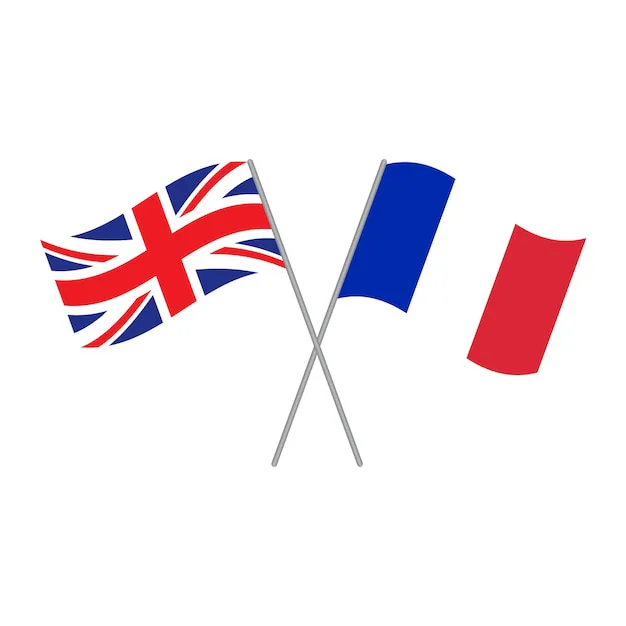
What was the first cause of the conflict between the French and the British colonies?
Disagreements over fishing rights and trade
The British wanted to keep the forest and the French wanted more farmland
The French wanted to keep the forest and the British wanted more farmland

What was stated in the Proclamation of 1763?
Colonists were BANNED from settling west of the Appalachian Mountains.
The Proclamation ended the French and Indian War.
Colonists were ENCOURAGED to begin settling west of the Appalachian Mountains.
The Proclamation proclaimed independence for the American colonists.

From the library, which direction must you head to reach the City Hall?
north
south
east
west
What is the direction to the school from the City Hall?
north
south
east
west
Where on the map did the Pueblo People, Navajo, and the Apache live?
Where is the Great Plains on the map?

In the 1600s, what would happen if you belonged to a church that wasn't the Church of England?
Arrested and fined

Why did the Pilgrims decide to venture to North America?
They wanted a safe place to practice their religion
They wanted to Explore and have adventures in a new land
Political stability is a goal of the Pilgrims
Economic opportunities, such as gold and silver, was a goal of theirs

The Pilgrims arrived in North America in late December. What happened next?
Built a fort and defeated the locals. This was the first Thanksgiving
Discovered gold and silver and returned to England
Established a trading post and became rich while working with the Native Americans
Established the Plymouth Colony but were unprepared for the winter. Half of them died

What religious group founded Boston?
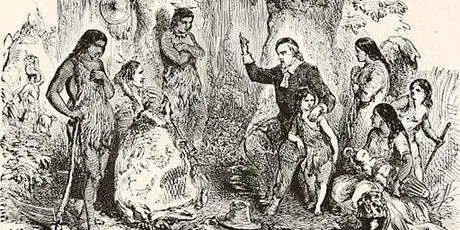
Why were Native Americans becoming angry with the Puritans?
Puritans were taking land and resources

What was the "Columbian Exchange"?
The Columbian Exchange was the transfer of plants, goods, animals, and ideas between the Americas and the Old World.
If you were a Separatist and not a member of the Church of England, what could happen to you?
Persecution, imprisonment, or fines
Where did the Pilgrims land?
The (a) was a religious movement that changed the way people practiced religion and it led to tolerance of other religions.
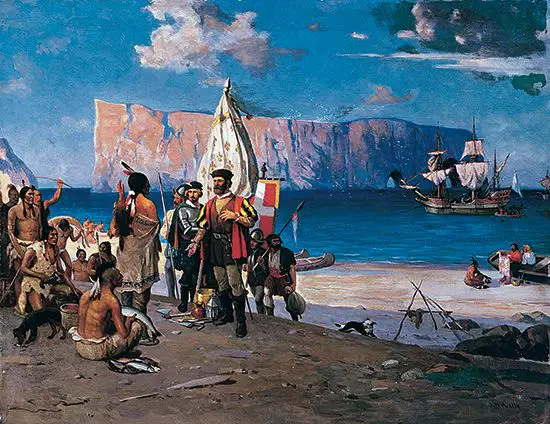
Describe the relationship between the native peoples of North America and European explorers
Always friendly and cooperative
Often in conflict over land and other resources
How were the Spanish able to defeat the large groups of Native Americans?

They had not developed any resistance to the disease. What is the meaning of the term "resistance"?
Type of weapon
Ability to remain unaffected by something
Type of medicine
Ability to identify an unfamiliar illness

What is a "settlement"?
A settlement is a type of food.
A settlement is a town created by people in an area previously uninhabited by those people
Where was the city of Tenochtitlan located?
What did Spain call their newly discovered and claimed land?
Where was the Inca Empire?

What was the Northwest passage?
A sea route connecting the Atlantic and Pacific Oceans through the Arctic waters of Canada.
Where did the Europeans try to find the new trade route called the Northwest Passage?

Who was Henry Hudson?

Who was John Cabot?
Who was the primary author of the Declaration of Independence?
George Washington
Thomas Jefferson
Benjamin Franklin
John Adams
President
Legislative
Executive
Judicial
Supreme Court
Legislative
Executive
Judicial
Congress
Legislative
Executive
Judicial
Override power
Legislative
Executive
Judicial
Bicameral
Legislative
Executive
Judicial
Veto power
Legislative
Executive
Judicial
Interpret Laws
Legislative
Executive
Judicial
Impeachment power
Legislative
Executive
Judicial
Cabinet
Legislative
Executive
Judicial
Make Laws
Legislative
Executive
Judicial
Enforce Laws
Legislative
Executive
Judicial
House of Representatives
Legislative
Executive
Judicial
Appointed for life
Legislative
Executive
Judicial
Commander-in-Chief
Legislative
Executive
Judicial
Senate
Legislative
Executive
Judicial
Principle of Republicanism
Legislative
Executive
Judicial
Judicial Review
Legislative
Executive
Judicial
Appoints judges
Legislative
Executive
Judicial
Controls the budget ($)
Legislative
Executive
Judicial
Power to declare war
Legislative
Executive
Judicial

