
NEW
Font size
 Worksheets
Founding and Competent Rulers of Ayutthaya
Total questions: 48
Worksheet time: 24mins
Which ruler founded the Ayutthaya kingdom and became its first king in 1350?
King Rama Thibodi I
King Borom Trailokanath
King Naresuan the Great
King Narai the Great
How long did the Ayutthaya kingdom remain Thailand’s former capital, according to the text?
Nearly 100 years
Exactly 417 years
About 200 years
Around 600 years
Which statement best describes the Chatusadom system established by King Rama Thibodi I?
It was a religious council with five temples
It was a military code with two units
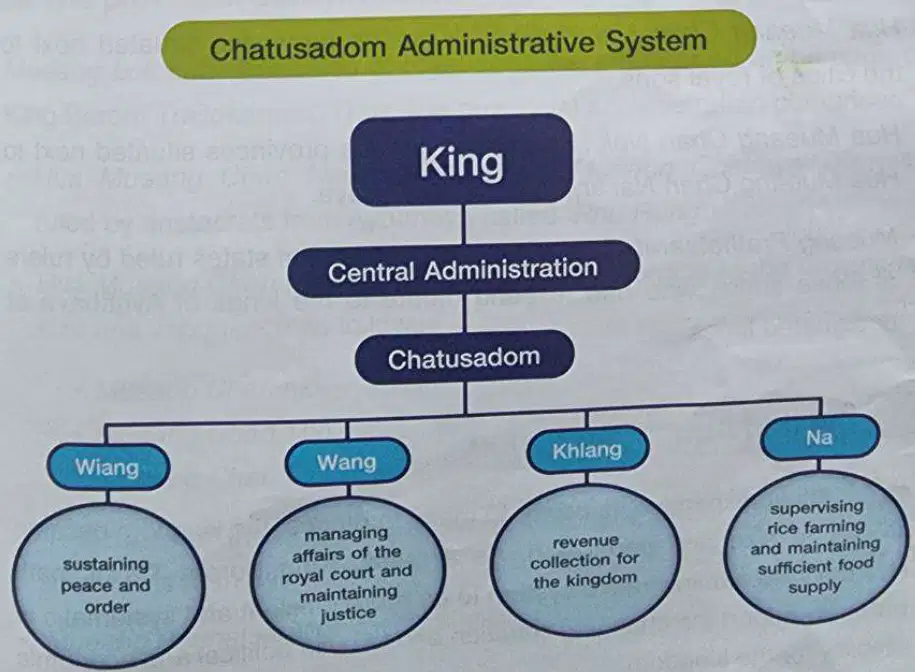
It was an administrative system with four bureaus
It was a trade network with three ports
Which set lists the four bureaus in the Chatusadom system?
Wiang, Wang, Khlang, Na
Wang, Wiang, Sala, Na
Wiang, Sala, Khlang, Pak
Khlang, Na, Sala, Thani
Which of the following includes all five dynasties that ruled Ayutthaya?
U-tong, Supannaphum, Sukhothai, Rattanakosin, Ban Phlu Luang
U-tong, Supannaphum, Sukhothai, Prasat Tong, Ban Phlu Luang
Supannaphum, Thonburi, Sukhothai, Prasat Tong, Ban Phlu Luang
Prasat Tong, Rattanakosin, Sukhothai, Ayutthaya, U-tong
Which king was the longest-reigning monarch of Ayutthaya, ruling for 40 years?
King Borom Trailokanath
King Rama Thibodi I
King Naresuan the Great
King Narai the Great
What major change did King Borom Trailokanath bring to Ayutthaya’s administration?
He created a royal navy for distant wars
He reformed the system to be more efficient and systematic
He replaced taxes with donations from temples
He ended ties with nearby kingdoms permanently
King Borom Trailokanath combined which kingdom with Ayutthaya?
Thonburi kingdom
Rattanakosin kingdom
Sukhothai kingdom
Lan Na kingdom
Which achievement is most closely linked to King Naresuan the Great?
Declaring Ayutthaya’s independence from Burma
Organizing the four-bureau Chatusadom system
Strengthening ties with France and Europe
Building western-style plumbing in the palace
Why did no neighbouring territories invade Ayutthaya for a long time after King Naresuan’s victory?
The kingdom made peace with all neighbours
The kingdom moved its capital far inland
A huge wall was built around the entire city
The legendary elephant battle showed strong military skill
Which area prospered during the reign of King Narai the Great?
Forest conservation and wildlife protection
Local agriculture and rice farming
Religious rituals and temple construction
International relationship and literature
Which statement best explains Ayutthaya’s ties with France during King Narai’s reign?
Trade decreased because of conflicts
Diplomatic ties strengthened, bringing knowledge and technology
France conquered Ayutthaya and ruled it directly
Relations ended after a brief visit by traders
Which rivers surrounded Ayutthaya and helped farming succeed?
Pa Sak, Lop Buri, Chao Phraya
Mekong, Ping, Nan
Sakae Krang, Tha Chin, Kok
Chi, Mun, Yom
What made Ayutthaya a good place for trade with other countries?
Near a shipping route to the Gulf
High mountains blocking invaders
Dry plains with few rivers
Far distance from all coastlines
Which idea describes a king seen as divine with absolute power?
Chatusadom, four bureaus
Dhammaraja, moral rule
Devaraja, divine kingship
Chindamanee, textbook
Which concept teaches that a ruler should follow Buddhist teachings?
Dhammaraja, righteous king
Devaraja, god-like ruler
Viang, royal city bureau
Khlang, finance bureau
What was the first Thai textbook mentioned in the material?
Chindamanee, early textbook
Ramkhamhaeng, stone inscription
Mahachat, epic story
Tripitaka, Buddhist scripture
Which administrative system organized four main bureaus in Ayutthaya?
Chatusadom, central administration
Mandala, regional alliance
Sakdina, land ranking
Tribhumik, cosmology
Which set lists the four bureaus most closely linked to Chatusadom?
Khlang, Na, Pa Sak, Lop
Wiang, Wang, Khlang, Na
Wang, Na, Lop, Pa Sak
Wiang, Wang, Na, Lop
Why was Ayutthaya fertile and suitable for growing rice?
Cold climate year-round
Constant sea winds for crops
Rich natural resources and rivers
Few animals or forests
Which statement best compares Devaraja and Dhammaraja?
Devaraja emphasizes divine power; Dhammaraja stresses righteous rule
Both reject religion in politics and favor trade only
Devaraja follows Buddhist sermons; Dhammaraja follows Hindu cult
Dhammaraja grants absolute power; Devaraja limits authority
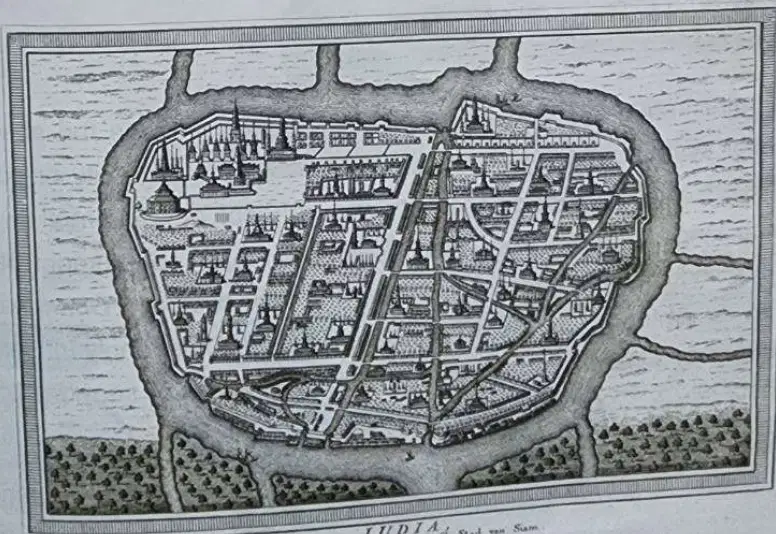
Look at the old map of Ayutthaya. Which feature most likely helped city defenses and transport?
Surrounding rivers forming natural barriers
Tall sand dunes far outside the city
A single straight road to the mountains
Large empty desert around the walls
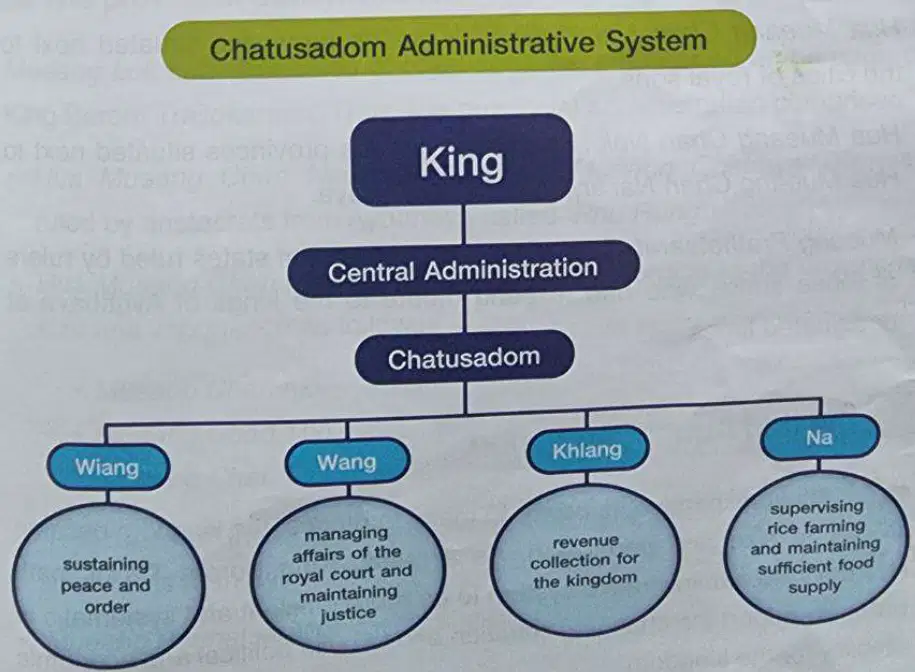
Which bureau in the Chatusadom system focused on sustaining peace and order?
Wang managed royal court justice
Khlang handled kingdom revenues
Wiang maintained peace and order
Na supervised rice farming supply
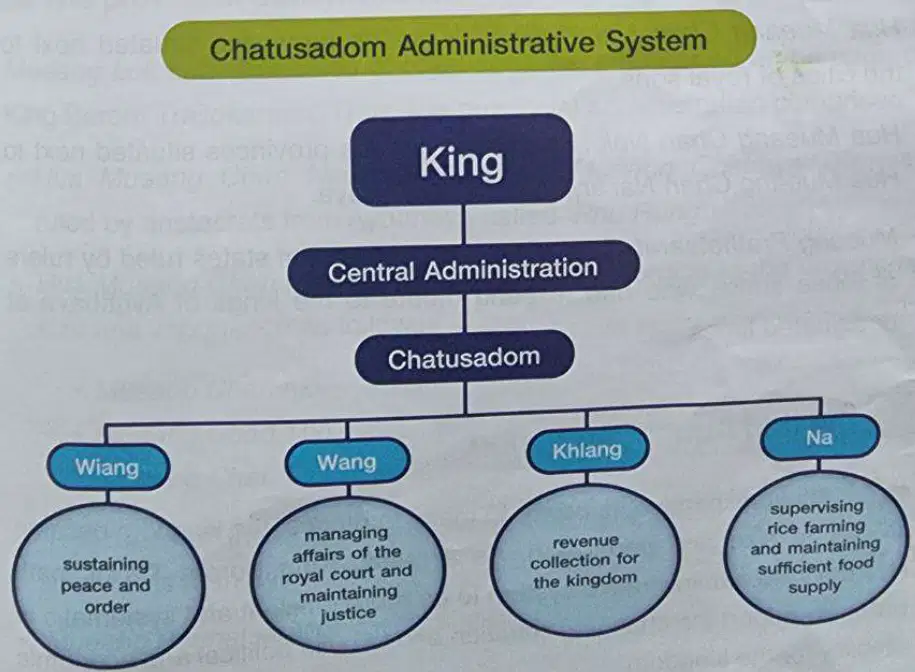
What was Wang mainly responsible for in the central administration?
Sustaining peace and order
Managing royal court and justice
Supervising rice farming supply
Collecting kingdom revenues
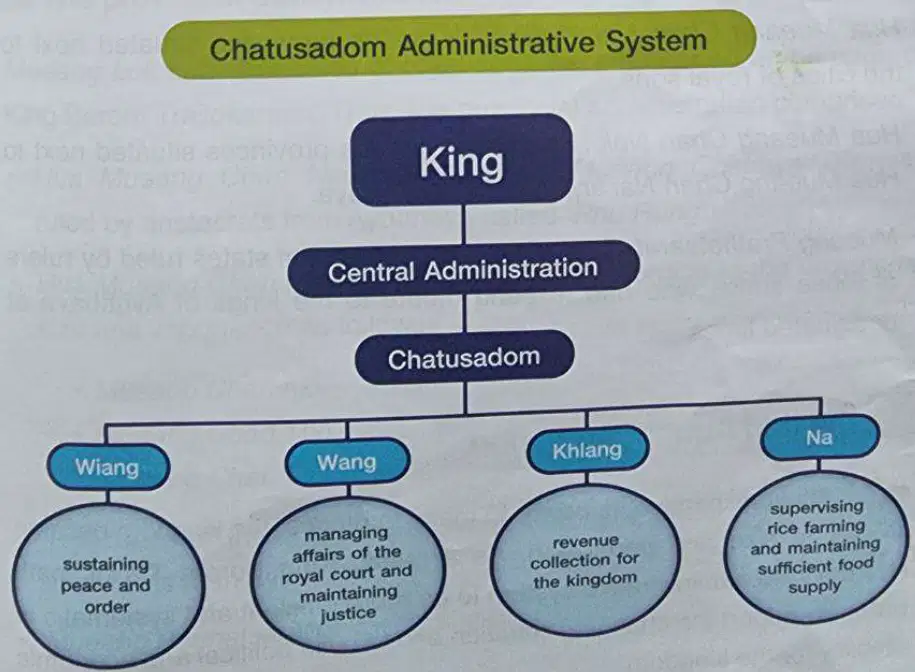
Which bureau supervised revenue collection for the kingdom?
Khlang collected revenues
Wiang kept peace and order
Wang oversaw royal court
Na managed rice farming
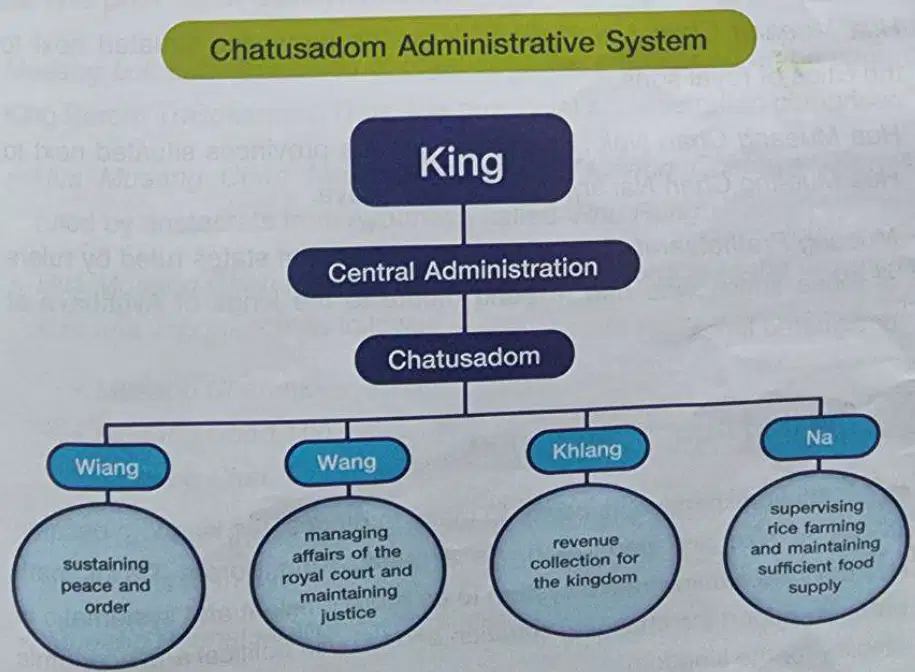
Na’s main duty in the Chatusadom was to do what?
Supervise rice farming supply
Run the royal court justice
Collect taxes and tribute
Maintain peace across cities
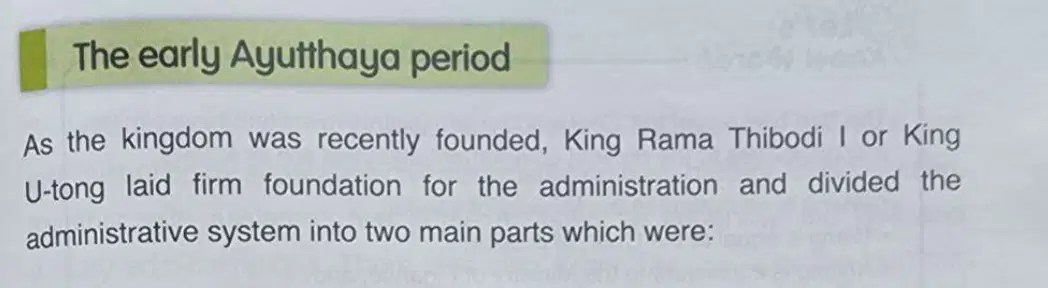
In the early Ayutthaya period, who laid the foundation for administration and divided it into main parts?
Provincial governors
Royal sons of Ayutthaya
King Borom Trailokanath
King Rama Thibodi I
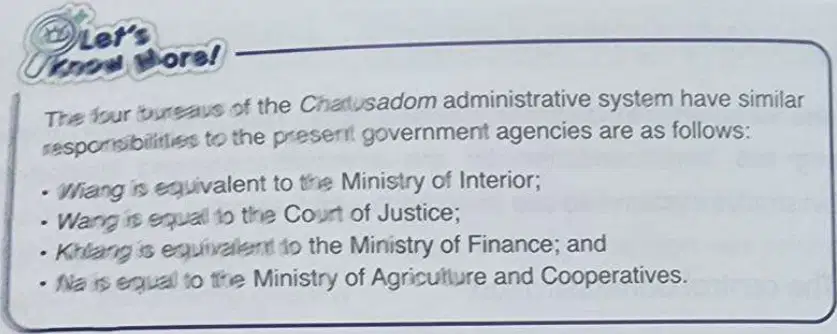
Which modern ministry is equivalent to Wiang’s role?
Ministry of Agriculture
Ministry of Finance
Ministry of Interior
Court of Justice
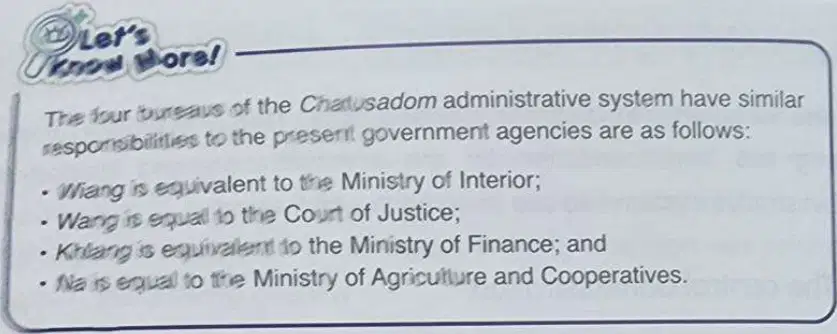
Khlang’s modern equivalent aligns with which agency?
Ministry of Finance
Ministry of Interior
Court of Justice
Ministry of Agriculture
What does Mueang Luk Luang describe?
Vassal states paying tribute
Cities ruled by king’s sons
Provinces far from Ayutthaya
Provinces next to Chan Nai
Which group of provinces was situated next to the cities of royal sons?
Hua Mueang Chan Nai
Hua Mueang Chan Nok
Mueang Prathetsarat
Mueang Luk Luang
What best describes Hua Mueang Chan Nok?
Provinces beside Chan Nai
Vassal states paying tribute
Cities ruled by royal sons
Provinces far from Ayutthaya
Mueang Prathetsarat refers to which type of states?
Provinces near Chan Nai
Districts of rice farming
Royal sons’ nearby cities
Vassal states sending tribute
If a city supervises food supply and rice farming, which bureau would oversee it?
Na would supervise farming
Wiang would maintain order
Wang would run court justice
Khlang would collect revenue
A province protecting Ayutthaya in the west was part of which category near the capital?
Mueang Luk Luang group
Hua Mueang Chan Nok
Hua Mueang Chan Nai
Mueang Prathetsarat

During the mid Ayutthaya period, reforms were made mainly to achieve what?
Efficient, systematic administration
More tribute from vassal states
Replacing all provincial rulers
Expansion of rice fields only
Which change helped balance power by separating government roles in Ayutthaya?
Transfer of all duties to local chiefs
Creation of a single supreme governor
Division of civil and military administration
Removal of coastal provincial offices
What was Krom Tha responsible for in the kingdom?
Overseeing mountain forests
Managing the Harbour Department
Collecting village head taxes
Training palace soldiers
Which pair were the two prime ministers appointed to supervise administrations?
Krom Tha and Phu Rung
King Petratcha and royal sons
Samuha Nayok and Samuha Phra Kalahom
Mueang Chan Tri and Mueang Chan Tho
In the late Ayutthaya period, who supervised northern provincial administrations?
Samuha Nayok
Samuha Phra Kalahom
Krom Tha
Phu Rung
In the late Ayutthaya period, who supervised southern provincial administrations?
Samuha Nayok
Chatusadom clerks
Samuha Phra Kalahom
Royal sons
Which statement best describes the economy’s main feature in Ayutthaya?
Finance economy centered on banking
Service economy focused on tourism
Industrial economy powered by factories
Subsistence economy based on natural resources
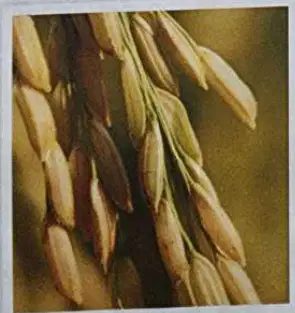
Which items were important agricultural exports of Ayutthaya?
Rice and peppercorn
Gold and silver
Silk and cotton
Tea and coffee
Why were Ayutthaya’s river basins valuable for development?
High mountains for mining
Cold climate for livestock
Wide deserts for trade routes
Fertile land suitable for crops
Which department administered seaside provinces in Ayutthaya?
Royal Artisans Bureau
Interior Revenue Office
Military Training Corps
Harbour Department (Krom Tha)
Which trio lists crops commonly grown in Ayutthaya’s fertile areas?
Rice, peppercorn, coconut
Wheat, barley, oats
Tea, coffee, cacao
Banana, cassava, maize
What was a key feature of trade during the Ayutthaya period?
Controlled by the royal court monopoly
Managed by local village councils
Open market run by foreign merchants
Shared equally by all city guilds
Why did Ayutthaya become a prosperous trading center?
Its location near Gulf shipping routes
Its mountains rich in minerals
Its climate perfect for rice only
Its isolation from neighboring states

