
Font size
 Worksheets
U.S. Political Parties and Revolutions
Total questions: 90
Worksheet time: 45mins
The first Secretary of the Treasury and founder of the first national bank.
This party, founded by Thomas Jefferson, supported states rights and a weak federal government.
This party, led by Alexander Hamilton and John Adams, supported a strong centralized government.
This began in 1789 and led to turmoil in this European nation, and ultimately war across Europe with the rise of Napoleon.
Washington never delivered this speech at the end of his presidency, instead having it published. In it he gives 3 pieces of advice to the American people - Choose moral leaders, stay out of foreign alliances, and avoid political parties.
A group of advisors to the president.
How things are done or how they have always been done before.
Precedent
These acts, signed by John Adams, was wildly unpopular and allowed the government to jail people for their nation of origin or for speaking out against the president.
This treaty between England and the United States in 1794 removed British military units from the American frontier.
Jay's Treaty

Second President of the United States.

This rebellion of Pennsylvanian farmers against taxes is considered the first domestic test of the Washington Administration.
France essentially tried to shake the US down for protection money. American's were so outraged that Washington offered to come out of retirement to lead the army.
These powers are not directly named in the Constitution but are necessary to complete the tasks listed there.
The amount of money the United States owes to other people.

Not picking sides in an international conflict.
"Mind ya business."
A group of people with similar views aligned to exercise political power.
A person who can afford to make risky investments, hoping that they asset will become more valuable in a brief amount of time.
The first ten amendments to the Constitution.
The legislative body of the United States.
Sometimes called the "Necessary and Proper," this clause in the constitution allows Congress to make laws necessary to conduct their enumerated powers in the Constitution.
Prim and Required Clause
This clause in the Constitution establishes the Constitution as the primary law of the land.
This is the governing document of the United States.
This court is the top court in the United States.
A change to a document, such as the Constitution.
Review
Amendment
This system of countermeasures in the US government ensures that no one branch can become too powerful.
Each state gets a limited number of these votes. 270 of them are needed to elect a US president.
This branch of government preforms the law.
Meaning central or national government.
Local
State
Regional
Federal
The formal process of removing the President or another elected official.
Impeach
The process by which the Supreme Court deems laws to be Constitutional or not.
This branch interprets the laws.
The idea that government power should be restrained.
This branch of the government writes laws.
The belief that the decision most people agree to should be enacted.
The idea that government should have the consent of the governed.
An agreement between two nations.
To break up power between different branches of government.
When the president formally rejects a proposed law, refusing to sign it.
To break up power between different branches of government.
The process by which the government can seize land or goods necessary for the nation, with the requirement that the government pay fair market value for that thing.
Fair treatment through the normal judicial system, especially entitlement to notice of a charge and a hearing before an impartial judge.
This rule prevents the government from using illegally obtained evidence against you.
The people who determine if a defendant is guilty or innocent.
Taxes placed by a government on imported goods.
An increase in average prices of goods and services.
Recession
Inflation
Stagnation
Currency appreciation
The branch of government responsible for writing the laws.
Legislative
Administrative
Executive
A period of long-term reduced economic activity in a nation or multiple nations.
A system of money for a particular country.
Business and trade between people, especially at large scale.
A collection of weapons and munitions.
The political party of Andrew Jackson, this party has its roots in the Democratic-Republican party and was an early champion of states rights.
This 1830 law signed by Andrew Jackson led to the Trail of Tears and the death of 60,000 Native Americans.
Known as "the Great Compromiser" this political figure spent most of his time trying to prevent a Civil War in America.
This American politician was a stout supporter of slavery and the expansion of slavery to the west. He was also Vice President under both John Quincy Adams and Adams' rival Andrew Jackson.
In Jacksonian Democracy, the idea that the victors of a political election have the right to assign non-elected and bureaucratic positions to their allies.
The right to vote and elect leaders or to vote on policies and laws.
The ability of a President to reject a law, from the Latin "I forbid it."
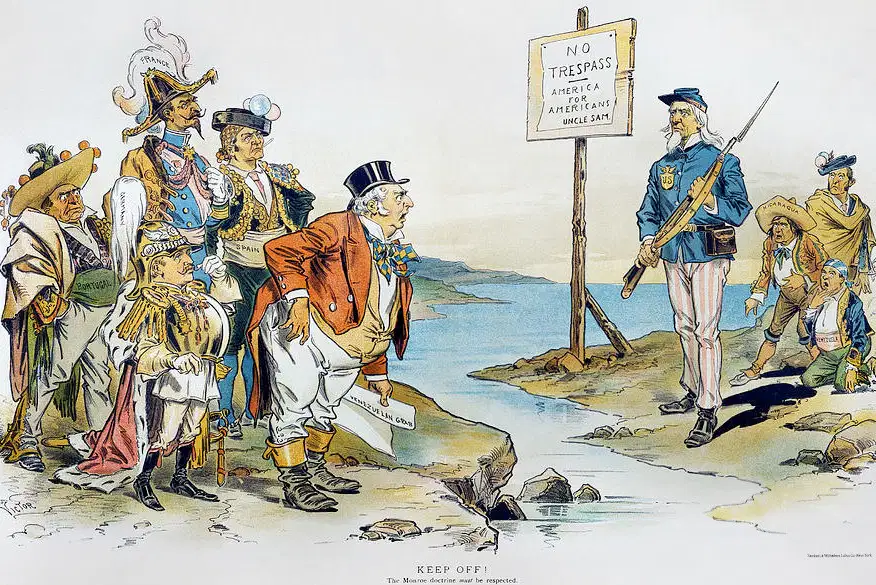
This presidential decree states that the United States would defend the rest of the Americas from European interference.
Farming, or having to do with farming.
Agrarian
Aquaculture
This group, featuring Lewis, Clark, Sacajawea, and York, explored the western United States for President Thomas Jefferson.
Corps of Discovery
Americorps
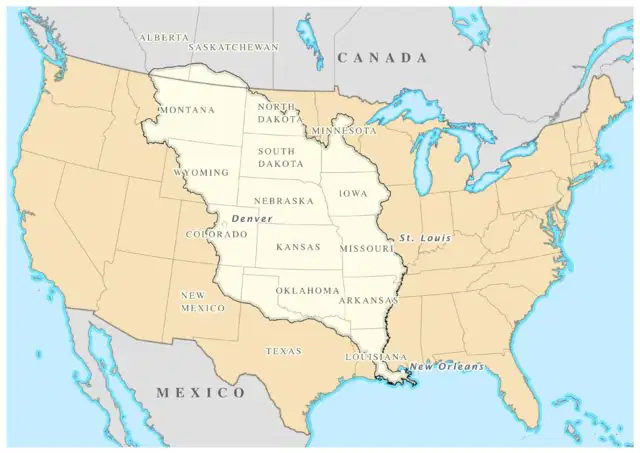
This land purchase by Thomas Jefferson doubled the size of our nation.
The amount of money the United States owes to other people.
The idea that a law is illegal and violates the Constitution of the United States.

Seventh President of the United States and celebrated war hero of the War of 1812.

This battle actually happened after the War of 1812 was already over. A decided American victory, it gave the United States the illusion of victory in the war.
To forbid or block trade with another nation.
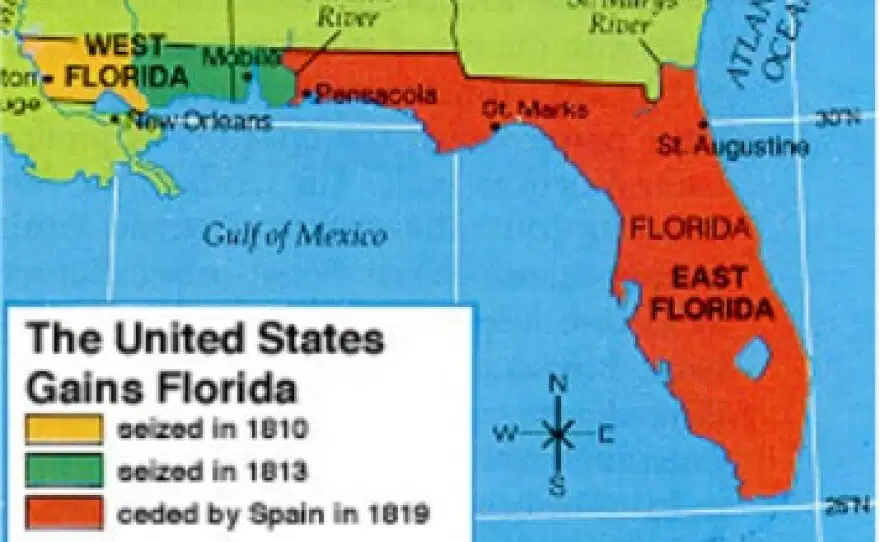
This treaty secured Florida as a territory of the United States.
This event from the Adams administration is when French agents demanded a bribe to stop raiding American shipping.
An extreme zeal and belief in the superiority of one nation to the detriment of all others.
Henry Clay's plan to strengthen and unify the nation through protective tariffs and internal improvement.
Sometimes called "Clinton's Big Ditch," this canal connected New York shipping to the Great Lakes.

This group of Native Americans freed enslaved people and resisted American expansion into Florida. Technically, they are still at war with the United States.
Cherokee
Sioux
Iroquois
Seminole
The idea that the United States is divinely driven to extend from the Atlantic to the Pacific.
This conflict started over a Texas boarder dispute. Oddly, the other nation never actually declared war on the United States, but was forced to give America a large portion of territory in exchange for 15 million dollars.
This Native American leader of the Seminole commanded the Seminole forces during the Second Seminole War.
The journey forced upon the Cherokee and other nations by the Indian Removal Act. An estimated 60,000 people died.
Trail of Tears
Oregon Trail
Sante Fe Trail
Exodus of Death
Those five Native American nations who had adopted aspects of European culture.
The Five Civilized Tribes
The Five Nations
The Iroquois Confederacy
The Confederation of Native Peoples
The complete elimination of slavery.
Abolition
Jubilee
Vaquero
Veto
This trail led from Independence, Missouri, to Oregon City, Oregon and was used by nearly a half million settlers.
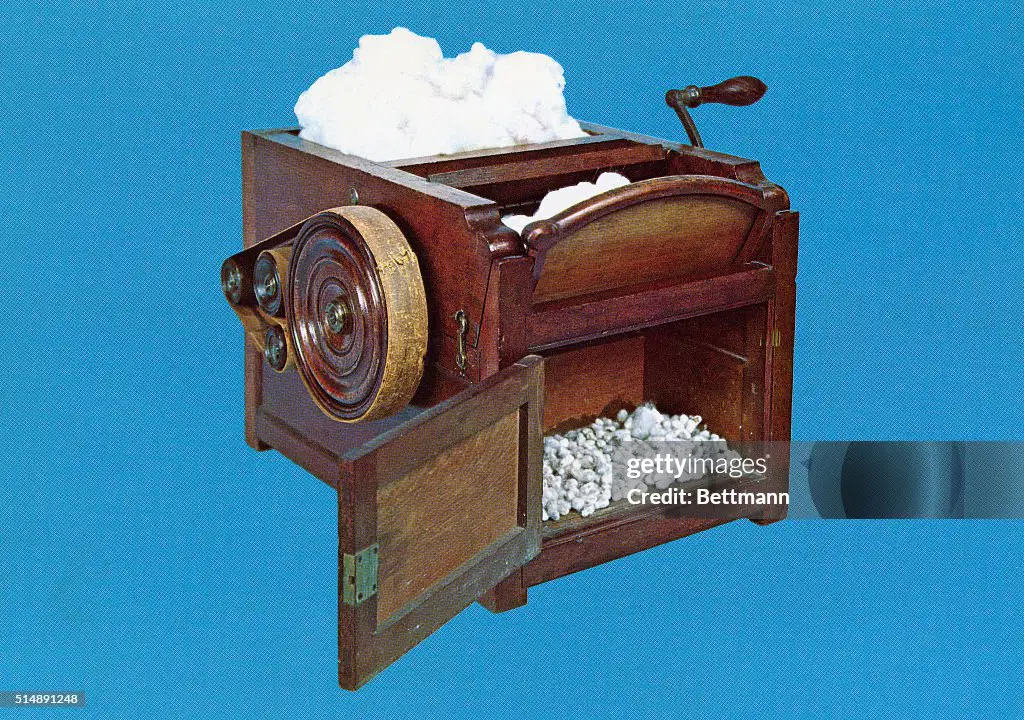
Invented by Eli Whitney, this machine separated cotton quickly and easily.
This word means and ideal or idealized society.
A group of abolitionist who smuggled people to freedom using railway signals and code words.
Those people who were morally opposed to American slavery.

This man led an attack on the arsenal in Harper's Ferry Virginia to free enslaved people.
Meaning country or agrarian. Opposite of Urban.
de-urban
The idea that the citizens should control most of a nations resources.
Evolution
The making of a product in large quantities.
A wire device, that when tapped could be used to send messages quickly across long distances.
The idea that parts from one machine should fit on another machine of the same model.
Uniform
Standardization
Compatibility components
Interchangeable parts
This machine was powered by burning wood or coal and turning water into steam, creating the first trains.
steam locomotive

