
 Worksheets
MA Chapter 9 & 10 Review
Total questions: 39
Worksheet time: 20mins

What is the name for the product offered by an insurance company?
Policy
Benefit
Guarantor
Claim

In healthcare services, the first party is the patient, the second party is the provider, and the third party is
The insurance policy subscriber
The insurance company
A specialist to whom the patient is referred
The facility where care is provided

When checking in a patient, the MA should check several pieces of information on the patient's insurance card, including
The patient's date of birth and policy deductibles
Copay amounts and diagnosis codes
The date the policy became effective and the ID/group number
The patient's social security number and full name

Who is responsible for paying the deductible amount required by a health insurance policy?
The patient/subscriber
Medicare
The patient's/subscriber's employer
The insurance company

In health insurance, what is an allowable amount?
The monthly fee that the subscriber pays for the insurance policy
The total amount spent on health care in one year
The amount a patient pays out of pocket before the insurance company begins to pay
A standard fee for a healthcare service set by the insurer

Which of the following is an insurer most likely to consider an elective procedure?
An annual physical
A facelift
A colonoscopy screening
Setting a broken bone

One function of the Affordable Care Act (ACA) is to
Make insurance available to all adults over the age of 65
Allow people to purchase health plans as individuals online
Make and enforce rules about who qualifies for health insurance
Set a flat rate for each insurance policy

Under the ACA, people with _______ _______ _________cannot be charged a higher monthly premium.
Private insurance policies
Preexisting medical conditions
In-network providers
Multiple family members

Which of the following best describes the role of the primary care provider (PCP) under a managed care system?
The PCP manages her own patient scheduling without an MA or office manager.
The PCP acts as a manager for less experienced providers at a facility.
The PCP selects the best medical insurance plan for each patient.
The PCP coordinates and manages access to all healthcare that a patient receives.
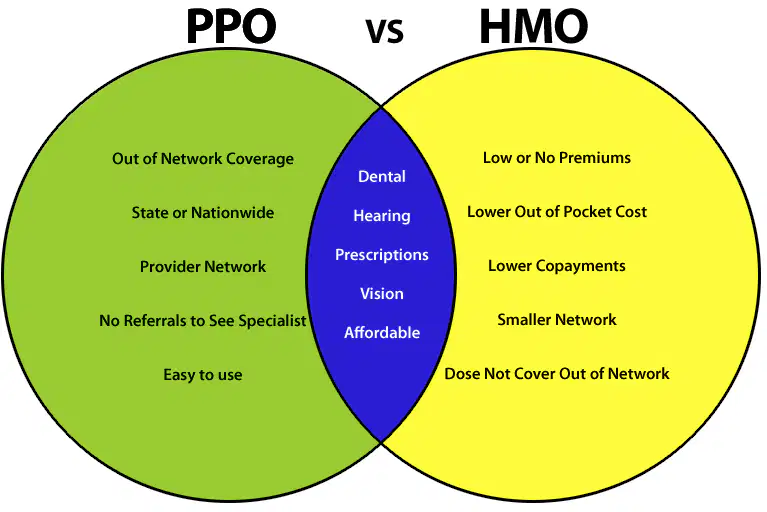
Jamie is a freelancer and pays for her own health insurance plan. She pays a high monthly premium and does not have a PCP. There is a network of providers that accept her insurance policy and her costs are lowest when she sees these providers, but she can see other providers if she wishes. What type of insurance plan does Jamie have?
Jamie has a preferred provider organization (PPO) plan.
Jamie has a health maintenance organization (HMO) plan.
Jamie has a point-of-service plan.
Jamie has a COBRA plan.
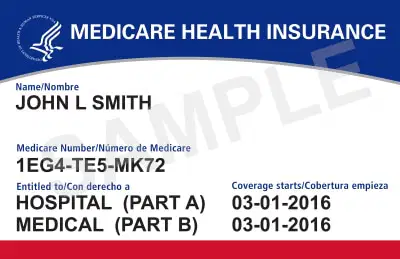
Which of the following patients would be most likely to be covered by Medicare?
David, a 64-year-old electrical engineer who recently had a liver transplant
Emily, a 37-year-old who was born partially deaf and works full-time at an elementary school
Marissa, a 26-year-old on active duty in the US Air Force who survived childhood cancer
Bill, a 58-year-old former librarian with degenerative musculoskeletal condition who is unable to work due to disability
Which of the following is true of Medicare Part C?
Medicare Part C covers care given in a skilled nursing facility.
Medicare Part C covers the full cost of all prescription drugs.
Medicare Part C is optional and may offer dental benefits.
Medicare Part C is optional and covers all costs associated with hospitalization.
What does it mean for a provider to opt out of Medicare?
The provider accepts Medicare patients but instead of taking the Medicare-approved payments for services, they may charge patients more.
The provider does not accept Medicare at all.
The provider only treats Medicare patients who are paying for a Medicare Advantage Plan.
The provider does not accept any patients over the age of 65.

Special types of insurance products exist for
Children from low-income households
All children regardless of family income
Married adult children of military service members
Ex-spouses of military service members

10-year-old Jessica is covered by a CHAMPVA program because her mother became disabled while on active military duty 2 years ago. Jessica is also covered by a private insurance plan through her father's employer. Maddy, an MA, needs to coordinate benefits for Jessica. What information might Maddy need to determine which parent's insurance policy is the primary insurance for Jessica?
Which insurance policy Jessica's parents have chosen as Jessica's primary insurance policy
Whether her state uses the "birthday rule" to determine primary insurance and, if so, both parents' birthdays
The date when the CHAMPVA policy became active
The date when the father's insurance policy expires
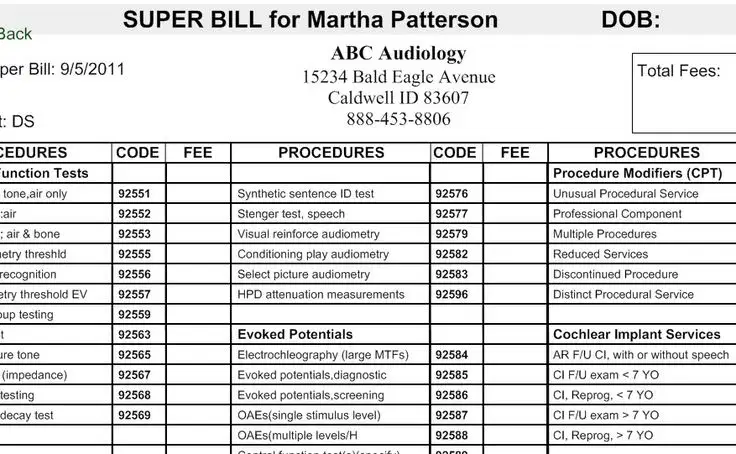
Information for an insurance claim may be found on a document called an encounter form or
Declaration of benefits
Superbill
Explanation of benefits
Visit summary

What is one reason an insurer may deny payment on a claim?
The patient does not have a primary care provider.
The patient has a preexisting condition.
The service provided is not appropriate for the patient's diagnosis.
The initial claim is incomplete but is resubmitted with the required information.

How does an MA obtain preauthorization from an insurance company?
The MA sends a monthly report to each insurance company of recommended treatment plans for subscribers.
The MA submits a detailed report on the patient's visit to the insurance company and the insurer decides what treatments are appropriate.
The MA creates a 10-digit code specific to each patient that represents past treatments and waits for another 10-digit code representing treatment options to be returned by the insurer.
The MA contacts the insurer and provides details of the patient's diagnosis and the planned procedure/treatment.

What might an MA be delegated to do if a preauthorization request is denied by an insurance company?
Prepare and file an appeal providing proof that the procedure/treatment is medically necessary
Provide the patient with options for other insurers who will cover the procedure
Apply for an exception through Medicare
Appear in person at a hearing on the patient's behalf
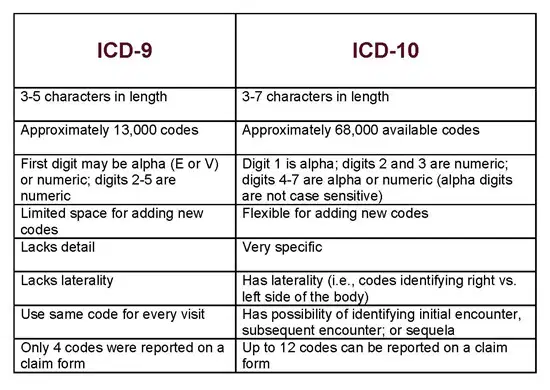
Which of the following is true of the International Classification of Diseases-10-Clinical Modification (IDC-10-CM)?
IDC-10-CM codes are used to represent medical equipment used in patient care.
IDC-10-CM coding is the computer code used to run electronic health and medical records.
IDC-10-CM codes are a form of encryption for communicating health records between medical facilities.
IDC-10-CM codes provide a uniform way to communicate information about a patient's diagnosis.

In IDC-10-CM coding, where can an MA find code categories arranged by body system?
In the Alphabetic Index
In the Tabular List
In the manual for the EMR or EHS used at the facility
On the CMS website
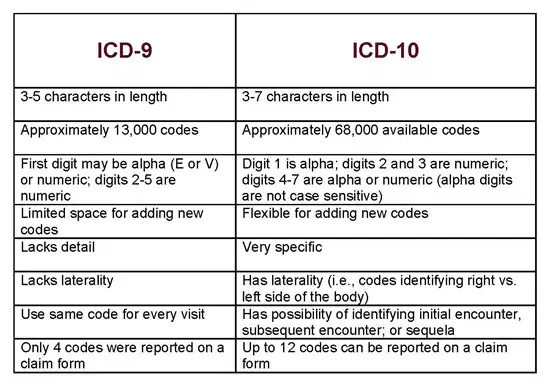
When using the IDC-10-CM system, diagnoses must be coded
To give only the most general idea of the patient's condition to protect privacy
To make the condition seem more serious than it is so the insurer will be sure to pay
Accurately and to the highest level of specificity possible
To make the condition seem less serious than it is so as not to alarm the patient
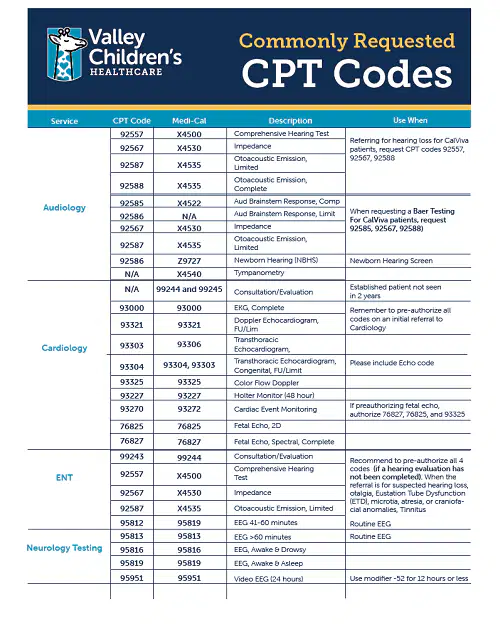
What type of code can be "bundled" to indicate procedures that are commonly performed together?
IDC-10-CM codes
CPT codes
IDC-7-PCS codes
Level II codes

Under the HCPCS Level II coding system, which of the following would likely be coded under the letter J?
A prosthetic hand
A set of crutches
A steroid injection
Cough syrup containing codeine

What is one possible consequence if the most accurate and descriptive coding is not used on a claim form?
The patient will be dropped by the provider.
The provider will be charged with fraud.
The insurance company may deny payment for some or all of the treatment.
The MA will lose his certification after three incidents of incorrect coding.

Which of the following is usually true of how a medical practice receives income?
Patients pay a set amount or percentage at the time of the appointment and their insurance companies are billed for the remainder of the cost of care.
Medical practices charge patients for the full cost for all services at the time of the appointment. Once the claims are filed, the patient is reimbursed by their insurance company for covered costs.
All patients pay a flat fee, insurance claims are filed with insurers, and the rest of the costs are covered by Medicare.
Insurance providers pay patient bills in full and bill the patients for the part of the bill that is the patient’s responsibility.

Which of the following are considered medical office expenses?
Payments from insurance companies, medical equipment leases
Staff salaries, utilities
Medicare payments, disposable supplies
Patient payments, medical waste disposal service

Which of the following best describes a sliding scale payment system?
A system in which people with appointments pay less than walk-in patients
A system in which patients pay different amounts based on household income, with patients with lower incomes paying less
A system in which patients receiving routine care pay less than patients with more complex health conditions
A system in which patients with greater health needs and more visits pay less than patients who see the provider once per year

Which of the following would be considered a professional courtesy discount in a medical office?
A discount given to patients who are especially courteous and cooperative
A discount given to patients who share a certain medical insurance company
A discount given by one provider to a patient who is also a healthcare provider
A discount given to patients who do not receive a clear diagnosis and have to return for follow-up

What should an MA do if he receives a check for partial payment of a bill from a patient instead of a full payment?
Accept and record the payment and continue billing the patient monthly until the balance and any applicable interest is paid
Return the check for nonsufficient funds (NSF)
Hold the patient’s payment until the entire balance is received and then record the patient’s payment
Contact the patient to let her know that you are sending the account to a collection agency

A patient’s account is considered delinquent when payment is ______ days past due.
1–30
31–60
90–120
120+

Arlo, an MA, is assigned to make calls to patients whose medical bills are delinquent. Which of the following scenarios for performing this task follows FDCPA practices for ethical bill collecting?
Arlo calls Mr. Montgomery’s cell phone at 7:15 a.m. Arlo offers Mr. Montgomery a payment plan for the remainder of his bill. He is polite and courteous.
Arlo calls Mr. Montgomery’s home at 11:00 a.m. Mr. Montgomery is not home, so Arlo leaves a message with his daughter. Arlo gives his name and position, the name of the provider, and the office’s phone number and hours of operation for the medical office.
Arlo calls Mr. Montgomery’s workplace at 2:00 p.m. Arlo is polite to the person who answers the phone, but insists he does not want to leave a message and will hold until he is able to speak directly to Mr. Montgomery regarding his medical debt.
Arlo calls Mr. Montgomery’s cell phone at 4:00 p.m. Arlo tells Mr. Montgomery the amount he owes and how overdue the bill is. Mr. Montgomery says he is not able to make a payment. Arlo reminds him the bill is 6 months overdue and says he may have to contact law enforcement.

Which of these bills would be most likely to be sent to a collection agency?
A 60-day-old bill that was partially paid at the time of service
A 90-day-old bill that a patient is making small monthly payments on
A 120-day-old bill that the medical practice cannot collect on despite regular calls and three written attempts
Any bill over 120 days past due regardless of whether payments have been made or a payment plan set up

What is one of the largest monthly expenses of any medical practice?
Payroll
Cleaning
Medications
Utilities

On a paper check, how many times is the amount recorded?
Once, on the front of the check
Twice
Three times
Once, on the back of the check
Which of the following describes a restrictive endorsement on a paper check?
An endorsement stamped on the back of a check that has the business name and account number
Any handwritten endorsement on the back of a check
A handwritten endorsement on the back of a check that includes a date
A stamp or signature on a check that is below the endorsement line

An electronic funds transfer is likely to be used for
Receiving payment from an insurance company
Depositing patient checks and cash payments
Restocking petty cash
Sending an account to a collection agency
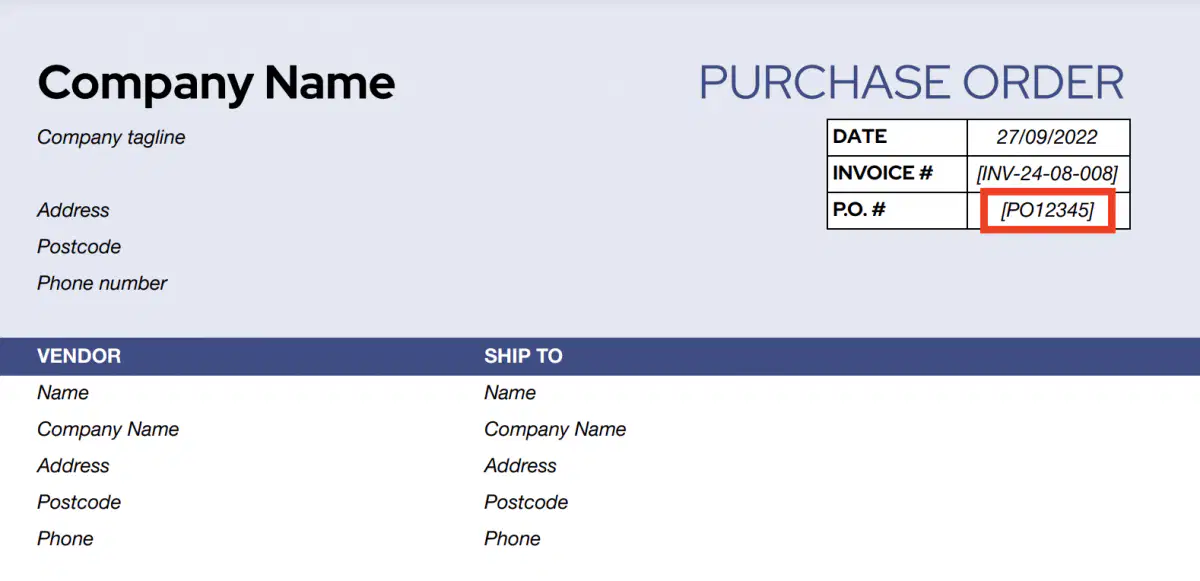
Under what circumstances might an MA be asked to provide a purchase order number?
After receiving a payment from an insurance company
When placing an order for medical supplies from a vendor
When entering mailed payments from patients into the check register
When depositing cash payments into the practice’s bank account
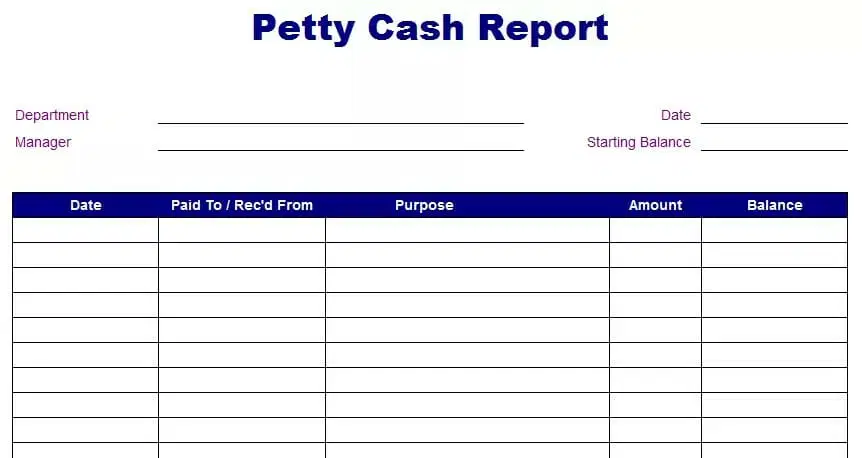
Marcus, an MA, has been asked by the provider to purchase a cake for an office party honoring Letty, a nurse who is having a baby. The cake costs $18.00. Which of these methods is the best way for Marcus to pay for the cake?
Marcus should use a personal credit card and then ask the provider to reimburse him with cash.
Marcus should create a purchase order and electronically transmit it to the bakery.
Marcus should use petty cash to pay for the cake and place the receipt from the bakery in the cash box.
Marcus should use petty cash and then log the purchase of the cake in the facility check register.

