
Font size
 Worksheets
Breast Cancer — Worksheet Extraction
Total questions: 45
Worksheet time: 23mins
Introduction to Breast Tissue: The breast is described as a specialized glandular organ located over the pectoralis major. What is the primary design function of this organ?
Lactation
Thermoregulation
Blood filtration
Hormone storage
Introduction to Breast Tissue: Understanding breast anatomy is emphasized because most breast cancers originate from specific anatomical components. Which reason for studying anatomy is stated?
To identify specific anatomical components from which most breast cancers originate
To measure breast volume accurately for cosmetic procedures
To determine metabolic rate of breast tissue
To improve athletic performance involving the chest
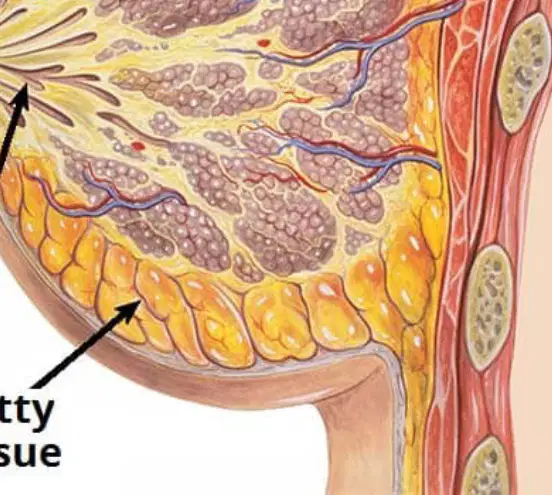
In this diagram, which labeled structure is primarily responsible for milk production?
Lobules
Lactiferous ducts
Pectoralis major
Thoracic wall
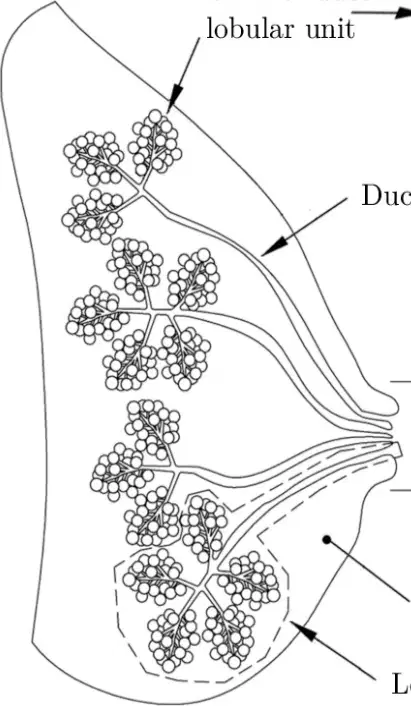
Schematic of the breast shows intralobular terminal duct, extralobular terminal duct, and the terminal duct lobular unit. According to the labels, what does the terminal duct lobular unit comprise?
Terminal ducts and a lobule
Only the lactiferous sinus
Fatty tissue and Cooper ligaments
Thoracic wall and pectoralis major
Breast Anatomy & Tissue overview states the breast is composed of lobules (milk‑producing), ducts (milk passage), and supportive stroma. Which components are highlighted as the primary sites of cancer origin?
Lobules and ducts
Pectoralis major and thoracic wall
Fatty tissue and skin
Nipple and areola
Breast Anatomy & Tissue overview: Where do most malignancies arise?
Ductal epithelium
Fatty tissue
Pectoralis major
Cooper ligaments
Which item is described as a major risk for breast cancer?
Age and female sex
Smoking
Low-fat diet
Regular exercise
Which genetic mutations are listed as established risk factors for breast cancer?
BRCA1/2
APC
CFTR
HFE
Which of the following are examples of hormonal exposure? Select all that apply.
Early menarche
Late menopause
Hormone replacement therapy
Radiation exposure
Which imaging-related feature is listed as an established risk factor?
Dense breast tissue on mammogram
Calcified thyroid nodules on ultrasound
Low bone density on DEXA
Normal chest X-ray
Breast cancer develops due to a combination of which influences? Select all that apply.
Genetic
Hormonal
Environmental
Lifestyle
Infectious (parasitic)
Identifying risk factors is essential for which purposes listed? Select all that apply.
Screening
Prevention
Risk-stratified management
Curative surgery in all cases
Which pair represents non-modifiable risk factors listed?
Age and genetics
Hormone use and obesity
Alcohol and diet
Physical inactivity and smoking
What happens to breast cancer incidence with advancing age?
It increases
It decreases
It remains unchanged
It fluctuates randomly
What is identified as the strongest independent risk factor in women?
Age
Diet
Parity
Exercise
The majority of cases occur after what age?
(a)
Age as a Risk Factor. Age-adjusted incidence rises due to which factors listed?
Hormonal exposure and cumulative genetic mutations over time
Improved access to care alone
Seasonal variation
Decreased hormone levels and fewer mutations
Breast cancer occurs predominantly in which group?
Women
Children
Men
All groups equally
Prior cancer in one breast is associated with what outcome listed?
Higher chance of second primary cancer in the opposite breast
Guaranteed cure of the first cancer
Elimination of genetic risk
Lower overall surveillance needs
Which predispositions are reflected by a personal history of breast cancer as listed? Select all that apply.
Genetic
Hormonal
Environmental
Infectious bacterial
What follow-up approach is required as listed?
Enhanced surveillance
No surveillance
Annual dental screening
Immediate transplantation
Which family relationship is associated with a 2–3× increased risk of breast cancer?
First-degree relatives
Second-degree relatives
Distant relatives
Unrelated individuals
Genetic factors account for what proportion of all breast cancer cases?
1–2%
5–10%
20–30%
Over 50%
Among women under 30 years, genetic mutations may explain up to what percentage of breast cancer cases?
10%
25%
40%
5%
Which genes are identified as the most significant breast cancer susceptibility genes?
BRCA1 and BRCA2
HER2 and EGFR
TP53 and PTEN
MYC and KRAS
Which reproductive factor increases breast cancer risk by elevating lifetime estrogen exposure?
Early menarche (younger than 12 years)
Menopause before age 45
First childbirth before age 25
Multiparity
Late menopause (older than 55 years) affects breast cancer risk in which way?
It elevates risk by prolonging estrogen stimulation.
It decreases risk by shortening estrogen exposure.
It has no effect on risk.
It only affects ovarian cancer risk, not breast cancer.
What effect can using estrogen with or without progesterone for contraception or hormone replacement therapy have on breast cancer risk?
It can increase risk.
It eliminates risk.
It guarantees no change in risk.
It only affects adolescents.
Which factors determine the magnitude of breast cancer risk associated with exogenous hormone use? Select all that apply.
Duration of use
Dose
Type of hormone
Blood type
What is recommended for individuals on long-term hormone therapy?
Careful assessment
Automatic discontinuation for all users
No monitoring is needed
Routine radiation exposure as screening
In postmenopausal women, obesity increases breast cancer risk primarily due to which mechanism?
Estrogen production from adipose tissue
Reduced insulin sensitivity only
Increased bone density
Iron deficiency
Which lifestyle factor is identified as important and modifiable in prevention strategies?
Excessive alcohol consumption
Eye color
Natural hair texture
Handedness
How is breast cancer described among women worldwide?
It is the most common cancer.
It is the second most common cancer.
It is rare.
It occurs only in older adults.
Approximately what share of new global cancer cases did breast cancer represent in 2020?
Approximately 11.7%
Approximately 2%
Approximately 25%
Approximately 50%
What is the lifetime risk of breast cancer for women in the U.S.?
1 in 8
1 in 100
1 in 1000
1 in 2
What is the lifetime risk of breast cancer for men?
1 in 1000
1 in 8
Zero risk
1 in 10
According to Age-Related Incidence data, what is the median age at breast cancer diagnosis?
51 years
61 years
71 years
41 years
According to Trends Over Time, in which group was the decline in incidence after 2000 especially noted?
Women <50 years
Women ≥50 years
Men <50 years
Adolescents
Trends Over Time lists reasons for improvements. Select all factors identified as contributing to improvements.
Early detection and screening
Advancements in systemic therapies
Better awareness and healthcare access
Reduced physical activity
Mortality Trends reports the change in U.S. breast cancer mortality from 1980 to 2020. What was the percentage decrease?
33%
43%
53%
63%
Pathophysiology indicates the proportion of breast cancer cases that are sporadic. Which range is correct?
90–95%
50–60%
20–25%
5–10%
According to Pathophysiology, what percentage of patients have an identifiable genetic mutation?
1–2%
5–10%
20–25%
30–40%
Which genes are identified as the most common hereditary breast cancer genes?
BRCA1 and BRCA2
EGFR and KRAS
TP53 and RB1
MYC and CDK4
Most common invasive pathologic forms lists two subtypes. Which pair is correct?
Invasive ductal carcinoma (IDC) and Invasive lobular carcinoma (ILC)
Ductal carcinoma in situ (DCIS) and Paget disease
Medullary carcinoma and Mucinous carcinoma
Phyllodes tumor and Fibroadenoma
Carcinogenesis results from a complex interplay of specific factors. Select all factors
Genetic factors
Environmental exposures
Hormonal influences
Patient-related factors
Seasonal changes

