
 Worksheets
Global 2 Regents review
Total questions: 122
Worksheet time: 2hrs 20mins

Based on this passage, one way the castle at Edo and the palace at Versailles are similar is that both
became symbols of power and wealth
developed into monastic centers of learning
were meant to provide protection and prevent attacks
served as monuments to the military

Which claim can best be supported by this passage?
The more independent the nobles were the higher their status.
Nobles maintained their authority by remaining isolated.
Rulers controlled their nobles by influencing where they lived.
Spending time in segregated sectors guaranteed nobles the support of their ruler.

Which political philosophy is best supported by both documents?
Rule of law represents a social contract with the people.
Tyranny encourages liberty and security.
Separation of powers guarantees people fair treatment.
Oppression promotes the general will.

Which event most directly influenced the writing of both documents?
Iranian Revolution
French Revolution
Russian Revolution
Cuban Revolution

What is the most likely purpose of this document?
to highlight the benefits of free market
to record the negative effects of child labor
to minimize the impacts of agricultural innovations
to inspire social and political reform

The conditions described in this passage directly resulted in
Ireland invading Britain
millions of Irish emigrating to the United States
most landlords forgiving the rent the Irish owed
Britain agreeing to withdraw from Ireland

A historian could best use this passage to study which topic of World War I?
events that started the war
impact of combat on civilians
equipment utilized by soldiers
propaganda that supported the war effort

Which claim can best be supported by this passage?
New technology made warfare more destructive.
Warfare had a limited impact on the environment
Countries engaged in war were punished for their actions
Illness and disease took many lives.

Which point of view is expressed in this illustration?
The Russian Orthodox Church caused the fall of the Romanov dynasty.
The Russian government encouraged a diversity of opinions.
The Romanovs suppressed Enlightenment ideas within their empire.
The Russian Revolution made conditions worse for most minorities.

Which long-term historical circumstance about Russia is shown in this illustration?
appeal of Marxism to the Russian nobles
autocratic rule of Russian royalty
rejection of the Pan-Slavism movement
support of the Russian Orthodox Church for democratic ideals

Which foreign policy action best explains the United States response to Cold War situations?
repeated reliance on appeasement
consistent attempts to bring about détente
a continuing pursuit of nonalignment
a long-term commitment to containment

Which claim best supports the pattern of interaction between the United States and the Soviet Union between 1948 and 1979?
Conflict occurred when one side tried to expand its sphere of influence into another country or region.
Disagreements between the United States and the Soviet Union were quickly resolved without the deployment of the military
Leaders of other countries encouraged conflict between the superpowers.
Peace and stability were created around the world as a result of the alliance between the United States and the Soviet Union

Which document would best provide information about the impact these events had on regions other than the United States and the Soviet Union?
Russian textbook published in 2015
television interview with President John F. Kennedy
memoirs of people living in East Germany, Cuba, and Afghanistan
line graph of the Soviet Union’s gross domestic product between 1948 and 1968

The actions taken by Gandhi reflect his commitment to which policy?
collectivization
religious intolerance
civil disobedience
censorship

The actions of Gandhi and his supporters, as described in this passage, helped lead to the
banning of Western books and music
removal of British control from the subcontinent
development of an economic alliance for South Asian nations
peaceful partitioning of British India into India and Pakistan

Based on this passage, what does Mao believe about war from the communist perspective?
Wars are inevitable regardless of the society.
Wars can be just or unjust depending on their purpose.
Wars have a purpose in all societies because of a constant need for change.
Wars should be permitted when a government needs to obstruct progress.

Based on this passage, what does Mao believe about World War I?
The philosophical beliefs of the competing countries challenged traditional ideals.
The potential political gains of European nations benefited China.
The countries in the war were involved for their individual economic benefits.
The possible military losses made it too risky for the Communist Party to intervene.

The tensions between North Korea and South Korea described in this passage began over
boundaries drawn during the Cold War
ethnic conflict on the Korean peninsula
trade disputes centered on fishing rights in the Yellow Sea
China’s purchase of submarine technology from North Korea

Based on this passage, in which way is the situation in the Korean peninsula comparable to the history of South Asia since World War II?
Peaceful protests led colonial powers to surrender their control of the region
Increased prosperity has accompanied a shift from totalitarian to democratic rule.
Regional conflicts have contributed to the proliferation of nuclear weapons.
Technological progress reduced tension and led to improved trade relationships.

Which claim is best supported in this passage?
An arms race will help defuse tensions on the Korean peninsula.
Economic cooperation between the two Koreas would spread democracy to the North.
An invasion by the United States could remove Kim Jong Un from power with few casualties.
North Korea’s successful military tests have increased the likelihood of war.

This cartoonist is comparing Vladimir Putin to
Czar Nicholas II
Joseph Stalin
Mikhail Gorbachev
Boris Yeltsin

Which earlier historical development best refl ects Putin’s strategy for rebuilding Russia’s prestige in the world?
granting of independence to former Soviet republics
removal of Soviet troops from Afghanistan
lifting of the Berlin blockade
installation of communist regimes throughout Europe
What was the main idea of the poem "The White Man's Burden?"
Europeans should learn from the people they conquer
Europeans should teach their colonies to produce manufactured goods
Europeans should "civilize" the people they controlled
Europeans should welcome less developed countries as equals
At what event did the Scramble for Africa occur?
Meiji Restoration
Opium Wars
Berlin Conference
Boer War
The Irish Potato Famine encouraged people to
Support free market economy
Document the negative effects of child labor
Minimize the impacts of agricultural innovations
Support political and social reforms to end the famine
What was one change that occurred during the Agricultural Revolution?
New technology increased efficiency
Use of the open field system
Even distribution of land to small farmers
Breeding smaller sheep
What was the Enlightenment?
When people began to question absolute monarchs
When people began to question the Roman Catholic Church
When England became a limited monarchy
When France overthrew its king
What was the Glorious Revolution?
When people began to question absolute monarchs
When people began to question the Roman Catholic Church
When England became a limited monarch/democracy
When France overthrew the king
What was the French Revolution?
When France began to industrialize
When France overthrew its king to create a democracy
When France began to question the Roman Catholic Church
When France established a government based on Islam
What was the Haitian Revolution?
When Fidel Castro established communism
When Madero, Pancho Villa, & Zapata overthrew Diaz
When Simon Bolivar gained independence for Latin/South American countries
When Toussaint L'Overture led a successful slave rebellion
What were the Latin American Revolutions?
When Simon Bolivar gained independence for Latin/South America
When Toussaint L'Overture led a successful slave rebellion
When Madero, Pancho Villa, & Zapata overthrew Diaz
When Fidel Castro establish communism
What was the Mexican Revolution?
When Toussaint L'Overture led a successful slave rebellion
When Madero, Pancho Villa, & Zapata overthrew Diaz to establish democracy
When Simon Bolivar gained independence for Latin/South America
When Fidel Castro established communism
What was the Industrial Revolution?
When products went from being made by hand to made in factories
When people used new fertilizers & methods of farming to grow more food
When Lenin overthrew the czar & established communism
When Mao overthrew the government & established communism
What was the Bolshevik/Russian Revolution?
When Lenin overthrew the czar to establish communism
When goods went from being made by hand to made in factories
When people used new methods of farming & fertilizers to grow more crops
When Mao established communism in China
What was the Chinese Communist Revolution?
When goods went from being made by hand to made in factories
When people used new methods of farming & fertilizers to grow more food
When Lenin overthrew the czar to create communism
When Mao established communism in China
What was the Green Revolution?
When people used new methods of farming & fertilizers to grow more food
When goods went from being made by hand to being made in factories
When Lenin overthrew the czar to establish communism
When Mao established communism in China
What was the Iranian Revolution?
When Ayatollah Khomeini overthrew the Shah to create Islamic fundamentalism
When Fidel Castro overthrew the government to establish communism
When bin Laden organized the 9/11 terror attacks
The Six Day War between Israel and the Arab world over Palestine
What was the Cuban Revolution?
When Ayatollah Khomeini overthrew the Shah & established Islamic fundamentalism
When Fidel Castro overthrew the government & established communism
When bin Laden organized the 9/11 terror attacks
When Israel fought the Arab world during the Six Day War over Palestine
What was the main idea of the poem "The White Man's Burden?"
Europeans should learn from the people they conquer
Europeans should teach their colonies to produce manufactured goods
Europeans should "civilize" the people they controlled
Europeans should welcome less developed countries as equals
At what event did the Scramble for Africa occur?
Meiji Restoration
Opium Wars
Berlin Conference
Boer War
The Irish Potato Famine encouraged people to
Support free market economy
Document the negative effects of child labor
Minimize the impacts of agricultural innovations
Support political and social reforms to end the famine
What was one change that occurred during the Agricultural Revolution?
New technology increased efficiency
Use of the open field system
Even distribution of land to small farmers
Breeding smaller sheep
What was one effect of the actions of wealthy landowners during the Agricultural Revolution?
Decrease in the amount of food produced on farms
Enclosure Acts and consolidation of small farms into large ones owned by a few farmers
Wealthy landowners lost the money they invested in farming innovations
Small farmers gained power in Parliament
A historian would find "The White Man's Burden" by Rudyard Kipling most useful to understand
A point of view that opposed Kipling’s claims
A point of view concerning imperialism supported by some Europeans
The economic reasons the Europeans supported imperialism
The effects of Kipling’s poem in the 20th century
The Irish Potato Famine resulted in
Ireland invading Britain
Millions of Irish emigrating to the United States
Most landlords forgiving the rent the Irish owed
Britain agreeing to withdraw from Ireland
Which of the following events was a reason the Edict of 1635 Ordering the Closing of Japan was issued?
War with China
Trade with Europeans
The Black Death
Korean influence in Japan
What did John Locke believe about a government's relationship with its people?
People have the right to rebel if their natural rights are denied
The people should give up their liberty to create an orderly society
Governments should be obeyed regardless of their actions
Liberty can only be guaranteed in a direct democracy
Which of the following individuals most strongly influenced the ideas in the excerpt of the Declaration of the Rights of Man and the Citizen?
Louis XIV
Thomas Hobbes
Baron de Montesquieu
John Locke
Identify the best use of "The Edict of Edo" for a historian.
To determine the effects of the Edict of 1635 Ordering the Closing of Japan on merchants
To find out how Japanese Christians felt about the Tokugawa Shogunate
To explore the views of the Japanese government towards outsiders in 1635
To identify the goods exported by Japanese merchants
The ideas of John Locke inspired which of the following historical developments?
Rise of absolute monarchs
The spread of feudalism
Spread of Christianity
Rise of representative democracies
Identify a political impact of Napoleon’s conquests in Europe.
The French empire directly or indirectly controlled most of Western Europe
The French empire lost colonies
France controlled Sicily
Napoleon’s empire grew through peaceful treaties with neighboring powers
Which of the following states the point of view of the authors of the Declaration of the Rights of Man and the Citizen?
A government should make laws to protect the natural rights of its citizens
Absolute monarchy is a form of government that guarantees the rights of citizens
Property is a more valuable natural right than security
A government should limit people’s freedom to ensure they are safe
Which event occurred after the expansion of Napoleon's empire?
Age of Enlightenment
Fall of the Roman Empire
Congress of Vienna
National Assembly meets for the first time
Maximilien Robespierre is famous for his role in what major world event?
World War I
World War II
American Revolution
French Revolution
Boer War
The Committee of Public Safety adopted policies known as the ___________, which led to the deaths of 40,000 French people.
Reign of Terror
League of Nations
Constitutional Convention
National Convention
The "Law of Suspects" established revolutionary courts to try anyone suspected of ...
treason against the revolution.
monopolizing essential merchandise.
being executed by guillotine.
being a foreign spy.
What method was the most often used means of execution during the Reign of Terror in France?
Guillotine
Hanging
Electric chair
Firing squad
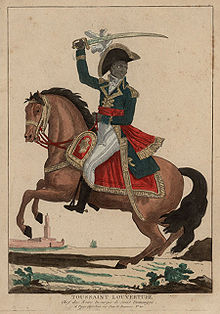
Who was the leading general of the Haitian Revolution?
Napoleon Bonaparte
Jean Jacques Dessalines
Hidalgo
Toussaint L'Ouverture
One effect of industrialization on Meiji Japan was that it
strengthened the power of the Shogunate
decreased the level of pollution
modernized transportation
increased the number of small farms
How did militarism lead to WW1
Countries wanted to invade other countries in order to take over more land and thus boost economy
Countries went into fight because they were more confident of themselves to be involved in wars
Due to the quick expansion and development of the armies, tension grew between countries because once they got stronger, it’s only a matter of time for someone to decide to use them for something.

What is collectivization?
Increasing the kulak population
Special projects like the building of the Moscow underground
The merging of small private farms into large state controlled farms known as kolkhoz
The merging of smaller factories into larger super industries
Which Soviet policy did collectivization of farms fall under?
Lenin's new economic policy
Stalin's five year plans
Brezhnev's policy of detente
Gorbachev's policy of glasnost
Why did Holomodor (Ukrainian Famine 1932-33) occur?
to punish the Bolsheviks for not voting
to punish the Ukrainian farmers for resisting collectivization
to punish the Soviet farmers for growing the wrong crop

The organization whose members agreed to mutually defend other Communist nations is called--
Korean Pact
Warsaw Pact
NATO
Satellite Nations

Which foreign policy aimed at preventing Communism from spreading?
Containment
NATO
Cuban Missile Crisis
Berlin Airlift
Which is not included in the 12 founding countries of NATO
Luxembourg
USA
Portugal
Russia
NATO stands for
North Atlantic Treaty Organization
North Atlanta Treaty Organization
National Atlantic Thirty Organization
North Atlantic Treaty Organizations
Who was the original "enemy" of NATO?
Soviet Union
USA
Germany
Japan
The fast growth of something
Prominately
Proliferation
Precipitous
Taper

Which of these describes the "Arms Race?"
The United States and Soviet Union competing to make superior sattelites
The US and Soviet Union fighting over space technology
The US and Soviet Union competing to make more powerful nuclear weapons
The population boom competition between the US and Soviet Union
Which of Gorbachev's programs created more openness, more public participation in government, and greater individual rights were given to Soviet citizens?
glasnost
perestroika
democratizatsiya
shock therapy
Which political leader introduced programs that moved the USSR away from totalitarianism, and increased economic freedom and political rights?
Mikhail Gorbechev
Joseph Stalin
Boris Yeltsin
Vladimir Putin
How did the Space Race and arms race contribute to the collapse of the Soviet Union?
Both were expensive programs that put a strain on the country's economy.
There were not enough military bases to support the programs.
The US used espionage to steal the technology from both programs.
The USSR did not have the resources to develop the technology needed for the programs.

Which of the following conclusions can be made based on the poster above?
A. Jewish people in Germany were more likely to enlist in the military.
B. The Nazis blamed Aryan businessmen for the start of World War II.
C. Most Germans supported the actions that led to the start of World War II.
D. Nazis used propaganda to blame Jews for the war and justify the Holocaust.

Which of the following best explains the events portrayed on the map above?
A. Germany was bound by the terms of a nonaggression pact.
B. Germany violated many of the limitations set by post World War I treaties.
C. German citizens advocated for peaceful relations with neighboring nations.
D. German military tactics were largely unsuccessful following their forced demilitarization.

Which of the following describes the most significant consequence of Germany invading the Soviet Union?
A. New military equipment was developed to meet the demand of a continuously escalating conflict.
B. Germany became engaged in a two-front war and provided an opportunity for Soviet territory to expand.
C. British and American forces were significantly weakened by having to divide troops in the East and West.
D. German forces became less vulnerable to attack and made it clear that they were capable of dominating Europe.
Which of the following is a cause of the French Revolution?
unemployment and poverty
the third estate had no power
Enlightenment Ideas
all of the above
The Declaration of Rights of Man and of the Citizen and the Declaration of the Rights of Woman and the Female citizen are directly influenced by which event?
WWI
Bombing of Pearl Harbor
French Revolution
Scramble for Africa
The goal of SImon Bolivar was to...
Conquer Africa
Unite South America
Become the new King of France
Defeat Germany in WWII
Simon Bolivar's actions were most likely influenced by the ideas of ....
Joseph Stalin
Enlightenment Philosophers
King Louis XVI
all of the above
What was the result of the Irish Potato Famine?
Many people left Ireland to live in other Countries
England continued to take food and grain from the Irish
Many Irish people starved to death
all of the above
Which characteristic of the Industrial Revolution most directly contributed to the health concerns?
Increase in productivity
Population growth in cities
More job opportunities
all of the above
Which action did Marx and Engels predict would change the conditions from the Industrial Revolution
The upper classes gaining more wealth and power
A peaceful protest of slaves
The Rise of Fascist leaders
A revolution led by the proletariat (working class)
What was the result of the scramble for Africa?
The new boundaries divided cultures
Warfare increased
The African people were taken advantage of
all of the above

What was Lin Zexu’s purpose for writing this letter to Queen Victoria?
Convince Britain to sell more Opium in Chine
Stop Britain from importing Opium into China
Ask Britain for a 50/50 split of the Opium profits
Ask Britain to sell Opium at a lower price
What was the impact that new technology had on WWI?
The weapons and technology made the war end faster
The weapons made the war more humane
more death and destruction
very little impact

Why did Haitian Revolutionary leaders create this document?
To establish laws, to protect the rights of citizens
to establish equality
to abolish slavery and protect property
all of the above
Father of Communism
Karl Marx
Vladimir Lenin
Joseph Stalin
Friedrich Engels
A nationalist/philosopher from India, this man was a spiritual and moral leader favoring India's independence from Great Britain. He practiced passive resistance, civil disobedience and boycotts to generate social and political change.
Jawarhalal Nehru
Muhammad Ali Jinnah
Mohandas K. Gandhi
Mao Zedong
17th century English philosopher who opposed the Divine Right of Kings and who asserted that people have a natural right to life, liberty, and property.
Karl Marx
Simon Bolivar
John Locke
Voltaire
Head of the Soviet Union from 1985 to 1991. His liberalization effort improved relations with the West, but he lost power after his reforms led to the collapse of Communist governments in eastern Europe.
Joseph Stalin
Leonid Brezhnev
Mikhail Gorbachev
Mao Zedong
French general; Overthrew the Directory; Crowned himself emperor in 1802 and attempted to spread the revolution across most of Europe; Blundering mistake to invade Russia
Robespierre
Napoleon
Louis XVI
Marquis de Lafayette
Vietnamese communist statesman who fought the Japanese in World War II, the French until 1954, and South Vietnam & the U.S. until 1975 (1890-1969)
Ho Chi Minh
Mao Zedong
Mohandas K Gandhi
Karl Marx
The most important military leader in the struggle for independence in South America. Born in Venezuela, he led military forces there and in Colombia, Ecuador, Peru, and Bolivia.
Toussaint L'Ouverture
Napoleon
Simon Bolivar
Father Miguel Hidalgo
Communist dictator of the Soviet Union; Took power after Lenin's death; 5 year plans, collectivization, and Great Purge; Defeated NAZI Germany in WWII; Started the Cold War.
Mikhail Gorbachev
Mao Zedong
Joseph Stalin
Fidel Castro
President of the Turkish Republic. Known for modernization and westernization of Turkey following WWI
Mustafa Kemal (Ataturk)
Mohandas K Gandhi
Nelson Mandela
Saddam Hussein
Dictator of Germany, implemented Fascism and caused WWII and the Holocaust.
Adolf Hitler
Napoleon
Joseph Stalin
Benito Mussolini
The increased flow of trade, people, technology, culture and ideas among countries.
Colonization
International trade
Globalization
Decolonization
Increased trade gives people more...
debt
goods
services
barriers
Globalization increases the spread of _____ culture
Southern
Eastern
Western
Northern
The action or process of a state withdrawing from a former colony, leaving it independent.
Decolonization
Coupe
Colonization
Globalization increases the replenishment of natural resources
True
False
This group settles trade disputes among member nations
OPEC
WTO
United Nations
Multinational corporations operate in ___ countries in order to sell throughout the world.
one
two
many
This group promotes free trade
OPEC
WTO
United Nations
A cartel of oil producing nations
OPEC
WTO
United Nations
Globalization is most associated with domestic trade
true
false
Globalization has been rapidly increasing since
1990
1909
1900
The action or process of settling among and establishing control over the indigenous people of an area.
Decolonization
Coupe
Colonization
Globalization has increased due to
raised trade barriers
new trade organizations
increased communication
resource depletion
Spread of a disease worldwide
Endemic
Epidemic
Pandemic
Panoramic
One characteristic of apartheid, which was practiced in South Africa, is
forced migration of blacks to other nations
integration of all races in society
an open immigration system
segregation of the races
The South African government’s policy of racial separation between 1948 and 1994 was called
Pan-Africanism
democratization
apartheid
suffrage

