
 Worksheets
M5 Church and Society in Western Europe
Total questions: 124
Worksheet time: 1hrs 26mins


The Black Plague was thought to be brought to Western Europe through the —
trade routes
Crusades
Mongol invasions
Viking raids
Because of the Black Death —
people entered into feudal agreements for protection.
Africa became the most powerful continent.
people lost faith in the Church.
all monarchs of Europe and Asia died.
- Basic rights of citizens
- Rule of law
- Representative assemblies
Why is the Magna Carta an important document in history?
It was the first document to place limits on the king's power
It outlawed feudalism and gave voting rights to all citizens
It established Parliament as the nation's legislative body.
It determined England's physical boundaries
How did the Hundred Years’ War affect the development of English national identity?
It caused the English to unite against the French invaders.
It led to the independence of England from the Norman French.
It divided England and France into separate kingdoms for the first time.
Which statement describes the relationship between a vassal and his lord?
The vassal provided military advice in exchange for food.
The vassal received a salary in return for military service.
The vassal received land in exchange for providing military service.
Which group had the least liberties in medieval society?
serfs
nobles
artisans
merchants
Against whom did King Richard the Lionheart fight for control of the Holy Land, and what was the outcome?
King Richard the Lionheart fought Saladin, but he did not regain control of the Holy Land.
King Richard the Lionheart fought Alexius Comnenus, and he regained control of the Holy Land.
King Richard the Lionheart fought King Philip II, but he did not regain control of the Holy Land.
Who started the First Crusade by giving a speech urging church leaders and the people to expel Muslim invaders from the Byzantine Empire?
Urban II
Louis XIV
Richard the Lionheart
Saladin the Magnificent
In what medieval document were the rights of the individual first recognized?
The English Bill of Rights
The Magna Carta
The Mayflower Compact
Which leader recaptured Jerusalem in 1187?
Saladin
Pope Urban II
King Richard
Joan of Arc
Which statement describes the impact of the Black Death in Europe?
It killed millions and contributed to major economic changes.
It killed thousands of people and had a minor effect on society.
It killed most of the population and resulted in mass conversion to a new religion.
In order to call people to arms, Pope Urban II appealed to people's Christian religion, need for salvation, and what else?
He pointed out that the Holy Land was very wealthy and ripe for the taking
He pointed out that the summers were nicer
Which of the following was true of the Church during the Middle Ages?
It unified people with a sense of security and belonging.
It had little political authority to guide people’s conduct.
It provided each person with a different path to salvation.
It created division among people in the same manner as feudalism.
Which of the following was a problem that troubled the Church during the medieval period?
Many bishops participated in the practice of selling positions in the Church.
Many people refused to pay tithes to the Church.
Many bishops cared more about their spiritual duties than their duties as feudal lords.
Many priests refused to marry and have families even though the Church encouraged it.
Which of the following was true of the Model Parliament?
It was divided into the House of Commons and the House of Lords.
It helped to strengthen the great lords.
It was made up of only nobles and bishops.
It included commoners in the decision-making process of government.
Which of the following effects did the Great Famine have on society?
It led to people having more weakened immune systems.
It caused an increase in population.
It resulted in people relying more on livestock than on grain.
It caused more people to become farmers to increase food production.
How did warfare change during the Hundred Years’ War?
Archers with longbows became more important to the army.
Armies realized that they needed more soldiers to gain victories.
Soldiers on horseback became the most important part of the army.
Armies began to rely more on heavily armored knights.
Which of the following statements is true of the First Crusade?
The Crusaders captured Jerusalem in the First Crusade.
The Crusaders did not reach the Holy Land.
The Crusaders organized to recapture the city of Edessa.
The Crusaders were led by Philip II, Frederick I, and Richard the Lion-Hearted.
Which of the following statements is true of the Second Crusade?
The Crusaders organized to recapture the city of Edessa.
The Crusaders captured Jerusalem in 1099.
The Crusaders attempted to regain the Holy Land from Saladin.
The Crusaders looted the city of Constantinople.
Which of the following statements is NOT true of the Third Crusade?
The Crusaders looted the city of Constantinople.
The Crusaders attempted to regain the Holy Land from Saladin.
The Crusaders were led by Philip II, Frederick I, and Richard the Lion-Hearted.
Which pope was responsible for inciting the First Crusade?
Urban II
Gregory VII
Alexander III
Adrian IV
What practice did Pope Gregory VII and Henry IV disagree on?
Lay Investiture
Simony
Papal Rule
Crusades
During their time in power, which English monarch implemented a jury system and established a unified body of law that became known as Common Law?
Henry II
Edward I
Hugh Capet
King John III
This pope banned the practice of Lay Investiture, setting off a dispute with Henry IV that led to Henry's excommunication and the pope's eventual exile.
Gregory VII
Urban II
Henry II
Saladin II
A Kurdish warrior/ Muslim leader responsible for capturing Jerusalem around 1187. Negotiated a truce with Richard the Lion-Harted which allowed Christian to freely visit the city.
Saladin
al-Khawzimi
Alexius II
Safavid II
The English ruler who signed the Magna Carta to appease rebellious nobles.
King John
Henry IV
Edward II
Phillip IV
How were merchant guilds different from craft guilds?
Merchant guilds controlled the number of goods that were traded.
Merchant guilds focused on supervising the training of new workers.
Merchant guilds prevented people from joining a profession.
Merchant guilds set standards for the quality of work.
What was known as 'everyday language'?
Vernacular
Simony
Wordspeak
Verbatim

This practice involved kings appointing and installing bishops with spiritual authority.
simony
excommunication
lay investiture
heresy
What allowed for the people to increase food protection and were able to better resist disease.
Dr. House
Three Field System
Stronger faith in the Church
More factories
These offered economic and social opportunities and allowed serfs to become free.
Manors
Medieval towns
Fiefs
Vassals
Excommunication is
banishment from the Church
when many sacraments and religious ceremonies cannot be performed in the entire country.
religious officials
a ceremony in which kings and nobles appointed church officials
An interdict is
banishment from the Church
when many sacraments and religious ceremonies cannot be performed in the entire country.
religious officials
a ceremony in which kings and nobles appointed church officials
A guild is
a device used to decapitate someone
a piece of land gifted by a king
an organization of individuals in the same business striving to improve the economic and social conditions of its members
a letter issued by a bank allowing the bearer to withdraw a specific amount of money from the bank.
A letter of credit is
a device used to decapitate someone
a piece of land gifted by a king
an organization of individuals in the same business striving to improve the economic and social conditions of its members
issued by a bank allowing the bearer to withdraw a specific amount of money from the bank.

English king who fought Saladin in the Third Crusade
Urban II
Richard the Lion-Hearted
Saladin
Thomas Aquinas

The scholar who argued that the most basic religious truths could be proved by sound reasoning
Urban II
Saladin
Henry II
Thomas Aquinas

Duke of Normandy who invaded England in 1066 and claimed the English crown
Urban II
Saladin
William the Conqueror
Henry II

The founder of the dynasty that ruled France from 987–1328
Urban II
Saladin
Henry II
Hugh Capet

One of the most powerful Capetian kings
Urban II
Saladin
Henry II
Philip II

English king who added French lands to English holdings by marrying Eleanor of Aquitaine
Urban II
Saladin
Henry II
Philip II

Bohemian scholar who taught that the Bible was the final authority for Christian life
Urban II
John Wycliffe
Henry II
Jan Hus

English scholar who argued that the Bible was the final authority for Christian life
Urban II
John Wycliffe
Henry II
Jan Hus

The law of the Church
Clergy
Sacrament
Canon Law
Holy Roman Empire

The style of architecture of the cathedrals during the Middle Ages
Lay Investiture
Simony
Gothic
Crusade

The practice of selling positions in the church
Lay Investiture
Simony
Gothic
Crusade

A merchant-class person who lived in a town
Three-Field System
Guild
Commercial Revolution
Burgher

The expansion of trade and changes in business practices
Three-Field System
Guild
Commercial Revolution
Burgher

A body of rulings by English judges
Vernacular
Scholastics
Common Law
Magna Carta

Scholars who gathered and taught at universities
Vernacular
Scholastics
Common Law
Magna Carta

Everyday language
Vernacular
Scholastics
Common Law
Magna Carta

The city in France where the pope moved temporarily
Parliament
Estates-General
Avignon
Great Schism

The body of representatives that makes laws for a nation
Parliament
Estates-General
Avignon
Great Schism

A council of representatives that advise the French king
Parliament
Estates-General
Avignon
Great Schism

The division in the Church created by having popes in both Avignon and Rome
Parliament
Estates-General
Avignon
Great Schism

A period in the early 14th century when weather patterns changed and people starved
Great Famine
Bubonic Plague
Hundred Years’ War
Great Schism

A war between England and France that waged from 1337 to 1453
Great Schism
Bubonic Plague
Hundred Years’ War
Great Famine
The Hundred Years War was ...
a constant battle with fierce fighting and no periods of peace
a series of wars between the French and the English
A battle that lasted 116 years
100 years of war for the control of the Holy Land
Which Holy Roman emperor sought to control the wealthy cities of northern Italy
Henry IV
Frederick Barbarossa
Otto I
Charlemagne
This man was the first of the new Holy Roman emperors, lasting for nearly 1000 years.
Henry IV
Henry II
Otto I
Bismark
Who is the leader of the Catholic Church?
King of France
King of England
Holy Roman Emperor
Pope

Some of earliest churches built in the last parts of the Roman Empire are called?
Gothic Churches
Romanesque Churches
Lithuanian Architecture
Etruscan Architecture
Historians sometimes call the Middle Ages in western Europe the
Age of Faith.
Age of Reason.
Age of Exploration.
Age of Enlightenment.
How was the feudal system changed by the Black Death?
The nobility started to use slaves instead
The Black Death led to an increase in peasant population
The feudal system become more successful than before
Who was the Magna Carta originally written to protect? Who did it eventually protect?
Nobles (Barons) / All English citizens

The __________ was a political entity in Europe during the Middle Ages that encompassed much of what is now Germany and Italy.

Who were the members of the medieval church responsible for religious duties such as conducting ceremonies, administering sacraments, and providing spiritual guidance?
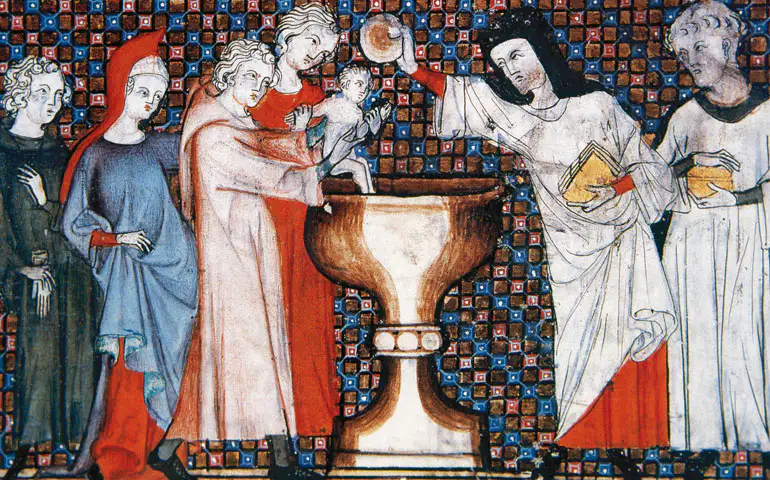
A religious rite or ceremony regarded as imparting divine grace, such as baptism or marriage, is known as a __________.
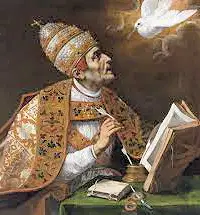
How did Gregory I increase the political power of the pope?
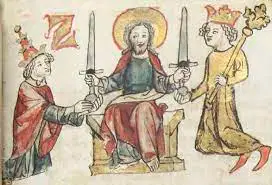
What was Gelasius’s two-swords theory?
the two-swords theory was a culinary technique used in medieval cooking
the two-swords theory referred to the belief in dual-wielding swords in battle
a mathematical concept involving the number two and the power of military alliances
there are two powers in the world: spiritual power held by the Pope and temporal power held by secular rulers

Why was Otto I the most effective ruler of Medieval Germany?
he gained power through conquests, alliances, reforms, and expanded the territory of the Holy Roman Empire
he was ineffective due to his lack of military prowess
he failed to establish any alliances with the Church
he did not expand the territory of the Holy Roman Empire
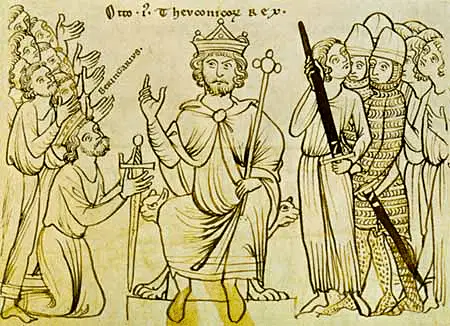
The Concordat of Worms, signed in 1122, resolved a power struggle between which two entities during the Middle Ages?
This refers to church officials.
clergy
schism
Papal States
emperors
Series of religious wars launched by European Christians against Islamic Muslims to win back the Holy Land
Crusades
War of the Worlds
War of the Roses
War on Terrorism
This term refers to when someone buys an item now but will pay for it later
Merchant
Credit
Trade
Commerce
An association of people who worked at the same craft or trade is known as a what
Guild
Trade
Apprentice
Merchant
This refers to someone involved with the buying and selling of goods
commerce
guild
merchant
apprentice
This was the increase in economic activity at the end of the Medieval period with an increase in trade and emergence of towns/cities again
Merchant Trade
Silk Road
Economic Bust
Commercial Revolution
List the correct hierarchy of the Roman Catholic Church.
Pope, Cardinal, Bishop, Priest
Priest, Bishop, Cardinal, Pope
Bishop, Priest, Cardinal, Pope
Cardinal, Pope, Priest, Bishop
The First Crusade got started when the Seljuk Turks did what?
Prevented Christians from entering Jerusalem
Attacked the Catholic city of Rome
Burnt down the city of Jerusalem
How many of the crusades are considered important?
4
7
9
Why did people join in fighting in the Crusades?
Knights liked to fight and fighting in the Crusades was not a sin.
People could keep what they plundered.
They thought it would help them get into heaven.
All of these answers
They wanted to retake the Holy Land from Muslims.
What happened during the first crusade?
Crusaders refused to go to Jerusalem because it was far away from their homes.
Crusaders met in constantinople, they killed many jews and muslims along the way and some crusaders stayed behind and founded Palestine.
Crusaders met England and they went to Jerusalem by boats.
What was the primary motivation for the Crusades?
political
economic
social
spiritual
What inspired the Third Crusades?
A disagreement between the Pope and the Monarchy.
Egypt was a center of Muslim power.
Saladin took control of Jerusalem.
Expanding the Empire.
Pope Urban II wanted to recapture the Holy Lands so that...
Christians going on pilgrimages to visit the Holy Land would be safe.
Muslims had the right to visit the Holy Lands.
the Byzantine emperor could be defeated.
Jerusalem could remain in the hands of the Turks.
a Muslim leader name Saladin began a major campaign against Jerusalem that started the...
First Crusade.
Second Crusade.
Third Crusade.
Check ALL that are effects of the Crusades.
Weakened Pope and Nobles
Strengthened the monarchs
Strengthened the Byzantine Empire
Bitterness between Christians, Muslims, and Jews
True or False: The Crusades continued on and off for over 200 years.
True
False
Which region of Europe did most Crusaders come from?
Western Europe
Southern Europe
Syracuse
Northeastern Europe
About how long did it take for Europeans to travel to the Holy Lands for the Crusades?
three hundred years
three years
two and a half weeks
six months

Farmers used a new farming system called...
The Two Field System
The Three Field System
The Black Death probably began from the plains of
Africa
Europe
Asia
America
Pneumonic plague disease is caught through breathing and it attacks the lungs.
True
False

