
 Worksheets
Human Body System Test - 3, 4, 5
Total questions: 42
Worksheet time: 23mins
Name
Class
Date
1.
Sofia’s favorite meal is breakfast, and she is careful to include healthy components along with her favorite foods. She knows breakfast helps to keep her energy levels up until lunch.
The process in which your body breaks down food into nutrient molecules is__________________. __________________ are the substances in food that provide the raw materials your body’s cells need to carry out all their essential processes.
a)
digestion; Enzymes
b)
respiration; Nutrients
c)
digestion; Nutrients
d)
absorption; atoms
2.
Pearl’s grandmother had a mild form of inflammatory bowel disease, which occurs in the large intestine. What is the function of the large intestine?
a)
produces bile and filters blood
b)
produces chyme to be delivered to the stomach
c)
reabsorbs water and compacts wastes in readiness for elimination
d)
reabsorbs nutrients and produces urine
3.
Sophia's digestive system helps her body get energy from food. How do the nutrients from food get to the body's cells?
a)
The nutrients are distributed by the digestive system to the parts of the body that need them.
b)
The nutrients are picked up and transported around the body by blood from the circulatory system.
c)
The nutrients are absorbed directly into the cells that need them.
d)
The circulatory system brings nutrients to the digestive system to be processed for the cells.
4.
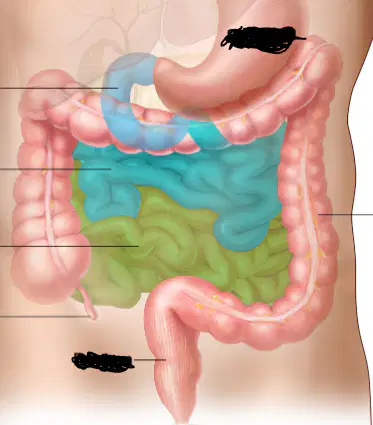
There are many organs that make up the digestive system. Which organ is shown below in blue, teal and green?
a)
Esophogus
b)
Large Intestine
c)
Small Intestine
d)
Stomach
5.
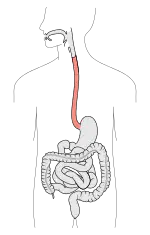
Identify the organ highlighted in red.
a)
Esophagus
b)
Large Intestine
c)
Small Intestine
d)
Stomach
6.
What are the two main types of digestion?
a)
Mechanical & Chemical
b)
Chemical & Blending
c)
Smushing & Smashing
7.
Which is an example of peristalsis?
a)
The process of pulling water out of food when in the large intestines
b)
When smooth muscle tissue moves food from the esophagus toward the stomach
c)
Another name for a heart attack
d)
Running out of breath when exercising
8.
Enzymes are used by the ____________ system to _____________ breakdown food.
a)
digestive; chemically
b)
digestive; mechanically
c)
respiratory; chemically
d)
none of the above
9.
The majority of chemical digestion and nutrient absorption takes place in the
a)
esophagus
b)
small intestine
c)
mouth
d)
heart
10.
How are the muscular and digestive system related? Select TWO (2).
a)
The Digestive system breaks down muscles.
b)
Digestive system breaks down food into nutrients that will get sent to the muscles for energy.
c)
The Muscular system excretes chemicals to help the breakdown of food
d)
The Muscular system helps during the mechanical breakdown of food.
11.
After a long soccer practice, Jack felt his pulse increase. As he cooled down, his pulse began to slow. Since he’d been studying the circulatory system in science class, he knew why his pulse slowed.
What is the main structure of the circulatory system that pumps the blood move through the body?
a)
Artery
b)
Heart
c)
Lungs
d)
Lymph vessels
12.
Which direction do arteries carry blood?
a)
Away from the heart
b)
Towards the heart
c)
Up the body (Xylem)
d)
From the lungs.
13.
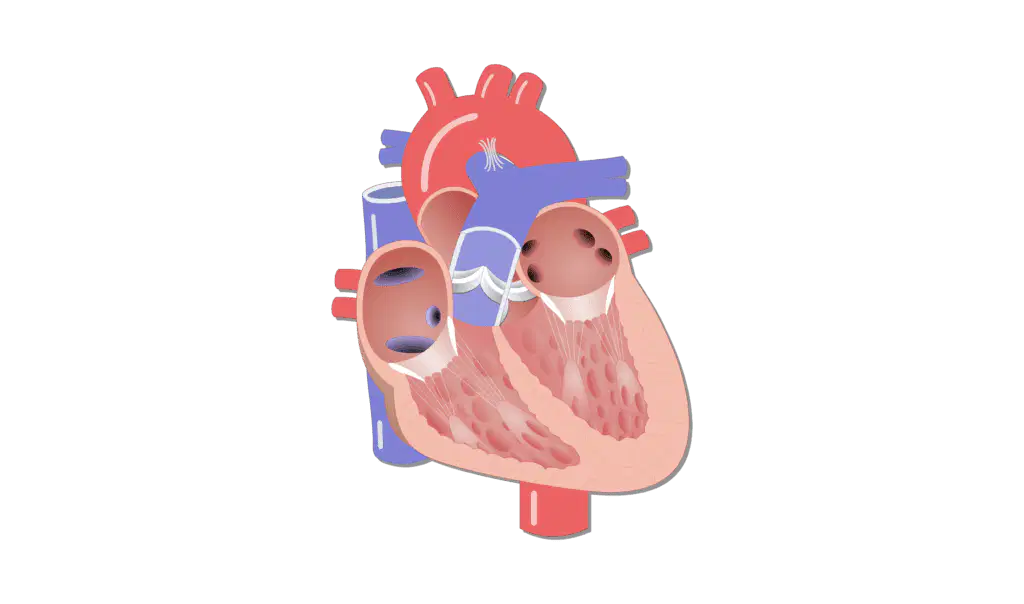
There are four main chambers in the human heart. Which 2 chambers are on the top?
a)
Right atrium and left atrium
b)
Right ventricle and left ventricle
c)
Left ventricle and right ventricle
d)
There is only one big ventricle on the top
14.
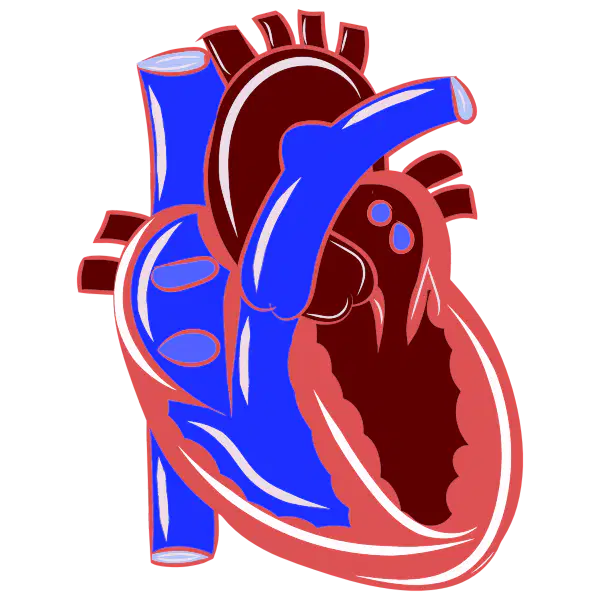
Which is the correct order of blood flow, starting in the right atrium?
a)
Right Atrium, Left Atrium, Left Ventricle, Right Ventricle
b)
Right Atrium, Right Ventricle, Left Atrium, Left Ventricle
c)
Right Atrium, Left Ventricle, Left Aorta, Right Ventricle
d)
Left Ventricle, Bottom Chamber, Left Atrium, Left Chamber
15.
What carries blood back to the heart?
a)
Arteries
b)
Veins
c)
Capillaries
d)
Small Intestines
16.
What type of cell carries oxygen and nutrients around the body?
a)
red blood cells
b)
white blood cells
c)
Nerve cells
d)
Energy cells
17.
Where does low-oxygen blood travel to pick up oxygen?
a)
Stomach
b)
Lungs
c)
Gall Bladder
d)
Brain
18.
What color is human blood?
a)
red when oxygenated and blue when deoxygenated
b)
red (bright red when oxygenated and dark red when deoxygenated)
c)
it depends on the age of the person
d)
it depends on the person's activity level
19.
What is diffusion?
a)
When material moves from areas of high concentration to low concentration and uses NO ENERGY
b)
When material moves from low concentration to high concentration and USES ENERGY
c)
When material moves from high concentration to low concentration and USES ENERGY
d)
When material moves from areas of high concentration to low concentration and USES ENERGY
20.
Mr. Scott is at the pool swimming laps. As he swims, carbon dioxide moves rapidly out of his lungs. Simultaneously, waste diffuses out of his cells and into his blood, which is then filtered by his kidneys.
What THREE (3) body systems are described in the scenario described above?
a)
Respiratiory
b)
Circulatory
c)
Excretory
d)
Digestive
e)
Endocrine
21.
John cut his arm during his lacrosse game. What part of the blood will help him create a scab and heal his wounds?
a)
Red Blood Cells
b)
Platelets
c)
White Blood Cells
d)
Plasma
22.
Blood cells that help fight diseases and are part of the immune system are called:
a)
Red Blood Cells
b)
Platelets
c)
White Blood Cells
d)
Plamsa
23.
The ___________filters blood to produce urine and are part of the __________ system.
a)
lungs; circulatory
b)
rectum; digestive
c)
kidneys; excretory
d)
gall bladder: Nervous
24.
Lucy learns that the lymphatic system is part of the circulatory system. She wants to learn more about it and reads more carefully about the part it plays in circulation. What is the role of lymph nodes in the lymphatic system?
a)
They are found in the plasma and help fight off bacteria and other harmful microorganisms.
b)
They filter lymph by trapping harmful bacteria and other microorganisms in the fluid.
c)
They transport lymph to where it is needed in the body.
25.
Which is an example of diffusion in the the circulatory/respiratory systems?
a)
Blood that is high in carbon dioxide loses CO2. Oxygen diffuses into low-oxygen blood.
b)
Blood that is carrying a lot of carbon dioxide gains more CO2.
c)
Oxygen diffuses into the heart so the heart can pump it around the body
d)
CO2 moves into the cells of the stomach and other organs
26.
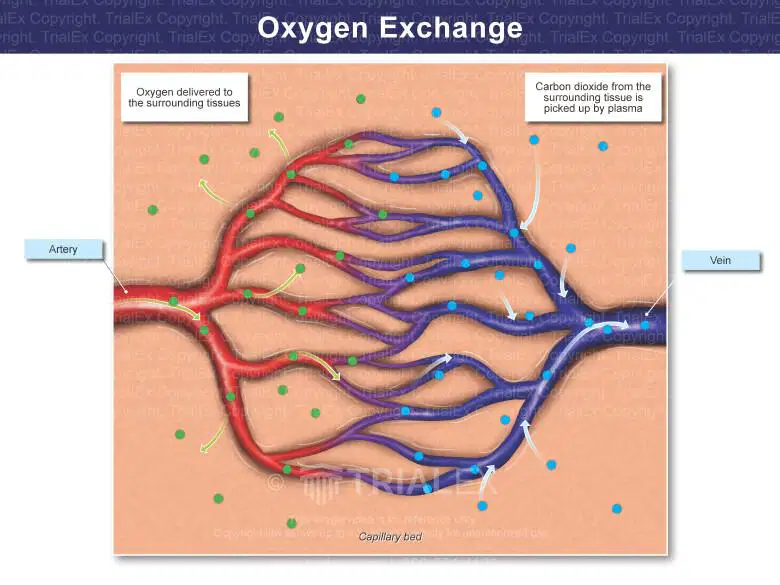
Our blood contains both oxygen and nutrients that are traded for waste and carbon dioxide in cells. Where does this exchange happen?
a)
Only in the lungs
b)
In the heart and stomach
c)
Arteries
d)
Capillaries
27.
What are the two parts of the central nervous system (CNS)?
a)
Spinal Cord & Liver
b)
Hypothalamus & Brain
c)
Brain & Spinal Cord
d)
Peripheral Nerves & Eyes
28.

Embiid scoops up the ball, turns around, and makes a jump shot from the baseline These actions are all controlled by the:
a)
Somatic Nervous system
b)
Autonomic Nervous System
c)
Endocrine System
d)
Excretory System
29.
Robert picks up a metal pan lid that was covering a pot of boiling water, and he drops it immediately. Cells in his fingers sent the message that his finger had touched heat.
This response is automatic, occurs without a conscious thought and is example of a(n):
a)
reflex
b)
instinct
c)
synapse
d)
neuron
30.
Digestion and heart rate are examples of actions controlled by the:
a)
Autonomic Nervous System
b)
Somatic Nervous system
c)
CNS
d)
brain
31.
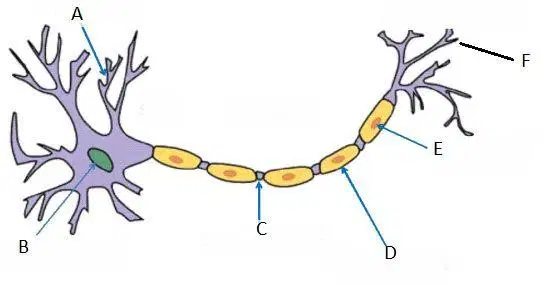
The structure labeled A in the picture below is called a:
a)
axon
b)
dendrite
c)
myelin sheath
d)
nucleus
32.
Which are types of neurons? (Select all that apply.)
a)
reflex neuron
b)
motor neuron
c)
sensory neuron
33.

Which is true of the cerebrum?
a)
The cerebrum is divided into 3 lobes.
b)
The cerebrum is the largest part of the brain.
c)
The cerebrum consists of mostly muscle.
d)
The cerebrum controls balance.
34.
The endocrine system regulates the body by releasing:
a)
Electrical signals
b)
Hormones
c)
Blood
d)
Lymph
35.
What type of organ produces and releases chemicals through ducts or into the blood stream?
a)
Glands
b)
Spinal Cord
c)
Brain
d)
esophagus
36.
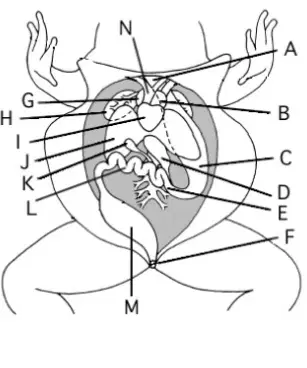
Together, the organs labeled C, L, and M, make up the ___________ system.
a)
circulatory
b)
digestive
c)
nervous
d)
respiratory
37.
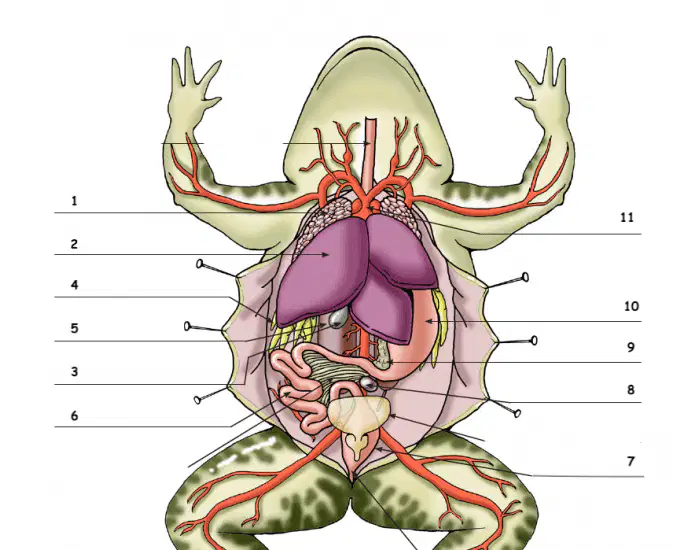
What organ is labeled "2"?
a)
heart
b)
liver
c)
lungs
d)
stomach
38.
Which do frogs have that humans do not?
a)
lungs
b)
fatty bodies
c)
kidneys
d)
connective tissue
39.
Match the following organs to their function
a)
absorbs water
1.
large intestine
b)
transports food to the stomach
2.
esophagus
c)
absorbs nutrients
3.
small intestine
d)
makes bile
4.
liver
e)
makes insulin
5.
pancreas
40.
a)
Gallbladder
1.
stores bile
b)
esophagus
2.
carries food from the mouth to the stomach
c)
large intestine
3.
collect and stores waste, absorbs water from the waster and creates feces
d)
small intestine
4.
food continues to be broken down and nutrients are absorbed into the bloodstream
e)
liver
5.
Organ that makes bile
41.
In the digestive system, (a) digestion is performed by the teeth
In the stomach (b) is/are released which (c) proteins. In the (d) extra water is reabsorbed into the bond
Choose from the below words
mechanical
acid
denatures
large intestines
small intestines
enzymes
chemical
42.
The stomach contains liquid and pieces of chewed up (a) .
Choose from the below words
multiplying
damaged
food
carrots
100 %

