
 Worksheets
25-26 Topic 5 Test Review
Total questions: 20
Worksheet time: 10mins
Barnacles live in saltwater attached to sturdy objects such as rocks. All rocky surfaces in a bay are already covered with barnacles. This lack of surfaces to attach to is an example of _______________ acting as a _______________ factor that could stop the growth of the barnacle population.
space, limiting
climate, abiotic
biotic, water
one more (make sure there is a correct answer)
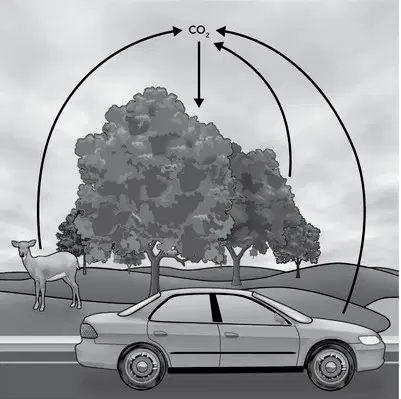
What could both add and remove carbon from the atmosphere in the model above?
car
insect
tree
deer
In a grassland ecosystem, nitrogen and other matter accumulate in animal waste. Which organisms return this matter to the ecosystem by decomposing the waste?
producers
decomposers
primary consumers
secondary consumers
For several years, a population of bats living in a cave has been decreasing in size. Which of the following factors could cause this decrease in the size of the bat population? Choose the 2 factors that apply.
decrease in predators
competition for shelter
increase in food supply
infection by a deadly disease
According to the Law of Conservation of Mass, there is a fixed amount of nitrogen on Earth. The nitrogen that exists in the air is fixed by _________________ in the root nodules. This allows it to exist in the soil. _______________ then use the nitrogen to make proteins and other complex compounds. When animals eat the plants, the nitrogen is transferred to their bodies. When these organisms die, the nitrogen is broken down by fungi and returned to the air by bacteria.
bacteria, plants
fungi, plants
animals, bacteria
bacteria, animals
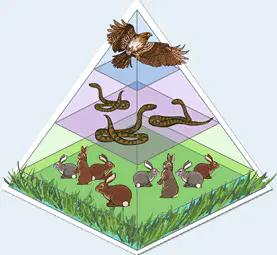
A desert ecosystem includes grasses, rabbits, snakes, and hawks. As you move up the energy pyramid of this ecosystem, each level has _______________ energy than the level below.
more
less
the same
Slippery bananas live on the forest floor of the humid forests of the Pacific Northwest. They consume and decompose a variety of materials, including small dead animals and decaying leaves. What term describes slippery bananas?
carnivores
consumers
decomposers
producers
For the organism and the energy transfer described, what energetic role is the organism playing within its ecosystem?
Fungi in a forest decompose dead trees.
carnivores
consumers
decomposers
producers

The diagram shows the food web of a forest ecosystem. Which organism has access to the least amount of energy?
grass
grouse
hawk
insect
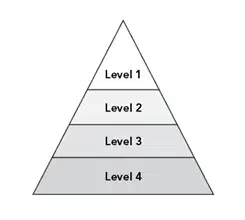
Choose the level of the food pyramid that represents the energy role of producers.
Level 1
Level 2
Level 3
Level 4
Which of the following activities would increase the amount of carbon dioxide in the atmosphere? Choose the 3 that apply.
Plants perform photosynthesis.
Eating a snack.
Cutting down trees in a forest.
Driving a car to the store.
Which part of the water cycle involves water changing from liquid to gaseous state?
precipitation
condensation
evaporation
reduction
A farmer spread a nitrogen-based fertilizer on a patch of grass where cows had recently grazed in the field. Why was it necessary to add a nitrogen-based fertilizer to the soil where there was a patch of grass?
Because nitrogen can only be “fixed” by lightning.
Because there are no decomposers on the farm.
Because bacteria released all the nitrogen into the air.
Because plants cannot use “free” nitrogen.
In what ways are plants involved in the cycles of oxygen and carbon?
photosynthesis, precipitation, nitrogen fixation
evaporation, protein production, decomposition
respiration, condensation, free nitrogen
photosynthesis, respiration, decomposition
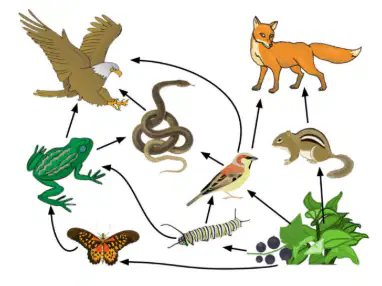
According to the food web, identify the 2 terms that describe the snake.
consumer
carnivore
producer
decomposer
herbivore
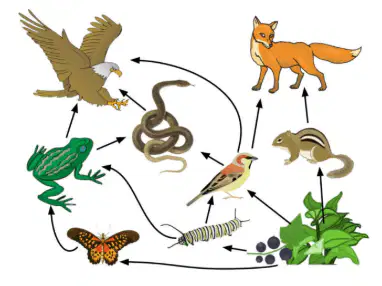
Analyze the food web to identify the 2 terms that describe the bird.
consumer
omnivore
producer
decomposer
herbivore
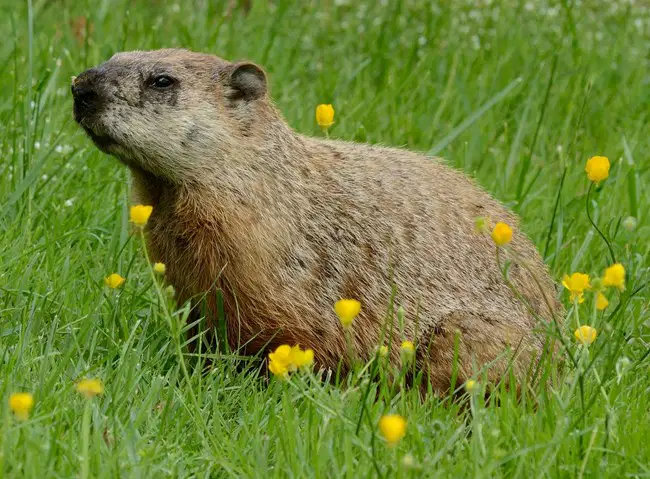
The marmots that inhabit a prairie environment drink water and depend on plants, including clover, for food. Which of the following terms describe both the water and the clover that marmots consume? Choose the 2 that apply.
limiting factors
both are abiotic factors
both are biotic factors
resources
A forest ecosystem has different levels of organization. Select the answer that shows the levels of organization of the ecosystem in order from the smallest to the largest level.
ecosystem, community, population, organism
organism, population, community, ecosystem
population, organism, ecosystem, community
community, ecosystem, population, organism
Carbon enters the forest from the atmosphere through the sugar-making process called ____________________.
cellular respiration
transpiration
photosynthesis
fermentation
Limiting factors cause population sizes to ______________.
increase
decrease
stay the same
have no effect

