
NEW
Font size
 Worksheets
Task Analysis
Total questions: 14
Worksheet time: 7mins
Which statement best defines task analysis in human-computer interaction?
A systematic study of user actions and cognition
A catalog of system features and constraints
A mapping of network components and protocols
A specification of business goals and metrics
In task analysis terminology, which option correctly differentiates a subtask from an operation?
Subtask is a goal; operation is a sequence
Subtask is a plan; operation is a desired end-state
Subtask contributes to a goal; operation is indivisible
Subtask is indivisible; operation contributes to a goal
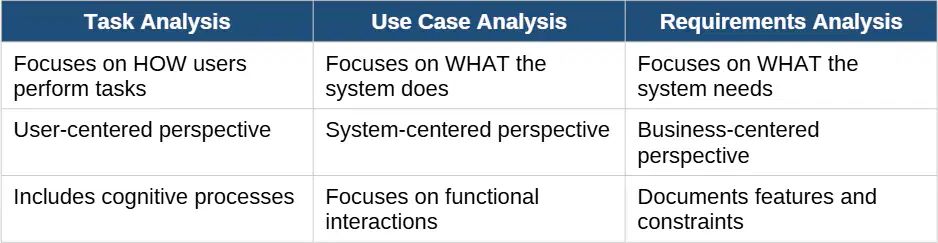
A team must design a login workflow. Which analysis approach is most appropriate if they need to understand how users perform the steps, including cognitive decisions?
Task analysis with user-centered perspective
Requirements analysis emphasizing system needs
Network analysis focusing on infrastructure
Use case analysis focusing on system functions
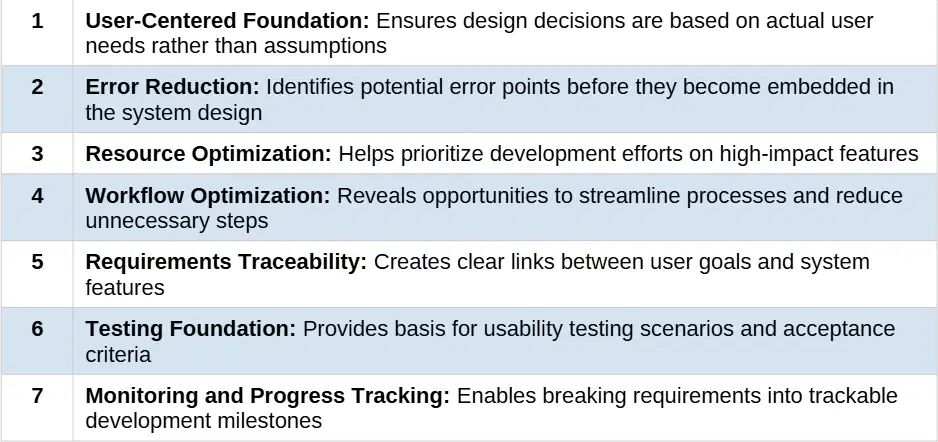
Which benefit of task analysis directly supports reducing defects before they reach users?
Resource optimization focusing on high-impact capabilities
Requirements traceability across user goals and features
Error reduction by identifying potential failure points early
Workflow optimization to streamline multi-step processes
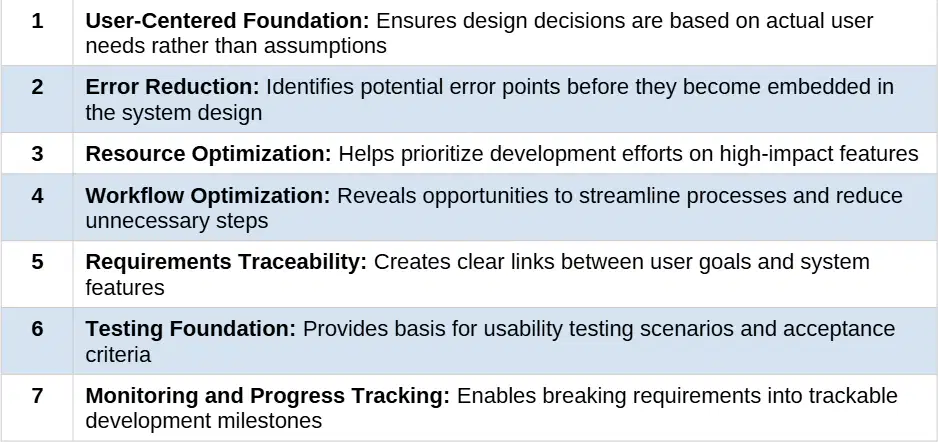
A team maps user workflows and removes unnecessary steps to cut cycle time. Which purpose or importance does this activity primarily address?
Facilitating communication among stakeholders
Testing foundation for usability criteria
Workflow optimization through streamlined processes
Monitoring and progress tracking milestones
Which approach is best suited for decomposing a complex procedure into subtasks with associated plans?
Cognitive Task Analysis for mental models
Goals, Operators, Methods, Selection Rules (GOMS) model for routine predictions
Hierarchical Task Analysis for structure
Critical Incident Technique for failures
A team must estimate routine task completion time and compare design alternatives for skilled users. Which method should they choose?
Goals, Operators, Methods, Selection Rules (GOMS) model for quantitative predictions
Cognitive Task Analysis (CTA) for expert knowledge elicitation
Critical Incident Technique (CIT) for high-impact incident focus
Hierarchical Task Analysis (HTA) for flexible hierarchical depth
In a safety-critical system review, investigators need to identify moments where success or failure hinges on specific user actions. Which approach fits best?
Cognitive Task Analysis (CTA) capturing mental decision processes
Goals, Operators, Methods, Selection Rules (GOMS) estimating performance time load
Hierarchical Task Analysis (HTA) focusing on task structure diagrams
Critical Incident Technique (CIT) revealing failure points and incidents
In Hierarchical Task Analysis (HTA), which component specifies the execution order and conditions among subtasks?
Goal component with user objective
Subtask component contributing progress
Plan component with sequencing rules
Operation component with underline

Which HTA notation element indicates an operation that cannot be further decomposed?
Numbered box for tasks
Underlined task label
Horizontal connecting line
Plan statement below
You are designing an HTA for a mobile app login. Which stopping rule best applies when decomposing the task?
Stop when every step has a plan statement
Stop after exactly three decomposition levels
Stop when further detail adds no value
Stop when operations are all underlined
In project monitoring, which HTA level best aligns with tracking daily standup items?
Goal (Level 0)
Subtask (Level 1)
Operations
Sub-subtask (Level 2+)
A team is evaluating HTA for a highly variable workflow with interleaved steps. Which limitation should they plan for?
Supports both design and evaluation activities reliably
Flexible depth to stop at appropriate level
May not capture parallel or interleaved activities effectively
Identifies bottlenecks and problem areas consistently
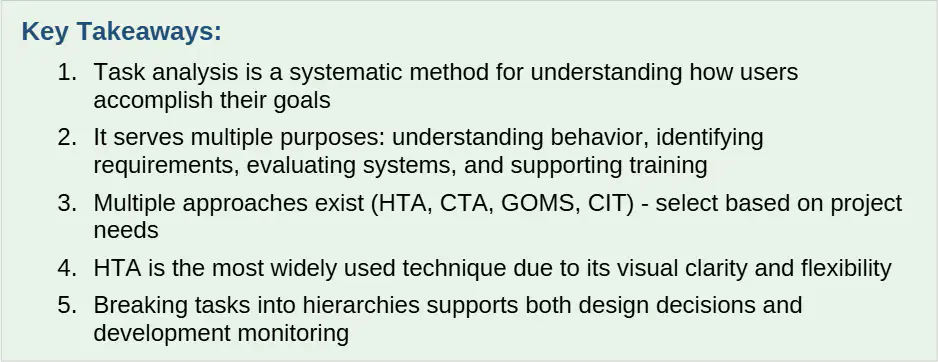
Which statement best summarizes why HTA is widely used in practice?
It replaces all other analysis methods entirely
It offers visual clarity and flexibility for tasks
It focuses solely on training system operators
It models cognitive processes with high fidelity

