
 Worksheets
Topic 2 Behavioral Approaches and Theories
Total questions: 30
Worksheet time: 23mins
Behaviorist theory asserts that development is composed of:
Fixed stages of cognitive growth
Biological maturation and genetic predispositions
Internal mental processes and subconscious desires
Observable behaviors learned through environmental experience
Which two theorists provided the foundation for the scientific study of observable and measurable behavior?
Erik Erikson and Jean Piaget
Ivan Pavlov and John B. Watson
Albert Bandura and B.F. Skinner
Lev Vygotsky and Urie Bronfenbrenner
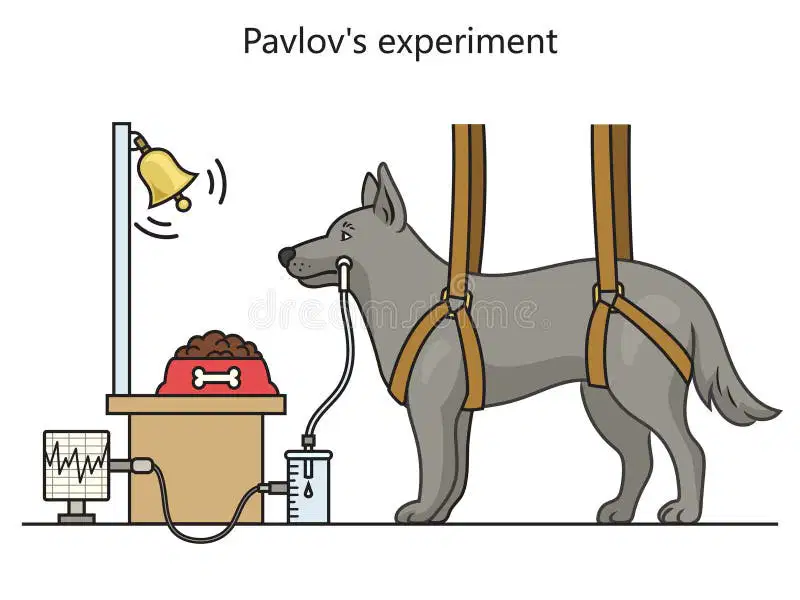
In Pavlov's experiment, what was the "unconditioned stimulus"?
Food
The bell
Salivation
The lab assistant
A previously neutral stimulus that eventually elicits a response after being paired with an unconditioned stimulus is called a ______.
Reinforcer
Modeled behavior
Conditioned stimulus
Negative punishment

What was the primary goal of Watson’s controversial "Little Albert" experiment?
To study how infants learn to walk
To observe social imitation in toddlers
To test the "tabula rasa" concept
To condition and control human emotions
In the "Little Albert" experiment, Albert became conditioned to fear the white rat because it was paired with ______.
a scary mask
a loud noise
a painful prick
the absence of his mother
According to the implications of classical conditioning, school phobia may develop if a student ______.
is not rewarded with stickers
fails to observe a symbolic model
relates negative emotional experiences with school
has no friends to imitate or role model in classroom
If a teacher counts down to twenty and the students clean up because they have associated the countdown with the instruction to clean, the countdown is a ______.
conditioned stimulus
unconditioned stimulus
neutral stimulus
negative reinforcer

B.F. Skinner’s Operant Conditioning is a form of learning where behavior changes based on _____.
consequences
biological maturation
observational modeling
internal thought processes
Which concept suggests that a person is like an "empty vessel" or "blank slate" to be filled by designed experiences?
Modeling
Tabula rasa
Reciprocal determinism
Vicarious reinforcement
What is the primary difference between operant and classical conditioning?
Operant focuses on the stimulus; classical focuses on the response
Operant focuses on the response; classical focuses on the stimulus
Operant involves animals; classical involves humans
Operant is cognitive; classical is biological
Stickers, toys, and food are examples of:
Social reinforcers
Nonsocial reinforcers
Symbolic models
Negative punishments
Which of the following is an example of a "social reinforcer"?
A smile or a hug
A piece of candy
Extra playtime
A gold star
"Negative Reinforcement" involves ______ something to ______ a behavior.
subtracting; strengthen
subtracting; weaken
adding; strengthen
adding; weaken
"Positive Punishment" involves ______ something to ______ a behavior.
subtracting; strengthen
subtracting; weaken
adding; strengthen
adding; weaken
If a teacher removes "gadget time" to stop a child from throwing a tantrum, this is an example of:
Negative reinforcement
Positive reinforcement
Negative punishment
Positive punishment
What is a common criticism of Skinnerian concepts in education?
They place too much emphasis on imitation
They ignore biological factors
They are too difficult to implement
They may depersonalize learning and treat people like puppets
Albert Bandura is famous for which experiment?
The Bobo Doll experiment
The Tabula Rasa experiment
The Little Albert experiment
The Salivating Dog experiment
According to Bandura, children acquire behaviors, thoughts, and feelings through ______.
trial and error
biological triggers
subconscious drives
observing and imitating others
Bandura’s research demonstrated that viewing aggression by ______ produces more aggressive behavior than viewing live adults.
peers
siblings
Cartoon characters
teachers and parents
Which of the following is NOT one of the four steps Bandura identified in his learning pattern?
Attention
Retention
Conditioning
Reproduction
In Bandura’s four steps, "retention" refers to ______.
being motivated by a reward
remembering what the model did
paying attention to a model
having the physical skill to copy the behavior
A "symbolic model" in social learning includes _____.
a teacher demonstrating a task
a peer playing next to the child
characters in books, films, or television
a verbal explanation of how to behave
Children are more likely to imitate people who are _____.
distant and strict
seen as weak or incompetent
very different from themselves
warm, loving, and seen as powerful
If a student shows a strong dislike for a specific academic subject because they were once humiliated by a teacher in that class, this is an example of:
classical conditioning of an emotional response
symbolic modeling from fictional or media-based characters
operant reinforcement of an avoidance behavior
vicarious learning through the observation of others
According to Bandura’s findings, which of the following is true regarding aggressive behavior and media?
Children only imitate people they know personally.
Filmed aggression has no measurable impact on children's behavior.
Watching live adults is more influential than watching cartoons.
Viewing aggression by cartoon characters produces more aggressive behavior than viewing live or filmed adults.
If a previously reinforced behavior (such as a child's tantrum) is consistently ignored and no longer receives the reinforcement of attention, the behavior will eventually decrease. This process is called ______.
negative punishment
positive punishment
negative reinforcement
positive reinforcement
Which of the following is an example of "negative reinforcement" in a classroom setting?
Giving a student extra recess time for finishing their work early.
Assigning extra homework to a student who disrupted the class.
Taking away a student's phone because they were using it during a lesson.
Allowing students to skip a required review session after they demonstrate mastery of the topic.
In the "Motivation" step of social learning, what factor makes a child more likely to imitate a model?
Seeing the model get punished.
The model being cold and distant toward the child.
The model being perceived as weak or incompetent.
Seeing the model receive a reward for their behavior.

What did Bandura and his colleagues demonstrate regarding "prosocial" behavior?
Viewing prosocial behavior can reduce displays of aggressive behavior.
Prosocial behavior is entirely determined by a child's temperament.
Prosocial behavior can only be learned through direct reinforcement.
It has no effect on aggressive children.

