
 Worksheets
Spring 2026 Benchmark Review
Total questions: 50
Worksheet time: 1hrs 5mins
In cellular respiration, (a) is broken down, (b) energy.
Catergorize the following molecules for the process that transforms solar energy into chemical energy.
carbon dioxide
water
sunlight
oxygen
glucose
Catergorize the following molecules for the process that transforms chmical energy into cellular energy.
carbon dioxide
water
ATP
oxygen
glucose
Choose the correct part of the Cell Cycle where DNA replication takes place.
Choose the correct part of the Cell Cycle where the cell is growing and preparing for division.
Order the steps of protein synthesis from beginning to end.
DNA unzips
TRANSCRIPTION
mRNA leaves the nucleus
TRANSLATION
protein is folded and modified
Match each biomolecule to its purpose
store and release energy, structural support of plants
carbohydrates
builds cell membranes, waterproof coverings, insulation
lipids
store genetic information
nucleic acids
cell transport, fight diseases, change rate of chemical reactions
proteins
Choose all TRUE statements.
Transcription occurs in the nucleus.
Translation occurs in the cytoplasm.
Transcription occurs on the ribosome.
Translation occurs in the endoplasmic reticulum.
Choose all TRUE statements.
DNA and all types of RNA are built of repeating monomers called nucleotides.
DNA and all types of RNA are built of repeating monomers called nucleic acids.
In DNA, adenine always pairs with uracil.
In DNA, adenine always pairs with thyamine.
What is the purpose of DNA replication?
To ensure genetically identical cells
To create more proteins
To use up excess ATP
To build subunits called nucleotides
Match each process to its correct description.
DNA makes an exact copy of itself
replication
DNA used to make a template of mRNA
transcription
mRNA used to determine order of amino acids
translation
What gas is produced during photosynthesis?
oxygen
carbon dioxide
glucose
water
Amino Acids are the
building blocks of proteins
monomers of nucleic acids
waterproof covering on cell membranes
enzymes that speed up chemical reactions
Categorize the different types of cellular respiration.
produces more energy
less efficient
requires oxgyen
does not require oxygen
produces ATP
begins with glucose
Choose the stage of mitosis where chromosomes are aligned at the equator of the cell.

What process is shown in this diagram?
mitosis
cell differentiation
meiosis
genetic mutations
What products of the light-dependent reaction of photosynthesis are used in the Calvin Cycle?
ATP
ADP
NADPH
NADP+
CO2
Which of the following is produced in the light-dependent reaction but not used in the Calvin Cycle?
ATP
NADPH
H2O
O2
When a person eats eggs, meat, or other sources of protein, how does their body use the protein to carry out protein synthesis?
The proteins are broken down into amino acids, then reassembled according to the person's DNA.
The proteins are broken down into amino acids and then absobed into pre-existing proteins.
The proteins are the same for all organisms, and just get reused.
The proteins are refolded into human proteins.
The proteins release amino acids and then the amino acids are changed into human amino acids.
Can matter be created or destroyed?
Yes
No
It depends
Sometimes
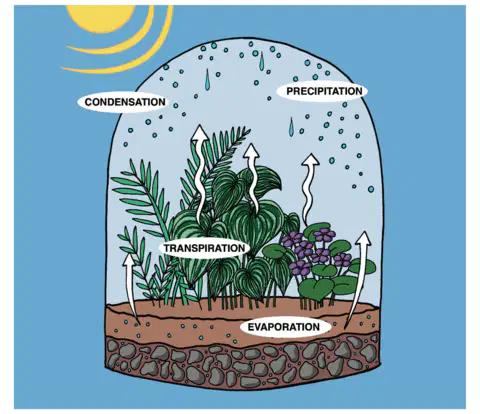
If I set up the terrarium pictured and measured the mass to be 1065 grams. Sunlight can enter the system, but nothing else can enter or exit the glass.
After 2 weeks, I measure the mass again. What should it be and why?
Equal to 1065 grams because no outside matter entered the system.
More than 1065 grams because plants did photosynthesis, creating glucose, which has more mass than carbon dioxide.
Less than 1065 grams because plants did photosynthesis, releasing carbon dioxide, which has no mass.
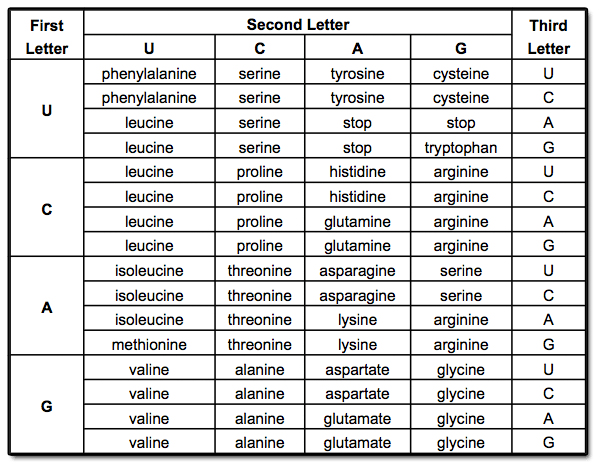
What was the original DNA that matched with this RNA sequence: AGU ACA ?
UCA UGU
AGT ACA
TCA TGT
AGU ACA
Complete the process of Transcription by using the following DNA sequence...
ATG CAG CCA
UAC GUC GGU
UTC GUC GGU
TAC GGG GGU
TAT GUC GGU

Using the codon chart, please indicate the amino acid sequence that will be produced from this mRNA sequence: AUG UUC GAU
GLU - PHE - ASP
MET - ARG - PHE
MET - PRO - ASP
MET - PHE - ASP
Do humans completely digest food while chewing?
Yes
No
Cellular Respiration converts nutrients from food into usable energy.
True
False
Human muscles produce glucose during exercise.
True
False
Match the biomolecules to their functions
store energy and form protective barriers in cell membranes
lipids
provide immediate energy to the body
carbohydrates
carry out cellular functions, speed up chemical reactions, build living things
proteins
code for proteins
nucleic acids
Select the part of the image below that is incorrect.
Label the components of the diagram.
Choose the arrow that shows photosynthesis.
Choose the arrow that shows respiration.
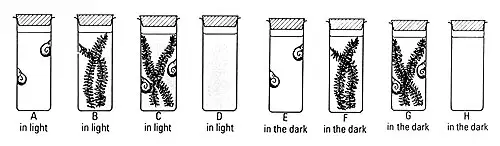
The image shows an experiment where students are measuring dissolved oxygen and carbon dioxide levels in different flasks. 4 flasks were placed in light and 4 were placedin the dark.
They placed the following in each flask:
A and E: 2 snails
B and F: 2 plants
C and G: 2 snails and 2 plants
D and H: water only
Which flask should have the most dissolved oxygen after 1 week?
A
B
F
C
G
The image shows an experiment where students are measuring dissolved oxygen and carbon dioxide levels in different flasks. 4 flasks were placed in light and 4 were placedin the dark.
They placed the following in each flask:
A and E: 2 snails
B and F: 2 plants
C and G: 2 snails and 2 plants
D and H: water only
Which flask should have the most carbon dioxide after 1 week?
A
B
F
C
G
Organize these options into the right categories
passed from parent to offspring
stores genetic information
speeds up chemical reactions
insulin, hemoglobin, antibodies
builds skin, hair and nails
provides insulation and waterproofing
builds cell membranes
stores energy
main source of energy for cells
builds cell walls
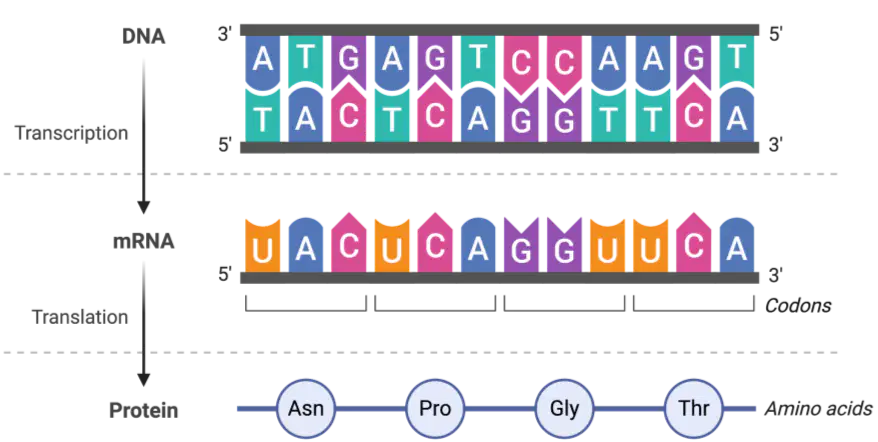
What type of organism is represented by the protein synthesis model in the image?
animal
plant
fungi
we can't tell because all organisms have the same 4 nucleotides in DNA and use transcription and translation to build proteins
The CENTRAL DOGMA of biology states that genetic information flows only in one direction, from DNA, to RNA, to protein.
Select the statement that is supported by this theory.
DNA is found in the cells of all organisms.
DNA contains instructions for building proteins.
The beginning and end of polypeptide chains are determined by specific DNA sequences.
tRNA and rRNA are essential to the process of transcription.
Which of the following is are true statements? SELECT 2
Anaerobic respration does not require oxygen and takes place in the cell's cytoplasm.
Anaerobic respration does not require oxygen and takes place in the cell's mitochondria.
Aerobic respration does require oxygen and takes place in the cell's cytoplasm.
Aerobic respration does require oxygen and takes place in the cell's mitochondria.
Organize these options into the right categories
starch
lipids
cellulose
fats, oils, waxes
enzymes
mRNA
ribosomes
DNA
Match each image to the correct steps happening in mitosis.
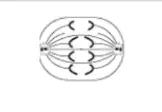
chromosomes are moving toward the poles
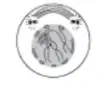
nuclear membrane is breaking down
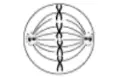
chromosomes are lined up at the equator
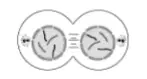
nuclear membrane has started to reappear
Complete the following explaination of protein synthesis.
(a) contains all the instructions an organism needs to live. During (b) , DNA is used as a template to make a molecule of messenger RNA (mRNA) which then leaves the (c) and goes to a ribosome in the cytoplasm. During (d) , the genetic code in mRNA is read and used to put (e) in place to make a protein.
How is energy stored before being used in respiration?
chemical energy
kinetic energy
cellular energy
heat energy
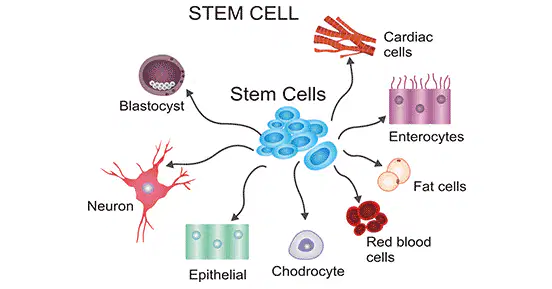
How is cell differentiation involved in this image?
When cells develop, they remove parts of their genetic material to become specialized cells.
All cells in an organism have the same genetic information, but only activate specific genes depending on the type of cell it has become.
Stem cells have transferred energy into the more complex cells to build more genetic material and become more advanced.
Fully developed cells have collected cellular parts from other cells to become specialized.
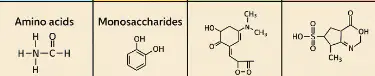
Determine if the following are true or false for the monomers pictured.
All contain oxygen
All contain hydrogen
All contain a ring-shaped section
All contain nitrogen
All contain equal amounts of oxygen atoms
Why does the cell cycle have checkpoints?
To prevent uncontrolled cell division.
To regulate a body's ability to metabolize sugars.
To detect damage in DNA.
To prevent the cell cycle from happening out of order.
To provide energy and support during the cell cycle.
_ is the type of energy used by cells.
(a)
Match the following:
C6H12O6 + O2
products of photosynthesis
H2O + CO2
products of cellular respiration
chloroplast
site of photosynthesis
mitochondria
site of cellular respiration
Match the following:
C6H12O6 + O2
reactants of cellular respiration
H2O + CO2
reactants of photosynthesis
chloroplast
site of photosynthesis
mitochondria
site of cellular respiration

Sickle cell anemia is caused by one base being changed from T to A.
This causes the amino acid to change from GLU to VAL.
How does this impact the final protein produced?
The change in amino acid results in a differently shaped protein, which impacts the protein's function.
The change in amino acid causes the protein to stop synthesizing too early, resulting in a shorter protein.
The change in DNA removes blood cells from the body, which prevents oxygen from reaching the cells.
The change in DNA stops the body from repairing bone marrow, which prevents the production of healthy blood cells.

