
 Worksheets
Unit 216: Boilers Part 1 Introduction
Total questions: 47
Worksheet time: 24mins
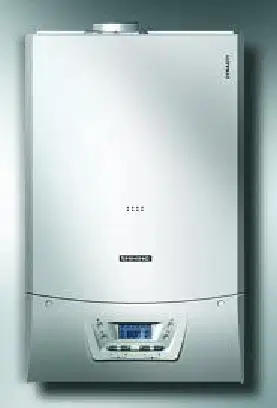
Which boiler type integrates domestic hot water and space heating in one unit without a separate cylinder?
Combination boiler providing on-demand hot water
Back boiler with remote cylinder
System boiler with stored water
Independent boiler serving only heating
Match each accreditation to its typical fuel or system area.
Gas Safe
Natural gas and LPG appliances
OFTEC
Oil-fired heating systems
HETAS
Solid fuel and biomass appliances
17th Edition IET
Electrical installations and wiring
Which regulation part covers installation requirements for heat-producing appliances such as boilers?
Gas Safety (Installation) Regulations
Water Supply (Water Fittings) Regulations
Building Regulations Part J
Building Regulations Part P
Which statement best describes who may install boilers legally?
Any experienced plumber without registration
Persons competent within their areas and accredited
Only electricians with 17th Edition certification
Only manufacturers’ service engineers
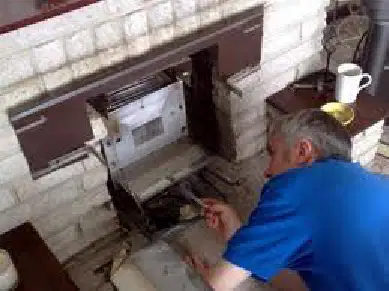
Select all recognised boiler types from this list.
Immersion heater
Wall mounted unit
Condensing boiler
System boiler
Back boiler
Which fuel delivery method most likely requires bulk storage and periodic deliveries on-site?
Natural gas supplied by mains network
Oil delivered and stored in a tank
Hydrogen produced by the boiler
Electricity via grid connection
Which organisation registers engineers working on gas-fired heating systems in the UK?
NICEIC approves gas installers
HETAS registers gas engineers
Gas Safe Register covers gas work
OFTEC certifies gas boilers
Match each fuel or system area to its primary UK regulatory body.
Gas work
Gas Safe Register
Oil-fired heating
OFTEC
Solid fuel appliances
HETAS
Electrical installation
NICEIC
Which statement best describes the requirement for boiler installation competence?
A registered Competent Person must install
Installation needs no formal registration
Any experienced plumber may install
Only manufacturers’ reps may install
Which fuels generally require delivery to the property rather than supply via the national grid?
Electricity requires delivery
Natural gas requires delivery
Solid fuel requires delivery
LPG requires delivery
Oil requires delivery
Which list correctly identifies the four main fuel types used for central heating today?
Hydrogen, oil, solar, biomass
Electricity, steam, kerosene, coal
Natural gas, coal, wind, LPG
Natural gas, LPG, oil, electricity
Which statement best explains why condensing gas boilers achieve higher efficiency than traditional boilers?
They use one large burner for faster heating
They recover latent heat from condensing flue gases
They eliminate the need for any heat exchanger
They operate with higher flame temperatures only
Identify the main regulatory driver for fitting modern condensing boilers in most cases.
Local water bylaws inspection timing
Part P electrical compliance rules
Gas Safe registration renewal
Building Regulations Part L requirements

In a traditional (non‑condensing) boiler, how is the primary water heated according to the diagram?
By direct flame contact with tubing
By a condensing trap and secondary coil
By dual counterflow plate exchangers
By a single heat exchanger above the burner
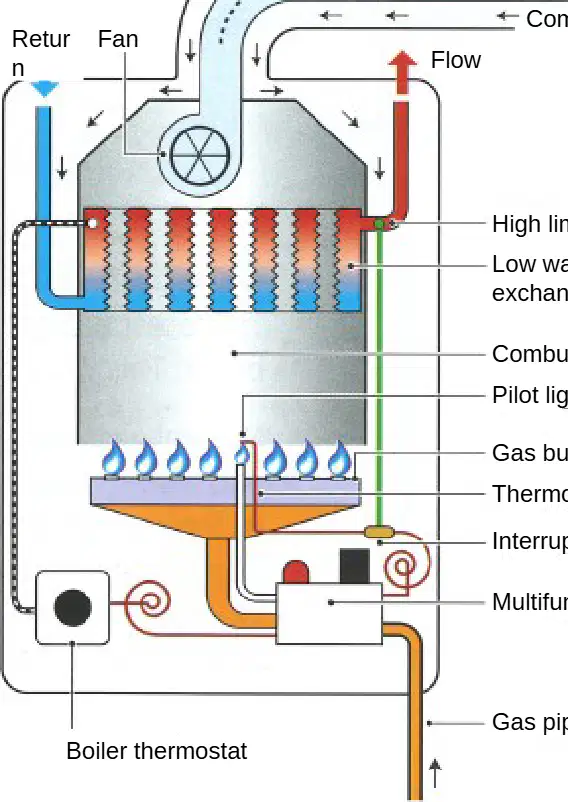
Which component listed in the traditional boiler diagram ensures flame presence for safety shut‑off?
Thermocouple near the pilot flame
High limit thermostat on the flow
Multifunction control on the panel
Fan at the flue gas outlet

What happens to flue gases in a condensing boiler before they exit the flue?
They mix with combustion air to dilute
They are reheated to avoid condensation
They bypass all heat exchangers completely
They cool to around 55°C and condense
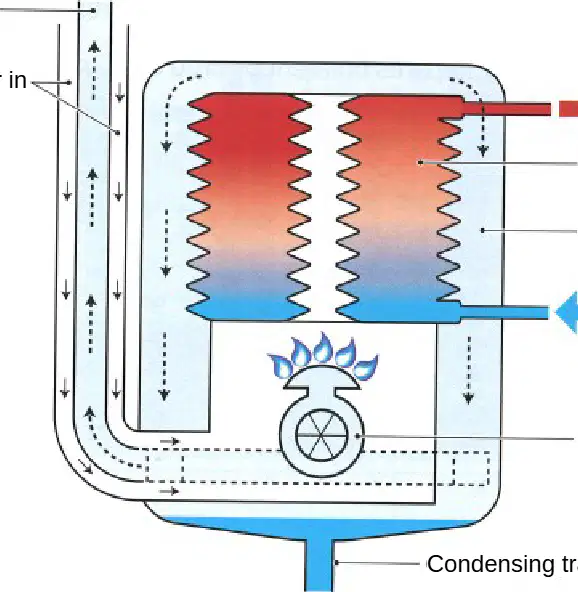
Select all features typical of a condensing boiler shown in the diagram.
Latent heat recovery from vapor
Secondary heat exchanger present
Condensing trap for drainage
Pilot light continuously burning
What provision must be made for condensate from a condensing boiler?
Vent condensate back into combustion
Store condensate in sealed tank
Drain slightly acidic condensate safely
Neutralise flue gases with lime bags
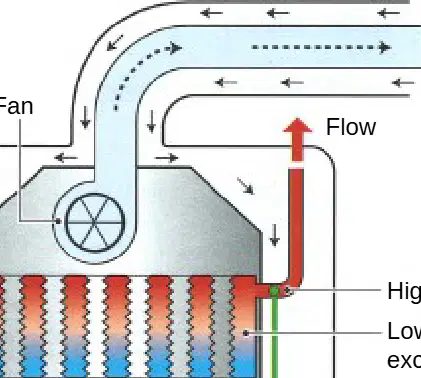
Which component in the traditional boiler diagram limits temperature to protect the system?
High limit thermostat on flow
Interruptor cable routing
Combustion chamber walls
Gas burner nozzle size
Match each labelled component to its function in the traditional boiler diagram.
Pilot light
Ignition source for main flame
Fan
Assists flue gas movement
Boiler thermostat
Controls target water temperature
Gas burner
Provides main heat for exchanger
Which statement describes latent heat in the context of condensing boilers?
Heat released when water vapor condenses
Heat created by electrical resistance
Heat absorbed during fuel vaporisation
Heat lost through radiation to casing
Under typical UK requirements, which efficiency rating is associated with allowed condensing boilers?
ErP band D seasonal
Boiler class II emission
Part F ventilation grade
SEDBUK rated A efficiency
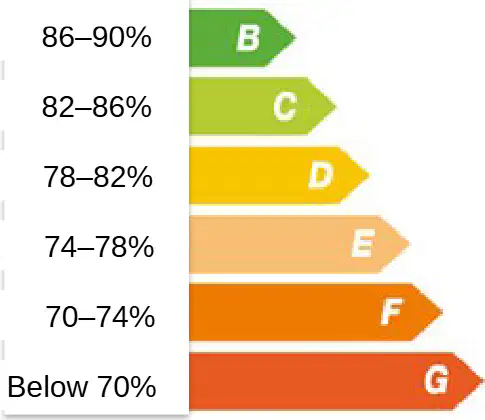
Which SEDBUK band represents boilers with 90% and above seasonal efficiency?
Band A, highest efficiency tier
Band D, lower efficiency tier
Band B, high efficiency tier
Band C, mid efficiency tier
Which statement best describes a conventional (open-vented) boiler?
Self-contained sealed circuit
Integrates pump and safety devices
Uses feed-and-expansion tank
Instant hot water without cylinder
System (sealed) boilers typically include which integrated components?
Circulating pump and expansion vessel
Safety controls like pressure relief
Diverter valve and plate heat exchanger
Flue gas recirculation assembly
Which boiler design usually requires a separate hot water cylinder?
Direct-vent wall-hung design
Conventional open-vented design
Condensing combi design
Combination instantaneous design

Match each SEDBUK band to its typical efficiency range.
Band B
86–90%
Band C
82–86%
Band D
78–82%
Band G
Below 70%
Which advantage is correctly associated with condensing boilers?
No need to manage condensate
Requires higher flue temperatures
Compliant with Building Regulations L
Increased system corrosion risk
Which disadvantage may occur with condensing boilers if not operating in condense mode?
Use more gas than intended
Reduced noise during operation
Higher hot water flow rates
Improved corrosion protection
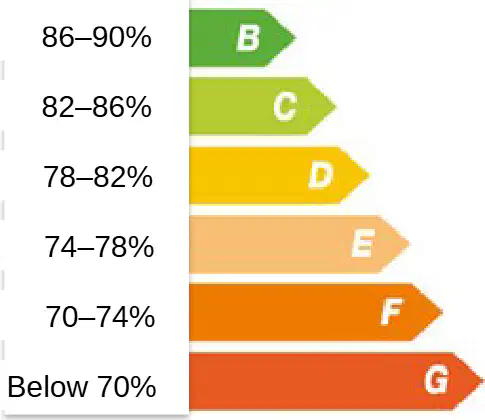
Which SEDBUK bands are generally permitted for installation under current standards?
A and B-rated boilers allowed
Bands A to C allowed
Any band above 74% allowed
Only A-rated boilers allowed
Which scenario most appropriately requires installing a conventional gas boiler rather than a system boiler?
When a sealed system is preferred and space is limited
When an open-vented system is specified for central heating
When time-saving integration of circulator and bypass is needed
When components are factory-fitted inside the boiler casing
A conventional gas boiler is described as standalone. What practical implication does this have for installation?
All system components must be purchased separately
The circulator and expansion vessel come pre-installed
No automatic bypass is required for safe operation
Only sealed systems can be connected to the appliance
System boilers are commonly installed today. What is the primary installation advantage?
They suit open-vented systems without extra parts
They require separate purchasing of major components
They include components like circulator and bypass
They avoid the need for an expansion vessel entirely
For a heating project requiring a sealed system, which boiler type is typically preferred?
System boiler with integrated expansion vessel
Conventional boiler with open-vented arrangement
Condensing oil boiler with gravity feed
Combination boiler with external header tank
Oil-fired boilers are most often installed in which context, and what regulatory requirement applies to new installations?
Urban areas with mains gas, non-condensing allowed
Industrial districts only, blast tubes optional
Suburban estates, open-vented oil only
Rural areas without gas, condensing mandatory
Match each oil boiler component to its function/path shown in the schematic.
Oil pump
Pressurises fuel to the burner
Fire valve
Shuts off supply in overheating/fire
Flue
Exhausts combustion products outside
Water jacket
Transfers heat to circulating water
In the schematic, which sequence best represents the fuel path from tank to burner?
Oil tank → Blast tube → Filter → Fire valve → Oil pump
Oil tank → Fire valve → Filter → Oil pump → Blast tube
Oil tank → Oil pump → Filter → Fire valve → Blast tube
Oil tank → Filter → Fire valve → Oil pump → Blast tube

In the open-flued boiler diagram, what is the primary function of the draught diverter shown above the combustion chamber?
Seal the boiler casing from room air fully
Recirculate combustion gases intentionally
Increase burner flame temperature significantly
Prevent backflow and stabilize flue draught
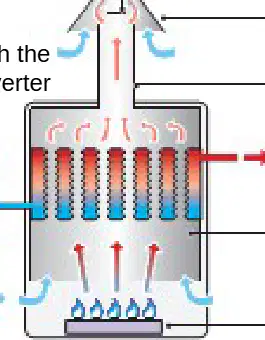
Which statement best describes ventilation requirements for open-flued domestic boilers?
Combustion air delivered only by mechanical fan
No ventilation needed because casing is room sealed
Air drawn through concentric ducts within sealed casing
Combustion air supplied from room via outside air brick
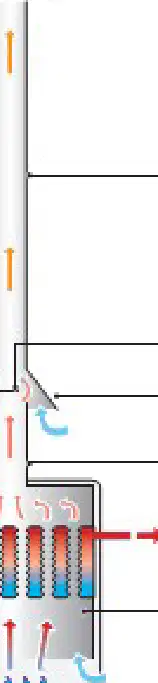
Match each component in the open-flued diagram to its role.
Primary flue
Carries hot gases from chamber initially
Deflector plate
Redirects flow to reduce turbulence
Terminal
Exit point for combustion products
Draught diverter
Admits room air and moderates draught

Natural-draught room-sealed appliances use which arrangement for air and flue gases?
Separate external intake and exhaust at distant locations
Single wall flue drawing room air directly
Concentric ducts with intake and exhaust together
Roof-only exhaust with basement air intake

In a natural-draught room-sealed system, what does 'one inside the other' refer to?
Secondary flue within primary water circuit
Fan housing within terminal cowl
Burner manifold within heat exchanger
Flue gas duct within combustion air duct
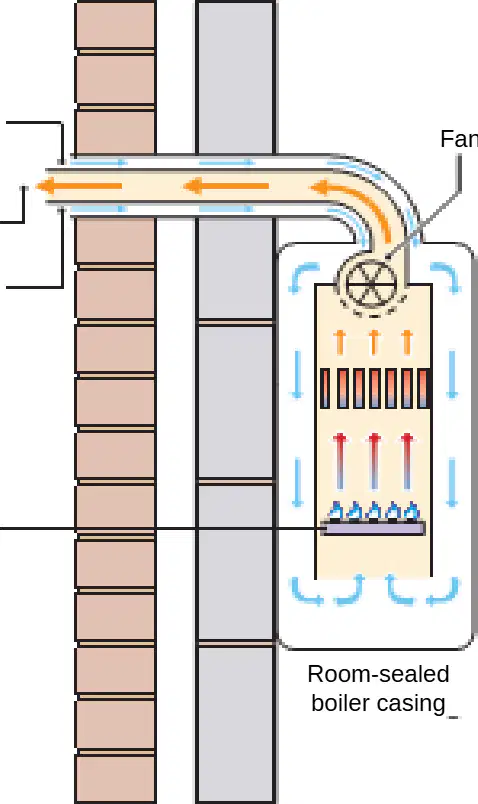
Which features distinguish fan-assisted room-sealed appliances from natural-draught ones?
Combustion air taken from room space
A circular, smaller flue terminal
A fan ensures positive evacuation
Outlet located away from intake by default
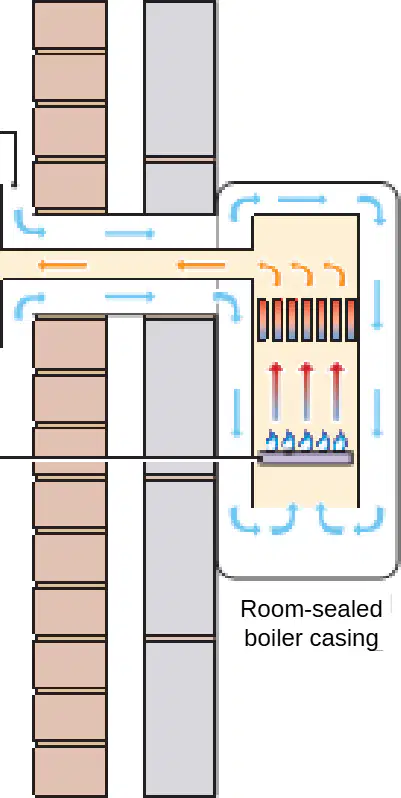
Where are the fresh air inlet and flue gases outlet typically positioned in room-sealed systems?
Separated by at least ten metres
Fresh air at roof, exhaust at ground level
In the same external location on building facade
Both connected to internal room openings
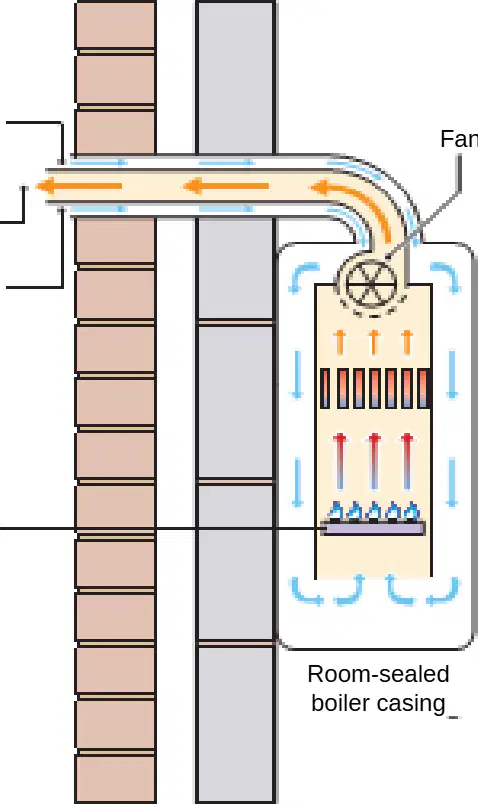
Which statement about the flue terminal of fan-assisted appliances is accurate?
Rectangular, larger, requires chimney stack
Circular, smaller, allows more siting options
Triangular, fixed, only roof installation
Oversized, needs separate cowls for intake
Match the appliance type to its combustion air source.
Open-flued
Room space via ventilation opening
Natural-draught room-sealed
External fresh air through sealed duct
Fan-assisted room-sealed
External fresh air through sealed duct
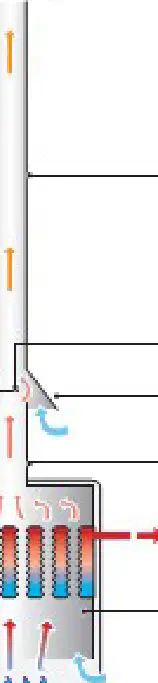
Which component is NOT present in room-sealed systems as shown, but present in open-flued systems?
Draught diverter within the flue
Sealed boiler casing
Concentric intake-exhaust ducting
Fan aiding evacuation

