
 Worksheets
The French and Indian War
Total questions: 20
Worksheet time: 10mins
What role did a young George Washington first play in the conflict over Fort Duquesne in 1754?
Trader negotiating fur prices
Envoy seeking alliance with Spain
General commanding British army
Messenger asking French to leave
Which battle became the turning point leading to British control of Canada during the war?
Battle of Quebec in 1759
Battle of Saratoga in 1777
Siege of Yorktown in 1781
Battle of New Orleans 1815
According to the Treaty of Paris of 1763, which territory did Britain gain from France in North America?
Canada and lands east of Mississippi
Quebec and Oregon Territory
Louisiana west of Mississippi
Florida and Caribbean islands
Which statement best explains why early British attacks near Fort Duquesne failed?
Low morale from previous wars
Refusal to use local militias
Rigid tactics in wilderness fighting
Shortage of artillery and ships
Which statement best describes the relationship between the English & the French during this time period?
They were isolated with no contact at all
They were close allies cooperating peacefully
They were unified under a single government
They were rivals competing for land and power
What was the cause of the French & Indian War?
Religious differences among settlers
Disputes over trade routes in Asia
Each side claimed land in the Ohio River Valley
Conflicts about taxes in the colonies
Why & how did the English claim the Ohio Valley?
They argued it belonged to New Netherland
They claimed it was part of Virginia
They claimed it as part of New Spain
They said it was owned by New France
What were 2 ways the French tried to drive out the English?
By sending missionaries to convert colonists
By inviting English settlers to share farms
By building forts and forming Native alliances
By focusing on trade with the Caribbean
What was the purpose of the Albany Plan of Union and what was the outcome?
To unite colonies for defense. The plan failed to pass
To increase taxes on Britain. The plan was approved
To split colonies into regions. The plan was adopted
To demand independence immediately. The plan succeeded
What were three major differences between the English and the French?
Map colors, flag shapes, language alphabets
Military tactics, settlement patterns, Native alliances
Religious festivals, music styles, cooking spices
Clothing colors, ship names, coin designs
What were the problems of the 2nd attempt on Fort Duquesne? What happened?
Difficult terrain and resistance. What happened was the British withdrew
Open plains favored cavalry. What happened was the French surrendered quickly
No opposition at all. What happened was the fort was peacefully traded
Storms at sea delayed supplies. What happened was the siege never started
How did the war begin to change once William Pitt became the leader of England?
New strategies and funding improved British successes
Colonial militias were disbanded to save money
Peace treaties were signed ending all conflicts
French fleets dominated Atlantic trade routes
What were the main results of the Treaty of Paris?
Spain replaced Britain in all Atlantic colonies
Britain withdrew from colonies; borders stayed same
France expanded empire; Britain ceded Canada
Britain gained territory; France lost North America
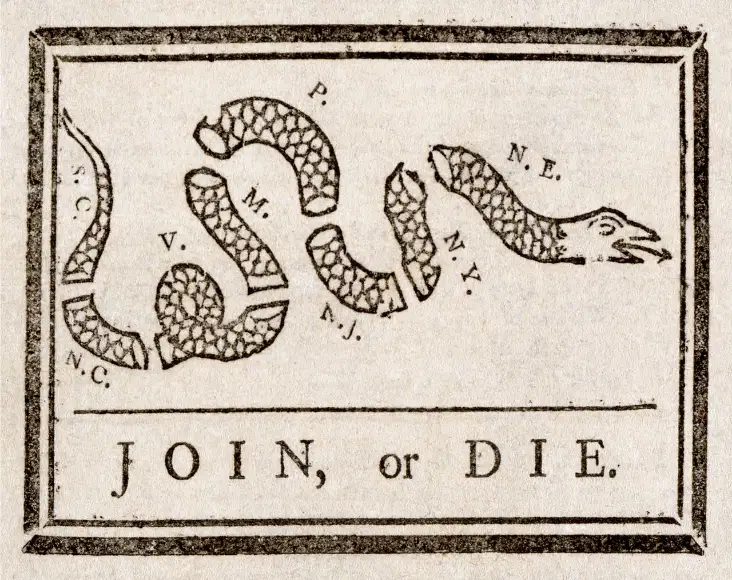
What is the caption shown beneath the segmented snake in the cartoon image?
Unite, or Fall
Join, or Die
Liberty and Union
Together, We Rise
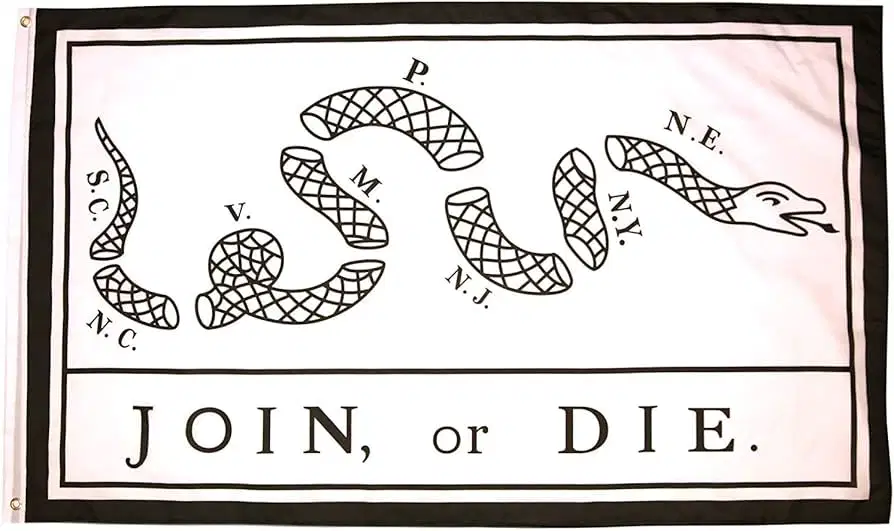
What is the cartoon's main message?
The newspaper promotes animal identification
A longer snake is more dangerous to enemies
Wildlife should be protected from hunters
Unity among colonies is necessary for survival
How were goods supposed to be transported after the passage of the Navigation Acts?
Directly to any country using any available ships
Through Britain or on British ships to markets
Only between colonies using locally owned ships
First to Spain and then to Britain for resale
Smuggling grew during salutary neglect. Which outcome best explains why not enforcing trade laws could create future conflict?
Merchants preferred British taxes over open competition
British officials gained trust by rarely visiting colonies
Colonists saved money and supported stronger British rule
Colonists became used to freedom and resisted tighter control
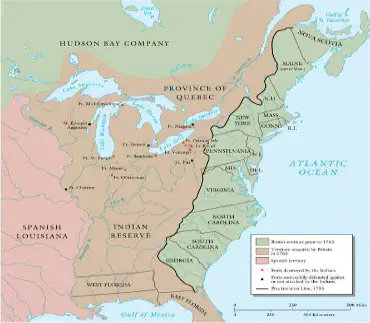
Which purpose best explains the Proclamation of 1763 issued by Parliament after the French and Indian War?
To divide the colonies into four new provinces
To reward colonists with free western farmlands
To encourage settlers west of the Appalachians
To stop colonial settlement west of the Appalachians
Why did Parliament pass the Quartering Act in 1765 requiring colonists to house British troops?
To force colonists to move into frontier forts
To punish colonists for trading with France
To reduce the cost of defending new territories
To recruit colonial soldiers for British regiments
What was a key cause of Pontiac's Rebellion in 1763?
French commanders ordered attacks on British forts
Native allies feared British settlers in the Ohio Valley
British promised free land to all Native nations
Colonists demanded immediate independence from Britain

